Parliament


S'pore designates 2026 as the year of climate adaptation: Grace Fu
The National Adaptation Plan (NAP) is a long-term strategy to prepare Singapore for a climate-impaired future.
March 03, 2026, 08:23 PM


Singapore will designate 2026 as the Year of Climate Adaptation to rally a nationwide push to strengthen the country's resilience against climate change.
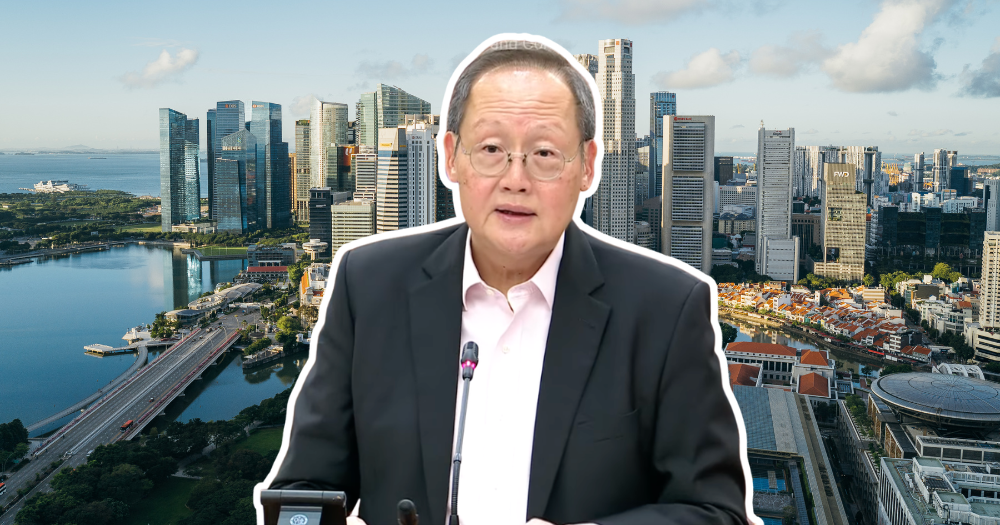
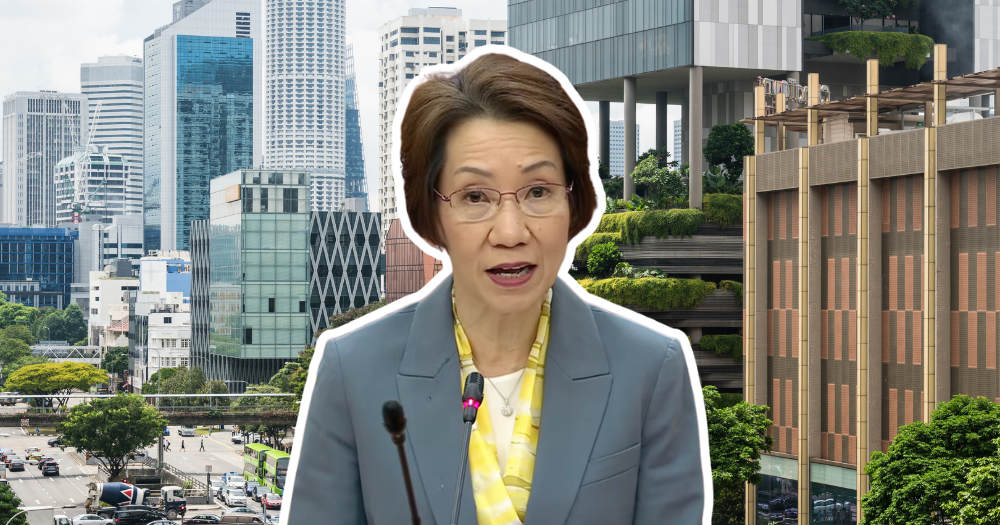
The announcement was made by Minister for Sustainability and the Environment Grace Fu during the Ministry of Sustainability and Environment's (MSE) Committee of Supply debate in Parliament on Mar. 3.
The move will see a comprehensive review of Singapore’s adaptation measures across key areas, including heat, coastal and flood, and water and food resilience.
It will also inform the country’s first National Adaptation Plan (NAP), a long-term strategy to prepare Singapore for a climate-impaired future.
Fu also talked about leaving a better world for her granddaughterNing.
Effects of climate change
In her speech, Fu highlighted the intensifying effects of climate change, warning that climate hazards could cause economic losses exceeding S$1 trillion by 2050, with disruptions to food and water supplies expected to become more frequent.
Economic instability and geopolitical tensions, such as the latest conflict in the Middle East, may also divert attention from climate commitments.
Singapore will not be spared from these impacts, Fu said.
Singapore will be threatened by issues such as rising sea levels, more intense heat and extreme weather, which threaten infrastructure, businesses and public health.
By the end of the century, a significant part of the country could be at risk of being submerged, leading to major economic and human losses.
However, Fu pointed out, as PM Wong said, that Singapore is not a mere bystander.
To address these risks, the government will lead national adaptation efforts by identifying climate threats, developing long-term strategies and investing in protective infrastructure where necessary.
Through GreenGov.SG, it will also drive adaptation efforts across the public sector and encourage the private sector to follow.
Businesses are expected to integrate climate adaptation into core strategies, including conducting risk assessments, protecting workers, investing in infrastructure, diversifying supply chains and insuring against climate hazards.
Communities, schools and sports organisations are likewise urged to adjust practices to cope with heatwaves, haze and floods.
Schools, for example, can adapt their students’ attire and activities and their classrooms to the heat.
Sports organisations can adjust training schedules and enhance their facilities for safety during extreme weather.
"Together, we must keep Singapore going as much as possible in step with the changing climate," said Fu. "And recover as quickly as possible in the face of extreme weather events."
National Adaptation Plan
Fu also outlined the key domains of the NAP:
- Heat resilience: Strengthening whole-of-government coordination and investing in research to better understand heat impacts, develop cooling solutions and identify behavioural changes.
- Flood resilience: Regular reviews of the adequacy of drainage infrastructure, updated design standards and efforts to build community resilience.
- Coastal resilience: Conceptual studies for the north-west coast from Tuas to Lim Chu Kang have been completed, with site-specific studies for Sentosa and the SouthWest Coast to begin in 2026. The Coastal Protection Bill will also be tabled for Second Reading to provide legislative powers for coastal protection works.
- Water and Food resilience: Continued innovation to safeguard essential supplies amid disruptions.
Climate change research
With regard to the study of climate change, the ministry established the Climate and Weather Research Alliance Singapore (CAWRAS) in September 2025 to advance tropical climate research for Singapore and Southeast Asia.
According to Fu, CAWRAS will be implementing a S$25 million Weather Science Research Programme to enhance forecasting capabilities, including the use of artificial intelligence to improve predictions of heavy rainfall and strong winds, such as Sumatra squalls.
Efforts are also ongoing to develop high-resolution historical weather records and expand Singapore’s heat stress sensor network to improve public alerts via the myENV app.
MSE has also partnered with leading climate and weather science institutes to strengthen its capabilities.
The National Environment Agency (NEA) is a Core Partner within the multilateral Momentum Partnership, a consortium of major operational weather centres and climate research centres, and has bilateral agreements with research organisations in Australia, the UK and the U.S.
These collaborations support knowledge exchange and joint research in weather prediction and climate science.
"Together, these advancements will help Singapore make more timely and better decisions – from early warning of climate hazards and our food diversification strategy to our long-term adaptation plan," Fu said.
Public engagements on the NAP
The government will also hold focus group discussions and a public exhibition as part of engagements on the NAP, and the SG Eco Fund will broaden its funding scope to support ground-up climate adaptation initiatives.
More details regarding these engagements will be provided in due course.
"By tapping on the collective minds of citizens, businesses and civil society, we will enhance our nation’s climate resilience to safeguard our way of life, including those with more needs - the elderly, the young and lower-income households," Fu said, urging all Singaporeans to participate actively in shaping the plan.
Top photos from Getty Images and MDDI/YouTube