Parliament


S'pore landowners to protect properties against rising sea levels under new Bill, govt support provided
A failure to comply may result in fines of up to S$200,000.
February 03, 2026, 02:23 PM

 Under a new Bill, Singaporean landowners may soon need to implement coastal protection measures on their plots to guard against rising sea levels and extreme weather.
What's in the Bill
Coastal protection measures
Under the Bill, landowners will own, implement, maintain and operate coastal protection measures on their site.
These can come in the form of barrages, coastal barriers, seawalls, revetments and demountable barriers.
Singapore's government, as the largest coastal landowner, will be responsible for the majority of the coastline.
Affected private landowners, such as companies in industrial areas like Jurong Island, will be supported by financial and technical assistance from the government.
They will also be given the flexibility to implement measures best suited for their site's needs, including dovetailing with coastal protection works, subject to the PUB's planning, design, operation and maintenance standards, which will be published.
In the event of potentially higher mean sea levels, the newly-introduced Bill may also raise future standards of coastal protection measures required.
All landowners will be given at least 10 years' advance notice to begin implementation, while the timeline for completion will be aligned to the progress of site-specific studies.
The coastal protection measures will join up to form a continuous watertight barrier around Singapore's coast, designed to counter the nation's vulnerability to coastal flooding as a low-lying island.
Other initiatives
Currently, about 30 per cent of the island lies less than five metres above the mean sea level.
The relative mean sea level is projected to rise by up to 1.15m by 2100 and could reach up to five metres transiently, owing to high tides and extreme weather events.
In light of this, landowners of transiently floodable areas, which means land affected by transient event like high tides and storm surges, will need to prepare and execute flood response plans.
They will also need to conduct regular drills to evacuate people in the event of transient coastal flooding.
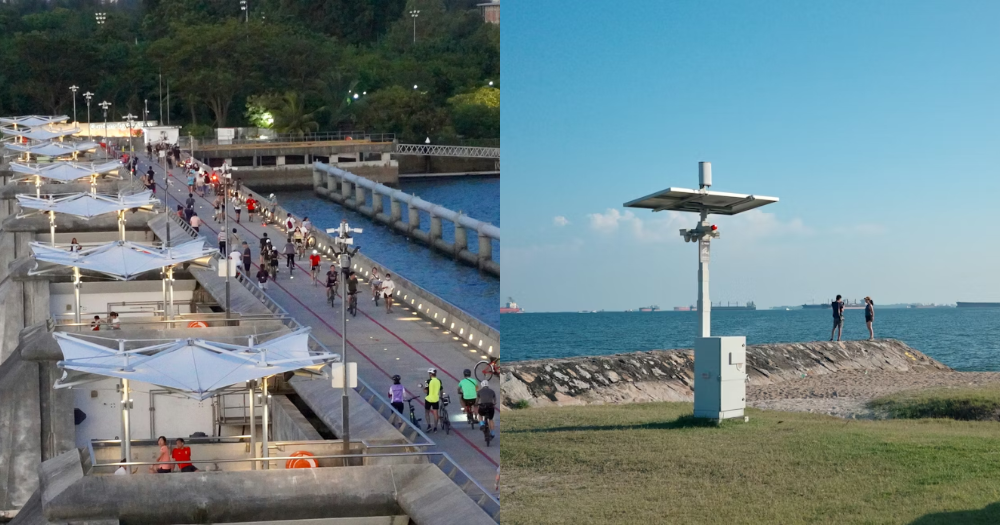
Sheltered structures within transiently floodable areas such as public bathrooms and F&B venues, as well as nearshore and offshore structures such as jetties, terminals and boardwalks must also be protected from permanent and transient flooding.
Owners can seek an exemption, however, if they assess that these structures can withstand floods.
Other measures stated in the Bill include the appointment of a flood protection manager, who will assist owners in complying with coastal protection requirements such as maintenance, operation and executing flood response plans.
Potential penalties
If passed, the new law will be enforced by PUB, with offences including non-compliance, alteration without prior approval, or a failure to inform PUB of a compromised protection measure.
For members of the public, damaging or affecting the functionality of a coastal protection measure will also be an offence punishable by law.
Potential penalties range from S$15,000 to S$200,000, and may involve a jail term, depending on the nature and severity of the offence, said MSE and PUB.
Top images via Unsplash