



Environment

NParks looking at sterilising otters, among other measures, to manage long-term population
Other measures include patrols and translocation, which the agency has started conducting.
January 14, 2026, 09:08 AM


The National Parks Board (NParks) has reportedly been exploring measures to control the otter population in Singapore for the long term, including sterilisation.
In this case, sterilisation means using wildlife birth control methods such as surgery and contraceptives, according to CNA.
In addition, NParks is also looking at translocation as a way to reduce human-otter conflict, among other measures.
The director of wildlife management and outreach at NParks, Cyrena Lin, emphasised that there is no one-size-fits-all solution.
"We do need to look at every single case on a case-by-case basis and adjust our mitigation measures accordingly," she told CNA.
Patrols
In the meantime, NParks has begun stepping up its population control efforts.
Since the start of January, it has been conducting daily patrols at residential estates in Lentor and Mayflower, where concerning otter reports were made, CNA reported.
If the teams find otters during these patrols, they will guide the animals away from residential zones and work with the community on keeping them out of certain areas, Lin said.
In the event that such measures do not work, and otters persist in residential estates, NParks will then consider translocation as a last resort to move the otter families to a more natural habitat.
Lin explained that there are public safety concerns if otter families with pups create burrows (known as holts) in a residential area.
Otters tend to be more protective, and thus potentially aggressive, when they have pups.
On Dec. 20, NParks conducted an operation to secure and relocate a family of otters discovered to have established a holt in a Pasir Ris condo.
The otters were spotted by residents swimming in pools and feeding on the fish in the condo ponds, and continued to stay in the area after NParks conducted patrols.
Resident reports
Exploring other control measures comes amid a rise in otters making their way into houses.
Residents in Lentor and Mayflower told CNA that the furry animals had started entering their homes and eating their pet fish.
Although they had seen otters around their estates previously, such break-ins were new.
On Dec. 29, a Lentor resident was startled to find one splashing in the pond in her backyard, with one of her koi fish hanging out of its mouth.
Another Lentor resident, whose neighbour’s six koi fish were eaten by an otter, expressed fears that the animal might attack the human residents anytime.
"We are very concerned that the otter may strike anytime to enter a house, and since the otter is not even worried about or afraid of humans," she said.
Over the first 11 months of 2022, NParks received about 450 pieces of otter-related feedback, up from 305 in 2021, and 208 in 2020.
Most of the feedback, though, was about sightings.
CNA noted that the otter population had more than doubled from 80 otters in 2017 to 170 in 2021.
The Members of Parliament for the affected residential areas told CNA they intend to raise the matter in parliament.
NParks' response
Responding to queries from Mothership, NParks' group director for wildlife management, How Choon Beng, said they adopt a "science- and community-based approach" to the management of otters in Singapore.
NParks, together with the Otter Working Group and their community of otter watchers, monitors the otters regularly to better understand their population, distribution, and movement patterns, and takes action to pre-empt or mitigate conflict where possible.
"NParks’ holistic population management strategy includes measures such as exclusion, habitat modification, translocation, as well as studying long-term population control measures including sterilisation. These measures serve to ensure public safety, health, animal welfare and mitigate dis-amenities."
As of 2021, there were at least 17 groups made up of 170 individuals of Smooth-coated Otters.
Here's what to do when encountering otters:
"Otters are curious by nature and will not attack unless provoked or when they feel threatened. When otters are encountered, the public should keep a safe distance, and avoid feeding, touching, chasing, cornering, or approaching them especially when there are pups, as the adults can be protective over their young when approached by humans."
For assistance relating to otter sightings and advice related to otter exclusion measures, the public can reach out here or call the Animal Response Centre helpline at 1800-476-1600.
The public can also find out more about otters on NParks’ website.
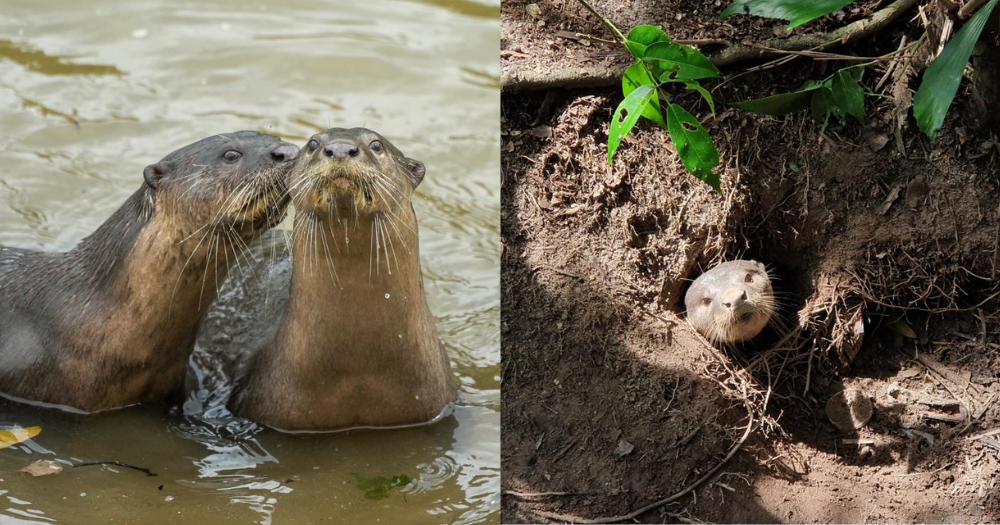
Top images from Ottercity Facebook group and Otter Working Group