News

Regardless of race, language or religion: What does being S'porean look like today?
With the rising forces of right-wing nationalism, populism and great power rivalry, geopolitical tensions exert pulls on different races within Singapore.
October 08, 2025, 11:17 AM


What does it mean to be Singaporean?
60 years post-independence, the "Singapore Tribe" is one that clearly exists — but is less clearly defined.
Is it our appearance? Our accent? Our values? Our choices?
Associate Professor Leong Ching, a former journalist, argues that this "Singaporean-ness" isn't a specific behaviour or look, but a forgetting and remembering of what is most important.
Leong is vice-provost of student life at the National University of Singapore (NUS) and acting dean at the Lee Kuan Yew School of Public Policy (LKYSPP).
By Leong Ching
There was a moment at the Kent Ridge Ministerial Forum when I wanted to jump in and demand: “What is it, SM? What are you remembering?”
Senior Minister Lee Hsien Loong had by that time, answered about 20 rapid-fire questions. We were perilously close to the end of the night.
Then, a second-year student from Nanyang Technological University stood up.
“Senior Minister,” he asked. “Throughout your long career, I was wondering if there were any moments that deeply touched you, or made you feel an immense sense of pride, and if you could share that with us.”
SM Lee was silent. A shine gathered at the corner of his right eye. Then he blinked, cleared his throat and composed himself to give a stoic answer.
“You live through a crisis like COVID, you watch the people on the frontline, putting their lives at risk…It is this sort of thing which gives you confidence that in a crisis, you can depend on Singaporeans.”
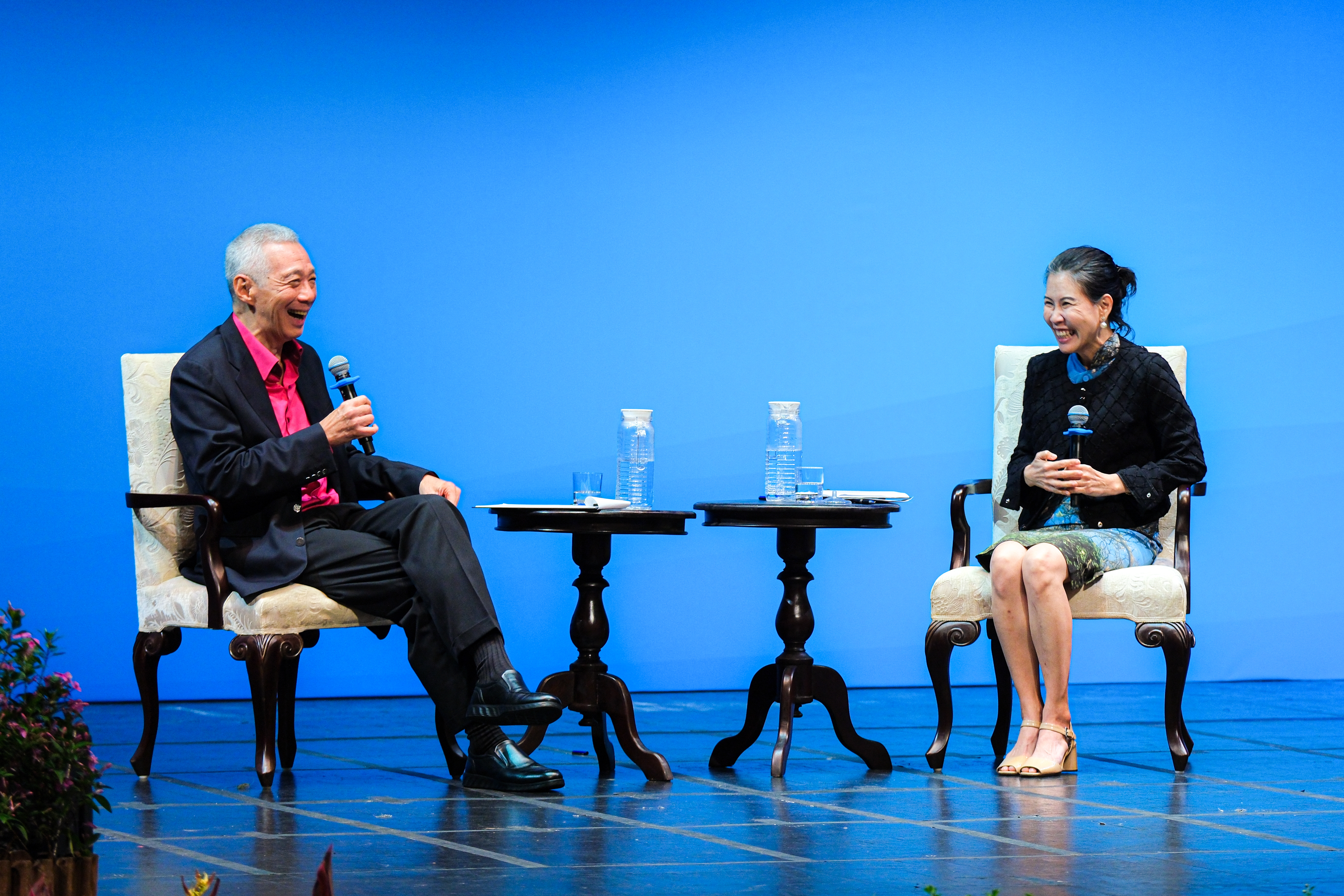 Photo from NUS
But what does it mean, this being “Singaporean”, that you can rely on in a life-and death situation? It is, as he was to say a few times over the night, a “puzzle”.
Most of the time, being Singaporean is invisible — no one (except perhaps we ourselves) can really tell a Singaporean by looking.
We are not a race, we do not have a common culture or a religion or a language, and we behave quite differently from others who may look like us.
As SM Lee points out, some officials from other countries would ask: "同文,同种,同宗,同祖,为什么不同意?"
"Same language, same culture, same ancestors, why not same view?"
But first, Singaporean
This question of national identity is writ large in Prime Minister Lawrence Wong’s speech in Parliament when he asked: “What kind of Singapore are we building?”
His vision is that of the “We First” society: one that strives for the collective good, not self-interest.
This contest between the individual and group identity and a call to unity have long been features of Singapore’s nation-building.
For S. Rajaratnam, former foreign minister and senior minister, the answer lies in what we forget. In 1990, he wrote that nation-building was an act of “shared amnesia, a collective forgetfulness”.
Not in the crude sense of not knowing one’s culture and history, but that one’s identity as a Singaporean held a higher claim.
For him, “As a Singaporean, I have had no difficulty, in a single lifetime, forgetting in turn that I was a Ceylon Tamil and Sri Lankan though I was born there. I had no difficulty forgetting that I was a British subject, or the formative years as a Malayan and where most of my kith and kin still are.”
“Being a Singaporean means forgetting all that stands in the way of one's Singaporean commitment...”
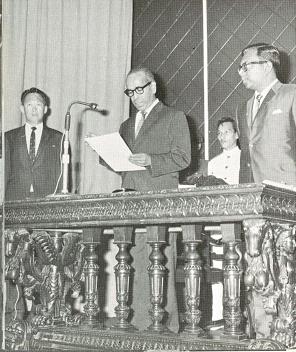 S Rajaratnam being sworn in as Minister for Labour and Foreign Affairs in 1968. Photo from NLB
A deliberate choice
It was in this context that he had famously written: “Being Singaporean is not a matter of ancestry but of choice and conviction”.
The choice is to hold a new loyalty, a “semangat yang bahru” (new spirit), over ancestral faiths.
But “forgetting all” is a very tall order.
A recent Institute of Policy Studies survey, which PM Wong cited in his speech, showed that only a third of people here feel that being Singaporean was the most important element of their identity.
One-fifth declared that it was race (20.6 per cent), and 16 per cent said it was religion.
Today, more than 20,000 come from all over the world each year to become Singaporeans — not much fewer than 33,000 babies born in Singapore each year.
With the rising forces of right-wing nationalism, populism and great power rivalry, geopolitical tensions exert pulls on different races within Singapore.
Indeed, ancestry is not a once-off forgetting 60 years ago, but a constant choice made every day.
So how can “being Singaporean” stand up to the siren calls of these “ancient civilisations and ancient faiths”?
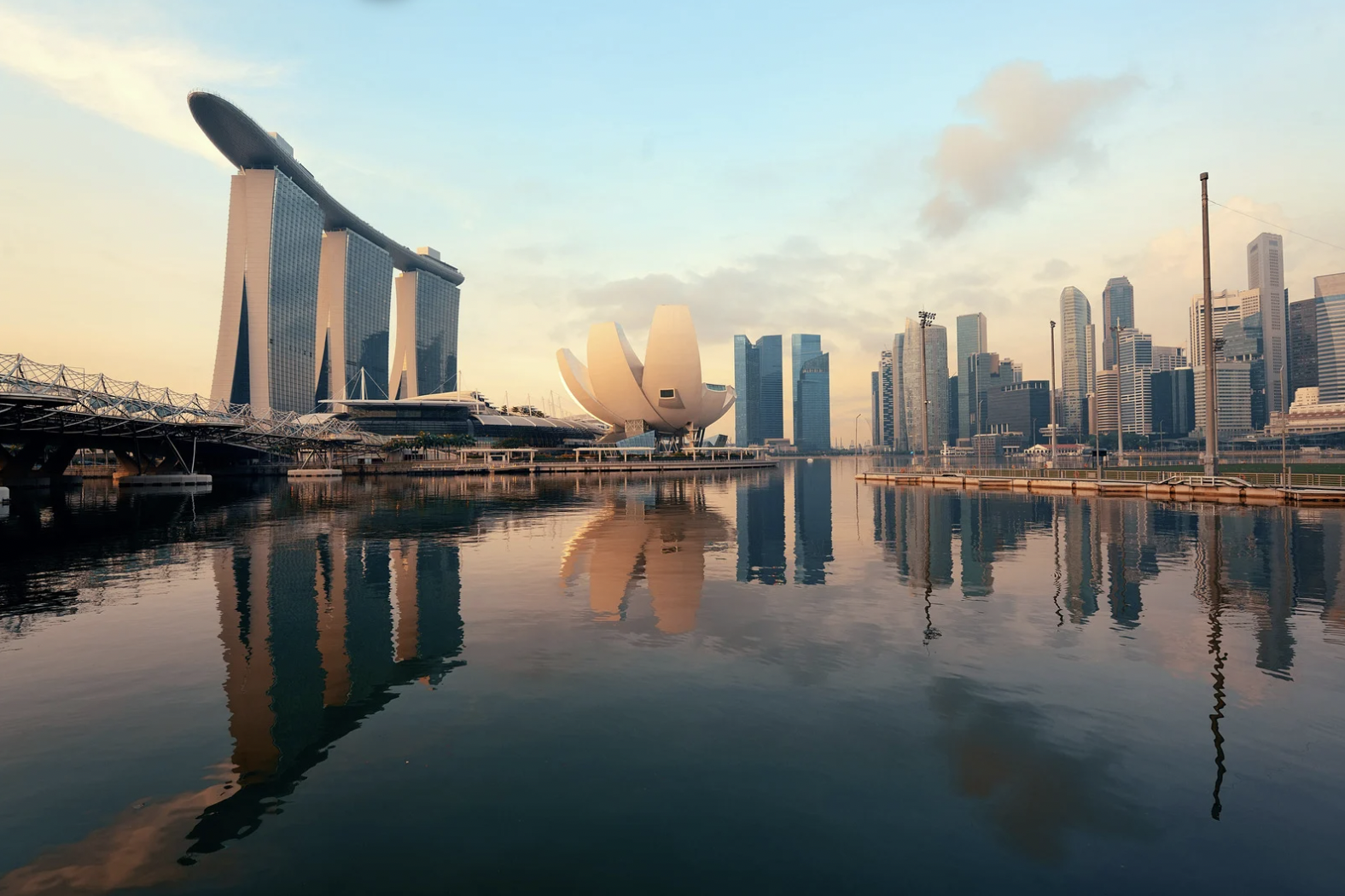 Photo from Canva
"Aliens from outer space"
For one, over 60 years we have grown into a particular shape — always small, but accommodating of each other's differences in culture, religion and race.
It's a shape that looks and feels and is, at its core, egalitarian, meritocratic and multiracial.
In 1999, PM Goh Chok Tong spoke of the challenges of creating a “Singapore Tribe” out of a people untested by fire, living as we did over decades of relative peace.
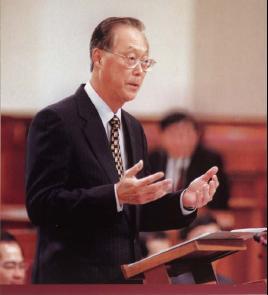 Goh Chok Tong in Parliament. Photo from NLB
But in the 25 years since, we have faced economic crises and pandemics, a short history but one fiery enough to forge, if not a tribe then at least the nascence of one.
For another, being Singaporean is to share, perhaps a touching faith, in the possibilities of the human spirit.
When I asked SM Lee what the “most Singaporean thing” about him was, he said it was that “we actually think each problem should be tackled, and each problem can have some solution".
This sounds like a Public Policy 101 except it is almost never found in the real world.
SM Lee confessed to encountering some mystification when explaining the Singaporean way of doing things.
“I used to go visiting other countries, and people will ask me — and I will explain to them — how we do various things (such as) anti-corruption, public housing, or National Service.
They will look at me, then they will talk to each other — and tell me, 'This is completely alien to us. It is like you come from outer space,'” said SM Lee.
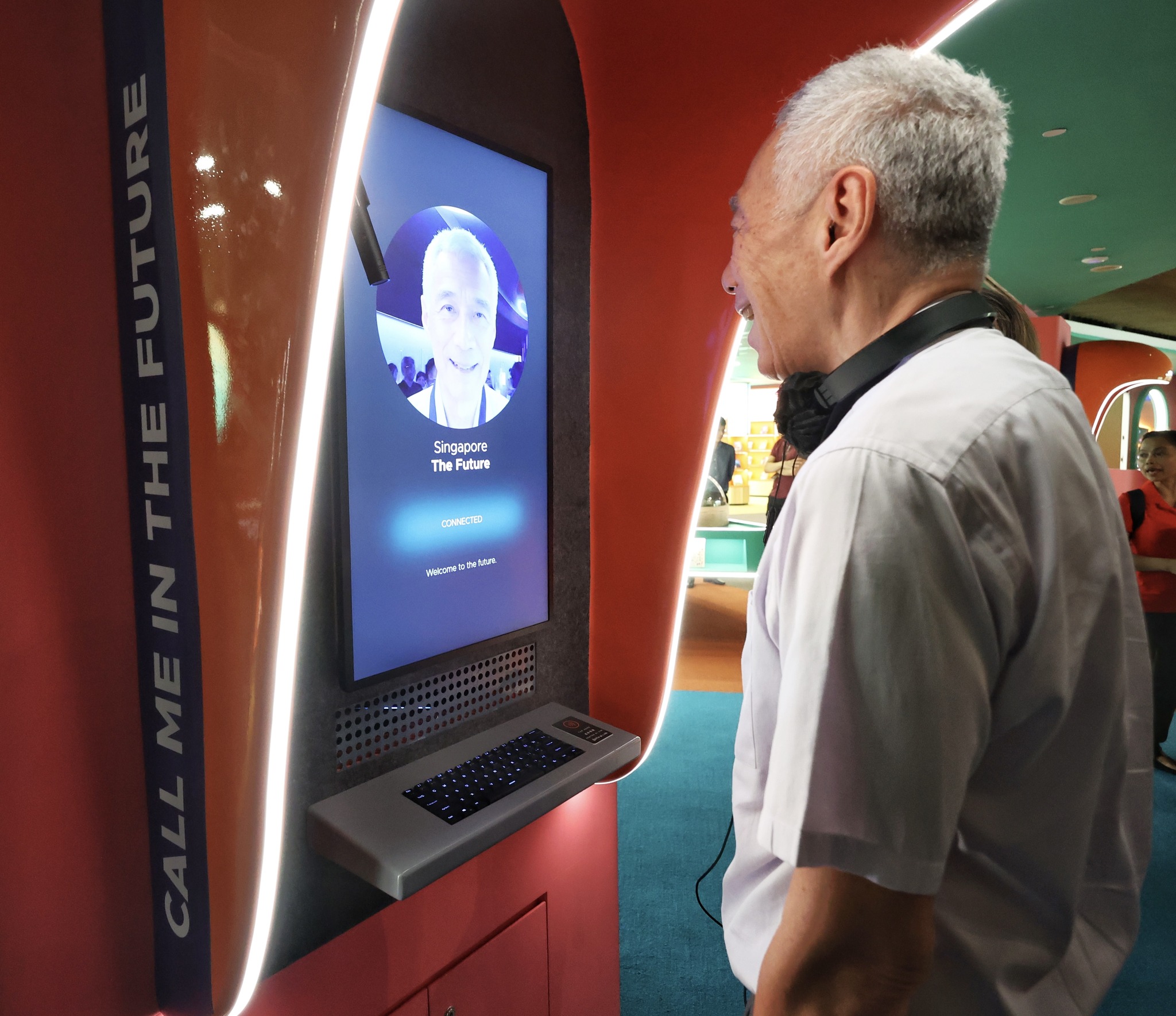 SM Lee in 2025. Photo from Lee Hsien Loong/Facebook via MDDI
A nation of "sensible voters"
The strangeness of all it comes not from the originality or extraordinariness of our ideas, but from our values: our politics, our society, our population.
These allow us to do what cannot be done elsewhere.
To be Singaporean therefore is to be shaped by our shared history and our values to be an “exceptionally sensible voter”. And more than vote, to “roll up your sleeves and do something”, which is SM Lee’s advice to a question on how to make Singapore feel like home.
Meanwhile, PM Wong said: “We do not just want to do things for Singaporeans; we also want to do things with Singaporeans. So I invite all Singaporeans to join us — to connect, collaborate and shape our future together.”
Rather than “forgetting all”, our emerging identity is a palimpsest of what we choose to remember, the decisions we have made in the past, and those we will make ahead.
And if fiery times are the making of tribes, then it looks like the Singapore identity will find its surest footing in the formidable tests ahead.
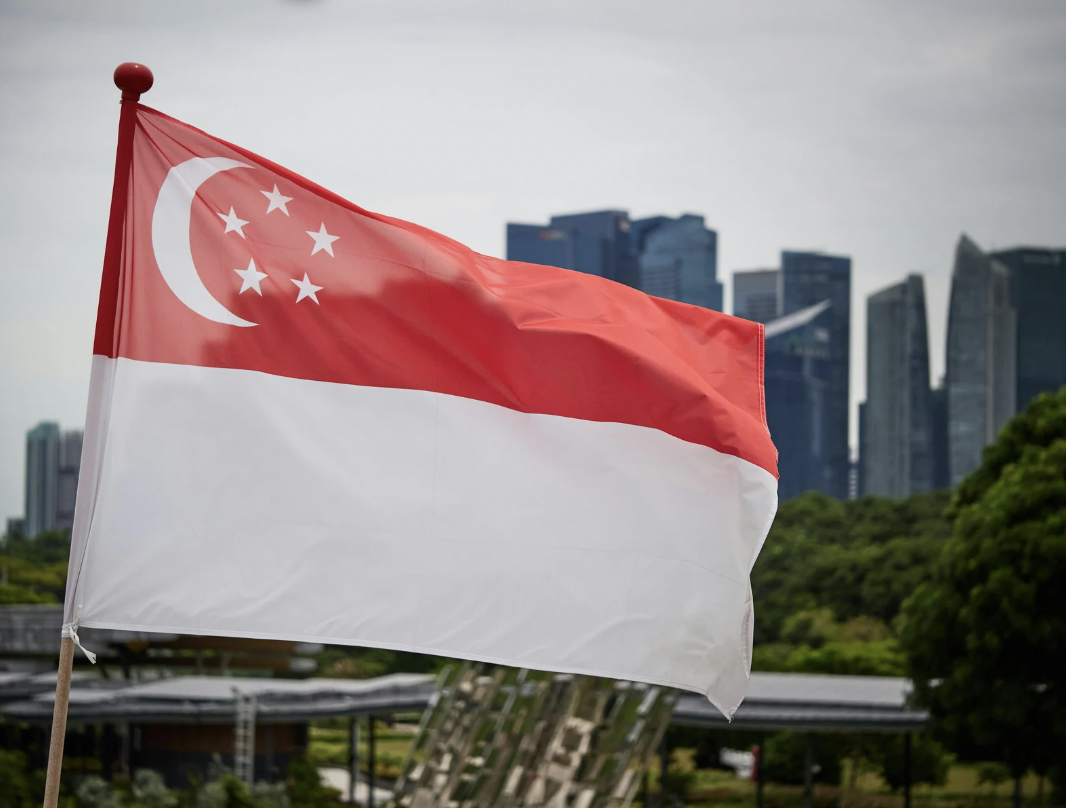 Photo from Canva
Top image from Canva