Perspectives

Comment: The many questions of S'porean recognition of Palestine & the pragmatic hope that underpins it
Recognition will come, one day.
September 23, 2025, 08:04 PM


The recognition of Palestine has long been a contentious issue, one that has become ever more contentious in recent times, especially with several Western countries appearing to have lost their patience with Israel's conduct of their military offensive in Gaza resulting, in tens of thousands of civilian casualties.
Just before Foreign Minister Vivian Balakrishnan spoke in parliament on Sep. 22 came the news that several prominent Western countries, including the United Kingdom, Australia, and Canada, had recognised a Palestinian state, although these countries hung several caveats on its recognition.
These countries did so after calls on Israel to make meaningful steps towards a ceasefire in Gaza, among other conditions, went unanswered.
This means an unprecedented majority of the United Nations Security Council recognise Palestine, France is set to do so in the upcoming days, and all but the most vital of Israel's allies: the United States.
Singapore's consistent position
But what of Singapore?
Singapore's government has held a clear and consistent position, even before the Oct. 2023 terror attacks by Hamas and Israel's subsequent military attacks in Gaza: Singapore believes in a negotiated two-state solution, with an internationally recognised Palestine and Israel.
Its view is that such a solution, consistent with the relevant United Nations Security Council resolutions, is the only viable pathway to achieving a comprehensive, just, and durable solution to the long-standing conflict.
As such, Singapore is prepared to recognise Palestine “at an appropriate time”.
But what makes one moment more appropriate than another?
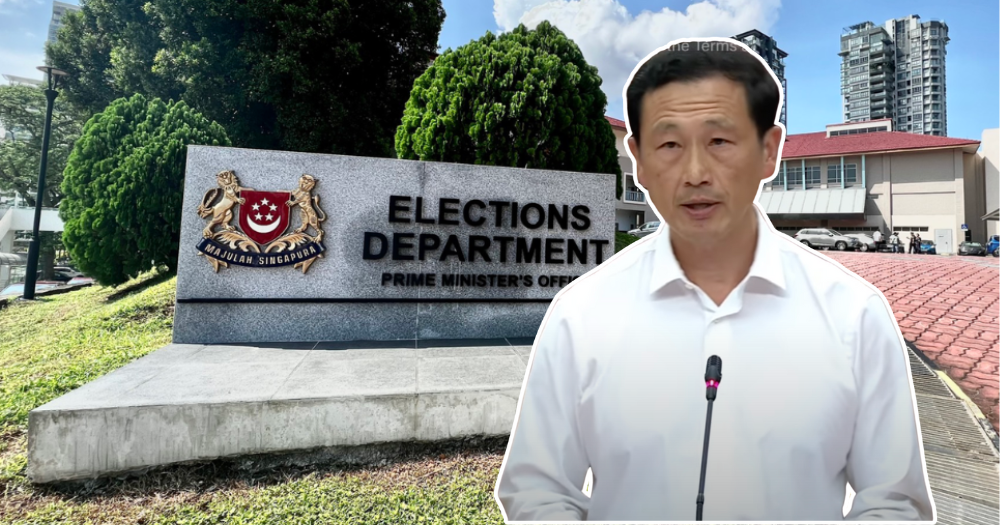
Vivian laid it out clearly in Parliament:
"We will recognise the State of Palestine when it has an effective government that accepts Israel’s right to exist and categorically renounces terrorism."
Vivian also later explained,
"Our position today is not if, but when to recognise (Palestine), and we are waiting for that appropriate constellation of factors to be in (place)."
Divided state
There is now a simple, but not easy, answer for the recognition question, and each component can be straightforwardly explained, even if putting them together creates a far more complicated issue.
Palestine is a non-contiguous state, split between the West Bank in the east, and the Gaza in west.
The West Bank is controlled by the Fatah-dominated Palestinian Authority, with which Singapore has met the leaders of on numerous occasions, and in whose territory Singapore maintains a Representative Office.
Gaza, on the other hand, is controlled by Hamas, who wrested control from Fatah in 2007 and has repeatedly called for the destruction of Israel.
While relations between Israel, Palestine, and particularly Hamas were not good, they went into free fall after the Oct. 7 attacks that were organised and carried out by Hamas, and they, as Vivian told Parliament, have said they would do it again given the opportunity.
Recognising difficulty
At the very start is a question of what recognition of Palestine would actually mean. Just the PA portion? Both?
The PA recognises Israel. But Hamas, which controls Gaza, doesn't, neither has it renounced terrorism.
At the Sep. 2 Middle East Institute Annual Conference, K Shanmugam, Coordinating Minister for National Security and for Home Affairs and the previous foreign minister, spoke at length about Singapore’s recognition of Palestine.
Shanmugam asked what the purpose of recognition was, especially when Palestine currently lacked both a viable government and a viable two-state solution.
He asked, pointedly, if such recognition would help or if it would harm, if it could provoke a counter-reaction, or change the facts on the ground.
He also said he doubted that Singapore had the ability to meaningfully influence Israel in changing its path, especially when its key backer, the U.S. could or would not.
Sovereignty
But a key factor was Singapore's approach to sovereignty.
Vivian made clear the importance of "clear rules and norms to safeguard our sovereignty as a tiny city state".
Singapore took nearly 10 years to recognise the state of Kosovo, having indicated sympathy early on, but making it very clear that there were several legal questions that it felt it needed answers to before it could do so.
Without presuming to speak for the government, the takeaway this author has is that, regarding sovereignty, details matter.
Especially with its own sovereignty, Singapore takes a very careful, detailed approach.
And this author suspects that, given the option to, Singapore would prefer to have many aspects of Palestine's sovereignty clarified before recognition.
Shifting position
With all that said, Singapore has also shown that its position can evolve, even change, to reflect the circumstances.
In May 2024, it voted in favour of a resolution that called on the UN Security Council (UNSC) to favourably consider Palestine's request for statehood and to become a full member of the world body.
Previously in 2012, Singapore abstained in a vote on Palestine's application for observer state status in 2012.
Burhan Gafoor, Singapore's Permanent Representative to the UN, said during the assembly after the May 2024 vote:
"Singapore’s vote today reflects our heartfelt desire to see both parties resume direct negotiations in good faith, demonstrating courage to take the tremendously difficult but essential first steps towards a two-state solution and a durable peace."
In his speech, Gafoor maintained Singapore's long-standing support for the negotiated two-state solution, and that Singapore's support for the resolution is in line with the country's consistent support for the principles of international law and the implementation of all relevant UN resolutions.
"The prospects for peace between Israel and Palestine have become even bleaker. And this is precisely why we must do everything possible to cease hostilities and revive efforts to work towards a two-state solution," Gafoor added.
Vivian took another step to signal another potential change, saying:
"If the situation continues to deteriorate, or if Israel takes further steps to extinguish a two-State solution, we will reconsider our position on recognising a Palestinian State."
In fact, tucked throughout Vivian's speech were clear signs of Singapore taking unprecedented action, such as the imposition of targeted sanctions on the leaders of radical right-wing Israeli settler groups, responsible for acts of violence against Palestinians in the West Bank.
However, Vivian also noted that "it (sanction) is for us a major statement, but I don't want to overstate its impact".
Singapore helps out
Even without formal recognition of the Palestinian state, Singapore has long been assisting them with state-building capacity, reflecting Singapore's long-standing commitment to Palestinian statehood.
Singapore has committed one of its most substantial foreign aid programs to helping Palestine build capacity for a post-recognition state, whenever that may be.
Vivian reminded parliament that Singapore was implementing an S$10 million Enhanced Technical Assistance Package, had trained more than 750 Palestinian officials in civil service training and digitalisation, as well as providing fully funded scholarships for Palestinian officials.
During the MEI conference, Shanmugam said that in 2026, Singapore and Japan would start a programme to train Palestinian civil police officers.
All this is in addition to the multiple tranches of aid, contributed by both civilians and the government, to help with humanitarian efforts in Gaza, which Vivian said amounted to over S$24 million.
Acting Minister-in-charge of Muslim Affairs Faisal Ibrahim said in parliament that many Singaporeans from other communities have stepped up to help.
For instance, he noted that both Muslims and non-Muslims contributed to the Aid for Gaza, organised by Rahmatan Lil Alamin Foundation (RLAF) in collaboration with the M3@Towns.
Since the start of the conflict, RLAF has raised a total of $15 million for Gaza.
Just the day before on Sep. 21, Singapore's president Tharman Shanmugaratnam witnessed the handing over of a S$1.2 million aid package by the Singapore Red Cross in Egypt.
Singapore's concrete contributions stand in contrast to those of its neighbours, Malaysia and Indonesia
Pragmatic hope
At the heart of Singapore’s efforts is really something that is unique in Singaporean foreign politics.
While a dogged focus on capacity building is entirely pragmatic, it is clearly a skill Singapore knows about and a skill that young countries need; it also speaks to hope.
Pragmatic, yet hopeful. Singapore on its own cannot meaningfully bring the day of Palestinian statehood closer, regardless of whether it recognises Palestine formally or not.
But it may be able to help that state blossom when it comes.
That day looks further than ever, with both Vivian and Shanmugam in their respective speeches acknowledging as much.
But one hopes that one day, the conflict will end and Palestinians will then face a new set of more prosaic but still essential challenges; challenges that Singapore is actually well-placed to help with.
Day-to-day things that we now consider mundane, but always important: how to police oneself, how to organise a municipality, how to get contactless payments working on the bus from Ramallah to Jenin.
A dream of normality.
One day.
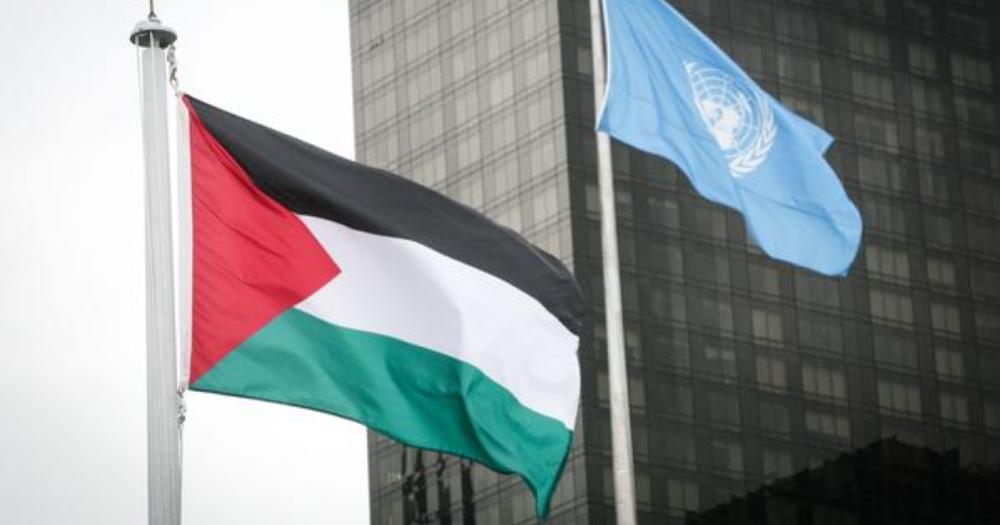
Top image via State of Palestine Ministry of Foreign Affairs and Expatriates