News

Ong Beng Seng’s life would be at risk in jail, but ill health not a licence to commit crimes: MHA
"Persons will be charged and punished if they commit crimes."
September 25, 2025, 11:53 PM


The Ministry of Home Affairs (MHA) said on Sep. 25 that health conditions may "sometimes be relevant" in considering the type of punishment a convict faces.
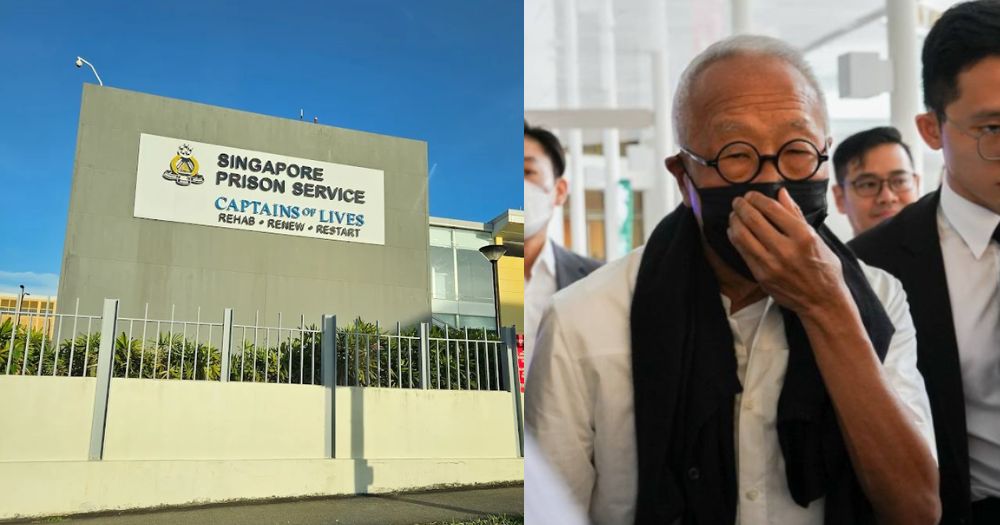
In a statement issued in response to Workers' Party (WP) Member of Parliament (MP) Sylvia Lim's supplementary question during Parliament on Sep. 25, MHA highlighted that the State Courts "accepted the views" that if billionaire property tycoon Ong Beng Seng was sent to prison, his life would be "at risk".
This comes after Lim asked about the Singapore Prison Service's (SPS) healthcare ability to manage inmates with serious health conditions.
She mentioned Ong's case, and pointed out that "there should not be any perception that ill health is seen as a licence to commit crimes and escape punishment".
Inmate health management
MHA first clarified procedures for how the SPS manages inmates with serious health conditions, stating that these inmates receive primary medical care within the Prison Medical Complex, which "adheres to the same infection control standards as in Public Healthcare Institutions (PHIs)".
SPS also has procedures and dedicated facilities in the Medical Complex and assisted living cells to manage inmates who are prone to infections and falls.
Thus, most cases can be managed in Prisons, including cases where the inmate may be at risk if an infection sets in.
For those with more complex medical conditions, SPS also works closely with PHIs and National Specialty Centres (NSCs).
"All inmates receive appropriate and adequate medical care through these arrangements," MHA said.
Court accepted expert medical opinion on Ong's sentencing
However, there are rare cases with complex medical conditions which require highly specialised treatment and have a high risk of infection.
These will have to be assessed based on medical advice.
In the case of Ong, who was 79 at the time of sentencing and suffering from incurable cancer, medical experts believed the risk of infection was high in prison conditions.
He also needed highly specialised cancer treatment, given his advanced stage of cancer, and multiple medical conditions, MHA said.
"Treating such conditions, while ensuring low level of infection is only possible if the prisons' medical facilities are fitted out like our PHIs and National Specialty Centres."
The ministry stressed that replicating the facilities and expertise of PHIs and NSCs within prisons "is not a sensible option".
MHA highlighted:
"Ill health does not give licence to commit crimes. Persons will be charged and punished if they commit crimes.
However, health conditions may sometimes be relevant in considering the type of punishment the convict faces.
In Ong's case, the Court accepted the medical opinion of a professor from the National University Cancer Institute, who said that Ong's "life would be at risk" if he was sent to jail.
MHA noted that there have also been other cases in recent years where judicial mercy was granted to offenders with serious medical conditions.
Once sentenced to imprisonment, inmates are regularly monitored and cared for by medical professionals.
43 inmates under External Placement Scheme
Lim had also asked if inmates have been moved to a more suitable place due to their health condition.
Those whose medical prognosis deteriorates significantly may be placed under the External Placement Scheme (EPS), which allows them to serve their imprisonment in facilities outside prison, MHA added in response.
Since the EPS provisions were introduced in 2014, 43 inmates have been emplaced under the scheme.
Background on Ong's sentencing
Ong was fined S$30,000 for his involvement in former Transport Minister S Iswaran's corruption case.
Ong had pleaded guilty to one charge of abetment of obstruction of justice, which typically warrants a jail term of up to seven years.
However, his lawyers made a case for judicial mercy on grounds that he had advanced multiple myeloma, a terminal cancer.
The judge also said that the main reason why Ong was fined instead of jailed was due to the risks that are significantly enhanced in prison, such as increased risk of exposure to pathogens and infections, as well as an increased risk of falls.
Top photos by Singapore Prison Service & Mothership