


News

There shouldn't be any perception that poor health's a licence to commit crimes & escape punishment: Sylvia Lim
"The law should apply evenly to everyone," she said.
September 25, 2025, 03:14 PM
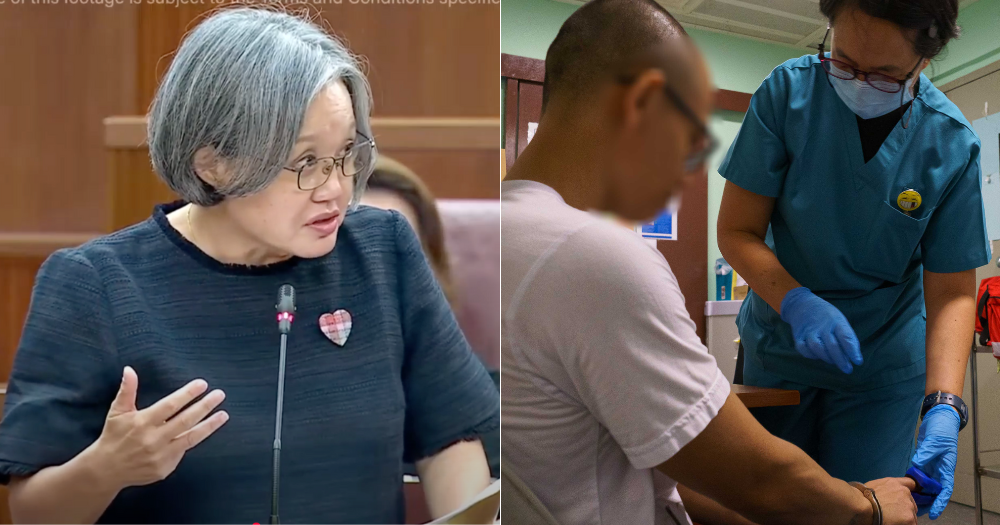


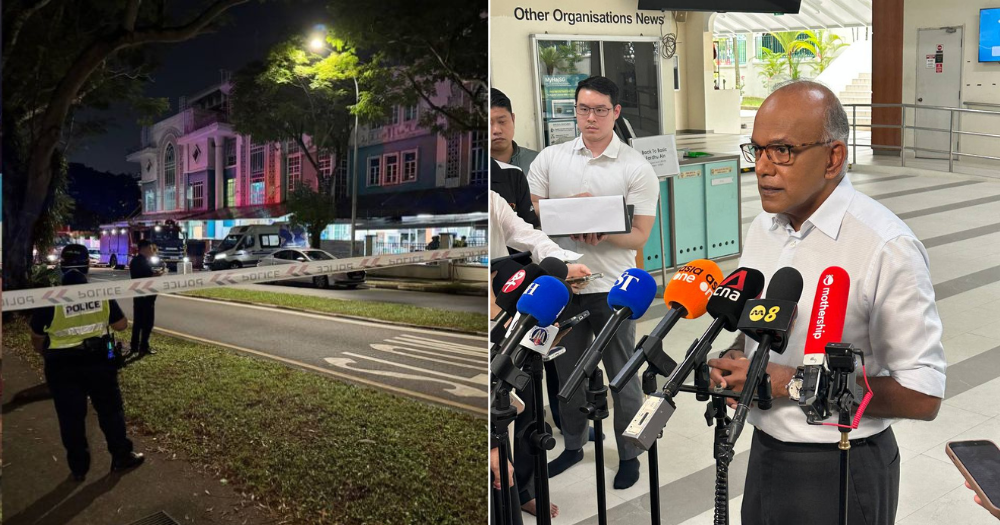
"There should not be any perception that ill health is seen as a licence to commit crimes and escape punishment," Workers' Party (WP) Member of Parliament (MP) for Aljunied GRC Sylvia Lim said on Sep. 25.
Lim, the WP Chair, was seeking clarifications in Parliament from Senior Minister of State for Home Affairs Faishal Ibrahim regarding Ong Beng Seng's sentencing, and the Singapore Prison Service's (SPS) healthcare ability to manage inmates with serious health conditions.
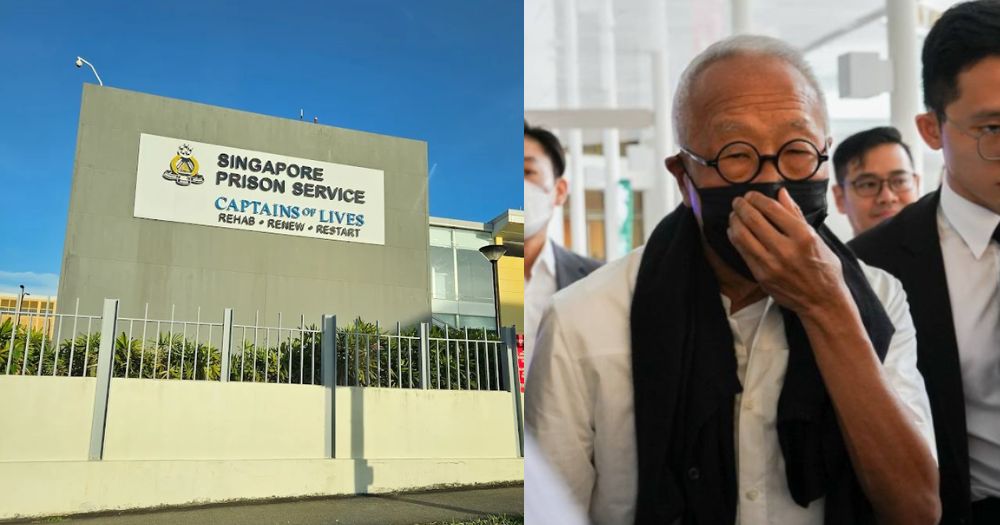
Ong was fined S$30,000 for his involvement in former Transport Minister S Iswaran's corruption case.
Ong had pleaded guilty to one charge of abetment of obstruction of justice, which typically warrants a jail term of up to seven years.
However, his lawyers made a case for judicial mercy on grounds that he had advanced multiple myeloma, a terminal cancer.
Prison provides appropriate medical care
Faishal told the house that the SPS has a healthcare system aligned with national standards and that inmates receive appropriate levels of primary medical care within the prison medical complex.
He was responding to a question from Aljunied GRC MP Gerald Giam on whether the SPS will review its facilities and procedures to handle inmates with serious health conditions who are prone to infections.
However, in cases of complex medical conditions, medical experts might advise that there is a need for highly specialised treatment which is not available in the prison complex.
Faishal said that these inmates may receive their treatment at public healthcare institutions or national specialty centres.
Questions on Ong Beng Seng and prison healthcare
Lim followed up by asking three supplementary questions.
She highlighted Ong's case in August, where the judge said that the main reason why Ong was fined instead of jailed was due to the risks that are significantly enhanced in prison, such as increased risk of exposure to pathogens and infections, as well as an increased risk of falls.
She commented that Faishal's response did not address the enhanced risk of potentially fatal infections and falls inside the prison complex.
"Based on what SMS said earlier, does he accept that there's no way that the prisons can actually address this concern of the courts with regards to potentially fatal infections and falls?" Lim asked.
More pointedly, Lim sought Faishal's affirmation that "in the public interest, the law should apply evenly to everyone".
"There should not be any perception that ill health is seen as a licence to commit crimes and escape punishment," Lim elaborated.
She added that to this extent, MHA and SPS should always review its medical facilities to keep pace with healthcare technology improvements to care for "even more complex healthcare situations".
Lim thus asked if Faishal could confirm whether the Commissioner of Prisons has ever asked to move inmates to a more suitable place in view of inmates' health condition.
This, she said, is an option under the Prisons Act.
"If the Court were to sentence a seriously ill prisoner to imprisonment, there is an option for the Minister to actually issue an external placement order," Lim said.
External placement up to judge and medical panel: Faishal
In response, Faishal highlighted that the SPS has medical protocols and systems in place to manage a variety of conditions, and cited examples such as its infection control protocols, which are aligned to the same standards of public healthcare institution.
Faishal added that he works closely with the prison, and has come across many cases with serious and complex medical conditions, which require dialysis, active chemotherapy and radiotherapy.
He assured that SPS will do its best to address concerns, provide the appropriate care needed by inmates, and that its doctors and healthcare staff are "attuned to the needs" of inmates.
Going back to Lim's point on court judgements and inmate placement, Faishal repeated that SPS has an adequate healthcare system and it was up to the judge to "decide based on the facts of the case".
Faishal said:
"We have, as you quoted, the external placement scheme, which I think is an option that the prison can take on, and this is not something the prison can decide. We have a medical advisory panel and in this case, an external placement review board to do so. And we have done so. We have had cases... where we have allowed the person to go on such as scheme."
He affirmed that the SPS cares for its inmates.
"I want to assure members that we will look after our inmates. They are fellow human beings. They need the care, but if we cannot take care for them within the prison setup, we work with the public healthcare institutions".
The external placement scheme is also there for those who require additional support.
In a statement by the Ministry of Home Affairs (MHA) issued on the same day, it further clarified that anyone who commit crimes will be charged and punished, although health conditions may sometimes be relevant in considering the punishment.
This will be based on expert medical opinion which the Court will assess.
In the case of Ong, expert medical opinion was sought from a professor from the National University of Singapore.
The opinion, which the Court accepted, was that Ong's life would be at risk if he was sent to jail.
MHA also shared that 43 inmates have been emplaced under the External Placement Scheme since its introduction in 2014.
Related story
Top image via SPS