News

Development in Woodlands North brings possibilities, but must consider biodiversity: Poh Li San
Around 10.4 hectares of forest will be cleared for a new transport and business hub.
August 29, 2025, 03:56 PM


Works on one of the developments in Woodlands North is set to begin in 2026 with land clearing and infrastructure works, which will pave the way for a mixed-use business node and transport hub called "Woodlands Gateway".
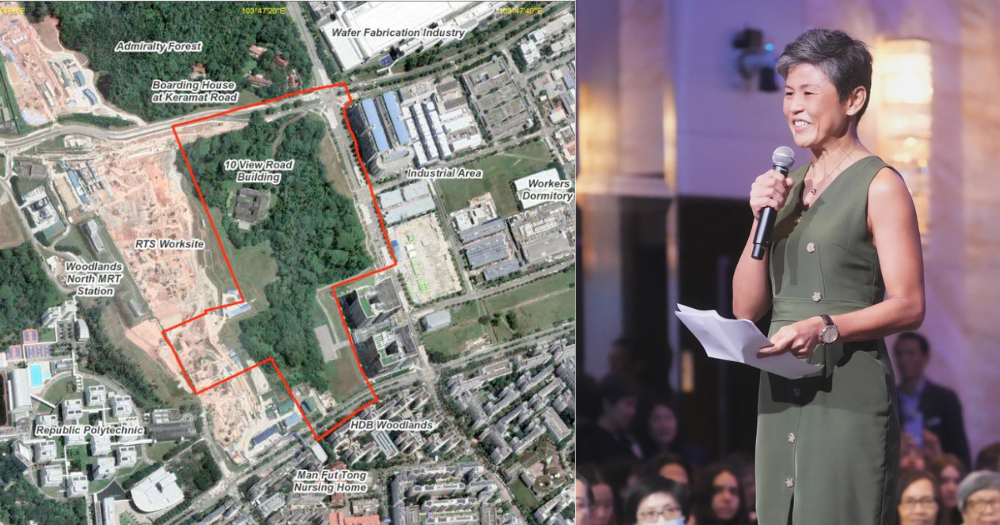
A total of 10.4 hectares of secondary forest will have to be cleared to make way for Woodlands Gateway, a new transport and business hub next to Woodlands North MRT and linked to the eventual Johor-Singapore Rapid Transit System (RTS) station.
In a Facebook post, Sembawang West SMC Member of Parliament Poh Li San welcomed the new development but urged JTC to retain as much green cover as possible.
Poh was responding to the findings of an environmental impact assessment (EIA) report initiated by developer Jurong Town Corporation (JTC), which was published on Aug. 20.
During Prime Minister Lawrence Wong's 2025 National Day Rally, he called Woodlands Singapore's "northern gateway" and said it will be transformed into a modern residential and commercial hub.
Woodlands Gateway
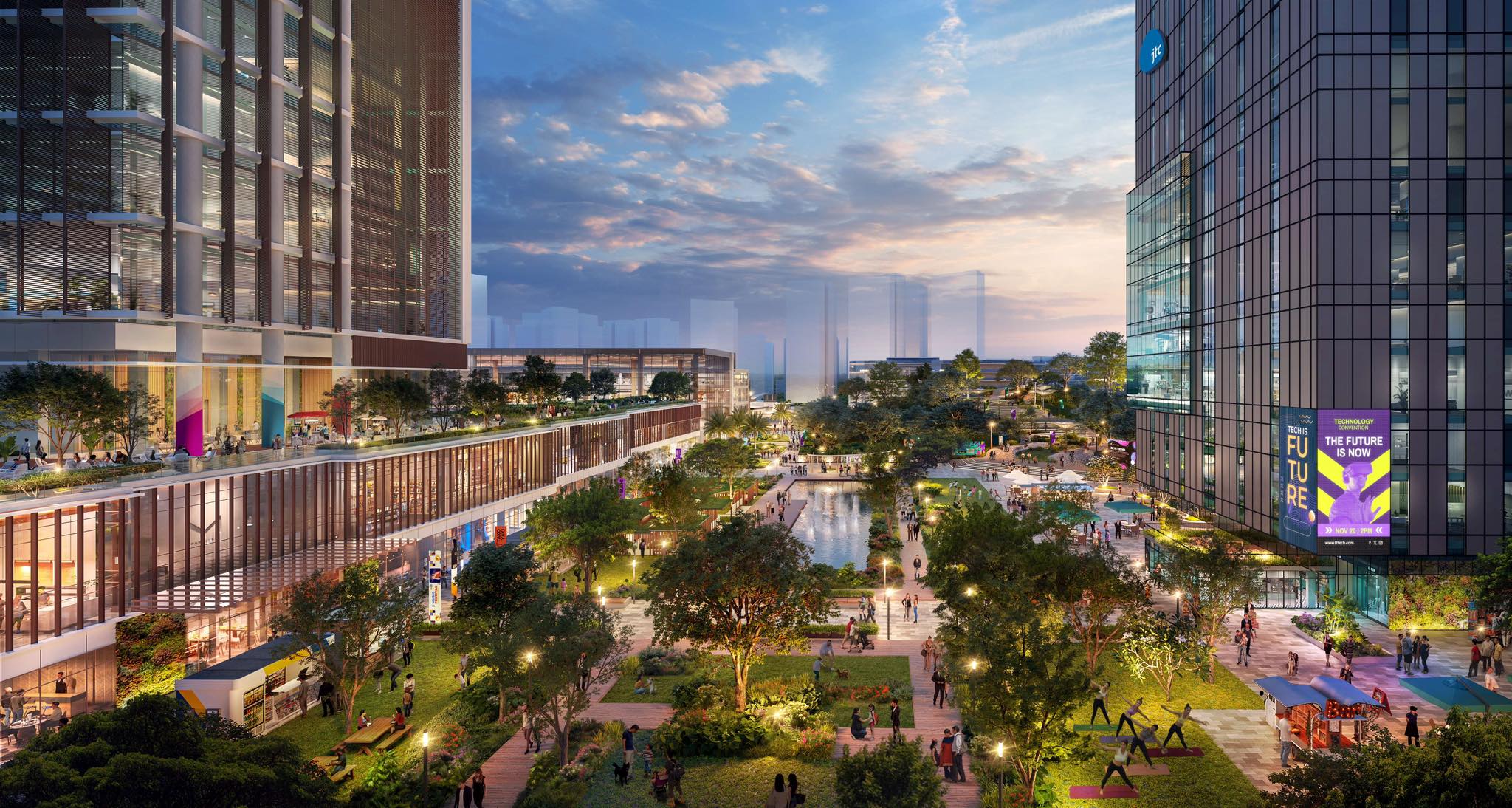 Image via JTC / Facebook.
 Screenshot via JTC.
The total land size under study for the development of Woodlands Gateway measures 27.7 hectares and is located across Republic Polytechnic, bounded by Woodlands Avenue 9 in the south and Admiralty Road West in the north.
Woodlands Gateway, situated at the RTS station that is slated to open end-2026, will be a "vibrant employment, commercial, and manufacturing hub", a JTC spokesperson told Mothership.
Tapping on the Singapore-Johor Special Economic Zone, new flexible industrial spaces will be developed to support business opportunities, especially for firms with operations in both countries.
The current project will run from 2026 to 2035, and will focus on land clearing and infrastructure works, such as the building or roads, drains, sewers and utilities, to enable future development.
Out of around 16.16 hectares of greenery mapped on the site, 10.4 hectares are secondary forests, which are forests that have regrown after they were previously disturbed.
The EIA for the Woodlands Gateway development is open for public feedback until Sep. 17.
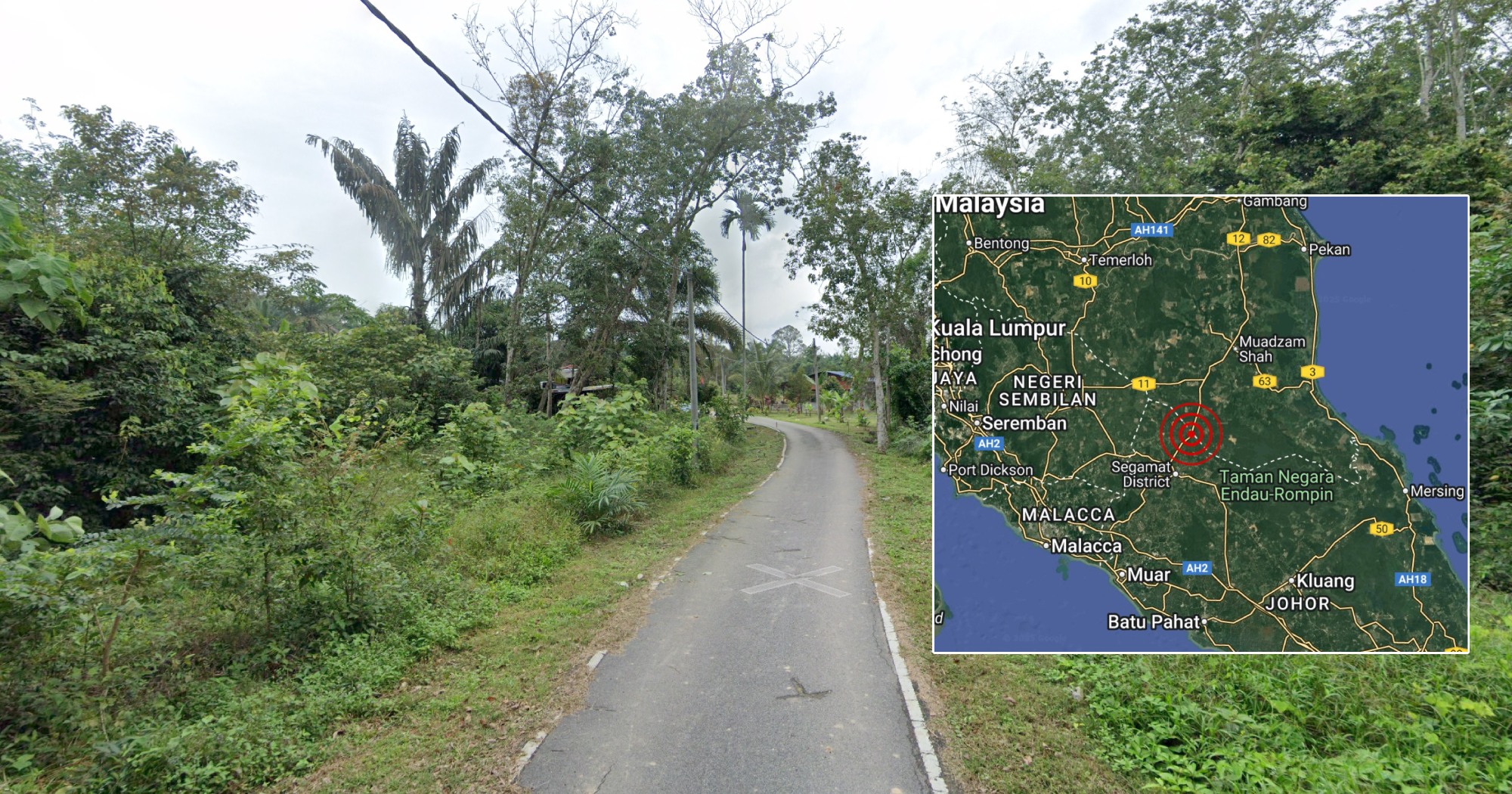
 Screenshot via Google Maps.
Integrate, not supplant, nature: Poh Li San
Responding to a report by The Straits Times on the EIA, Poh wrote in her post that she welcomed the new possibilities in the North that will come with the development.
"At the same time, we must be keenly aware of the loss of biodiversity," Poh said, before going on to add that development must take place in a "thoughtful, gradual way" that takes into consideration the biodiversity of the area.
She urged the developer to "retain as much green cover in the new development as possible."
In particular, she highlighted the protection of 13 affected floral species and the preservation of the area's heritage and history by integrating the British Naval Police premises.
She also called on people to provide their feedback on the EIA.
Feedback will be reviewed: JTC
Responding to queries from Mothership, a JTC spokesperson said that it acknowledged various suggestions received from the public thus far, including Poh.
JTC will review the findings and recommended mitigation measures in the EIA report, as well as the feedback received, before finalising the report and determining the extent of works to be done for the site, according to the spokesperson.
The developer pointed to several proposed mitigation measures for assessed environmental impacts.
For example, plant saplings identified for salvaging will be transplanted from the site.
"We will ensure the creation of green spaces and endeavour to plant the salvaged saplings or similar within the future development," the JTC spokesperson explained.
Plans for future industrial development will integrate greenery to harmonise industrial growth with environmental conservation measures.
For fauna such as birds and butterflies, the spokesperson pointed out that they are likely to relocate to nearby habitats.
Ecologists will be brought in to conduct inspections for signs of wildlife before trees are felled and works will be postponed if active bird nests are found on trees marked for felling.
Wildlife specialists will also be called in to translocate any wildlife found on the construction site.
"All works will only proceed after both the EIA report and development plans are finalised, which is likely to be from 2026 onwards," the spokesperson added.
EIA findings
Secondary forests
The 16.16 hectares of greenery mapped during the study comprises secondary forest, scrubland, grassland and urban vegetation, of which around 10.4 are secondary forests.
Of the 10.4 hectares, 6.25 hectares are made up of exotic and invasive species, while 4.19 hectares are made up of native species.
The former was the largest vegetation type found on the land parcel, making up 22.6 per cent of the total land area. The latter was found to take up 15.2 per cent of the land area under study.
Flora
A total of 199 flora species and species groups were recorded, of which 110 (55.3 per cent) were classified as native, 76 (38.2 per cent) as exotic, and 13 (6.5 per cent) were cryptogenic.
20 (10.1 per cent) of these species were found to be native threatened species, while 13 were found to be of conservation significance.
 Screenshot via JTC.
Fauna
A total of 204 species of fauna were documented, including 10 species of conservation significance.
The species most commonly recorded were birds, with 54 species identified, and butterflies, with 25 species identified.
The study noted a raptor nest observed on a tree, although it was no longer present during a second inspection.
A brahminy kite, which is a kind of raptor, was sighted in the vicinity, circling the tree where the nest was.
 Screenshot via JTC.
Other birds of conservation significance recorded include the common kingfisher, the black-crowned night heron and the brown shrike.
An otter, deemed to be the smooth-coated otter, was recorded on a camera trap in the north-eastern part of the project area.
There was only one sighting of an adult male Long-tailed macaque sighted by a camera trap in the southern part of the project area.
Related story
Top image via