Branded
What does the AI disruption mean for your job & can you stay ahead of it?
Short answer: yes.

The world is experiencing a "seismic shift" in the economy with the rise of Artificial Intelligence (AI).
At a debate session for Budget 2024, Member of Parliament Desmond Choo said that AI would lead to both job losses and job creation, with its advances and adoption by companies being highly disruptive.
Subsequently, in his Budget 2025 speech, Prime Minister Lawrence Wong said that S$150 million would be set aside for eligible enterprises to leverage on AI for their needs, and to integrate it into their business processes and systems.
Fortunately, there are still ways to stay abreast of this change.
As part of its Lifelong Education Scheme, James Cook University (Singapore Campus) is providing a 50 per cent study grant for the part-time mode of its Master in Business Administration (MBA) and Master of Psychological Science (Majoring in Business Psychology) (MPsySc) programmes.
These programmes are designed to help working professionals upgrade their skills and are part of the university’s efforts to support Singapore’s national agenda in promoting lifelong learning.
Alright, you might be thinking, so how do these programmes help you stay ahead of the AI revolution?
Building your soft skills which AI cannot do
Speaking to Mothership, Professor of Business at JCU (Singapore campus), Peter Hofman, explained that an MBA is more relevant than ever, given that it focuses on developing one’s analytical, communication and presentation skills.
"These are the soft skills that will be critical for your success in your career," he said.
As for AI, it is essentially a tool to help students, Hofman added, noting that many of his students use ChatGPT in his class for his assignments.
Ultimately, however, students must still be able to present the information that ChatGPT has provided them with.
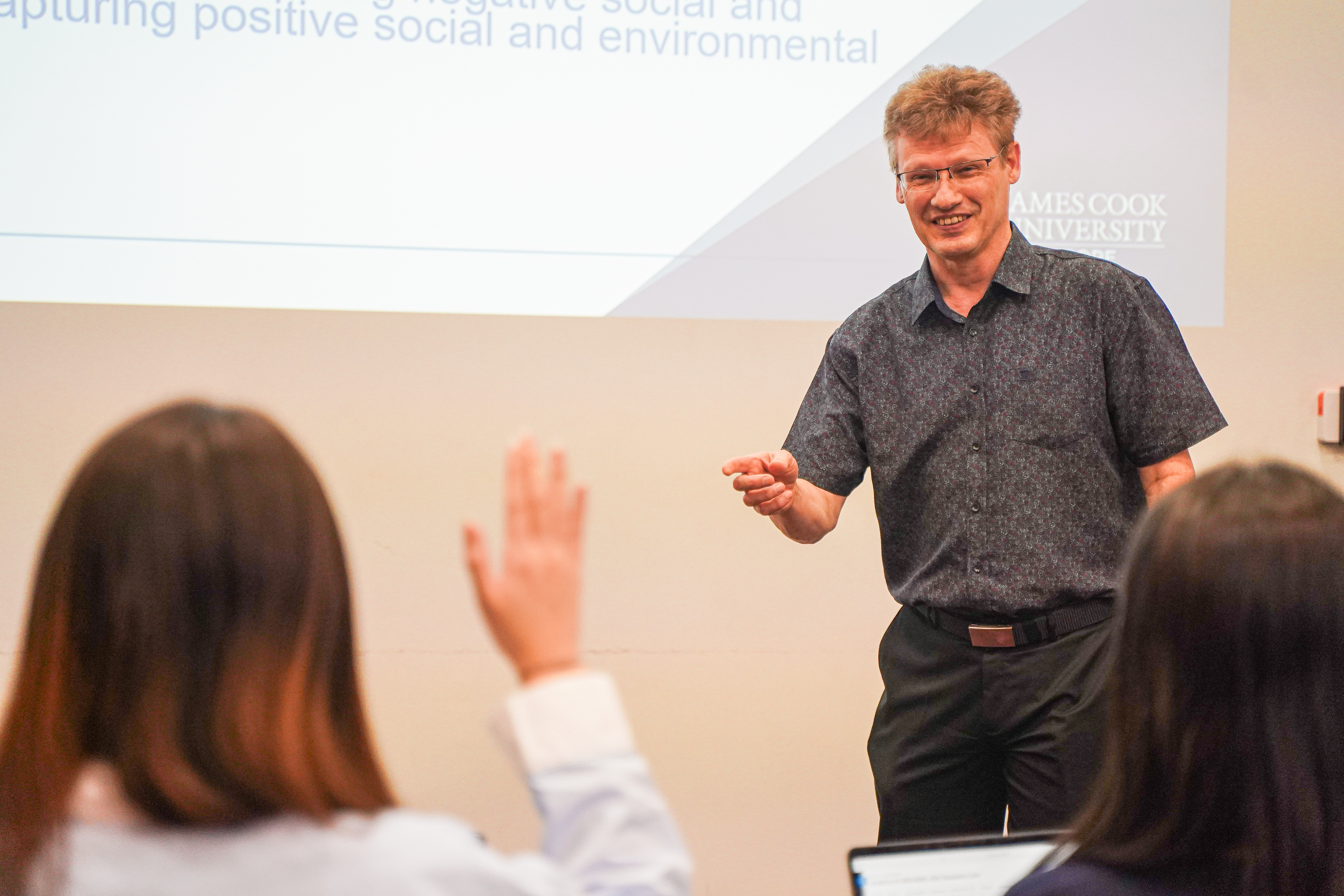 Image from JCU
"How do you convince others that you have good ideas?" Hofman added.
They must also learn to filter the volume of information in front of them to pick out the most important, reliable and interesting bits.
"AI generally can help you a little bit, but it’s just not good enough. You need to do that step yourself," he said.
The human touch is still required to ensure that the use of AI is done ethically
He was echoed by Associate Professor Smita Singh, the programme coordinator for JCU’s Singapore campus’ MPsySc, who added that while AI is a powerful tool that can help to reduce work pressure, it cannot be depended upon to handle everything.
According to Singh, even if AI is used to manage a big volume of data, one still has to inspect the source of the data and make an ethical judgement.
As an example of how people can work alongside AI, Singh said people can make use of AI to understand a large chunk of behavioural data, observe trends, and extract strategies to benefit their organisation, manage employee performance, and provide quick, bias-free and relevant feedback.
In addition, to ensure the process is ethical, it is essential to understand the technological needs of employees from diverse demographics, handle personal information with sensitivity, and establish limits on AI to prevent such information from being shared with third parties.
So, MPsySc graduates must focus on humanising AI deployment in the workplace, Singh said.
"We make sure that we improve students’ awareness of what is considered to be ethical, what is considered to be misconduct, what is considered to be not fair and not appropriate and so on," she added.
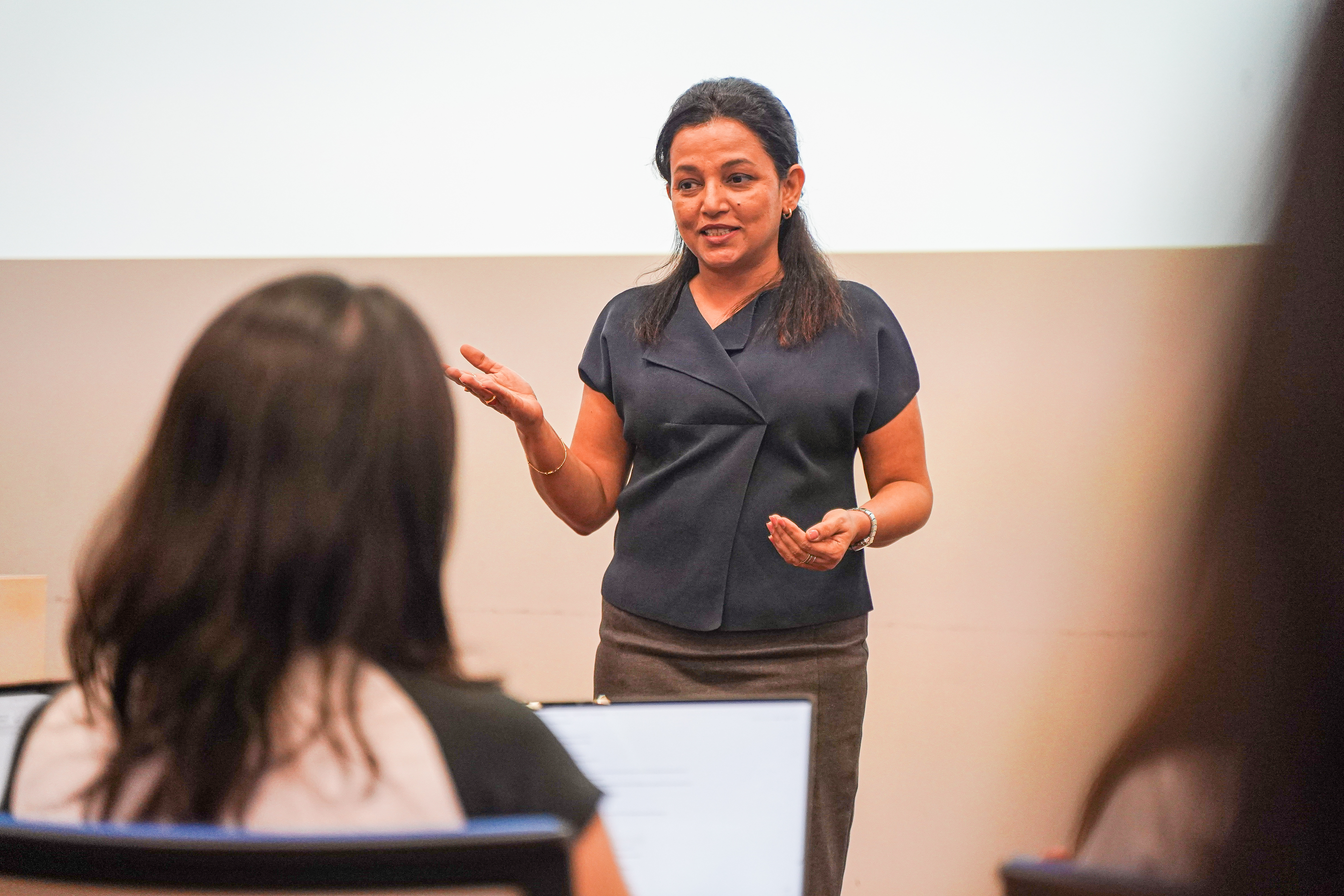 Image from JCU
More than just staying ahead of the AI revolution
Of course, the value of these programmes also extends beyond just staying ahead of the AI revolution.
Developing managerial experience and general business knowledge
Hofman said that the MBA is particularly useful for people who are keen on strengthening their managerial experience, especially if they have been working in a more technical role.
According to Hofman, he has seen a number of students who have a background in engineering enter the course and were subsequently able to move up in their organisations to a more senior position.
He gave an example of a student who is working in a leading Norwegian shipping service company, and was able to leverage his time with the programme to move towards a more regional role with a bigger leadership function within business development from technical sales.
Another student who had a psychology-based academic career found the MBA extremely beneficial in starting his own consultancy practice, as the programme helped him to understand current management practices relevant for consulting.
Currently, the MBA at JCU (Singapore Campus) allows students to choose from six majors to specialise in. They are:
- Analytics and Business Solutions,
- Creative Marketing,
- Entrepreneurship,
- Finance,
- Global Talent Management, and
- MICE, Tourism and Hospitality.
Students can also pursue a general stream, where they can pick a more diverse set of subjects from any of the six major specialisations to develop more knowledge across a "number of terrains," Hofman said.
Managing office politics better and understanding the need for less toxic workplaces
As for the MPsySc, Singh stated that students will be empowered in applying psychological principles and evidence-based practices to real-world business problems, from enhancing employee engagement to leading organisational change.
"With its strong focus on applied learning, critical analysis, and cross-cultural awareness, it prepares graduates to thrive in a fast-changing, globalised workforce," she added.
The programme offers strategies to students for navigating complex interpersonal relationships and managing challenging workplace dynamics, such as office politics, Singh pointed out.
This includes improving students’ awareness about the need for a more inclusive workplace, and how organisations can also be transformed to have a healthier and more inclusive working environment.
The programme is therefore highly relevant for individuals considering a career switch to Human Resources (HR), she said.
The key focus of the programme is on fostering inclusive and psychologically safe work environments, with a particular emphasis on enhancing employee well-being.
Once students understand such principles, they can become pioneers in advocating diversity and fairness at the workplace, thereby helping to fuel greater efficiency, Singh added.
Students also do not need to have a background in psychology to excel.
In the case of one former student, she was a healthcare professional with a Bachelor of Medicine and Bachelor or Surgery (MBBS), according to Singh.
Upon completing the programme, she was able to pivot to working in Lee Kong Chian School of Medicine.
Programmes are accredited
The programmes are also professionally recognised.
The Business School of JCU in Singapore is accredited by the Association to Advance Collegiate Schools of Business (AACSB) which demonstrates the business school’s ability to provide the highest-quality programmes.
JCU is one of the only four universities in Singapore and six per cent of business schools worldwide to achieve this accreditation. This recognition assures that the MBA offered at JCU meets the same rigorous global standards, giving graduates a qualification of proven quality.
The MPsySc programme is accredited by the Association for Business Psychology (ABP), making JCU the only institution in Singapore and one of the first in the region to achieve this accreditation.
Students from an ABP-accredited programme can utilise the “ABP Certified Business Psychologist” status on successful graduation, subject to the fulfilment of membership criteria.
So if you are feeling concerned about the AI revolution or considering a career switch, why not check out these programmes as a potential way of staying ahead?
You can find more information here.
This sponsored article made the writer seriously consider studying part-time for an MBA.
Top images via Unsplash and Pexel