Environment

Petition launched to protect Changi beach from reclamation, govt says access to intertidal areas unaffected
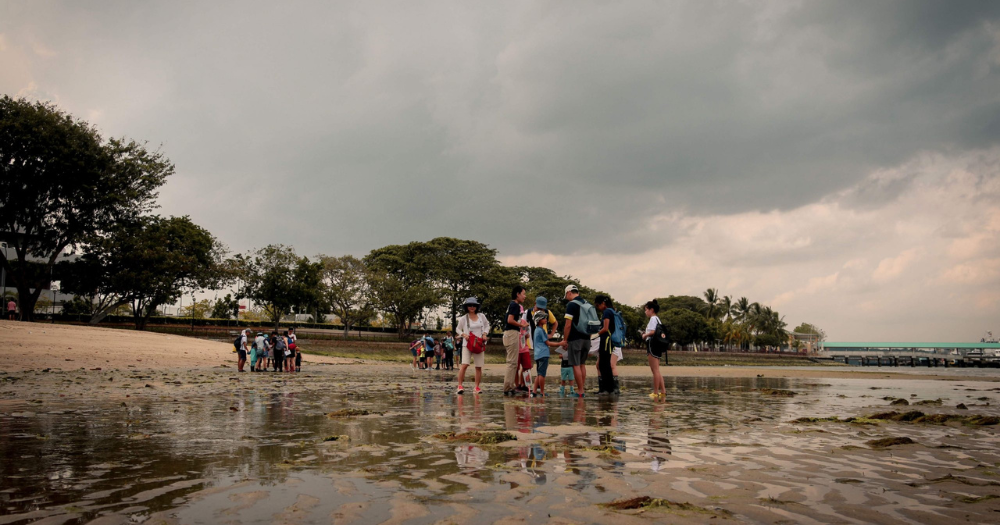
Changi beach is home to one of the last publicly accessible intertidal zones, the petition stated.
July 28, 2025, 07:11 PM


A petition was recently launched to conserve the Changi beach area, part of which will be undergoing land reclamation.
The petition was started on Jul. 13 by Neo Xiaoyun, a nature guide and student pursuing a Master's in Geography and Environment in Hawaii, along with Julian Paul Lee, an "ecological storyteller".
Neo and Lee wanted to "express [their] deep concern" about the fate of the intertidal zones along Changi beach, which is home to a diversity of marine life, in light of the reclamation plans.
They thus called for the reclamation works to be scaled back to protect the area.
The pair also noted that the non-disclosure agreement (NDA) for the project's environmental impact assessment (EIA) runs counter to an EIA's core purpose — "to incorporate diverse views and meaningfully protect natural heritage through public input".
Future aviation park
Part of Changi North will be reclaimed for a future aviation park, the Housing & Development Board (HDB) and the Urban Redevelopment Authority (URA) told Mothership in a joint statement on Jul. 28.
This aviation park will "support Singapore’s future economic growth and create jobs for Singaporeans".
The 193ha piece of land designated for reclamation is located between Changi Beach Park and Aviation Park Staging Ground near Changi Bay, The Straits Times (ST) previously reported on Jul. 3.
Irreplaceable biodiversity
However, the area is also home to one of the last publicly accessible intertidal zones, the petition stated.
There, seagrass meadows, sea stars, nudibranchs and other molluscs can be found.
According to Wild Singapore, a blog run by veteran naturalist Ria Tan, the tiger sea anemone is also more abundant on Changi shores compared to other areas like Chek Jawa.
Dugong feeding trails have also been recorded there.
These creatures and their ecosystems can be vulnerable to the effects of reclamation works — for example, sediment stirred up during construction can block sunlight, hindering the growth and survival of marine life.
Neo and Lee added that the loss of these intertidal zones is equivalent to the loss of opportunities for public education on Singapore's natural landscapes:
"If we lose these intertidal zones to reclamation, we would not only be losing irreplaceable local marine biodiversity.
We also stand to lose public classrooms for current and future generations of residents in Singapore. We would lose vibrant sites of memory, vital opportunities for public learning, and opportunities to nurture stewardship of Singapore’s natural heritage through citizen science efforts, intertidal walks, beach cleanup efforts, and more."
On EIAs
The second point Neo and Lee raised in the petition was their concern about the EIA process, specifically the use of an NDA.
"While we understand that certain sensitive information — such as details related to national security—may warrant restricted access, the blanket NDA limits public and media participation in the consultation process," they stated.
As such, the petition urged the government to revisit this practice and "prioritise public access to non-sensitive information, so that environmental consultations are inclusive, informed, and participatory".
Reclamation area cut down by 45ha
In their response to Mothership, HDB reiterated that "development projects in Singapore are carefully studied and assessed before any decision is made to proceed", and that a wide range of stakeholders with technical expertise or domain knowledge are consulted during the EIA process.
This helps ensure that the EIAs are "robust and effective in meeting the shared objectives".
URA and HDB shared that following the EIA, the reclamation plans for Changi North were adjusted to keep both Singapore's development needs and environmental sustainability in mind.
In fact, the land area for reclamation was reduced by 45ha, and there are plans for an inlet at the northern end to safeguard existing seagrass habitats at Changi Beach Park.
Additionally, the reclamation works will not affect access to intertidal areas off Changi Beach Park.
Mitigation measures and an Environmental Management and Monitoring Plan (EMMP) will also be implemented.
HDB, along with the National Parks Board, is also consulting stakeholders such as nature groups, youth representatives, and academics as part of the planning process.
HDB added:
"Several of the participating academics had also contributed during the EIA scoping phase, providing valuable technical inputs on specialised aspects of the study. Their continued involvement throughout the EIA process ensured consistency and depth in the technical review. As part of the EIA engagement process, HDB also invited members of the public to provide their feedback during the EIA public disclosure period."
Security sensitivities necessitate NDA
HDB and URA added that most EIA reports are made available online for public feedback for a stipulated period.
"However, hardcopy disclosure may be required if there are considerations requiring confidentiality. This includes security sensitivities, such as in the case of the Changi North reclamation," they said.
Rather than completely preventing the disclosure of the reports, their viewing will be facilitated as long as the public signs an NDA, which covers the sensitive information in the report.
Top photo from Young Nautilus