News

Ambassadors can outsource knowledge, but not a personal relationship: Bilahari Kausikan on US nominee Anjani Sinha
Singapore the U.S.'s requirements for ambassadors were totally different, and it was best not to prejudge.
July 19, 2025, 07:59 PM
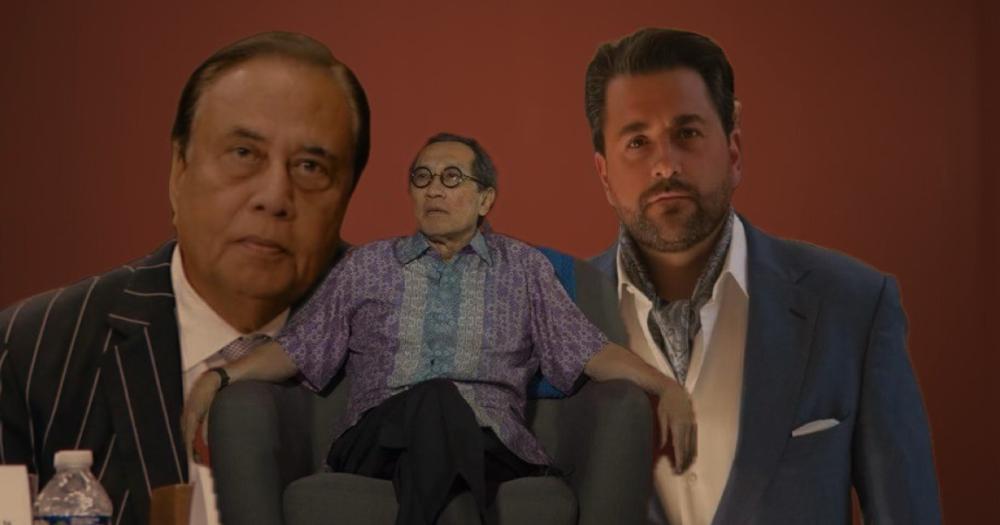


Anjani Sinha is an orthopaedic surgeon, business owner, political donor, and now the political appointee for the role of United States ambassador to Singapore, who recently endured a stormy confirmation hearing for the role by the U.S. Senate.
Doubts were raised about whether Sinha was capable of taking up the role, with Senator Tammy Duckworth (D-IL) outright saying that she doubted his ability after he was unable to answers questions about the island state, such as what the trade deficit was with the U.S. was (none, the U.S. maintains a trade surplus with Singapore), or when it will chair the Asean regional bloc (2027).
Duckworth criticised him as being “not particularly qualified for the role”, "not doing his homework" and chided him for “not taking (the hearing) seriously”.
This disdain for Sinha was taken up by several online commenters, with many deriding the choice.
However, the backlash was opposed by veteran diplomat Bilahari Kausikan, the former Permanent Secretary of the Ministry of Foreign Affairs, and Singapore’s former ambassador to the United Nations, with more than 30 years of diplomatic and foreign affairs experience.
Ignorant and stupid
Mothership spoke with Bilahari about Sinha’s appointment and his confirmation hearing, and he shared his experience with previous U.S. ambassadors and the process used to select them.
Bilahari started in his typically frank and elbows-out manner, describing the critique of Sinha, and to a certain extent the people supplying it, as “both ignorant and stupid”.
That opinion bears some explanation.
Humiliating and discrediting
Firstly, Bilahari explained the nature of the U.S.’s confirmation hearings, which require the executive, in this case U.S. President Donald Trump, to nominate individuals for posts, such as the Ambassador to Singapore.
These individuals are then examined and have to go through two rounds of approval.
The first round is a committee hearing by a relevant Senate committee, in the case of Sinha, the Senate Foreign Relations Committee, on which Senator Duckworth sits.
That committee will then vote to approve or reject the candidate, and if approved, the full Senate will vote on the candidate’s approval, and only after that will they be able to take up the role.
The confirmation hearings were meant to provide an opportunity for the Senate’s most relevant members to question and test candidates on their suitability for a particular job.
But with Trump's Republican party having a comfortable majority in the Senate, Sinha's eventual confirmation is a formality.
Bilahari opined that the system had evolved over many decades, and in his opinion, they are “no longer serving their original purpose."
The hearings now serve the purpose of “humiliating and discrediting the candidate of the party in power by the party out of power”.
Traditionally, the U.S. Senate has given nominees the benefit of the doubt, or at least allowed opposition to a candidate to be floated in private, allowing the candidate or administration to demur quietly.
Bilahari said that Duckworth and other Democratic senators on the committee would have gone on and attacked Sinha, regardless of the answers to his questions, and likely found him inadequate.
Duckworth at the time said that she did not have an issue with political appointees from either party, and has previously voiced opposition to Democratic nominees, even for Singapore.
No bad U.S. Ambassadors... so far
Bilahari also pointed out that the U.S. selects ambassadors in a very different way from Singapore.
While Singaporean ambassadors are now typically career diplomats (there are exceptions, more on that later), U.S. ambassadors were almost always political appointees, that is to say, candidates chosen at the discretion of the president.
Bilahari explained that in Singapore’s history, only three U.S. ambassadors had been career diplomats since the late 1970s, and the rest were political appointees.
“Very few had been ‘not very good’”, Bilahari said, “But none of them have been very bad”.
Or put another way, they’re mostly fine ambassadors, with a few distinguishing themselves.
Bilahari singled out Richard Kneip as an example of someone who had been mocked during his confirmation hearings.
Kneip, a former Governor of South Dakota, was nominated by U.S. President Jimmy Carter and apparently failed to correctly name the capital of South Korea, a “humiliating experience” as Bilahari recounted.
The situation was so bad that when he arrived in Singapore, his deputy, a professional foreign service officer, wrote an anonymous article deriding his new boss, an action Bilahari did not think highly of, saying that it showed professional diplomats can be idiots.
But far from being deficient, Kneip ended up being Singapore’s “best ambassador” because he had a “certain connection” with then-president Carter.
That connection proved helpful to Singapore, which was seeking to purchase air defence equipment from the U.S. but faced the objection of Carter, who wanted to prevent the introduction of new types of weaponry into the region.
But Singapore was granted an exemption because, after having the situation explained to him, Kneip changed Cater’s mind.
"Now that’s a good ambassador," Bilahari said.
You can outsource knowledge, but not a relationship
Bilahari then pointed out that the actual knowledge associated with the region was the role of the Deputy Chief of Mission and the embassy’s staff.
Bilahari said that the role of the ambassador was to represent his country, and in the way the role is conceived by the U.S., the president, in particular.
Sinha was a personal appointee of the U.S. president and had a relationship with Trump and his family.
Sinha was an orthopaedic surgeon, and Bilahari said that he was known to have provided care for Trump’s eldest son, Don. Jr.
Sinha was also said to be a “golf buddy” of Trump, and it increased the likelihood that he could communicate directly with the president should the need arise, making him an especially valuable ambassador.
Bilahari warned that it would be unwise “to prejudge” Sinha, or any appointee, and that in any case, Sinha would be supported by a “cadre of very competent State Department officers”.
“And if he needs to know who the next chairman of Asean is, they will tell him.”
For its part, Singapore needed someone who could “give us a voice in the decision-making councils of the administration in power”.
Meanwhile, Sinha's likely goals in Singapore will be straightforward, to keep the relationship "on an even keel" and moving forward.
Different strokes
But the disquiet felt by Singaporeans when watching Sinha’s confirmation, Mothership suggested, came from very different expectations of our own ambassadors and civil servants.
When suggesting that Singapore would never accept a candidate who had presented himself in the way Sinha did, Bilahari chimed in with a hearty “I hope so!”
He pointed out that Singapore had a “totally different system” and different expectations.
But Singapore also had its own version of political appointees, and Bilahari noted that in the 1980s, when he first joined the foreign service, most of Singapore’s ambassadors were political appointees.
This was because very few foreign service staff had reached the rank sufficient to be made ambassador, as the country as a whole, and thus the service, was still very new.
But as the MFA matured, and the majority of ambassadors had come up through the ranks, there were still occasions for political appointees, usually in the form of non-resident ambassadors.
Win them over
Singapore is not the only country having a frank conversation about the nominated ambassador, as Malaysia is also going through a particular moment.
Nick Adams, a right-wing commentator that Bilahari noted was a “larger than life character”, was announced as Trump’s nominee in the same week that Sinha underwent his bruising confirmation hearing.
Adams has been accused of being pro-Israel, something that he’d likely admit to himself, and allegedly Islamophobic; points of view that might find some opposition in Malaysia, a Muslim country whose pro-Palestinian stance is supported across communities.
Bilahari acknowledged that whether or not to reject Adams, as the Malaysian government has said it had the right to do so, was a matter for the Malaysians to decide.
But he similarly counselled not to prejudge Adams, and that it might present an occasion to “win him over and to try to moderate his views”, something that would not be helped by "insulting him before he even gets here".
Adams was “a public figure, almost an entertainer”, and might not ultimately behave in Malaysia as he had elsewhere.
"So I think this is rather silly, right? How is this helpful to Malaysia?"
Related story
Top image via Mothership NickAdamsinUSA/X, Sen. Tammy Duckworth/YouTube