News

Trump says Xi’s Vietnam visit probably intended to ‘screw’ US
“I don’t blame President Xi,” he said.
April 15, 2025, 04:53 PM


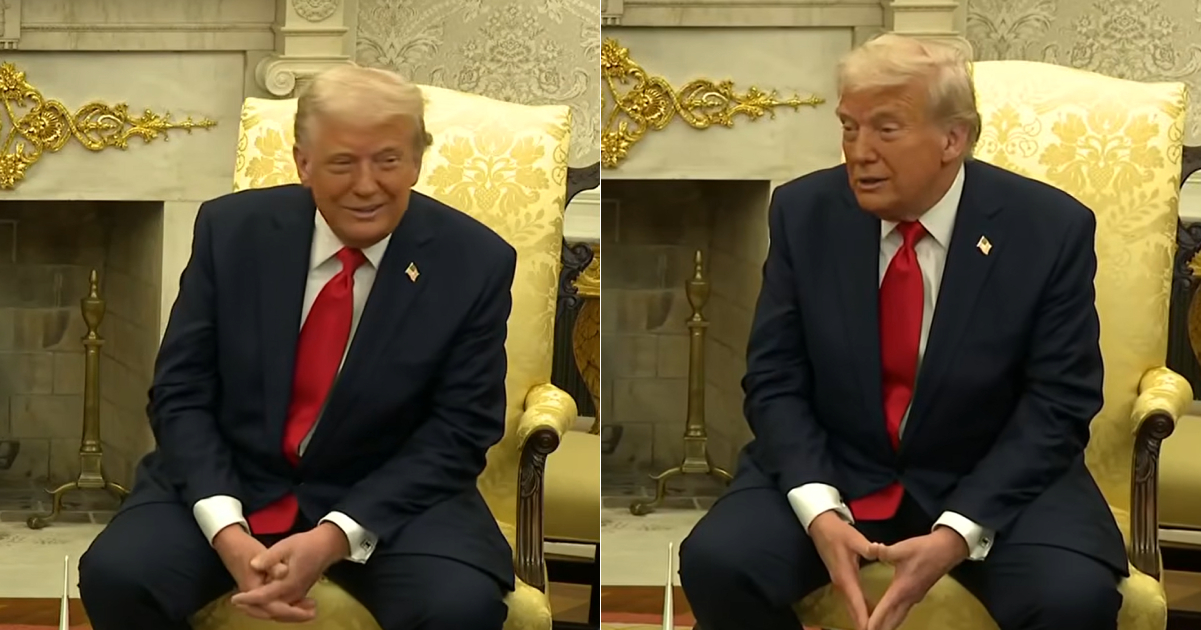
United States president Donald Trump said on Apr. 14 that China president Xi Jinping's visit to Vietnam was probably intended to “screw” the U.S., as the Chinese leader met with Vietnamese top brass.
Trump's comments came amid a discussion on tariffs and possible exemptions for automobiles and auto parts.
“I don’t blame China. I don’t blame Vietnam. I don’t. I see they’re meeting today. Is that wonderful? That’s a lovely meeting... like trying to figure out, how do we screw the United States of America?” he told reporters in the Oval Office, according to multiple media reports.
“I don’t blame President Xi,” he said in the Oval Office during a joint news briefing with El Salvadoran President Nayib Bukele.
“I like him. He likes me. I mean, you know, who knows?”
Trump also claimed that his predecessor Joe Biden had lost “trillions of dollars” in trade to China.
Xi and Trump last spoke on the phone in January.
Trump imposed an earlier level of tariffs on China in February.
After raising tariffs on imports from China to 145 per cent, Trump said he wanted to negotiate a deal.
Beijing retaliated by raising tariffs on goods from America to 125 per cent.
What Xi did in Vietnam
On Monday, Xi said the two countries should work together to maintain “the stability of the global free trade system and industrial and supply chains,” according to Chinese state news agency, Xinhua.
Xi then paid tribute to Vietnam’s late revolutionary leader Ho Chi Minh on Apr. 15, his last day of a trip to Hanoi.
Xi laid a red wreath with his name and the words “Long live Vietnam’s great leader President Ho Chi Minh” at the late leader’s mausoleum in central Hanoi.
Xi's Southeast Asia tour
Xi is on a three-nation Southeast Asia tour.
He has visited Hanoi and will go to Malaysia and Cambodia next.
The visits come about two weeks after the U.S. unilaterally slapped tariffs on numerous countries.
The meetings are to present China as a reliable and stable trading partner.
While in Vietnam, Xi said on Monday that their countries were “standing at the turning point of history... and should move forward with joined hands”.
According to the U.S., Hanoi is now negotiating with Washington over the 46 per cent tariff rate.
As leaders of China and Vietnam met, Vietnamese state media reported that both countries signed over 40 deals, but no details were offered.
China is Vietnam’s biggest trading partner, with trade between the two nations jumping 14.6 per cent in 2024 from the previous year, according to Chinese customs data, as reported by South China Morning Post.
History of Trump's tariffs
Trump imposed tariffs in his first term to push to decouple U.S. supply chains from China.
His 25 per cent levy imposed on certain Chinese imports in 2018 encouraged companies to relocate operations to other parts of Asia.
Vietnam, Malaysia, and Cambodia emerged as key re-routing hubs for firms to avoid rising costs.
However, Malaysia is facing 24 per cent tariffs, while Cambodia is facing 49 per cent tariffs.
But things could change in the future.
On Apr. 14, Trump said he would grant some exemptions.
“I don’t change my mind, but I’m flexible”, he said, adding that there “may be things coming up”.
Trump said he didn’t “want to hurt anybody” and had spoken with Tim Cook, the CEO of Apple, which was hit hard momentarily by Trump's tariffs.
Top photos via