News

Leong Mun Wai says Trump tariff fear is 'overblown', Tan Cheng Bock says govt warning is partly to 'instill fear'
Hazel Poa said that the tariffs would not immediately prompt changes to the PSP's manifesto.
April 06, 2025, 08:05 PM


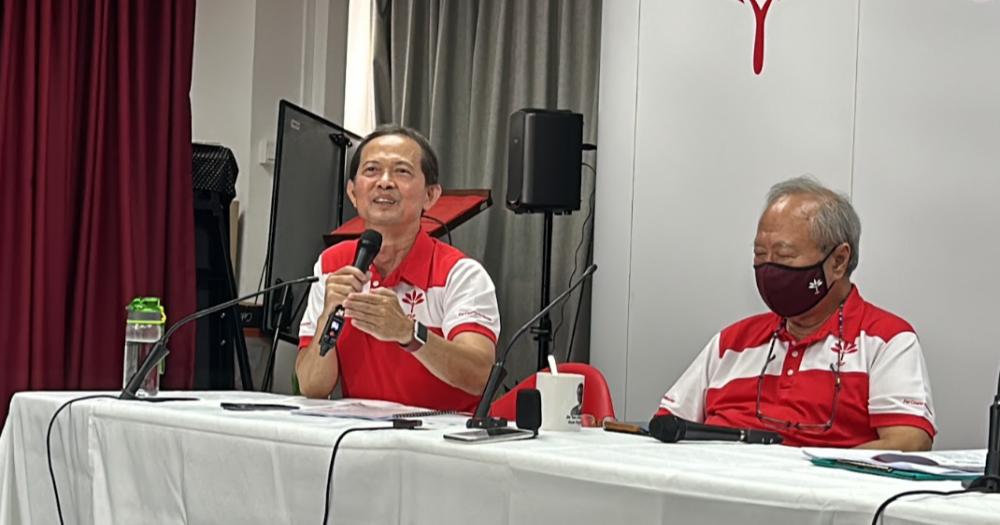
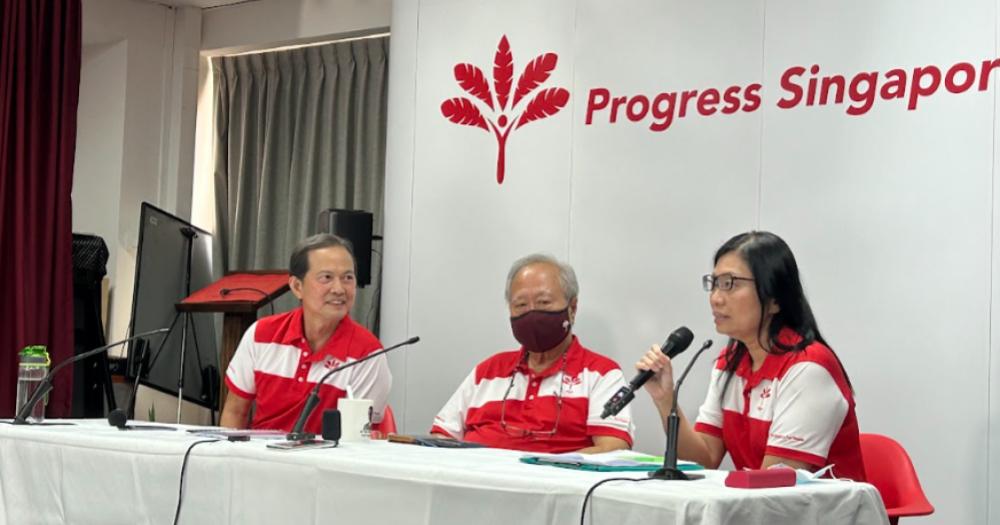
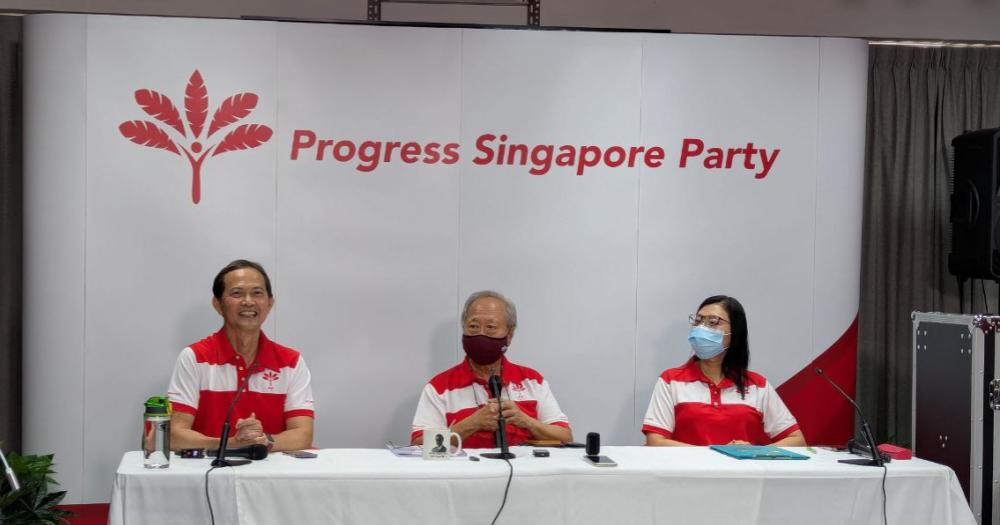
The Progress Singapore Party (PSP) launched its 78-page party manifesto on Apr. 6 at their Bukit Timah headquarters.
During the event, PSP leaders, including its newly reappointed secretary-general Leong Mun Wai, took questions.
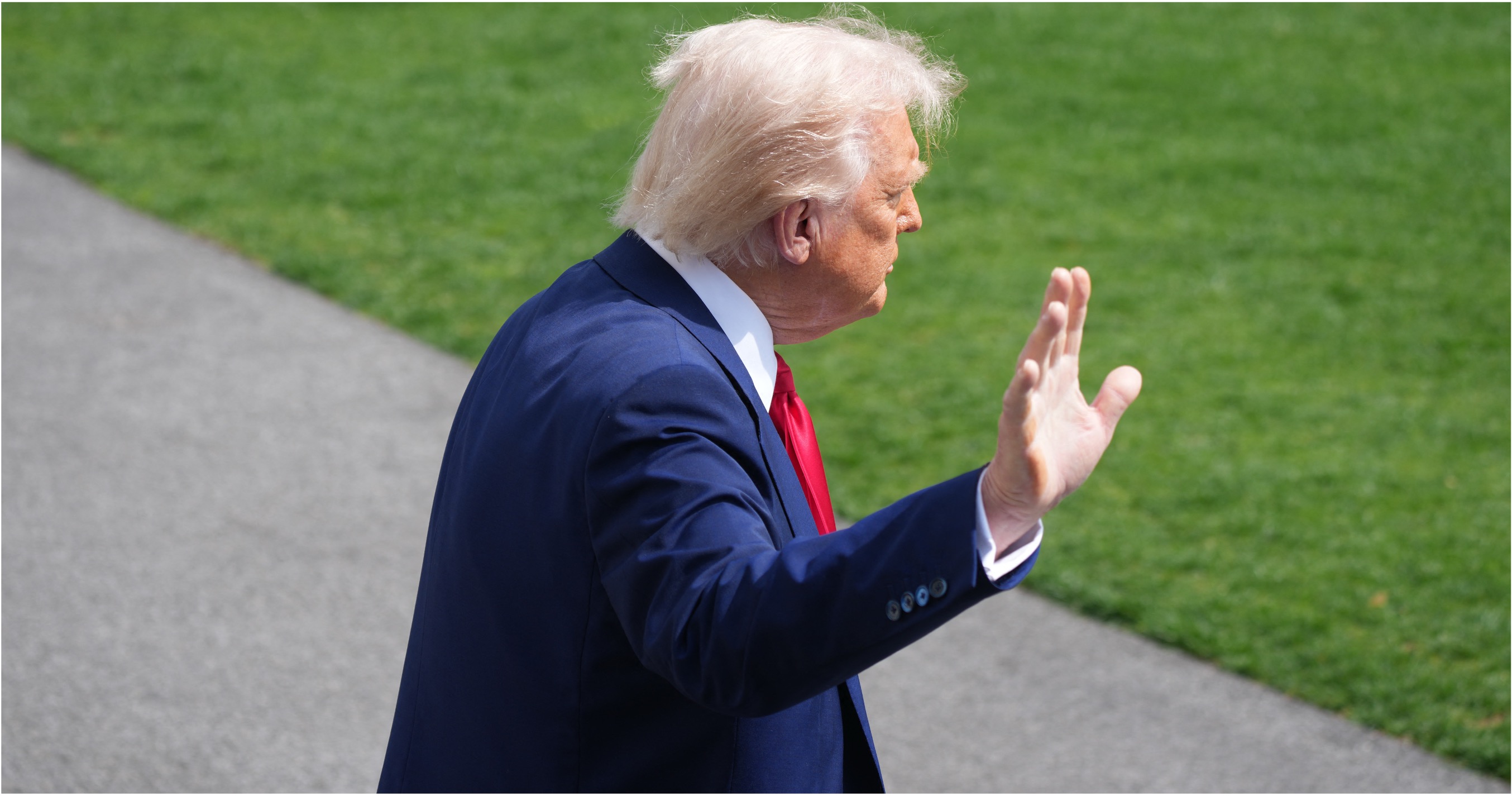
One of the questions was about the 10 per cent baseline tariff implemented by United States President Donald Trump on Singapore.
This was part of a global tariff strategy that saw an average tariff rate in Southeast Asia of 33 per cent and a 34 per cent tariff rate on Singapore's top trade partner, China, on top of a previously enacted 20 per cent rate.
Nothing is going to be perfect all the time
The questioner asked how tariffs might impact Singaporean's cost of living, with many Singaporeans expressing concerns.
Leong replied, "Nothing is going to be perfect all the time".
Saying the PSP normally "exercised restraint" on external events, "(the PSP) do not criticise the government on their external policies".
This was because "we must stand united as Singapore and Singaporeans when facing the foreigners."
"But at the same time, when there's an implication to say that these external events will affect Singapore and all that", Leong said that "we have to think deeper".
Citing his 30 years of experience in the financial markets, he said "nobody knows" what the impact of the tariffs on financial markets will be.
For context, U.S. stock markets have been roiled, with the S&P 500 losing S$6.7 trillion in value in the two days since Trump's announcement.
However, it is possible that Leong was specifically referring to impacts on Singaporean financial markets.
Tariff fears 'a little overblown': Leong Mun Wai
He clarified by questioning what the tariff's impact on Singapore might be, appearing to be responding specifically to the impacts on the cost of living.
He said that U.S. tariffs affected exports from Singapore, but Singapore's largest trading partner was China, and neither China nor Singapore were going to impose tariffs on each other.
Tariffs would only impact export goods when shipped to the U.S., and inflation caused by the tariffs would be felt inside the U.S. "They have the biggest problem."
"So why are we worried about inflation? I think we are drawing the wrong conclusion at the moment."
Leong said that as an economist by training, "I don't dare to make a conclusion right now" about the resultant effect; "We have to see the effect a bit more. But at the moment, I think the topic is a little overblown," he said.
Singapore endured other shocks
Leong added that while Singapore is a small nation affected by external events, but it has not "failed before." He referenced previous economic downturns, such as the stagflation and oil crisis of the 1970s, and said it was a "bigger" event than today.
"So as long as our society is united and strong, we can overcome any challenges that can come in our way," he said.
"We must make our domestic politics right, so we get back to the right track...and become a more united and diverse society."
When asked about government ministers warning about the significant impact of the tariffs, Leong said they were entitled to their own opinions.
However, in Leong's own view, the tariffs, as he had read about them at the moment, would not cause "as much impact as what has been reported."
Tan Cheng Bock: Tariff real impact needs to be studied and not "scare everybody"
Tan also responded, saying that he believed that the government minister's response to tariffs was "partly to instil fear in the voter", in his opinion.
Tan said that the stark warning's result was "so the voter will be so frightened that 'oh, this thing is going to happen, it's going to be serious, we better vote for the incumbent, safe bet.'"
Tan said that the tariffs had to be studied carefully "by economists like Mun Wai and all these people" on the tariff's real impact on Singaporeans, not to "just make statements of this kind and scare everybody".
Conscious decision to exercise greater restraint: Hazel Poa
Hazel Poa weighed in and said that it was a conscious decision for the PSP to exercise "greater restraint" in areas of foreign and defence policy.
"These are external facing areas, and I think that in such situations, we want to be united and not compromise the government's ability to protect Singapore's interest," she said.
She concluded by saying that events were still ongoing and that there was a need to continue monitoring the situation, and any discussion of altering the PSP's manifesto to accommodate recent events was "premature".
Poa said that in an evolving trade environment, with "reduced visibility on what is ahead of us, what is clear is that we need more perspectives, not less."
PM Wong and DPM Gan tariff warning
In the wake of the tariff announcement, Singapore's ministers, including Prime Minister Lawrence Wong and Senior Minister Lee Hsien Loong, had warned that Singapore would encounter "rough waters".
Wong said on Apr. 4, "The global calm and stability we once knew will not return anytime soon. We cannot expect that the rules which protected small states will still hold."
DPM Gan Kim Yong explained that although Singapore's direct tariff rate may be smaller than those imposed on other countries, Singapore's economy will still be negatively impacted if the tariffs lead to a slowdown in global trade.
Singapore is part of an integrated trade system, and what affects one country ultimately affects everyone else.
As other countries have also been slapped with tariffs, they will slow down their production and economic activity, because the tariffs create price hikes for consumers in the U.S. that will depress consumer demand.
Once this happens, investments in those countries normally exporting to the U.S. will go down.
With imports, exports, investment and trade all slowing down globally, this leads to a global economic slowdown.
Singapore, as an open economy dependent on global growth, will not be spared.
"No one will benefit from this exercise," Gan said.
He also predicted an overall rise in prices for goods and services, as when a country imposes tariffs and they get hit by retaliatory tariffs in turn, the cost of production goes up and overall, "someone will have to pay" for these additional tariffs.
Related story:
Top image via Mothership