




Environment

1.8m-high fencing to be extended along more roads near S'pore nature reserves to reduce vehicular-wildlife collisions
The fencing is expected to be completed by 2026.
April 14, 2025, 12:02 PM
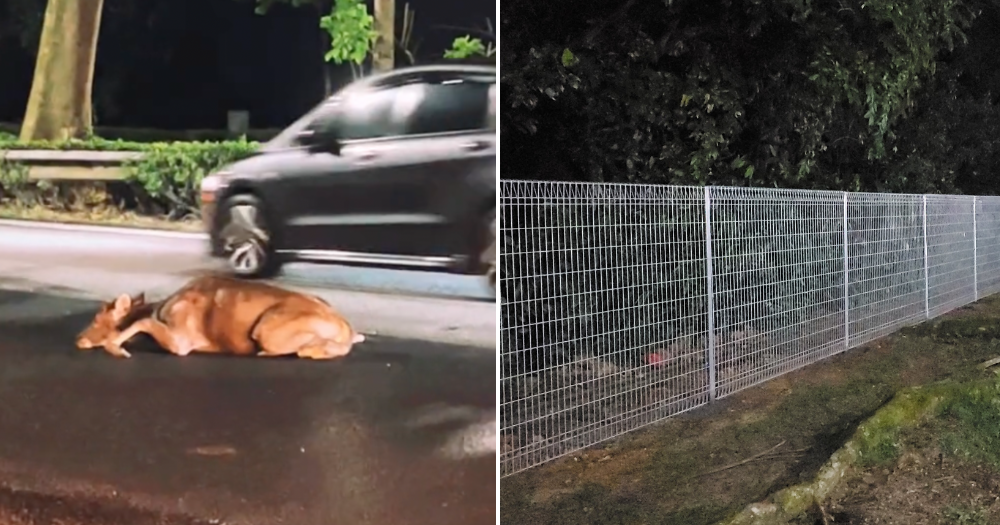
In an effort to further protect Singapore's wildlife, more fencing will be installed along major roads near the Bukit Timah and Central Catchment Nature Reserves.
This exclusion fencing, as it is called, will help mitigate wildlife collisions with vehicles, the National Parks Board (NParks) said on Apr. 14.
Aside from strengthening ecological connectivity and allowing wildlife to better move between green spaces, this measure will also make it safer for motorists, as such collisions actually pose serious risks to drivers and passengers.
Fencing currently implemented at three locations
NParks has been working with stakeholders to track incidents of roadkill from vehicular-wildlife collisions since 2014.
At hotspots of such collisions, NParks has been progressively implementing exclusion fencing and hedge planting.
The fencing is 1.8m high, meant to deter large animals like sambar deer from jumping over.
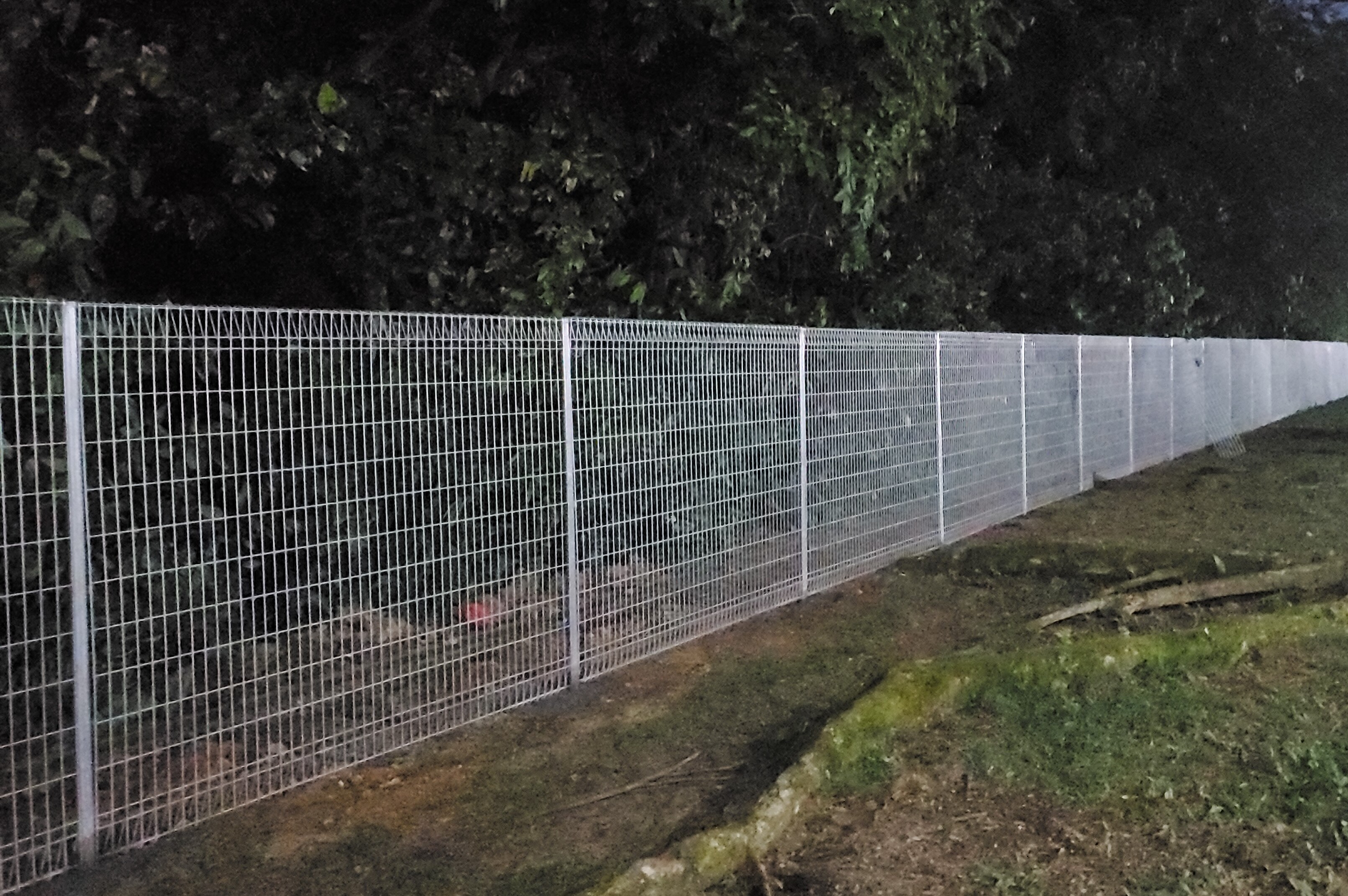 Photo from NParks
Meanwhile, the hedges serve as a nature visual barrier to prevent wildlife from moving onto the road.
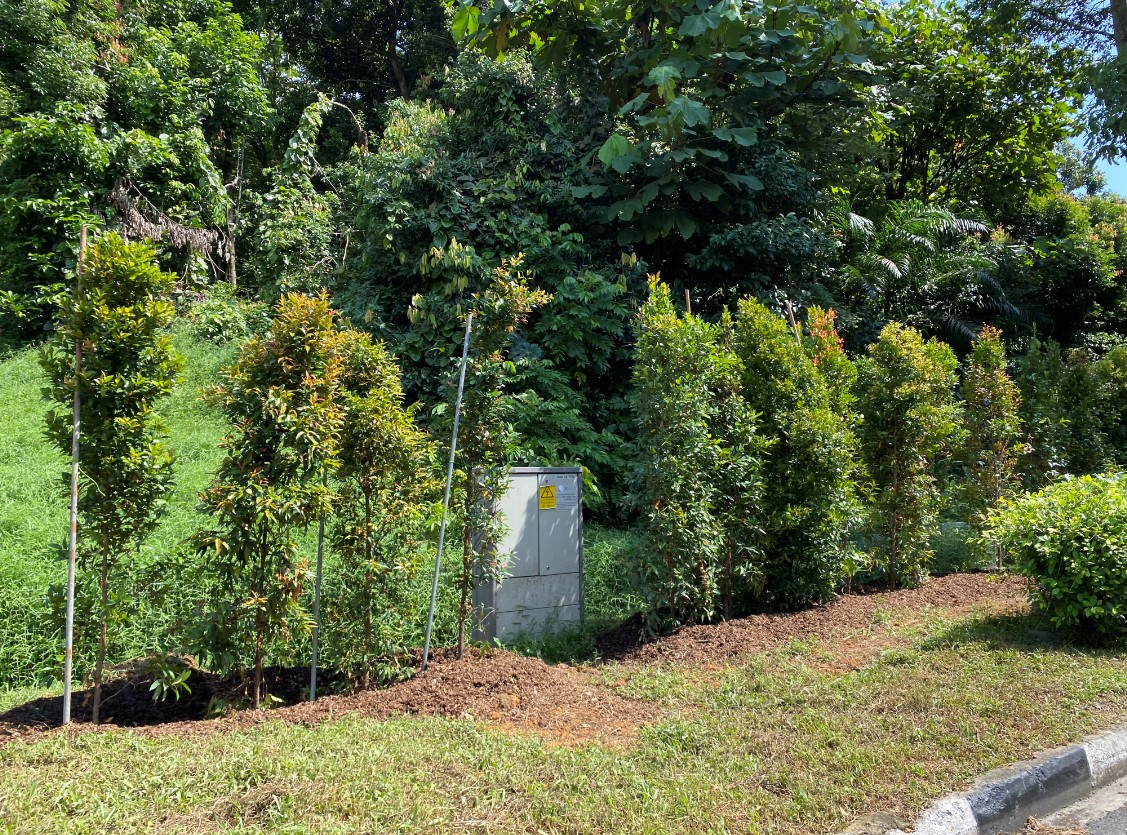 Photo from NParks
These measures have thus far been implemented at three areas, namely along the Bukit Timah Expressway, which is flanked by the two nature reserves.
Since its implementation, NParks said it observed a decrease in the number of wild boars and sambar deer roadkill incidents at these locations, from six cases in 2023, to two in 2024.
This highlights "the effectiveness of the mitigation measures introduced", NParks added.
A study by NParks also found that the presence of these barriers is associated with a higher probability of mammals using other road-crossing alternatives, such as rope bridges and culverts.
Extending exclusion fencing
As such, NParks will be extending the exclusion fencing to nine more locations.
These locations, mostly along major roads near the two nature reserves, have been identified to be of "higher risk based on past incidents".
The fencing will be implemented progressively and is slated to be completed by 2026.
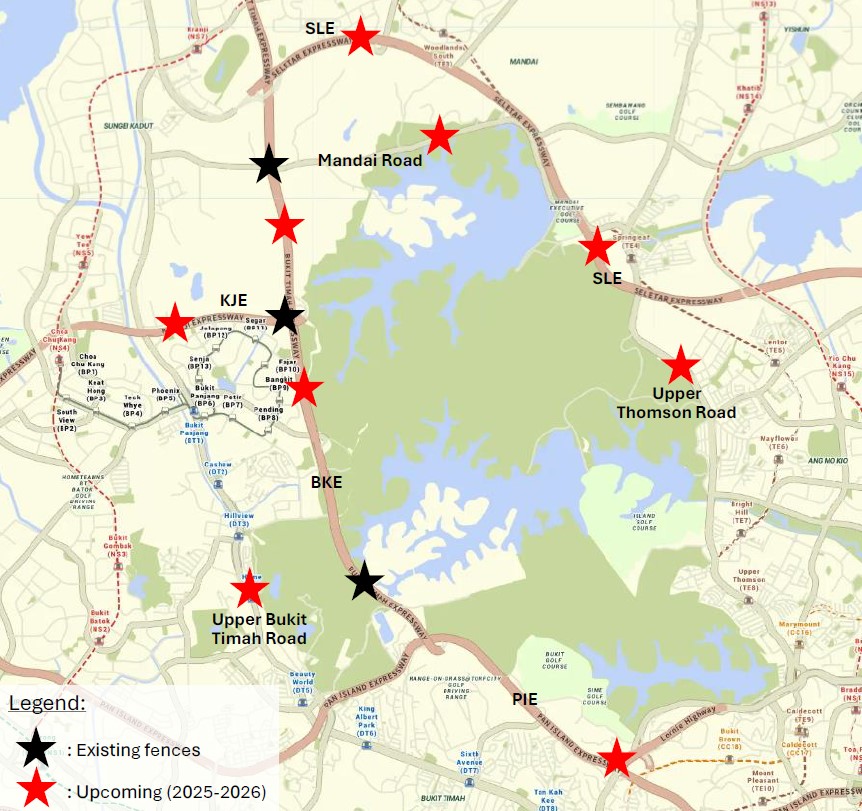 Photo from NParks
NParks also has plans to add smooth panels to the bottom of the fences to prevent pangolins from climbing over and onto the road.
Will identify additional mitigation measures
The agency will continue to monitor the efficacy of these mitigation measures, the findings of which will guide its rollout at other locations.
NParks will also continue to work closely with stakeholders to progressively implement and enhance mitigation measures.
Some of these stakeholders include the Animal Concerns Research and Education Society (Acres), Herpetological Society of Singapore, Jane Goodall Institute (Singapore), Mandai Wildlife Group, and Nature Society (Singapore).
It will also work with relevant agencies to identify additional mitigation measures such as:
- Installing signs to remind motorists to slow down and keep a lookout for
animals
- Installing rope bridges for arboreal animals, and
- Habitat modification efforts to remove food sources near roads.
In the meantime, NParks urged motorists to drive within the speed limits, and keep a lookout for and be alert to animals crossing.
Members of the public should not to handle injured wild animals on their own. For urgent reports of wildlife requiring rescue, they may contact NParks’ 24-hour Animal Response Centre at 1800-476-1600 or contact us at www.avs.gov.sg/feedback.
Top photo from cilikicap / TikTok and NParks