News

How did Lee Ek Tieng succeed in the monumental task of turning S'pore into a clean & green city?
Lee transformed Singapore from a polluted, rubbish-strewn nation into the garden city we know today.
April 14, 2025, 11:53 AM


There was a time in Singapore when rubbish lined the streets, floods followed every heavy downpour, and polluted air hung thick and unchecked.
Amidst the chaos, one man was handed the monumental task of transforming Singapore into a cleaner, greener city — and against all odds, he delivered.
Today, many remember Lee Ek Tieng as the visionary behind Singapore’s transformation into the garden city we now call home.
Yet, few truly knew the man behind the mission — or what fueled his unwavering commitment to reshaping the nation’s environment.
In the book, "Lee Ek Tieng: The Green General of Lee Kuan Yew", authors Samantha Boh, Pearl Lee, and Matthew Gan chronicle his remarkable journey through the eyes of those who witnessed his prowess firsthand.
Published by The Nutgraf Books, the book is now available at Popular and Kinokuniya bookstores.
An excerpt from "Chapter 2: Stop the Smog" is reproduced here. It tells the story of Lee's first encounter with the hazards of industrialisation.
By Samantha Boh, Pearl Lee and Matthew Gan
Peering out from his train seat window, his view slightly obscured by specks of soot falling from the smokestack above, Lee Ek Tieng’s heart sank.
The steam-powered locomotive was chugging through Durham, Britain, and some 100 feet beneath it was a pall of darkness cast by coal-firing plants.
It reminded him of Charles Dickens’ "A Christmas Carol" – dark, bleak.
As if it was not frightening enough being in a foreign land, his first trip away from home, the polluted cityscape of the epicentre of the coal-hungry nation was further fuelling his homesickness.
“This is not the place I want to be,” thought Lee, as he recounted in an oral history interview with the National Archives of Singapore.
The young civil servant was en route in the fall of 1964 to Newcastle, where he was to spend nine months studying a post-graduate diploma course in public health engineering.
But he was already being schooled on the perils of air pollution even before he stepped foot into the classroom.
Not only did he see it, but he was also dusting it off the collar and cuffs of his coat, and blowing it out of his nose.
Such was the hazard of decades of industrialisation.
It had modernised societies, driven economic growth, and transformed labour and lives.
But it had also poisoned the environment.
Britain, the first country in the world to industrialise, felt this starkly after thick smog blanketed London in 1952 for a week, killing about 12,000 people.
The “Great Smog of London,” as it was later called, pushed the British government to enact stricter air pollution laws.
In fact, it was in the midst of introducing clean air zones in London when Lee entered the country.
It was also a time when yellow smog and falling ash coated American cities, and “killer smog” events – short periods of heavy air pollution – were becoming increasingly common.
In Japan, people were being afflicted with bronchial disease due to the inhalation of sulphur dioxide while photochemical smog caused mainly by automobile exhausts was being reported in major cities.
While pre-independence Singapore was just starting on its own rapid industrialisation journey in the 1960s, the local government was hell-bent on not going down the same treacherous path as other developed cities.
For the next nine months, Lee studied the basics of public health and environmental engineering, rejoining the Public Works Department on his return.
This allowed him to “do things from first principles,” he said, in reference to Aristotle who defined a first principle as the first basis from which a thing is known.
It meant starting with the fundamentals.
But the skies in Singapore remained relatively clear and Lee’s brush with air pollution became an unpleasant memory.
Instead, the control of land pollution from night soil disposal and littering took precedence for the next few years.
He would be sent on a World Health Organization (WHO) fellowship in 1969 to the United States and Britain to visit and learn about sewage treatment works, and lead the planning of the nation’s first sewerage master plan.
But as expected, the respite was temporary.
Slowly, but surely, air pollution took hold.
Residents started complaining about smoke, dust, and fumes from factories getting into their homes.
Sawmills would burn their wood waste, emitting huge amounts of black smoke, while poorly maintained cars, buses, and diesel trucks emitted choking exhaust fumes as they plied the road.
There was also the acidic fallout from power station chimneys to deal with, and the burning of fossil fuels compounding the problem.
Sensing that the situation might come to a head if not addressed quickly, the government invited WHO consultant Graham Cleary to assess the situation and recommend an action plan in 1970.
After a month-long survey, he advised the government to establish a specialised air pollution unit, develop legislation for air pollution control, and factor air pollution considerations into urban planning, among other proposals.
The report deeply concerned then-Prime Minister Lee Kuan Yew, who formed the Anti-Pollution Unit (APU) in just two months.
Many years later, Lee Kuan Yew would explain his urgency in his autobiography "From Third World to First".
“Other cities had clean and green suburbs that gave their residents respite from city centres."
"Singapore’s size forced us to work, play, and reside in the same small place, and this made it necessary to preserve a clean and gracious environment for rich and poor alike,” he said.
Appointed head of the unit was none other than Lee Ek Tieng, who was to report directly to the prime minister himself.
But it was no easy task.
Industrial pollution control was still in its infancy worldwide, especially in the tropics.
Starting with a team of only three, Lee would lean on the expertise of Australian consultant Werner Strauss to build up the unit’s capabilities.
“We went down with him to practically every factory in Jurong then. In Jurong, those days, there were small little factories to study. And because of his experience, he knew exactly what sort of waste they would discharge in respect of air pollution,” said Lee.
The methods used to test for pollutants in the air were also rudimentary.
Much of the work was manual – collection, calibration, measurement, testing, and so on.
“These are what we call the wet chemical method. The things that you would do when you are in a laboratory in school,” said Susan Chong, who joined the unit in 1975 as a chemist.
“With instrumentation, today we can simply turn on a machine to monitor the surrounding air continuously. At that time, I even used to climb up chimneys to draw in air from the sampling point to test for chemicals like sulphuric and hydrochloric acids. But it was quite fun,” she added with a laugh.
And it seems she was not the only one fascinated.
Former APU technicians recall Lee making frequent visits to their laboratories over the years to discuss how to finetune the wet chemistry experiments, at times to the dismay of their bosses who were worried that it would lead to more work.
Monitoring stations were set up on buildings across Singapore, from schools like Singapore Polytechnic and National Junior College to the Paya Lebar Airport and Kim Chuan Sewage Treatment Works, each measuring acidity, sulphur dioxide, smoke, and dust deposition.
Monitoring instruments were also placed along busy roads to measure pollutants emitted by motor vehicles, and surprise inspections were made on factories.
Before Strauss returned to the University of Melbourne after a month in Singapore, he praised the nation for doing for its environment what cities the world over should have done when industry was in its infancy.
“Singapore will accomplish in six or seven years what it will take the rest of the world to accomplish in 60 or 70,” he told The New York Times.
In 1971, the Clean Air Act was passed in Parliament, requiring occupiers of industrial or trade premises to meet certain air quality standards.
“We can live without food for many days and we can live without water for a few days, but we can live without air for only a few minutes. It is thus of the utmost importance that the air we breathe is clean and not polluted with impurities,” said Ya’acob Mohamed, then-Minister of State in the Prime Minister’s Office, during the second reading of the Clean Air Bill.
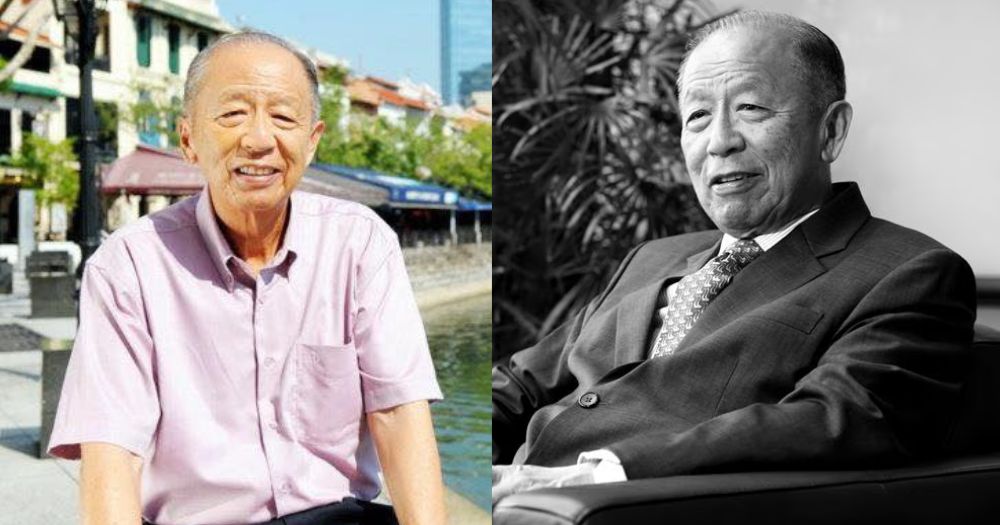
Top photos via National Environment Agency and Temasek Holdings