News


Money the easiest hurdle to tackle to convince quality individuals to enter politics: Analysts
Analysts told Mothership that there is never a good time for ministerial salary increments.
September 09, 2026, 05:03 PM
Photos via Canva, Lee Hsien Loon / Facebook.


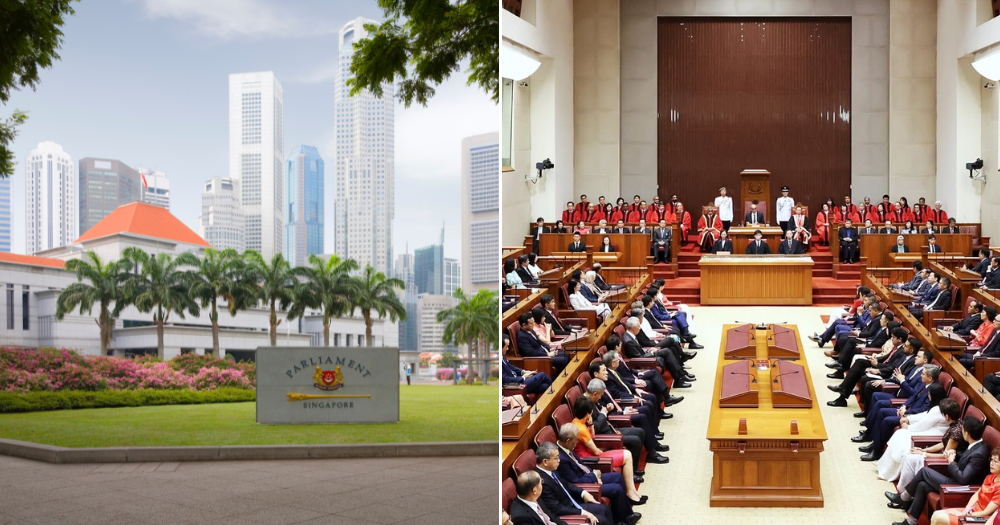
The government has accepted the recommendations put forth by the 2026 ministerial salary review committee, which means that the salaries of Singapore's political appointment holders will be adjusted for the first time in 15 years.
The move has attracted international news coverage, which described Singapore's ministers as the highest paid in the world.
A minister at grade MR4 will earn up to S$1.8 million in the distant future, up from S$1.1 million.
The salary points of all other ministerial grades and PAHs will similarly adjust upwards, since the MR4 salary is the benchmark salary.
The new salaries will take effect from Oct. 15, 2026, with existing ministers and PAHs getting a one-off adjustment of up to 9 per cent, subject to their performance.
This means that an existing MR4 minister receiving $1.1 million will see an increase of his or her annual salary to $1.2 million if they receive the maximum 9 per cent adjustment.
Announcing the adjustment, PM Wong emphasised the importance of being able to attract the best talent and build a strong political team for Singapore, and explained how a competitive remuneration will help in that.
However, he also acknowledged that money cannot be the be-all end-all for those looking to join political office.
Coordinating Minister for Public Services Chan Chun Sing reiterated this in his ministerial statement.
He commented, "As the Prime Minister has said, some CEOs of major Singapore companies earn six or seven million dollars a year, sometimes more. We are not trying to match that. Nor should we. But we cannot pretend that such opportunity costs do not exist."
If public office salary can never match private sector dollars, and if money ought not to be the primary motivation for seeking the job, then how does raising salaries ease the challenge of assembling the best team for Singapore?
There are many challenges to convincing someone to take the leap into the life of politics. Raising salaries and making it as competitive as political appetite allows for is perhaps the easiest hurdle to lower.
Is now a better time?
Before getting into the weeds of the money conundrum, one question to ponder about is timing.
Back in May, Chan said that consideration of the salary review committee's recommendations will be deferred until the impact of the Middle East crisis is clearer.
It's been five months since, and the conflict between the U.S., Israel and Iran is nowhere near any form of conclusion.
Oil prices have eased from its peak, but remains elevated compared to pre-conflict levels.
In the interim, Singapore was again hit with 12.5% tariffs by the U.S.
Singapore's GDP forecast has, however, been raised.
Have the storm clouds cleared?
Eugene Tan, political analyst and Professor of Law at Singapore Management University (SMU), told Mothership that PM Wong may have decided to "bite the bullet" and move on the matter as the conflict appears to have the makings of a "forever war".
The ministerial salary issue is sensitive, emotive and "not a vote winner", Tan remarked.
"Parliament has completed the first year of its term, so time is of the essence in moving on unpopular or sensitive issues," he added.
The current term of government and 15th parliament officially took office on Sep. 5, 2025.
The next general election is due to be called by 2030. Election issue or not, the clock is ticking on growing the talent pool.
"It is also likely that the challenge of recruitment has grown and there is the imperative and urgency to ensure that matter is addressed," Tan continued.
Nonetheless, Tan said that there is never a good time for ministerial salary increments.
Aaron Maniam, Deputy Director at the Institute of Policy Studies, said the same.
Maniam pointed out that the latest move increases the government's flexibility to recruit, while the "very careful phasing of the implementation" reflects the "continued recognition of the prevailing economic uncertainties".
Can money overcome the recruitment challenge?
On the conundrum of money as incentive, both PM Wong and Chan emphasised in their statements that the salary increase is to give the current and future governments the best chance of bringing in the best people for the top jobs.
In PM Wong's words, "It’s not simply about what we pay ministers today. It’s about whether future Prime Ministers will continue to have a realistic chance of persuading capable Singaporeans... to step forward and build a first-rate team for Singapore."
At the same time, money cannot be the primary motivating factor, and it will not be more than private sector salaries.
To derive the MR4 salary benchmark, a 40 per cent discount is applied to the median income of top 1,000 Singapore citizen earners as a reflection of the spirit of public service.
This framework was established by the 2012 ministerial salary review committee.
Tan opined that it is unlikely that the increments will lead to a "beeline of private sector candidates".
"I would look at the salary adjustments as an attempt to ensure salaries do not become a bigger hindrance than they are to capable individuals considering whether to enter politics," he shared.
"The salary adjustments are not meant to act alone in attracting suitable candidates, but are meant to reduce any deterrence to public office and provide the government with flexibility in their recruitment efforts," Maniam said.
Maniam also pointed out that salaries are part of the "practical realities of a political career" to ensure that financial burdens do not add to natural pressures of political work, which might in turn deter individuals from stepping forward.
In recent times, the most notable private sector individual who made the switch to public life is Minister for Trade and Industry (Energy and Industry) Tan See Leng.
Tan received a shout-out from PM Wong, who said that he would like to bring in more people like Tan.
Most of the other recent new cabinet appointees were senior civil servants, however.
Jeffrey Siow, who is now Minister for Transport, was the highest-ranking civil servant to leave civil service and enter the political arena in the 2025 general elections.
The other GE2025 debutant to enter PM Wong's cabinet was David Neo, who was the Chief of Army. Neo is now Minister for Culture, Community and Youth.
Non-monetary considerations
To SMU's Tan, it is "more likely the case" that non-monetary considerations are decisive.
Such "non-monetary considerations" were acknowledged by both PM Wong and Chan.
Apart from pay cuts and the uncertainty of electoral outcomes, political life places "real demand on families", PM Wong said.
"Money will never be able to suitably address these concerns," Tan commented.
More can be done, Tan said. "I think it is imperative for society to be instilled and inculcated with the ethos of public service."
"Even if pay is not an issue, the lack of such an ethos will mean the pipeline of political leaders will not be healthy. Are we losing the public service ethos as a society?" He asked.
The law professor also said that it is noteworthy for PM Wong to address the point that potential candidates assesses whether the team they are joining are people they want to serve alongside.
"In other words, is how the government governing, a deterrent in itself?" Tan mused, adding that it remains to be seen what is being done on this front.
Ministerial salaries was a difficult issue which Senior Minister Lee Hsien Loong would have preferred not to leave to his successor, if not prohibited by circumstances.
PM Wong recognised the delicateness of the issue, describing political salaries as "difficult and emotive".
In electing to settle ministerial salaries, PM Wong also signaled a willingness to confront politically unsavoury issues.
"It would have been easier politically for me to leave things as they are. But that would not be the right thing to do," he said in Parliament.
"Restraint cannot become neglect. That's why I have decided we must act now," he continued.
Finding the right benchmark
In 2012, when debating ministerial salaries, the Workers' Party proposed an alternate framework to peg a minister's salary to that of a senior management grade in the civil service instead.
Back then, chief among their criticisms of the 2012 framework was that the proposal to peg a minister's salary to the top 1,000 income earners has "created a flawed formula".
These income earners make up a small percentage of the workforce and are unrepresentative of the general population, the WP said in a 2012 statement.
They also proposed for any review or change of the salary structure for political office to be subjected to Parliamentary approval.
In establishing the benchmark for the MR4 salary, the 2012 report committee explained that the median income of the top 1,000 earners was chosen to "send a strong signal to prospective political appointment holders on the type of talent being sought".
The 2026 committee affirmed the continued relevance of this benchmark.
"Top 1,000 earners strike me as being highly selective and perhaps leaning on being elitist," Tan remarked.
He continued, "While the committee took the view that the figure better reflects the talent pool who are up to the job, a legitimate question is whether there is any empirical basis for this."
Tan opined that the number of income earners should be much larger, at 10,000 for example.
"Otherwise, it would make the pool much elitist and, more importantly, engender concerns that the pay formula is skewed towards higher salaries for which the top 1,000 earners may well be outliers," he explained.
Maniam described politics as "one of the most exacting careers around", one that is "cognitively and emotionally demanding".
"These are jobs with similar scope, complexity, budgets, decision-making demands and executive functions to a Minister's roles," Maniam said of the top 1,000 earners.
Maniam further noted that the number of income earners accounted for in the benchmark has risen through the years — from 24 to 48, and now 1,000.
This is to reflect reality that Singapore needs to draw its leaders from a wide range of roles and functions, he commented.
The previous benchmark prior to 2011 drew on the principal earned income of the top eight earners across six professions, meaning that the benchmark pool was 48 individuals.
Parliament set to debate government's position
While the government's decision on the salary adjustments do not need to pass a vote in parliament, parliament is nonetheless set to debate the government's position on the ministerial salary review on Thursday (Sep. 10).
Earlier this year during his Budget 2026 speech, WP chief Pritam Singh questioned if some of the National Bonus indicators, such as GDP and income growth, were still relevant in the age of AI.
The government has previously stated that GDP growth may longer entail as much job growth.
The government will be tightening the targets for the National Bonus and studying indicators to reflect the quality of life as experienced by Singaporeans.
The WP manifesto also calls for the abolishing of the office of the mayor.
Under the new salary adjustments, mayors' salaries will go up from S$660,000 annually to S$810,000 annually.
The government accepted the committee's recommendation to study the delinking of the mayor's salary from the MR4 benchmark.
The committee highlighted that considerations for the salary of community-related roles like mayors and Members of Parliament may differ from those of ministers.
On the framework, Chan said:
"Let me be upfront. No formula will be perfect or be able to satisfy everyone. There is no universally ideal benchmark. The key question is this – what is a workable framework and range of figures that allow the PM, any PM, to reasonably assemble a team that Singapore deserves?"
PM Wong concluded by saying:
"I ask for your understanding and support as we make this adjustment.
This is not about the PAP government of today. We cannot predict what the political landscape will look like years from now. But whichever party is in government, Singapore will need strong and effective political leadership to serve our people and take our country forward."