Parliament


'Are we cutting ourselves too thin?': MP Poh Li San on S'pore producing less than 10% of its food
She called for the government to increase support for local food production and raise the self-sufficiency rate to at least 30 per cent.
September 09, 2026, 05:58 PM
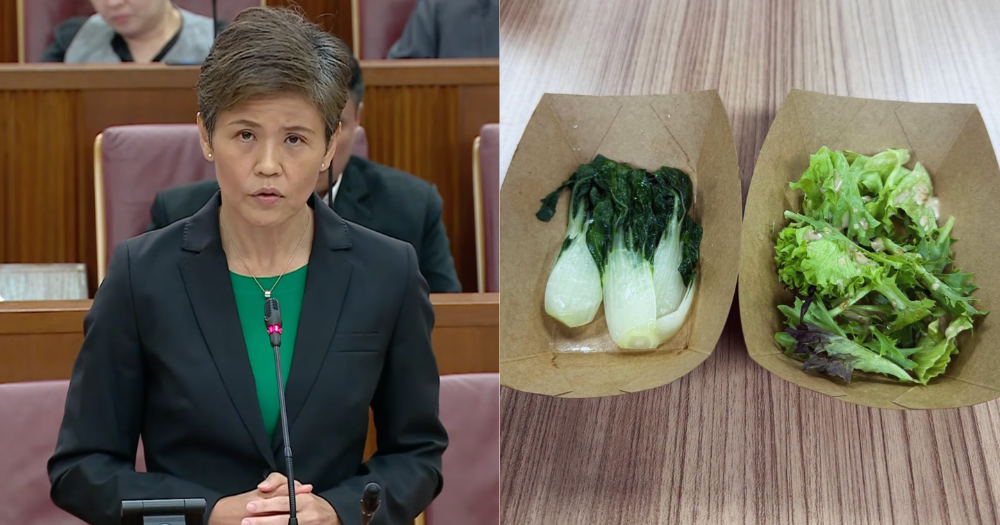
Photo from MDDI's YouTube and Poh Li San's Facebook


Today, Singapore has fewer than 200 farms and produces less than 10 per cent of the food consumed by its population of about six million people, according to Member of Parliament (MP) Poh Li San.
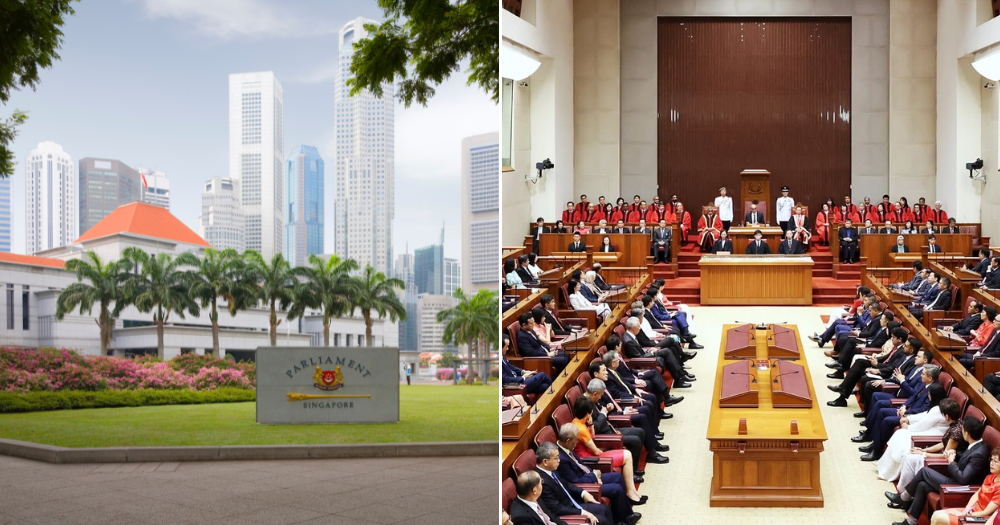
Speaking in Parliament on Sep. 9, she questioned if Singapore is "cutting ourselves too thin" with this low rate of food self-sufficiency.
Along with three other MPs, Poh put forward a motion on food security, calling on the government to support efforts to reduce food waste, and ensure Singaporeans have access to affordable food supply amid geopolitical uncertainties and climate-related risks.
Food waste contributes to higher prices
Poh said that Singapore has been importing food excessively and throwing away too much edible food.
Over the past five years, an average of 790,000 tonnes (or 128kg per capita) of food was thrown away each year. The food recycling rate hovers at around 18 per cent.
This contributes to higher food prices, she pointed out, because further resources get wasted in the process, for transportation and incineration.
Singaporeans are becoming anxious about rising food costs, and she believes Community Development Council (CDC) vouchers will not be sufficient to offset the higher costs in the long run.
"We would be better off producing more food locally, wasting less, and keeping food prices more affordable," she said.
"I ask not for caviar and artichokes, but for fresh fruit, fish, and eggs. Not for air-flown or imports from exotic places, but that all be nutritious and safe to eat."
Food production as national defence
Poh called for the government to review increasing support to boost local food production and raise the self-sufficiency rate to at least 30 per cent.
To reach that target, she asked the government to consider local food production capability as a strategic buffer and part of Singapore's total defence security.
"Just as we have spent billions of dollars over the past decades to build up our military defence capabilities, the government may consider increasing our national budget into building up our local food production capabilities."
The government should also help local farmers mitigate high production costs in terms of land, manpower, and utilities, and help aggregate demand for local farm produce, she added.
Reducing food waste
Poh also put forth a few proposals for how the government can help to reduce food waste.
The first is to collect more data on the amount of food imported and disposed.
The Singapore Food Agency (SFA) should connect existing sets of such data already collected across different agencies to improve tracking and insights, she said.
SFA should also track donation volumes by major food suppliers and incentivise them to donate the food items before expiry date.
Additionally, she said Singapore needs to create a more circular food ecosystem.
Poh brought up several local start-ups that offer innovative solutions by selling unconsumed cooked food at discounted prices, and turning food scraps into fish feed supplied to fish farms, contributing back to food production.
She called for the government to support such start-ups with more seed funding, grants, and tax rebates to help them defray business costs.
This support can also incentivise them to scale up faster and make a bigger social impact.
Finally, she urged the government to give grants to support food charity groups such as Food Bank, Food Rescue Sengkang, and Fridge Restock Community.
These three food charities rescue about 2,400 tonnes of food annually, which frees up capacity at incineration plants, she said.