Court


S’pore PR, 46, acquitted of restraining recruiter in nursing room to molest her
He was previously convicted and sentenced to four years’ jail and six strokes of the cane.
May 25, 2026, 07:57 PM
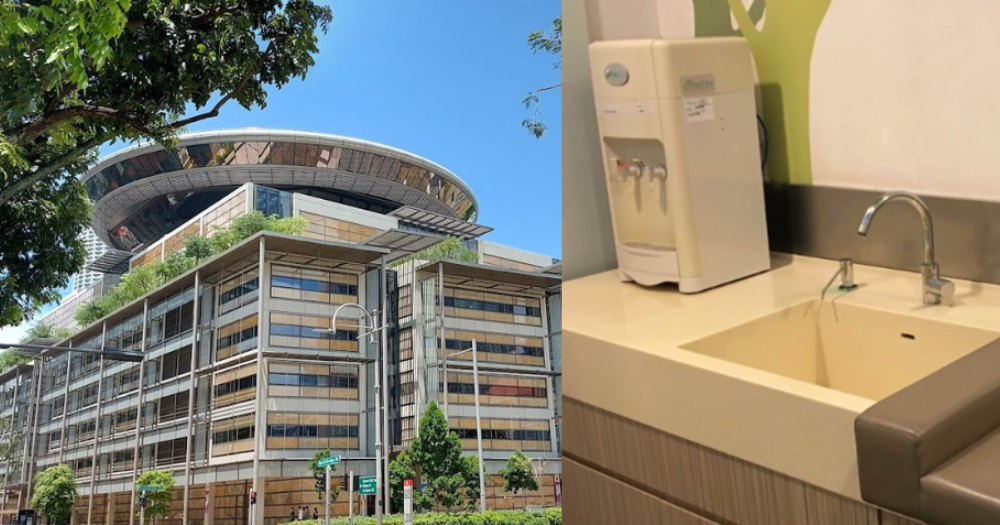
Photos from via Google Maps & Uniquelious/Blogspot


A 46-year-old Indian national and Singapore permanent resident who was previously sentenced to four years’ imprisonment and six strokes of the cane for aggravated outrage of modesty has his conviction overturned.
Ankit Sharma had appealed against both his conviction and sentence.
According to a judgment dated May 25, the appeal judge found that the prosecution had failed to prove its case against Ankit and allowed the appeal.
Background
Ankit was alleged to have outraged the modesty of a technology specialist recruiter whom he had met for possible work opportunities on Mar. 1, 2023.
He was alleged to have kissed her lips, taken her hand and used it to stroke his penis.
This happened in a nursing room of Changi City Point.
They had initially met at about 6:30pm at a restaurant in the mall, where Ankit ordered a beer and the woman ordered a gin and tonic.
Recruiter's account
According to the woman, the conversation veered from professional talk to more personal ones, with Ankit asking her about her boyfriends and the traits she liked in him.
At about 8:44pm, she excused herself to go to the toilet as she was getting uncomfortable and sent a series of messages to her boyfriend, asking him to check in with her at 9pm.
She then returned to order her fourth round of drinks for the night.
The conversation then took on a highly sexual tone, with Ankit allegedly asking her deeply intimate questions about sex.
The woman then excused herself to use the toilet again, where she called three people.
Only one friend initially answered, and she asked this friend to pick her up, as “this guy is talking about sex”.
When her then-boyfriend also returned her call, the victim asked him to come over as well.
However, when she left the toilet, Ankit was waiting outside, where he pushed her into the nursing room, and the sexual assault supposedly happened.
Ankit's account
Ankit's account differed from that of the woman in that the conversation was mutually enjoyable and the sexual encounter was consensual.
He said that the woman was the one who turned the questions personal and proposed to kiss and go to the nursing room.
In fact, he said she was the one who offered to masturbate him, and he had permitted her to do so until he ejaculated.
When the woman wanted to continue kissing afterwards, he told her he was no longer interested due to a smell coming from her mouth.
He then left the nursing room back to their restaurant table, where he later saw the woman talking on her phone outside the restaurant, looking “perfectly okay when she was talking”.
Sometime later, he was arrested by police officers at the scene.
Judge's decision
In making his decision, High Court judge Christopher Tan said: "In setting aside the conviction, I am mindful that an appellate court will only interfere with the trial judge’s findings of fact if they are shown to be plainly wrong or against the weight of the evidence."
He noted that the present case "effectively involves one person’s word against another’s".
As the prosecution’s case hinged entirely on the testimony of the woman, Tan said he had to determine whether
her evidence was "unusually convincing".
This is in the sense of being sufficient on its own to establish the charge against Ankit beyond reasonable doubt, he said.
Tan acknowledged that in such cases, there will generally be human errors in recollection by the witnesses and care should be exercised to avoid throwing out a complainant’s testimony on account of peripheral inconsistencies.
"However, there were issues in the complainant’s testimony that were not merely peripheral in nature but − in my view − went to the heart of her allegations against the appellant," Tan said.
As such, Tan said he was not confident that it would be safe to convict Ankit.
Why she did not leave
A point Tan found problematic in the complainant's testimony was her explanation for not taking her leave when the conversation turned uncomfortable.
Ankit's defence had asked the complainant why she did not simply disengage from and leave the restaurant prior to visiting the toilet a second time.
Tan noted that this line of inquiry must also be tempered against the understanding that victims of sexual offences "cannot be straitjacketed in the expectation that they must act or react in a certain manner".
However, her explanation as to why she continued staying with Ankit was what Tan found "problematic".
She had explained that she had asked her then-boyfriend to check in on her at 9pm so that she would have an excuse to leave.
However, when the defence pointed out during the trial that she could have simply done so with or without her boyfriend in the picture, she eventually countered that it was Ankit who had stopped her from leaving.
This was a switch in her account, Tan noted, as she did not mention anything about this in her examination-in-chief or in her statement to the police.
Tan also noted other inconsistencies the complainant had during her testimony, examination-in-chief and in her statement to the police.
Phone calls to friends
A key facet of the prosecution’s case was that the phone call the complainant made to her church friend at 9:27pm, during the second toilet visit, debunked Ankit's claim that their sexual encounter was consensual.
The complainant was said to be crying to her friend over the sexual nature of the conversation she was having with Ankit.
The prosecution had claimed that the complainant would have no reason to call her friend if she were going to initiate the sexual encounter in the nursing room later on.
The defence had argued that the woman had asked her friends to pick her up because she was feeling tipsy and not because of any harassment by Ankit.
However, Tan noted that the prosecution’s evidence on this point does not sit well with the complainant’s other messages sent at the same time.
Just two minutes earlier, the complainant had replied to her manager, who had asked why the CEO of their recruitment firm had advocated caution when meeting with Ankit.
This friend had asked if this was because of sexual harassment.
To this, the complainant had replied "No lah", which Tan said "raises more questions than answers".
The complainant had then gone on to text with her manager about their work, Tan noted.
She had explained in cross-examination that she had texted "No lah" as she preferred to speak rather than text when it comes to emotions.
However, Tan found this explanation unconvincing as her texts to her boyfriend at 9:37pm showed that she was "quite open to expressing her emotions over text messages".
"While the negative response 'No lah' is not in any way determinative in undermining the Prosecution’s case, it adds material heft to the defence when viewed together with the other surrounding evidence, especially that pertaining to the timing of the calls and messages," Tan said.
External inconsistency
Another inconsistency Tan found was in the manager's testimony.
The manager had testified that the complainant told her that the latter’s call saved her, as it allowed her to bluff Ankit into thinking that her boyfriend was arriving.
"This plainly diverged from the complainant’s testimony in court that the appellant brought the sexual encounter came to an abrupt halt because the overt manner in which she had answered [the manager's] call," Tan said.
She said that she had told her manager she was at Changi City Point and in the nursing room.
Tan pointed out that the prosecution failed to re-examine the manager on this or recall the complainant to explain the inconsistency.
However, Tan also acknowledged that this inconsistency did not appear to have been specifically highlighted to either the Complainant or the manager and thus meant that neither witness appears to have been given the chance to explain the disconnect.
Boyfriend's police statement
Tan also noted an inconsistency between the prosecution’s evidence and the statement that the woman's then-boyfriend gave the police.
The boyfriend had originally intended to testify as a prosecution witness, but later expressed his wish not to be involved in the case.
Instead, his initial police statement was submitted to the court.
According to his police statement, the complainant called him and relayed the incident to him while she was crying and alone in the nursing room.
Tan noted that the boyfriend had made two calls − one at 9:31pm and another at 9:50pm − to the complainant.
Based on the complainant's accounts of events and her other calls, the 9:50pm call would have been the one in which she relayed the incident to him.
However, this is where the prosecution’s case gets "fraught with difficulties", Tan said.
Based on the complainant's account, she had been on the 9:38pm call with her manager for about 11 minutes, where she had stood outside the nursing room relaying what had happened.
During cross-examination, the complainant had refuted that she relayed the incident to her then-boyfriend in either of the calls.
Tan said that the complainant was unable to explain the account given by her then-boyfriend in his police statement, save to say that he had lied.
Other inconsistencies were brought up by Tan, who eventually set aside Ankit's conviction and ordered his acquittal.