Court


S'pore woman loses S$10 million inheritance lawsuit over centuries-old will linked to Masjid Kassim
The dispute traced back more than a 100 years, to a series of instruments executed between 1914 and 1927 by the woman's grandfather, whom the mosque was named after.
May 25, 2026, 12:50 PM
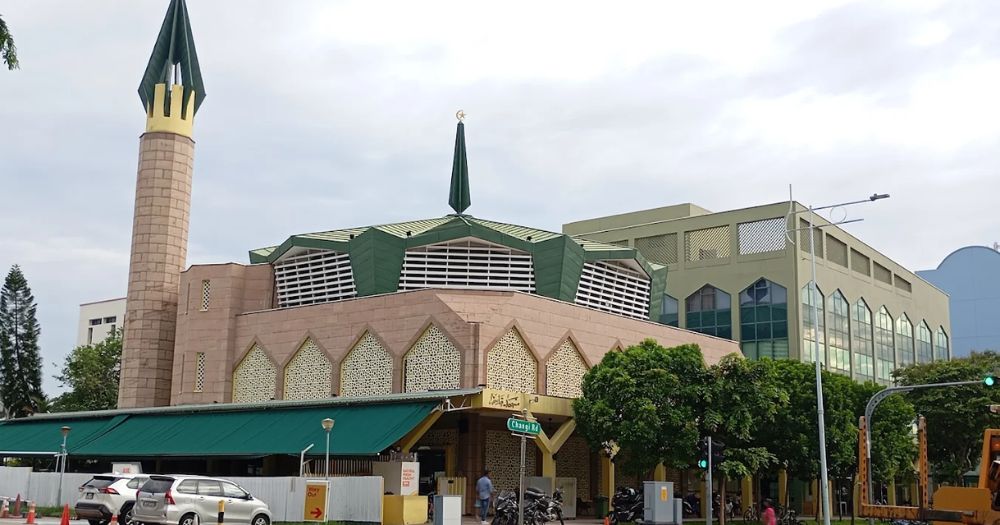
Photo from Google Maps.


A woman who sued Majlis Ugama Islam Singapura (MUIS) over her alleged entitlement to income from properties her grandfather had placed in Muslim charitable trusts has lost her High Court lawsuit.
The plaintiff, Fauziyah binte Mohd Ahbidin, was seeking to recover more than S$10 million in alleged proceeds from the wakaf properties, according to Lianhe Zaobao.
A wakaf is an Islamic charitable endowment, where assets such as land or buildings are set aside for religious, charitable or community purposes.
In a judgment released on May 14, 2026, Justice Mohamed Faizal dismissed the claim, finding that while the case had a "strong personal element", it "cannot be sustained in law".
Will said income from wakaf properties is to go to “poor son”
The dispute traced back more than a century, to a series of instruments executed between 1914 and 1927 by Ahna Mohamed Kassim bin Ally Mohamed, Fauziyah's grandfather.
According to court documents seen by Mothership, he had created various wakafs for the establishment and maintenance of a mosque and burial ground.
These are now known as Masjid Kassim and Kubur Kassim, respectively.
The remaining land lots, however, had since evolved to include not only Masjid Kassim, but also East Bay Gardens condominium and shop and office spaces at Wisma Indah.
These were referred to in the court documents as the “Wakaf Properties”.
On Nov. 23, 1932, Kassim executed a trust deed appointing new trustees, including himself, for the wakafs.
A few weeks later, on Dec. 9, 1932, he executed his last will in Jawi script.
One clause in the will directed the trustees to divide the net income from his “endowed properties” into five shares. Two shares were to be given to Kassim, and after his death, were to “devolve upon [his] son who is poor”.
At the time of Kassim’s death on Jul. 31, 1935, he had only one child, Mohamed Ahbideen bin Mohamed Kassim, also known as Ahna Mohamed Zainal Abidin bin Kassim.
The court found that the primary purpose of this clause was to grant Zainal a two-fifths share of the income from the Wakaf Properties after Kassim’s death.
However, the judge also noted that the clause was “phrased very inelegantly”, and that parts of the will could not be sensibly given effect in a testamentary context, as a will only takes effect after the testator’s death.
Dispute centred on Kassim’s Islamic affiliation
Fauziyah commenced the present suit on Jul. 29, 2019, claiming that Zainal’s estate, and by extension herself, was entitled to some part of the income from the Wakaf Properties under the will.
Her case was premised, among other things, on the contention that Kassim had died as a Hanafi Muslim.
According to the court documents, Fauziyah argued that the clause reserving a share of income for Kassim and then Zainal was a clear term that the court had to give effect to.
She also argued that, as Kassim was allegedly Hanafi, the court was not precluded from giving effect to the clause even though a valid wakaf had already been created over the properties.
MUIS disputed this.
"Kassim was not a Hanafi but a Shafie. Under Shafie jurisprudence, a wakaf, once declared, cannot be revoked or altered."
The court observed that there was an “inherent artificiality” in trying to ascribe rigid doctrinal labels to the religious practice of a person who lived about a century ago.
In particular, the judgment noted that in a 1962 probate petition, Zainal had declared on oath that Kassim was “a Muslim of Shaffi Sect”.
The judge held that his finding that Kassim was Shafie was sufficient to dispose of the case.
Fauziyah argued, however, that Zainal must have been mistaken when he declared in a 1962 probate petition that Kassim was “a Muslim of Shaffi Sect”.
Her reasons included that Zainal had allegedly no knowledge of Kassim’s personal background, as he was only six years old when Kassim died and did not live with his mother after Kassim’s death.
The judge rejected this argument. He said that even if Zainal had insufficient knowledge of Kassim’s background, Fauziyah was in an even more removed position, as she had “no contact with Kassim whatsoever”.
By contrast, Zainal, as Kassim’s son, had “immediate proximity, lived experience and familial knowledge” which Fauziyah, born years after Kassim’s death, did not have.
Additionally, the court found that a Hanafi in Singapore could not revoke or vary a wakaf previously dedicated.
In any event, he would not have been able to do so in this case, where the wakaf property consisted of a mosque and/or burial ground.
Sympathy cannot override legal principle
In dismissing the claim, the judge acknowledged the “deeply, and patently, unfortunate” human dimension of the case.
He said the dispute lay “at the intersection of the law and lived experience”, involving the “enduring hopes of one generation for the welfare of the next”.
The court understood that Fauziyah was seeking to vindicate what she believed to be her father’s entitlement, and to give effect to what she believed was her grandfather’s intention.
But Justice Mohamed Faizal said courts could not bend settled legal doctrine to accommodate even understandable personal grievances, nor reconstruct outcomes based on perceived fairness alone.
He said:
“Sympathy ultimately cannot displace principle, nor hindsight reshape settled boundaries."