News


166 new HIV cases reported among S'pore residents in 2025, all adults recommended to get tested: CDA
Over 65 per cent of the new diagnoses were detected in the course of medical care rather than a HIV test, and most of them were late-stage infections.
May 23, 2026, 12:50 PM
Photos from Dr Ben Medical, Canva, and CDA's LinkedIn


There were 166 new cases of human immunodeficiency virus (HIV) reported among Singapore citizens and permanent residents (PRs) in 2025, up from 151 in the previous year.
In a May 23 press release, the Communicable Diseases Agency (CDA) said that cases have "increased slightly", and added that year-on-year fluctuations are expected.
The number of new annual HIV cases has been gradually decreasing over the years.
It ranged from 300 to 500 from 2009 to 2019, and 200 to 270 cases from 2020 to 2023. Since 2024, the number has been below 200.
Also sharing these updates at a congress on sexually transmitted infections on May 23, Minister of State for Health Rahayu Mahzam committed to keep building on Singapore's response to HIV.
"While we still fall below 200 cases, this represents a year-on-year increase," she said. "This shows that we cannot rest on our laurels."
Most were late‑stage infections
Rahayu pointed out that more than half of new diagnoses in 2025 were late‑stage infections, "reminding us of the need to encourage earlier testing".
About 55.4 per cent of the new cases, or 92 people, had late-stage HIV infection when they were diagnosed.
This proportion was lower in 2024, at 51.7 per cent, or 78 out of 151 people.
Among the 2025 new cases, 65.1 per cent were detected during the course of medical care, and the majority of them exhibited late-stage HIV infection.
Another 15.1 per cent were detected during routine programmatic HIV screening, and 11.4 per cent from self-initiated HIV screening.
Cases detected via self-initiated screening tended to be at the early stage of infection, the CDA said.
"A higher proportion of men who have sex with men, including bisexual men, had their HIV infection detected via self-initiated HIV screening compared to cases attributed to heterosexual transmission."
Sexual intercourse remains the main mode of HIV transmission, accounting for 97 per cent of the 2025 cases.
According to the CDA, 32.5 per cent of the cases occurred through heterosexual transmission, 56.6 per cent in men who have sex with men, and 7.8 per cent in bisexual men.
Prevention and control efforts
Singapore has been using the "95-95-95" targets framework by the Joint United Nations Programme on HIV/AIDS (UNAIDS) to guide its efforts in mitigating HIV infections.
CDA shared that, to date, close to 90 per cent of people living with HIV know their diagnosis, around 96 per cent of those diagnosed are receiving treatment, and almost 94 per cent of those on treatment have achieved viral suppression.
This means Singapore has successfully met the second target on treatment, and is close to achieving the other two on testing and viral suppression.
At the same time, Rahayu emphasised that gaps remain.
"These include reducing delayed diagnosis, improving linkage to care for those who test positive, and ensuring that patients are able to access HIV treatment without financial barriers," she said.
Early treatment
The CDA recommends that every adult in Singapore get tested for HIV at least once in their lifetime, regardless of risk factors.
It also encouraged people who engage in "at-risk sexual behaviours" to go for regular HIV testing every three to six months.
Knowing one's HIV status enables one to receive treatment early and prevent others from getting infected, the agency said.
It added that for people living with HIV, if they are on regular treatment and have a consistent undetectable viral load for at least six months, they have no risk of transmitting the virus to their sexual partners.
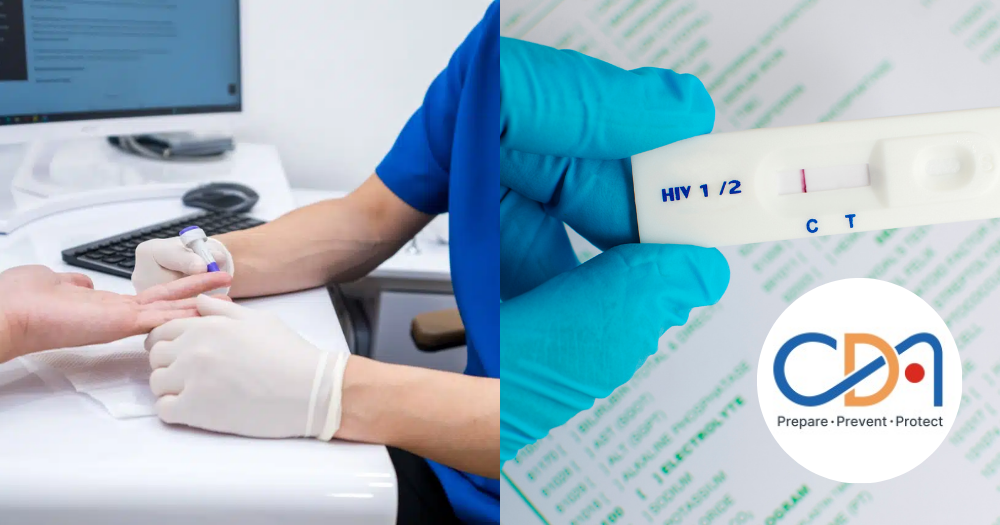
Since 2025, HIV self-testing kits have been available for purchase at selected retail pharmacies nationwide.
Financial support
Singapore will also improve patient affordability for HIV drugs, Rahayu said at the congress.
From Jun. 1, 2026, the Ministry of Health (MOH) will increase the monthly MediSave withdrawal limit for HIV drugs from S$550 to S$850.
"This will make it easier for patients to manage the lifelong, recurrent expenditures associated with regular antiretroviral therapy regimens, and consequently, make HIV treatments more accessible," Rahayu said.
Patients will also be able to tap on their family members’ Medisave accounts to pay for HIV treatments, allowing their loved ones to provide more support.