Court

Unnecessary for paramedics to insist on birth cert, but unlikely to change outcome of unsupervised toddler’s drowning: State Coroner
The incident occurred on Jun. 9, 2024.
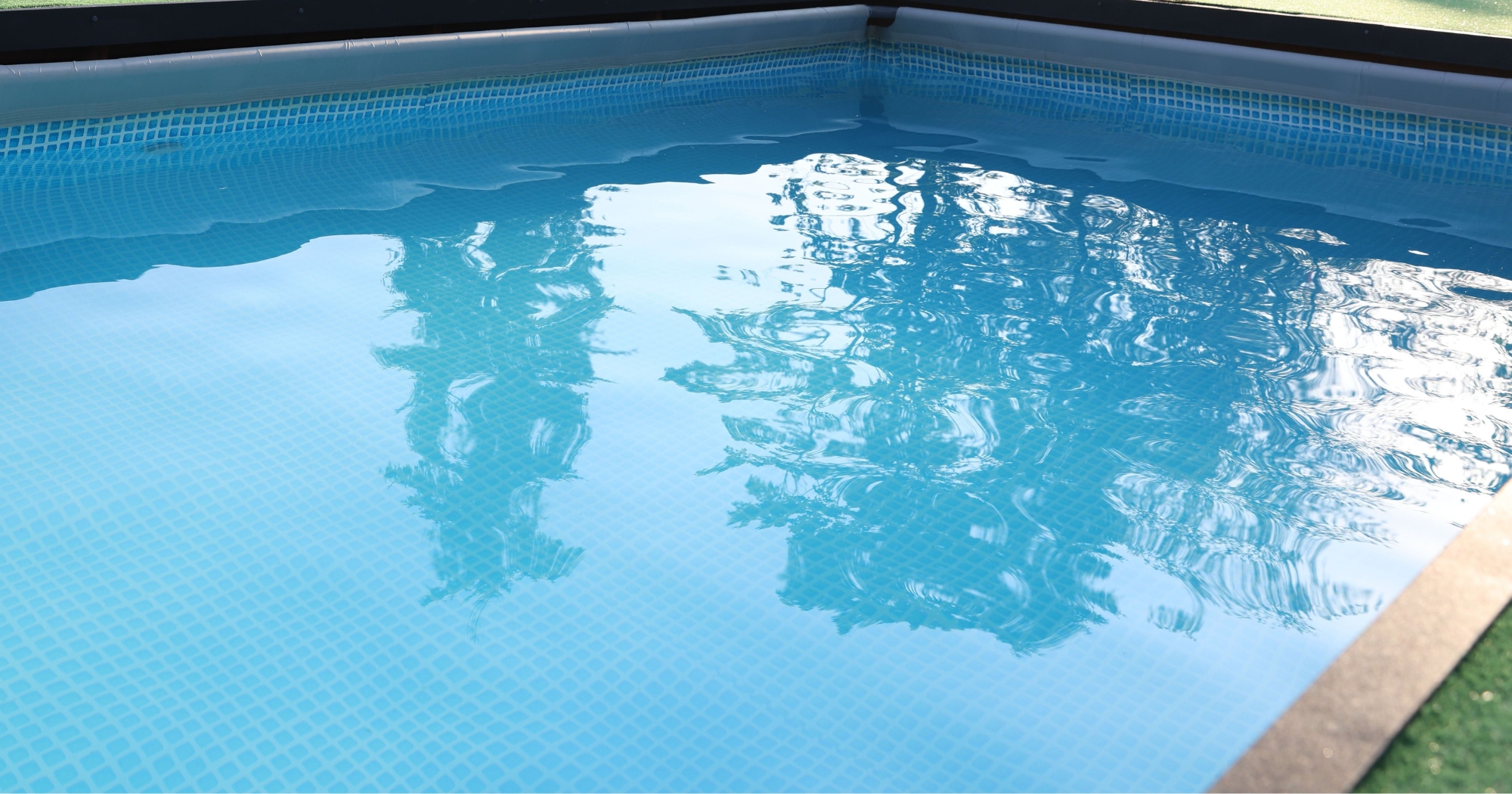
Photo via Canva


Warning: This article contains details of a toddler's death after accidental drowning. Audience discretion is advised.
A toddler aged one year and eight months died in June 2024 after falling into his home pool.
On Apr. 29, 2026, his death was ruled by the State Coroner to be a tragic accidental drowning, according to a Coroner's Inquiry document seen by Mothership.
The State Coroner also found the Singapore Civil Defence Force (SCDF) paramedics' "insistence" on obtaining the toddler's birth certificate before the ambulance left for the hospital to be "unnecessary".
He added that there should either have been better and calmer communication about why the certificate was necessary, or paramedics should have compromised when the parents could not get the document quickly enough.
However, the coroner found that the additional time in getting the birth certificate was unlikely to have changed the boy's fate. He added that it would be wrong to suggest that the quality of first aid provided by the SCDF at the scene was in any way substandard.
Seen entering water
The boy lived with his parents, his grandfather and two siblings in a three-storey semi-detached house.
Parties in the case are not named due to a gag order imposed by the court, CNA reported.
The toddler's mother said that at about 12pm on Jun. 9, 2024, she was in the living room while her son was running around on the first floor.
According to footage from the car porch, the boy left the house via a main door that was unlocked and ajar, at about 12:51pm, before heading towards the pool.
At about 12:55pm, he was seen entering the water and soon appeared to struggle before he became unresponsive.
After his mother noticed that the house became quiet and she could not hear the boy playing, she eventually found him face down in the pool.
Upon hearing his wife's screams, the boy's father, who ran over from the living room and pulled his son from the water, saw that the toddler's stomach appeared bloated.
He then began cardiopulmonary resuscitation (CPR). The boy vomited and his father continued performing CPR as his mother called an ambulance.
SCDF at the scene
At 1:14pm, SCDF received a call.
A sergeant and his ambulance team then reached the house at 1:23pm.
The ambulance left the house with the toddler at about 1:43pm before reaching the hospital at 1:48pm, according to the sergeant.
The toddler was later pronounced dead at about 4pm that day.
The paramedics had asked for the boy's birth certificate for registration at the hospital. The boy's father said he begged the team to send the boy to hospital first, and later get another family member to send the birth certificate to them.
He added that they claimed it was their procedure and were unable to proceed without the birth certificate.
The exchange "dragged for almost seven to eight minutes" as the parents tried to obtain the birth certificate, the father claimed.
The parents felt that time had been wasted by the paramedics waiting for the toddler’s birth certificate when they should have gone immediately to the hospital.
Sergeant's statement
It was noted that the sergeant was a paramedic who had six years of operational experience, and was managing his first paediatric cardiac arrest case here.
He said that when he arrived at the house at about 1:23pm, he asked for the birth certificate as this would be required for registration at the hospital.
When the toddler was brought to the ambulance, the sergeant went into the ambulance as well and gave CPR to the toddler.
The father, who was in the front seat of the ambulance, begged the driver to let him see and be with his son, and climbed over to the back. He placed a hand on the toddler while the sergeant was still performing CPR, which he said "hindered" medical procedure.
The sergeant said the father eventually let go and returned to the front seat, and the sergeant shouted "where was the birth certificate?" in general.
He said the father left the ambulance and went back into the house, and then returned with a digital copy of the certificate. He did not recall exactly how long this took as the situation was "chaotic".
Once the father returned, the sergeant said the ambulance moved off immediately.
The sergeant stated that he did not tell the father a birth certificate was needed before sending the toddler to hospital, adding this was not part of standard operating procedures, he added.
However, this was seemingly contradicted by the body-worn camera footage.
Review of body-worn camera footage
Due to the concerns raised by the parents, there was a police review of the sergeant's body-worn camera footage.
It revealed that the toddler was brought to the ambulance at 1:33pm and departed for the hospital at 1:43pm, approximately 10 minutes later, with the timeline corroborated by CCTV footage.
The body camera footage showed that the sergeant had repeatedly asked for the toddler's birth certificate at multiple times, while in the house and in the ambulance.
The sergeant was recorded to have told the father in the ambulance at about 1:40pm: "I cannot go until the birth cert is here … I thought you said it is digital."
At 1:42pm, the father received a digital copy of the birth certificate and handed a mobile device to the sergeant. At 1:43pm, the ambulance left.
Doctor who attended to toddler
A doctor at the hospital who attended to the toddler also gave a statement to the coroner, who noted that before moving off to the hospital, the toddler spent around 10 minutes in the ambulance.
When asked if the 10 minute period would have made an impact on the outcome, the doctor said he did not think it would make much difference.
He said the cardiac arrest probably occurred anytime between 12:54pm to 1pm.
That meant the most meaningful intervention at that point would have been performing CPR as soon as possible after the drowning, particularly with an emphasis on the breathing support, he added.
"...within seconds or minutes of the drowning would have the best effect," he said.
By the time paramedics arrived, "we're looking at maybe 20 minutes of cardiac arrest time", during which things had gone downhill "very very fast", he said.
"So, when the paramedics come and start giving CPR and that will be with the breathing support, that’s going to be the most meaningful intervention there.
So, then whether they stay and continue doing that for a longer time or they come here---come to the hospital earlier, I don’t think it makes any meaningful difference."
SCDF audit
In conducting an audit, SCDF found that the sergeant maintained focus on critical interventions "while also indicating areas that could potentially be refined" despite reported nervousness for his first such paediatric cardiac arrest case.
According to the SCDF:
"[The sergeant] requested the patient's birth registration at two points: initially at the scene and later in the ambulance, in preparation for hospital standby activation.
The request for patient particulars took place concurrently while the EMS crew addressed immediate medical needs and treatment.
Treatment was not stopped while waiting for the patient particulars. [The sergeant] was observed to continue performing what was necessary for resuscitation, and the patient particulars were handed over just before departure."
One of the SCDF officers who conducted the audit told the court that though it was ideal to have the birth certificate, it was "not a necessary document for the patient to have" to be conveyed to hospital.
In emergency situations, the hospital need not wait for the patient to be registered before starting interventions on the patient, he said.
That patient could be registered without documentation as an "unknown patient", the officer added.
'Truly tragic accident': Coroner
Calling this a truly tragic accident resulting in the untimely death of a child, the coroner said the loss of the boy has clearly had a "devastating effect" on his family.
Though access to the swimming pool could be controlled by ensuring that sliding doors were kept closed and locked, the coroner said there was "unfettered access" to the pool from the car porch.
Not clear when the toddler was retrieved from the pool
The coroner noted that the evidence was not clear exactly when the toddler was retrieved from the pool by his father, as there was no CCTV footage of this.
According to the sergeant, he was informed by one of the family members that they only noticed the toddler floating in the pool at approximately 1:15pm, which would be around the same time that the emergency call was made to SCDF.
On the other hand, the police senior investigation officer said that the father had informed him that the toddler was taken out about ten minutes before the emergency call, i.e., at approximately 1:04 p.m.
In either case, the coroner noted that the toddler would have been submerged without breathing for between 10 and 20 minutes.
"I would emphasise [the doctor's] evidence that in drowning cases, it is most important that CPR and ventilation is started as soon as possible after the patient has drowned," the coroner said.
"Unfortunately, in the present case, because it was not realised that the toddler had entered the pool, the time lapse before CPR was commenced, by the father, was not inconsiderable," he added.
He also found no delay in the dispatch or arrival of the ambulance, but mentioned that the paramedics should have been flexible about the birth certificate.
"In situations where there is a need to bring patients as expeditiously as possible to hospital, paramedics should exercise some flexibility with regard to procedural requirements, such as the necessity of obtaining a birth certificate," he said.
The coroner found that while the additional time spent in the ambulance while it was at the house would likely not have materially changed the outcome, it still caused additional, unnecessary distress to the parents.
The coroner conveyed his deepest condolences to the toddler's family on their loss.