Court


'You were seeking to mislead the court': Davinder Singh on Day 6 of Bloomberg trial
There was an argument on whether money laundering was the focus of the article.
April 15, 2026, 01:17 PM
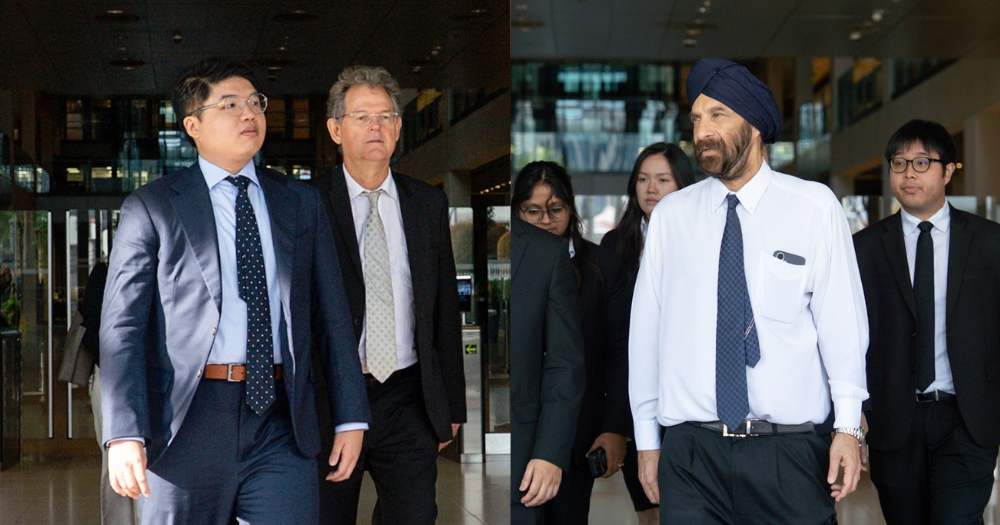


On the witness stand, Bloomberg reporter Low De Wei was grilled by Senior Counsel Davinder Singh on the sixth day of a defamation trial regarding Low's article, which focused on Good Class Bungalows (GCBs), including non-caveated property deals.
Singh claimed that Low was "seeking to mislead the court" and that Low had no evidence showing that he paraphrased a quote from a property agency founder.
Singh represents Manpower Minister Tan See Leng and Home Affairs Minister K Shanmugam, who sued Bloomberg and Low over a Dec. 12, 2024 article titled "Singapore Mansion Deals Are Increasingly Shrouded in Secrecy” for alleged falsehoods.
Checks & balances
Low was on the witness stand throughout Apr. 14's proceedings, continuing Singh's cross-examination from the day before.
Singh questioned Low on whether the checks and balances and mandatory disclosures should be a matter for the government to impose.
Low disagreed and said that in any democracy, the government would not be the only one engaging, but also other parts of civil society.
Low stated that concerning paragraphs five and six of his article, the ability to buy GCBs was a sensitive issue for locals, as Singaporeans care about the fact that the property market is transparent, including on the topic of foreign wealth.
Singh asked: "What do you want Singaporeans to do with this paragraph since you were reaching out to democratic principles and civil society?"
Low said that as a reporter, it was not his job to call for anything.
Presiding judge Audrey Lim said that as a reporter, it was Low's job to report accurately.
Singh said that at paragraph 29, Low had taken a parliamentary section out of context on the basis of a false premise and asked, "Is that a reporter reporting accurately?"
"Seeking to mislead the court"
After a 10-minute break, Singh arrowed in on two specific lines in paragraph 8 that Low wrote regarding a S$3 billion money laundering scandal and ten money launderers being convicted.
In response to Judge Lim's clarification, Low said he quoted William Wong, the founder of Realstar Premier Group, a property agency specialising in bungalows.
Low claimed that the lines were paraphrased from quotes given by Wong.
However, Judge Lim noted that the two lines did not have any direct attribution or inverted commas, and asked to see where they were written in Wong and Low's WhatsApp exchange.
Low then said that Wong only said "money laundering saga" and did not mention the specific scandal with 10 money launderers being convicted.
Upon hearing this, Singh said Low was "seeking to mislead the court" when Low said the lines from his article were paraphrased from what Wong told him.
"Picked up [certain] words to spice up the article"
Singh also focused on Low's word choices in paragraph eight, such as "unduly scrutinised" and "money laundering".
Singh read out Wong's message to Low, which said that more and more buyers prefer to keep a low profile due to privacy and the money laundering saga.
However, in Low's article, there was no mention of the word "privacy".
Low said a "low profile" can refer to privacy.
But Singh said: "Mr Low, low profile is one way of getting privacy, low profile is not in of itself privacy, do you agree?" Low agreed.
Singh said that Low picked up certain words to "spice up the article", and chose words like money laundering, unduly scrutinised, and low profile, and put it all together in paragraphs seven and eight of his article. Low disagreed.
Singh said the article portrayed the system as "so opaque", with "no checks and balances or mandatory disclosure rules" that certain parties “took advantage of … because of concerns over money laundering”.
Low said that money laundering was not the focus of his article.
In response to a question from Judge Lim, Low clarified that while the article did contain mentions of money laundering, it was not the focus.
Why waste time on something not relevant?
Singh also presented emails from a senior Bloomberg editor based in Sydney, Emily Cadman, and read out two questions from the correspondence.
The first question was, are there any constituents forcing the government for more disclosure other than the journalists, and are we able to see who owns them?
The second question was whether there is a way to show how Singapore is different from other cities to attract the internationally wealthy?
Singh said this showed that an editor was raising an issue of money laundering in connection with the draft. However, Low did not dispute the issue of money laundering, if it was not the focus of the article.
Low said he did, and proceeded to read out another email between himself and Cadman.
Singh read out from the email what Low said to Cadman, that opposition politicians have asked for more disclosure and Members of Parliament have asked about it in the past. He noted that Cadman had asked Low questions about a minister being involved in the transaction, making it topical.
"[The] news point was a minister was involved in the transaction," Singh said.
Low disagreed, and said he told Cadman he would ask for more disclosure.
Mention of money laundering
Singh said he had put the claimant (i.e. the minister) squarely in the context of money laundering.
Low said he focused on another point, about Singapore needing more transparency due to land scarcity.
Singh then focused on a paragraph that Low had skipped while reading out the email and read it out.
Low wrote that in theory, the government should still be able to see the transaction, but it is not clear for Singaporeans or those part of the government. He added that they would ask the government in a query.
Singh then said: "Not only were you implicating Mr Shanmugam, but also said you would follow up with the government on AML [Anti-Money Laundering]".
Singh asked why, if money laundering was not the focus of the article, would Low "waste [his] time" on following up.
Low said that as a reporter, he would follow up if a senior editor asked him to.
Singh said Low did not tell Cadman that it was not relevant to follow up or ask about this point, to which Low conceded he did not.
Agenda to target Tan and Shanmugam?
Low was then shown the Oct. 23, 2024 draft of his article, which showed that the word "privacy" was retained and lines on combating money laundering and disincentivising secrecy in the UK were included.
Singh said that in this draft, these paragraphs were placed before any mention of Tan or Shanmugam.
However, in the final article, the paragraphs were repositioned between the mentions of Tan and Shanmugam.
Low agreed that the paragraphs were moved, but said it could have been someone else who did it.
"I suggest to you sir, that it was intended by you and your colleagues pursuant to their agenda to target Mr Shanmugam as well as Dr Tan and to link their conduct with a concern over money laundering, that that is the reason these two paragraphs were moved to their location in the final article," Singh said.
Low said he "completely disagreed" and added, "we don't have any agenda."
The trial continues on Apr. 15.
Top photo from Azrizal Abu Che'/Mothership