News


Every major social governance policy needs effective combination of order & virtue: Ong Ye Kung at 5th S'pore-China Social Governance Forum
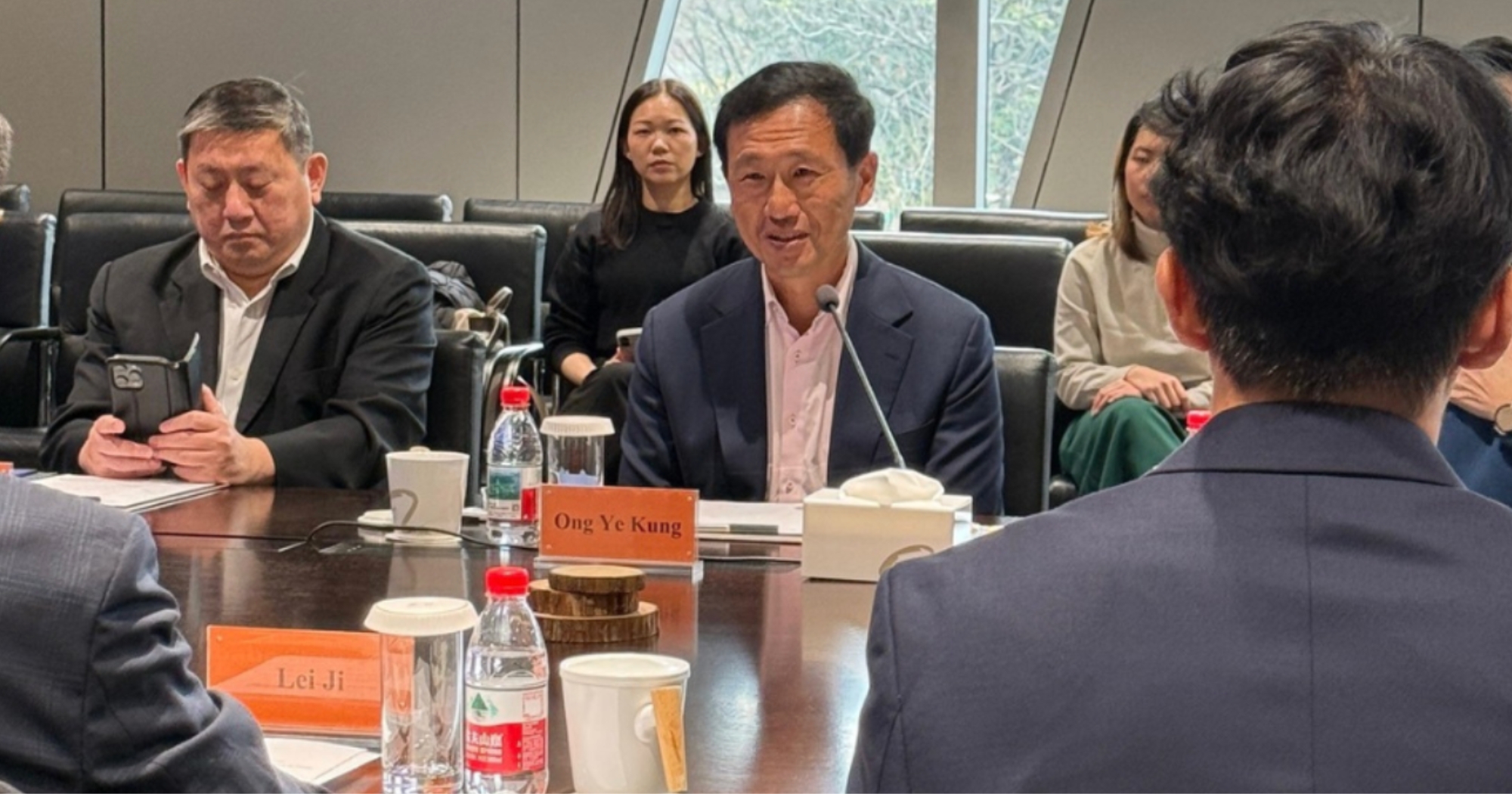
The forum was held on Apr. 20, 2026 in Hangzhou, China.
April 21, 2026, 10:20 AM


Every major social governance policy needs an effective combination of law enforcement and soft influence through virtue and propriety, said Minister for Health and Coordinating Minister for Social Policies Ong Ye Kung at the fifth Singapore-China Social Governance Forum (SGF).
It was held on Apr. 20, 2026, in Hangzhou, China.
Ong, who co-chaired the SGF with Chinese government official Chen Wenqing, added that healthcare and education institutions in Singapore are trying to combine both effectively.
An earlier report mentioned that the visit from Apr. 19 to 22 would see Ong accompanied by Minister for Social and Family Development Masagos Zulkifli.
Central
Noting that building cohesive and stable communities through dispute resolution was the theme of the Apr. 20 forum, Ong said hospitals are fundamentally about care and restoration of health.
Ong also said the central mission of schools is to nurture the young to be good people who can contribute to society.
He added that there are patients and family members who abuse healthcare workers, as well as disciplinary issues and bullying in schools.
As such, healthcare and education institutions have set up bodies with the disciplinary powers to enforce professional standards.
Ong noted that when it comes to difficult community disputes, Singapore set up the Community Disputes Resolution Tribunals (CDRT) in 2015 to serve as a channel of last resort.
Individual residents can file claims directly, without the need for lawyers.
Changing landscape of social governance
This comes after Ong pointed out that Singapore is 100 per cent urbanised and most people live in high-rise public housing, in greater proximity to each other but each cocooned in their private space.
It is therefore not easy to foster a strong community spirit, with much less interaction than in the past.
Lessons in community dispute resolution
With people of different cultures and backgrounds living together in diversity, Ong shared a few lessons Singapore has learned in managing the challenges of a modern society.
Order
Firstly, there is a need to constantly update laws and regulations to maintain social order, Ong said.
This includes the Maintenance of Religious Harmony Act of 1990 and further enacting the Maintenance of Racial Harmony Act to maintain peace and harmony in communities.
Secondly, he said citizens must have access to accurate and reliable information, even in the digital world, he added.
Ong noted that in this regard, Singapore has taken steps to address misinformation through the Protection from Online Falsehoods and Manipulation Act.
That allows readers to look at both the original article and the clarification and decide for themselves which to believe, Ong added.
Virtue
However, Ong highlighted that it is also important to build "softer" aspects of governance – a culture of mutual respect and trust, give and take, and collective responsibility for societal cohesion.
He said this was tied to his third lesson — actively cultivating shared values and social norms.
Noting that education has always played a central role in instilling values such as respect, Ong said Singapore extended this effort to new citizens to help them better understand the country's history and values through the Singapore Citizenship Journey launched in 2011.
The fourth lesson, said Ong, is to strengthen the system of social support and care.
He gave the example of the Central Provident Fund (CPF), which mandates personal savings, reinforces the virtue of savings, while also harnessing the help of employers to support Singaporeans in their retirement.
There is also a vast network of Active Ageing Centres to help seniors stay physically and socially active, he said.
In addition, there are targeted schemes for lower-income families, such as ComLink+, which have been further enhanced.
It provides additional financial incentives for vulnerable families, who, in return, do their part to achieve goals including sending their children to preschool, undergoing training and securing stable employment, and working towards home ownership.
Compassion, kindness
Ong said he believes that ultimately, a "community and a society's greatness" is "best measured by the compassion and everyday acts of kindness of its members".
The law is needed to provide the bedrock upon which such compassion and kindness can then take root and flourish, he added.
Top photo via Ong Ye Kung/Facebook