Features


3 S'pore doctors on SIA flight save Australian passenger having mid-flight cardiac arrest
They acted quick to perform CPR and set up a transfusion to give him medication.
April 20, 2026, 05:16 PM


About three hours after his plane departed Singapore, Kanwar S. Lather was getting ready for a good night's sleep when he suddenly felt a kick at the back of his chair.
He turned around and saw a man behind him passing out in his seat.
"Can somebody help him?" the man's wife beside him cried.
Most people might have frozen, but Lather was an emergency doctor with nearly 20 years of training.
By the time a flight attendant called out for any doctors on board, he was already up and attending to the man.
It did not look good. The man, who appeared to be in his mid-sixties, had gone into cardiac arrest.
"This man was dying," Lather recalled when speaking to Mothership.
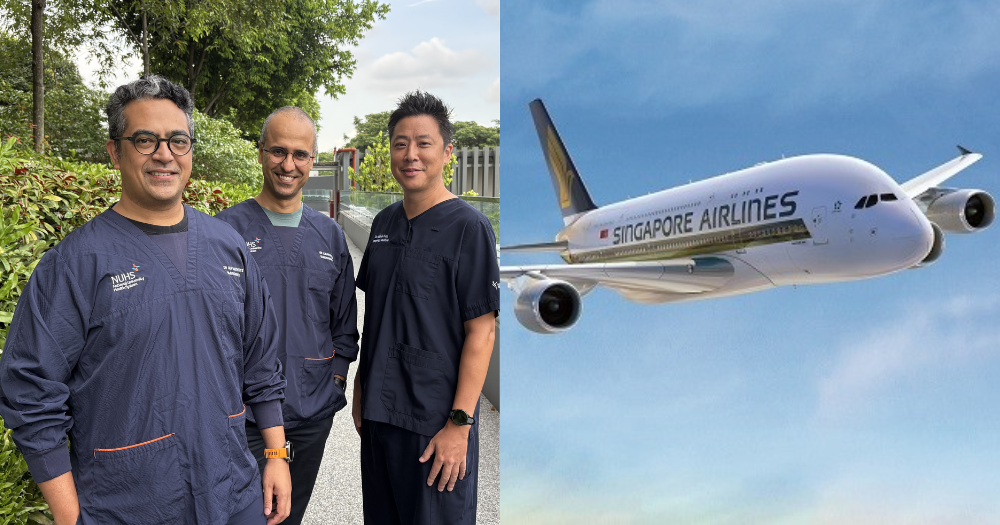
Fortunately, there was not one, not two, but three senior emergency doctors around.
They were friends travelling to Sydney together on Mar. 25 for a medical conference, never thinking they would be applying their knowledge before they even arrived, some 10,000 metres up in the air.
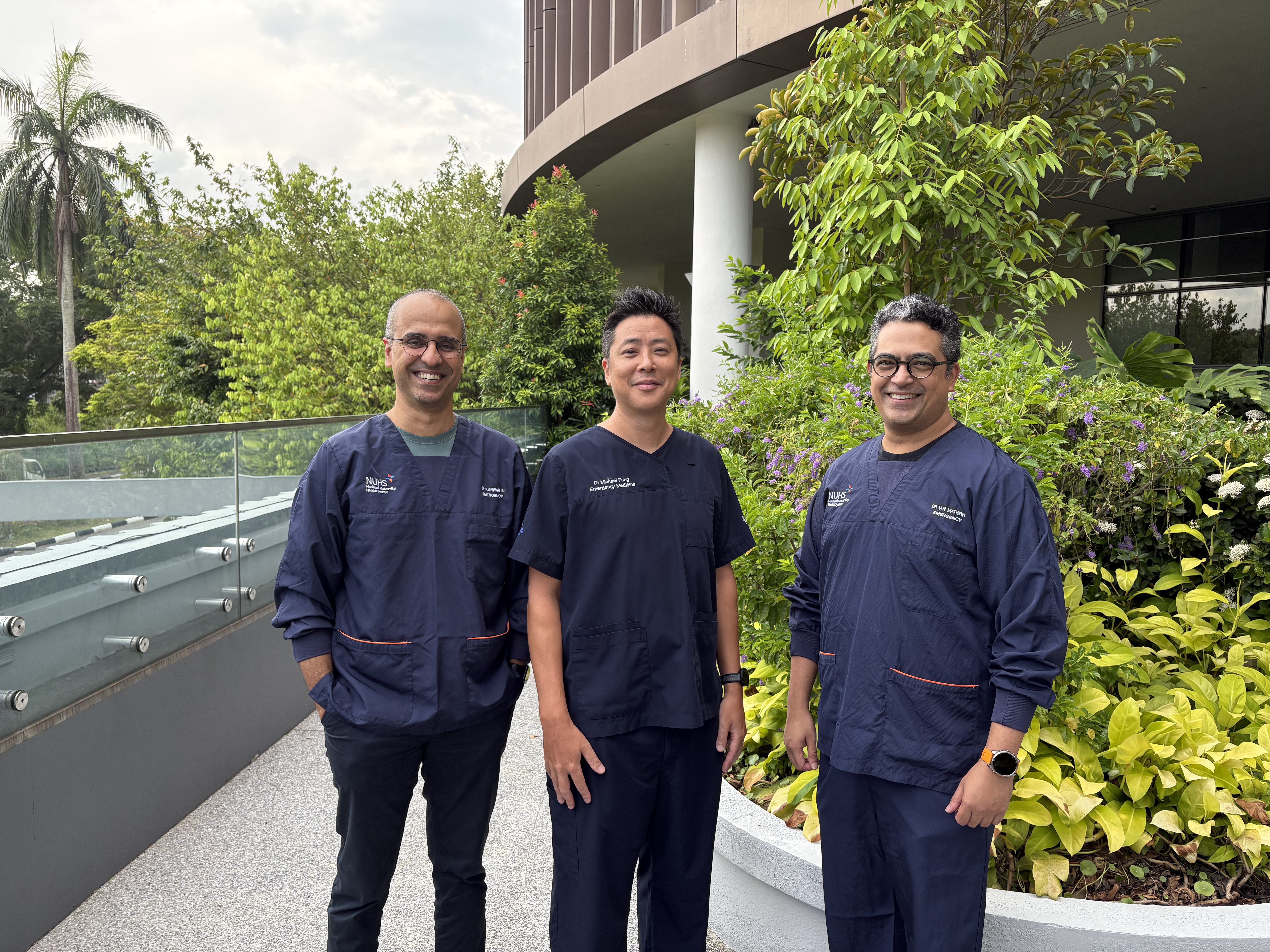 Photo by Mothership
Kicked into action
Although the other two doctors were seated further away, they rushed over to help when they heard the commotion.
When Ian Mathews, a colleague of Lather's at the National University Hospital (NUH), got to the man, he had stopped breathing.
They kicked into action. Joined by Michael Fung from Khoo Teck Puat Hospital, they took turns performing cardiopulmonary resuscitation (CPR).
Along the way, they figured out some practical issues — it turned out that laying the man across the seats rather than on the floor was easier for CPR — and Lather set up an intravenous (IV) infusion, while Mathews prepared medication.
Then they attached an Automated External Defibrillator (AED) to the man, but as it indicated a shock was not necessary, they continued CPR before delivering the medication.
Yes, the Singapore Airlines plane was stocked with all of this equipment.
When the passenger required oxygen, the cabin crew brought out oxygen cylinders too, which stunned the doctors.
"They were just producing stuff like a mini hospital," Lather said.
Teamwork
Though they were not in a hospital, the doctors' emergency training quickly kicked in, and they worked together like a well-oiled machine.
"We know exactly what needs to be done, and no two people are doing the same thing," Mathews said.
"There's a lot of non-verbal communication between the three of us, [giving] short updates to each other, just so we know that everybody's on the same page."
With help from four or five flight attendants trained in CPR, they settled into a rhythm not unlike a routine resuscitation at the hospital.
The man's pulse kept coming and going until finally, close to 45 minutes into the resuscitation, there was a sustained heart rate, and he was able to breathe on his own again.
 Veterans in their field, Lather, Mathews, and Fung gave a talk on medical education and communication in teams in 2016. Photo from Mathews.
A balancing act
The doctors did not relax after that.
Earlier on, they had given their recommendation that the plane make an emergency landing, and the crew decided to divert to Adelaide.
That was still about five hours away — a lot of time for a patient's condition to possibly get worse, as the doctors' experience told them.
"When you are stable, there's a kind of balancing act," Fung said. "He was just on the stable side of the balance, but...they can always, at any point, flip onto the other side of the balance, and then we need to mobilise again, start resuscitating again. It's pretty stressful, all of this, for us."
"We can't just hand over this guy to anyone — we are it," they added.
For the rest of the red-eye flight, they stuck around beside the man, changing his oxygen tank when necessary, and talking to him to make sure he stayed conscious.
They also talked to the man's wife, and learnt that the man was an Australian citizen with a history of heart problems, once requiring bypass surgery.
"I think this guy survived because we were on him within the minute of [his cardiac arrest] starting," Lather said, looking back.
"It's because we were there. Within a minute, the treatment started, and the stars aligned for [him]. That is why he came around. If it had been five or 10 minutes, [it's] unsurvivable, especially with those medical conditions."
Why we do this
Shortly after 6am, the plane landed at Adelaide Airport, creating quite a sight because the massive Airbus A380 aircraft was not one that the airport regularly received.
The doctors handed the man over to an ambulance crew and resumed their journey to Sydney with the other passengers on the same plane afterwards.
Rather than conk out from exhaustion, the three men felt invigorated by what they had just gone through.
For Fung, the incident allowed him to see emergency medicine applied in its truest sense, where they had to respond quickly to a critical situation in an unfamiliar, distressing environment.
It affirmed the value of his skills in a way he would not experience at the hospital.
Mathews, agreeing with him, said, "I think it gave me a refreshed look on emergency medicine, that actually, what we do can make a difference. Our speciality, in austere or odd environments, can save lives...It's a nice reminder of what we do and why we do it."
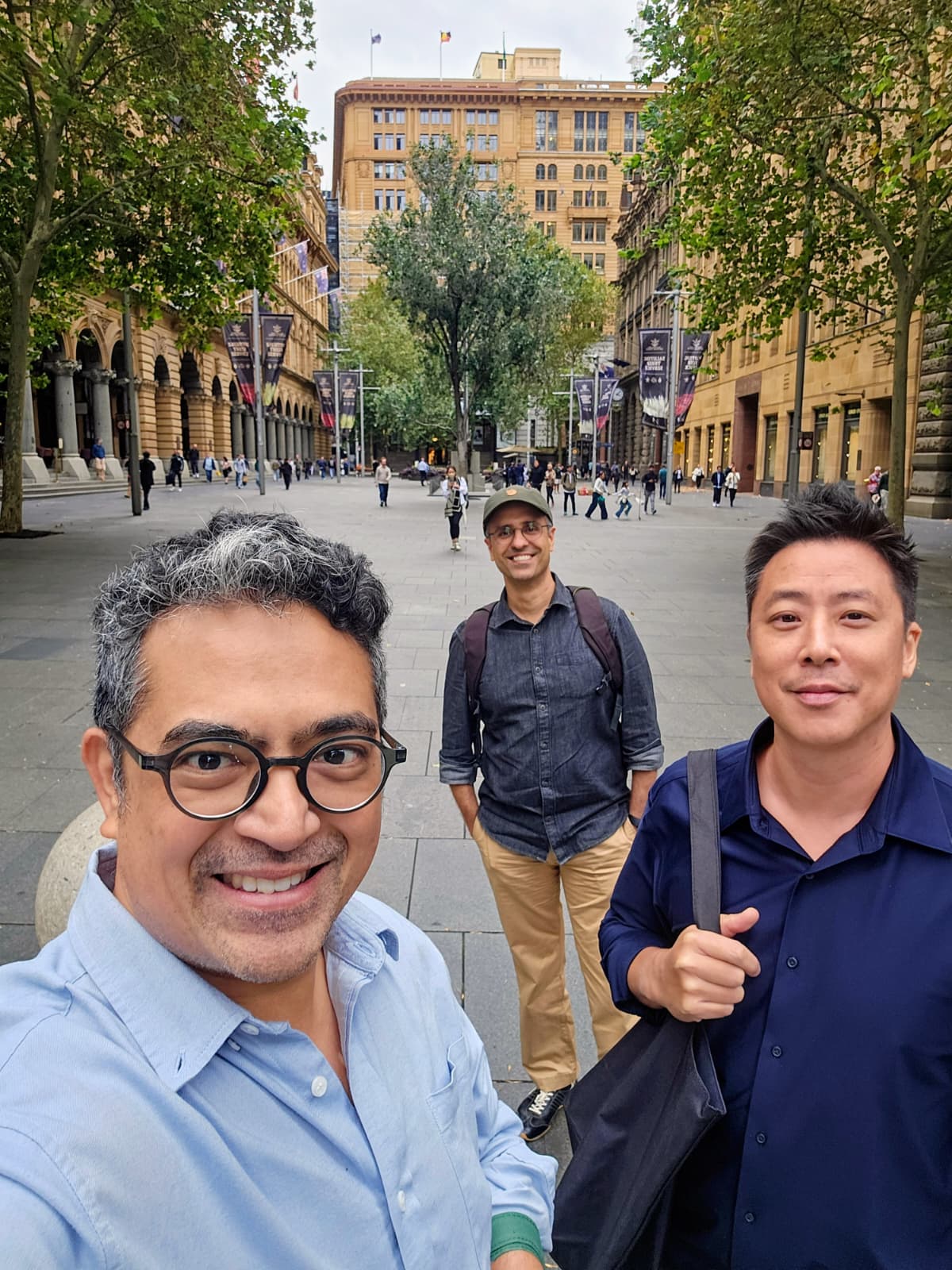 The doctors in Sydney, after the second day of the conference. Photo from Ian Mathews.
The responsibility of stepping up
Still, emergency situations outside the hospital are probably not something they would wish to experience very often.
Even for doctors, responding to one can carry the pressure of liability, Lather pointed out.
"What if I respond and something bad happens to the patient? Is it on me?" he said.
That's why there is the Good Samaritan rule, which indemnifies those who provide reasonable assistance to others during an emergency.
Such responders approach the situation with the best of intentions and do what they can, he added.
Lather, Mathews, and Fung stepped up with conviction, not just because of their medical training, but also because they knew, for the man to survive, somebody had to.
As for people who are not trained, the doctors encouraged them to learn CPR and AED — they'd never know when they might feel the need to step up.
Top images from Mothership and Singapore Airlines' website