



News


S'pore man, 66, hacked via WhatsApp, scammers targeted his friends who sent 'good morning' messages
He reported the incident to the police.
April 28, 2026, 07:11 PM
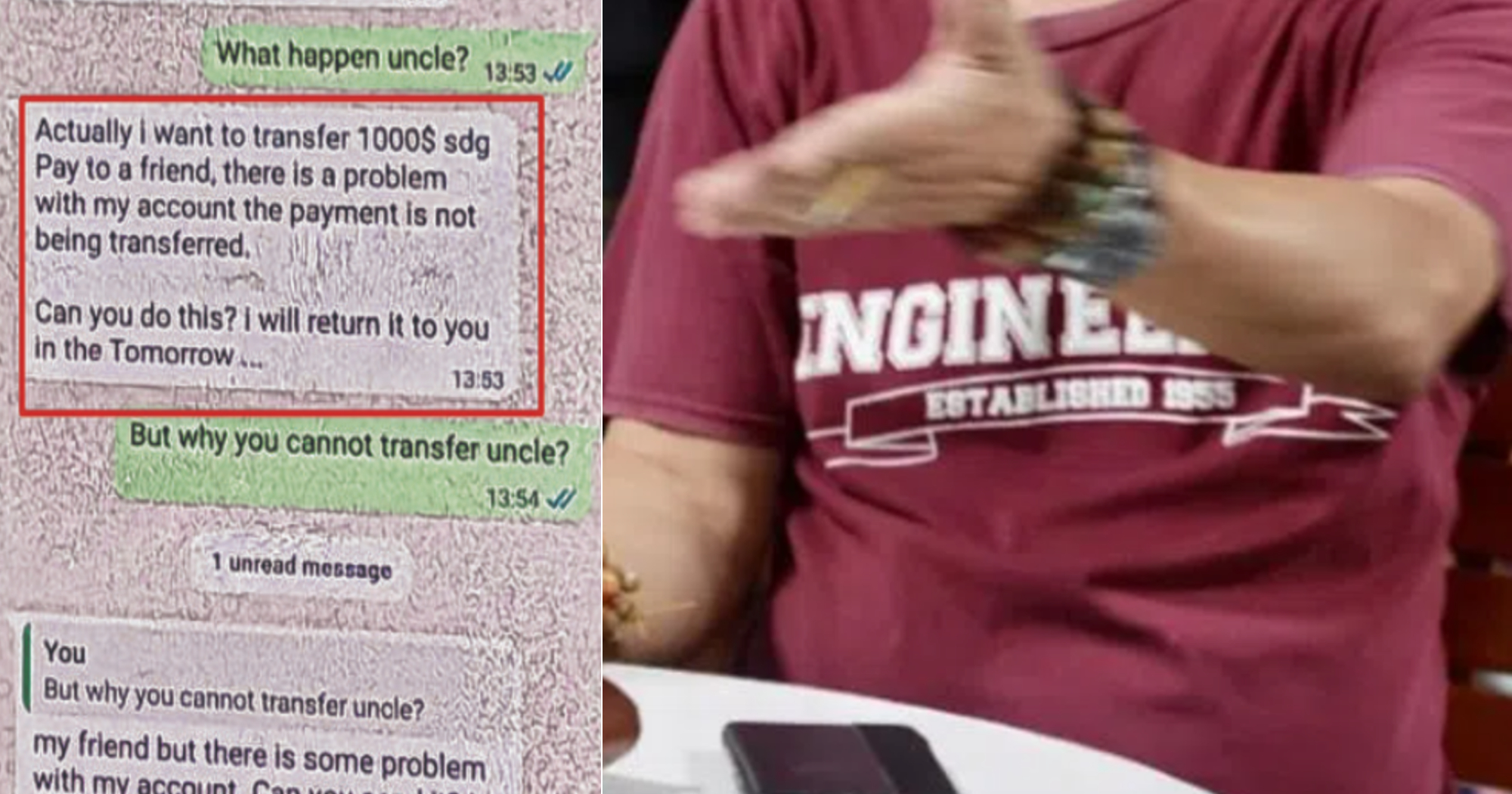
Photos via Shin Min Daily News


A Singaporean man, 66, found himself caught in a chain of impersonation scams after his WhatsApp account apparently got hacked.
He alleged that the hackers were able to access the accounts of his contacts through him.
In some cases, his contacts were even cheated out of thousands of dollars.
Four people had their accounts taken over, and more than S$3,000 was lost to scammers, reported Shin Min Daily News.
Chain reaction
As reported, Lu Changming (transliterated) said he first received a WhatsApp message sometime in mid-April.
The message was supposedly from a friend of 20 years and the person was asking to borrow S$1,000.
Lu found this strange as his friend was not one to borrow money.
Over a call, he discovered that the friend's WhatsApp account had been hacked and that hackers were using it to borrow money from friends and relatives.
About a week later, Lu received another message from the same friend at 6am asking for a one-time password (OTP) he had received.
He assumed that the OTP was needed for the friend to reclaim his account and sent it to him.
Only upon checking his own account afterwards did Lu realise he had also been hacked.
He reported the incident to the police.
'Good morning' senders targeted first
From there, scammers apparently used Lu's account ask his contacts for loans, as well as employ the same mechanism of requesting OTPs to hack into their accounts.
According to Lu, friends and relatives who frequently sent him "good morning" pictures were targeted first as they were deemed to have been in regular contact and more likely to transfer the money.
About 30 to 40 other people were implicated.
Out of which, four WhatsApp users had their accounts compromised, including Lu's sister, reported Shin Min.
After she was hacked, scammers reportedly attempted to "borrow money" from people in her contacts list.
This was done via QR codes sent by the scammers.
Three people fell victim to the impersonation scams and transferred S$1,000 each.
Blamed by others
Lu told the media that the people who got scammed blamed both hm and his sister.
Some mistook Lu as the scammer, and he was asked to repay the money in some instances.
He said he could not recover his WhatsApp account, despite making a police report.
He had to change his phone number.
To date, scammers are apparently still impersonating him and reaching out to people in his contact list, Lu said.
"I have a friend whom I haven't contacted in a long time who recently reached out, saying that he received a message from me asking to borrow money. I had to clarify quickly," Lu added.
His work as a cleaner was also affected, as he typically sent photos of areas he had cleaned to his supervisor via WhatsApp.
A foreman has had to follow him around to take pictures on his behalf given that his WhatsApp account was compromised, he said.