News


Food items like Scandinavian salmon, Brazilian frozen meats could become scarcer amid Iran war: BT
SFA told BT: "There may be some inevitable impact to food imports into Singapore."
April 22, 2026, 06:53 PM
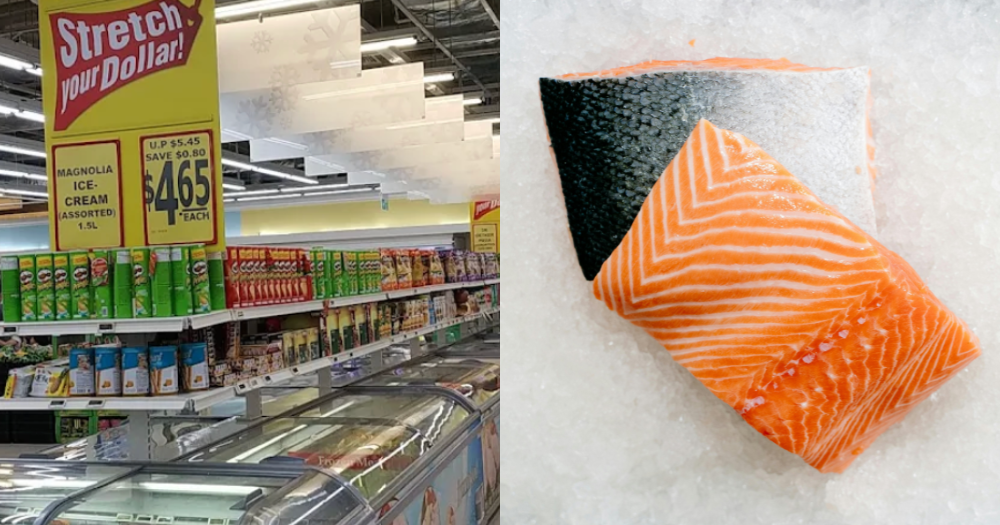


Global supply chain disruptions may cause certain food items to become scarcer amid the Iran war, despite Singapore's food supply remaining stable.
The Business Times (BT) reported that food items like Afghan raisins, Thai jasmine rice and Scandinavian salmon are some of the items that could see tighter supplies.
The Singapore Food Agency (SFA) told BT that it "cannot rule out some eventual disruption" to food supplies if the war persists, as global supply chains are interconnected.
This is despite less than 1 per cent of Singapore's food supply being sourced from the Middle East.
SFA added: "There may be some inevitable impact to food imports into Singapore. Singaporeans should therefore be prepared for some food items from certain countries to become temporarily unavailable."
Pressures on food prices
During a media doorstop on Apr. 4, Coordinating Minister for National Security and Minister for Home Affairs, K Shanmugam, said fuel and food prices will increase as Singapore imports "everything".
In a parliamentary reply on Apr. 7, Shanmugam, who also leads the Homefront Crisis Ministerial Committee, said: “Singaporeans are feeling the impact in higher prices as fuel and energy costs rise".
The Strait of Hormuz's closure, which has led to fertiliser shortages and elevated fuel prices, will also contribute to rising food costs.
No "imminent risk of disruptions"
The SFA told BT that while the Iran war has led to inflationary pressures on food, Singapore does not face any "imminent risk of disruptions" to food supply.
SFA added that Singapore's food supply is imported from 180 countries and regions and can pivot to alternative sources.
This diversification of food is also complemented by Singapore's revised food resilience framework, Singapore Food Story 2.
The framework has four main pillars to ensure food security: import diversification, grow local, stockpiling and global partnerships.
BT spoke to a visiting senior fellow at Iseas-Yusof Ishak Institute, Paul Teng, who said that rice supplies should be stable due to last year's bumper harvest.
Teng added that potential price hikes will be more pronounced after current stockpiles are depleted.
Food with longer supply chains
Hao Mart and Indian specialty supermarket Karthika told BT that certain food items from the Middle East including dried fruits and nuts like apricots and pistachios may be less available.
Teng added that foods transported through longer supply chains would also be of higher risk of becoming harder to find or pricier because of steeper import costs.
He cited fruits from temperate countries, Scandinavian salmon, frozen pork and chicken from Brazil and North American wheat as a few examples.
Food items from energy-reliant nations may also face shortage risks if higher fuel costs result in prohibitive growing or transport costs.
Karthika Supermarket said Indian frozen food shipments like prata and samosas have also experienced delays as production relies heavily on oil and gas.
Grocers' reactions
According to BT, Singapore's grocers are absorbing cost hikes and adjusting prices while finding alternative sources or substitute products.
BT reported that Cold Storage and FairPrice are relying on their diversified supply chains.
However, many specialised grocers, including Anna's Gourmet, which specialises in Central and Eastern European food imports, told BT that there were "no real alternatives".
Teng said that despite disruptions, Singapore will generally be able to acquire food items but at a steeper price.
He added that Singapore's relative wealth can allow for price hikes to be absorbed.
The impact of more expensive groceries on Singapore's consumers will likely be indirect as Singaporeans dine out more.
Hence, he said that Singaporeans would be more affected by the increased prices of cooked meals at eateries.
Lower-income households who spend a greater portion of their income on groceries would be more affected than other socioeconomic classes.
Related articles
Top photo from Canva and Joseph Tan/Google Maps