News


All S'pore schools to get more powerful classroom fans to beat the heat by 2027: Jasmin Lau
A 2024 NUS study found that cognitive performance declines above a certain temperature threshold.
March 04, 2026, 05:00 PM


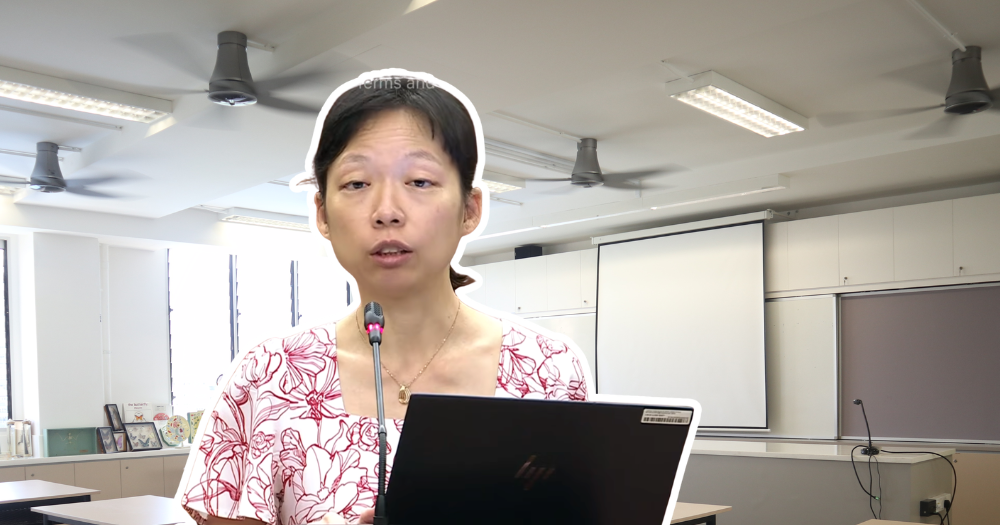
To mitigate rising temperatures, all schools in Singapore will be provided with additional and more powerful fans in their classrooms by 2027.
They will also have their external building facades coated with cool paint.
These measures are part of the ministry's efforts towards heat-resilient school designs, said Minister of State for Education Jasmin Lau in parliament on Mar. 4.
She was responding to parliamentary questions from Member of Parliament (MP) Cai Yinzhou about which schools are most vulnerable to the urban heat island effect, and the government's efforts to mitigate heat in schools.
Current cooling measures
Schools in Singapore are designed to focus on passive cooling, with design features that reduce heat gain, reduce reliance on air conditioning, and optimise natural ventilation.
For example, school buildings are oriented in a north-south direction for natural cross ventilation.
They also have shade to minimise direct sunlight, large window openings and ceiling fans to improve airflow, and shade and greenery to further reduce the ambient temperature.
Lau went on to share that the Ministry of Education (MOE) has been working with schools to identify those that are more affected by the heat, due to their locations or surroundings.
In cases where the current cooling measures are insufficient, additional ones may be deployed in a targeted manner.
For instance, air conditioning can be considered for classrooms that need to be enclosed for extended periods due to persistent dust or extreme noise, such as from nearby construction sites, Lau said.
Impact of heat on students
Lau added MOE is committed to ensuring that all students have access to conducive learning environments.
To that end, it is working with other agencies and researchers to study the effects of rising temperatures on students' learning and well-being.
"As we gather more evidence on the local impact of rising temperatures on students, we will continue to refine our approach to achieve optimal thermal comfort across all schools in an environmentally sustainable manner," Lau said.
Further possible measures include mixed-mode air conditioning, a system that combines and switches between natural ventilation and air conditioning depending on real-time environmental conditions.
When Cai asked for studies on the impact of thermal comfort on academic performance, Lau cited one by the National University of Singapore (NUS) published in 2024.
It identified that cognitive performance declines above a certain temperature threshold.
This does not mean all schools will need the same set of cooling measures, she added.
MOE will continue to monitor the schools, and target cooling measures at the ones where students may be experiencing more discomfort, on a temporary or permanent basis.
Top images from MDDI/YouTube and Angsana Primary School's website