News


Louis Chua says socioeconomic status tied to wealth inequality is S'pore's 'deepest division', urges return of estate tax
He also called for reinstating the Net Annual Value (NAV) tax on high-end properties.
February 25, 2026, 02:27 PM


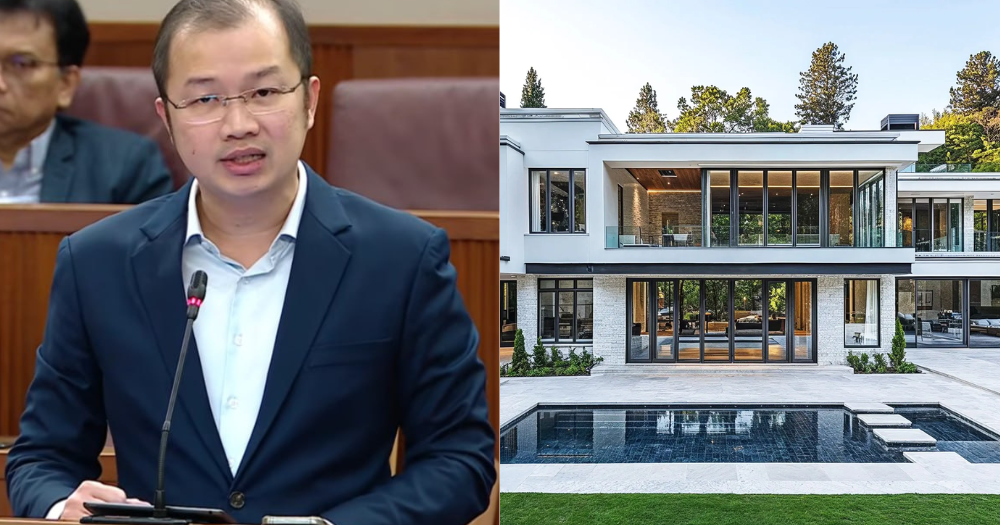
The deepest divisions in the Singapore society today are based on socio-economic status, rather than race, language, or religion, Workers' Party Member of Parliament (MP) Louis Chua said in Parliament on Feb. 25.
"If we do not take a concerted effort to address [wealth inequality] head on, as we have done with race and religion, these divisions will only deepen," the Sengkang GRC MP warned.
Wealth inequality
Speaking on the second day of the Budget 2026 debate, Chua claimed that the issue of wealth inequality was "missing" from the strategic focus of the Budget.
He referred to a Feb. 9 Occasional Paper by the Ministry of Finance (MOF), which found that wealth inequality exceeds than income inequality in Singapore.
Wealth at the top may be under-reported, and so measured inequality could be underestimated, Chua suggested.
PM Wong's measures
Wealth inequality was recently addressed by Prime Minister Lawrence Wong. In a video released ahead of the 2026 Budget statement, PM Wong noted that Singapore is beginning to see "early signs of slowing social mobility”, but many other advanced economies are facing similar pressures.
“We are refreshing our approaches and renewing our social compact so that every Singaporean has real and meaningful opportunities to progress,” he added.
During the Budget statement, PM Wong announced new measures to support lower income families and to cope with cost pressures.
They include a Cost-of-Living Special Payment of S$200 to S$400 in cash, for adult Singaporeans who earn up to S$100,000 in assessable income and who do not own more than one property.
Property tax
To address wealth disparities, Chua reiterated several property tax changes he had proposed during Budget 2023.
Chua called for reinstating the Net Annual Value (NAV) tax on properties, especially high-end homes such as good-class bungalows and secondary residences.
Doing so would complement the existing system of taxing wealth, such as through progressive property taxes and stamp duties.
He also urged the government to seriously consider bringing back estate duty, and set exemption thresholds to ensure that only those who are truly wealthy will be affected.
Estate duty, which was abolished in 2008, is a tax on the total market value of a person's assets at the date of their death.
Chua cited a 2021 report by the Organisation for Economic Co-operation and Development (OECD) that argued that an inheritance tax can effectively enhance equality of opportunity and reduce wealth concentration where capital income and wealth taxation is low.
There is no capital gains nor dividend taxes in Singapore, he added.
Make sure tax policies do not burden the middle class
Chua also highlighted the need to ensure Singapore's tax policies do not inadvertently burden the middle class.
"The challenge with taxing wealth via property tax, stamp duty, and motor vehicle-related taxes is that the middle income and upper-middle income groups end up suffering too," he noted.
He pointed out how previous tax policies aimed at luxury cars also hit cheaper cars.
Such cases demonstrate that policies intended to target the affluent can also impact the middle-income segment, while the truly wealthy remain largely unaffected.
He suggested studying less traditional wealth tax measures taken by other countries, including Norway and Switzerland, which charges lump-sum taxation based on lifestyle expenditure.
Chua noted that PAP MPs have previously cited Norway as a "cautionary tale", claiming that the increase in the rate of wealth taxes there resulted in an "exodus of wealth". However, many of these wealthy individuals turned to Switzerland, which ironically does have a wealth tax.
Switzerland serves as proof that a country implementing wealth taxes can remain a powerful draw for global talent and capital, Chua said.
Singapore, which has a unique value proposition similar to Switzerland, many wealthy individuals would still prefer to reside and operate here, he said.
Need for GST hike?
On other tax increase policies, Chua questioned the urgency behind the 2 percentage point GST hike in 2023 and 2024.
He asked if the hike was truly justified when the state consistently finds itself with more resources than initially projected.
Singapore recorded a S$15.1 billion fiscal surplus in the 2025 fiscal year, twice the estimated S$6.8 billion.
It is not an isolated incident, Chua pointed out.
"Higher than expected surpluses have been a consistent feature of our public finances since at least 2021, often following initial estimates of deficits," he said.
This point echoed the one made by his fellow WP MP Gerald Giam in the previous day's Budget debate.
Chua questioned if the government was consistently taking more from the economy than it truly needs.
"When a government persistently runs a budget surplus, it is effectively withdrawing liquidity from the economy and reducing the net savings of households and businesses," he asserted. "Persistent government surpluses are, by definition, private sector deficits."
Rather than relying on one-off handouts and ad hoc vouchers, Chua argued that Singapore needs better structural levers that adjust automatically with economic conditions.
Top images from MDDI/YouTube and SHE Real Estate