News

Is S'pore tourism boring & overpriced? Far East Hospitality head honcho says there's some truth to it.
The feedback stung, he admitted.
December 22, 2025, 06:45 PM


Some dissatisfied tourists recently complained on social media platforms Xiaohongshu and Weibo that Singapore is a boring and overpriced tourist destination.
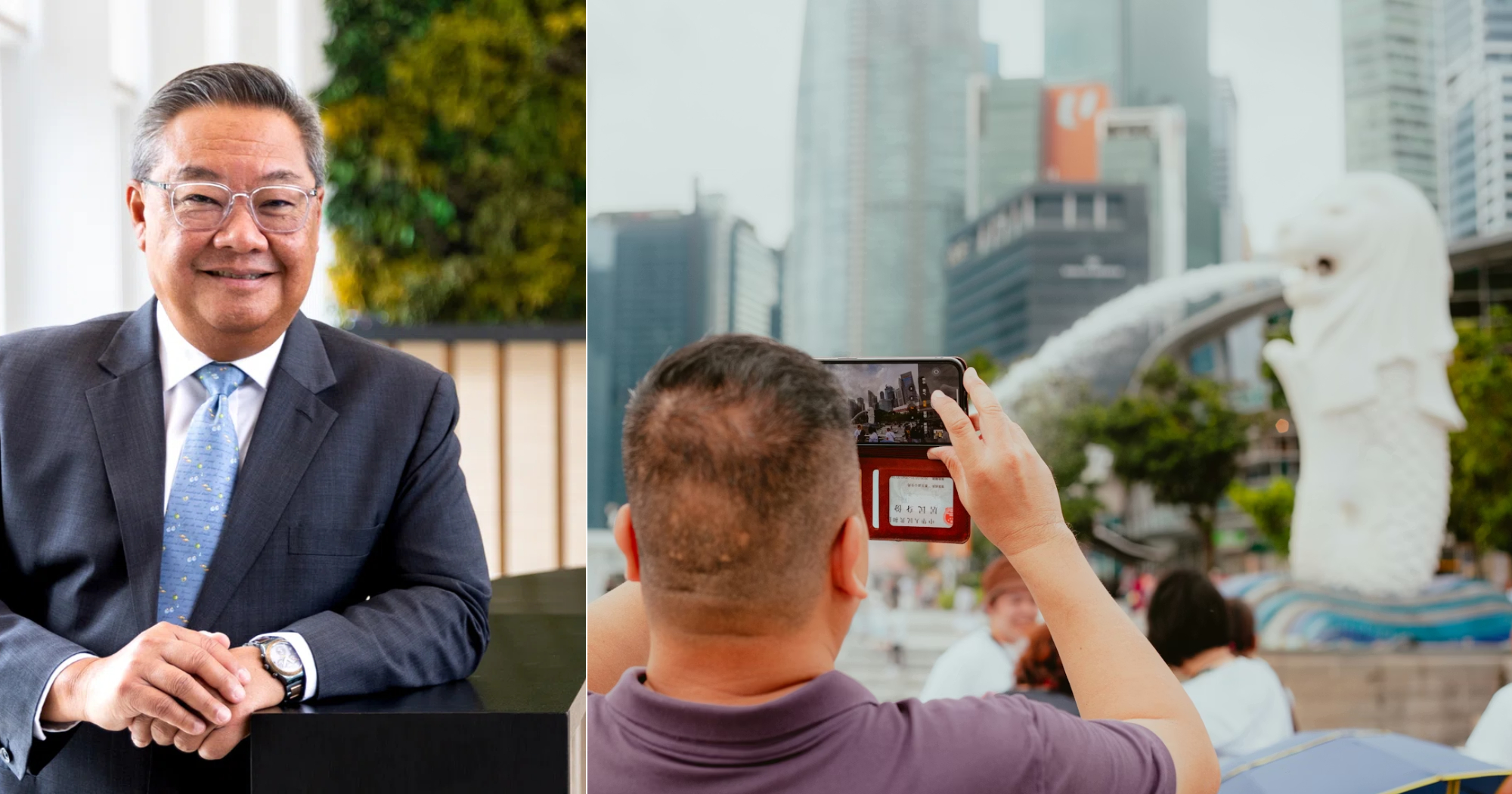
A Singapore hospitality veteran, Arthur Kiong, who has spent four decades in the industry, admitted that the feedback stung.
Kiong, who is the managing director at Far East Hospitality, told Lianhe Zaobao that the criticism has merit given that Singapore promotes "quality tourism", therefore, the value has to go up in tandem.
He said that while Singapore has "successfully raised prices", the country has "failed to increase value at the same time".
Such an approach could price out some segments of foreign visitors.
He said, according to Zaobao: "More importantly, we must re-examine the definition of quality tourism: What does it really mean? Is it simply about attracting wealthy travellers, who can afford high prices, while excluding ordinary travellers who cannot? Is it really that simple?"
What is quality tourism?
Despite the criticism, the first vice president of the Singapore Hotel Association (SHA) said he believes that local quality tourism is progressing steadily, but it must be hashed out in a more detailed fashion.
He said: "Specifically, we need to attract visitors who stay longer and not just tourists who only stay one night, turning Singapore into a transit hub for tourism."
"These 'one-night only' tourists consume a lot of resources but spend almost nothing, since they only stay one night," he explained.
According to data from the Singapore Tourism Board (STB), Singapore received 12.88 million visitors in the first nine months of 2025 — a slight year-on-year increase of 2.3 per cent, but the average length of stay fell by 1.6 per cent.
To attract tourists who stay longer in Singapore and spend more at hotels, restaurants, and shops, Kiong said Singapore ought to create its own niche market and develop unique "Only Me" experiences.
Singapore's strengths lie in medical tourism, or providing a more comprehensive experience that integrates local art and music, hawker food culture, and diverse cultural heritage.
Far East Hospitality, for example, was one of the earliest hotel groups in Singapore to arrange various immersive experiences for guests to live like a local.
This includes making rice dumplings and going for a history tour to find out more about Samsui women.
Adjusting to realities
The focus on the mid-tier segment of tourists has reaped benefits.
Far East Hospitality went from five local hotels with fewer than 500 rooms to 31 hotels and serviced apartments globally with a total of 5,644 rooms in 13 years, marking an increase of more than 10 times in capacity.
The ability to quickly adjust to operating realities has also served the group well.
During the pandemic, a number of the Far East Hospitality hotels were repurposed into quarantine centres.
And to address the pent-up demand with the lack of travel options at the time, some of the hotel rooms started to cater to those stuck in Singapore, who wanted staycations.
Kiong explained that there exist plenty of opportunities for the sector.
But there are also challenges aplenty.
As Singapore's tourism sector evolves, there will be intensified competition for labour, and there will be difficulty in attracting young people to join the industry.
There is also the recognition that the hotel industry no longer provides the job opportunities that Singaporeans expect.
On a more macro level, Kiong questioned how Singapore should continue to invest in this industry if it can no longer create the job opportunities that Singaporeans want.
On the flip side, the hospitality industry is crucial in playing a support role for other growth sectors, given that Singapore aims to be a financial, aviation, and even a technology hub in Asia.
Separately, in an interview with Business Times, Kiong said one positive factor was that Singapore's hotel room supply is “palpably slowing down”.
This takes the pressure off finding an army of staff to do the work in hotels.
He said the government is being very careful and not just creating more supply as it leads to more competition for labour in the form of a "whole battalion" of housekeepers and security cleaners, who will likely be foreigners.
Kiong's advice?
He said: “The industry has a great need for local talent... Everybody wants to come in and start at the top, which is not possible in hospitality. You have to start at the front lines.”
A compelling reason for young people to join the industry?
“Hospitality may not be very attractive on the surface because of the salary levels. But like anything else, if you are really good (at) what you do, the financial rewards will come,” he said.
Moreover, he added that those who have the skill of knowing how to get along with people can solve "90 per cent of life’s problems", which will lead to a "more fulfilling life".
Top photos via Far East Hospitality & Unsplash