News

Chinese movie 'Evil Unbound', about Japan's WWII Unit 731, criticised for inaccuracies
Some audiences demanded an apology from the director.
November 05, 2025, 03:43 AM
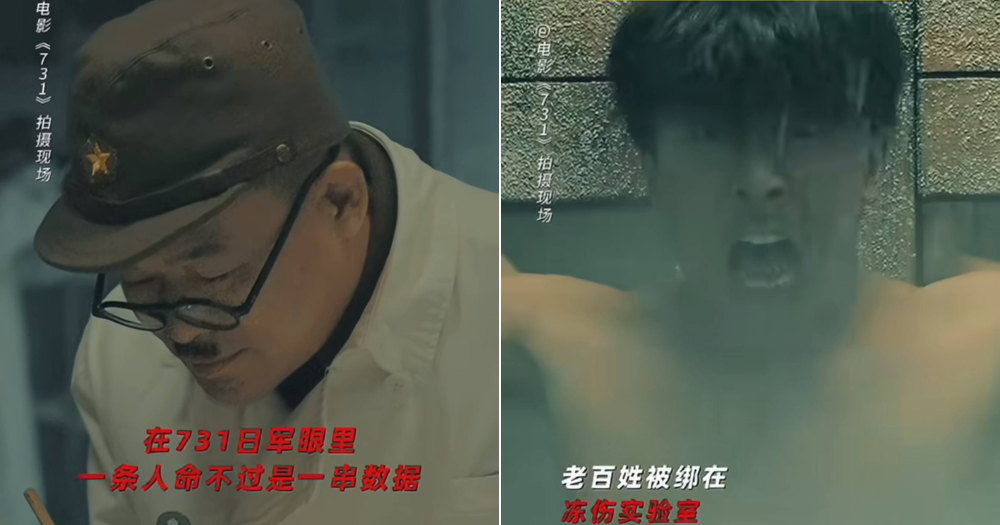


When the China-made WWII film, "Evil Unbound" — about Japan's notorious germ warfare group Unit 731 — was released earlier in September 2025, there was widespread anticipation, as well as concerns, that the theatrical retelling of the atrocities committed would stoke anti-Japanese sentiments.
Now that it has been released and consumed by the masses, the film has, instead, stoked criticisms in China for its historical inaccuracies and storytelling choices.
Criticisms abound
"Evil Unbound" retells the history of Japan's Unit 731 and its victims through the eyes of an imprisoned Chinese citizen as he attempts to escape the unit's facility in Harbin, China.
The characters are mostly fictional, as most records about the unit's victims did not survive destruction by the Japanese when their defeat neared, the film pointed out.
Following its release on Sep. 18, audiences left poor and scathing reviews in the comments section of the movie's official account on the Chinese social media site, Weibo.
Most of the naysayers called "Evil Unbound", which is titled "731" in China, a bad film and asked for refunds.
One user questioned: "The worst of the worst. How is it still making money?"
Why the comedic elements?
Others thought that there was too much focus on the film's Japanese characters and that it had put them in a good light despite their involvement with Unit 731.
Another commenter recommended cinema-goers skip "Evil Unbound" to watch "Dead to Rights" instead, which is another China-made film but about the Nanking Massacre during the Second World War.
"Dead to Rights" was released about a month prior to "Evil Unbound" and received both popular and critical acclaim.
China subsequently chose “Dead to Rights” as its submission for the best international feature film category at the 98th Academy Awards.
Some took issue with the light-hearted elements of "Evil Unbound", suggesting that they did not befit the gravity and sickening depravity of the atrocities suffered by Unit 731's victims.
According to one Weibo user, the movie only spent "as much as five minutes" on the actual history of Unit 731, while the rest were spent on its fictional plot, which was mixed with comedic elements.
The film's set was also slammed by some reviewers as reminiscent of the set of the South Korean "Squid Game" Netflix series.
Commenters also accused the producers of attempting to profit off the patriotic sentiment surrounding the history of Unit 731.
"You understood the sentiment surrounding the topic, but could not express the gravity of it," one commenter said.
But a more understanding user wrote: "There's too much editing, which muddled with the meaning of the film."
Japan chimes in
On IMDb, the film has received a score of 3.2 out of 10.
The backlash against the film reflects a sensitivity among Chinese viewers over its war history with Japan, analysts suggested, according to South China Morning Post (SCMP).
One researcher told SCMP that the film had trivialised the victims' suffering, giving the impression that "the things [the Japanese] did were not so terrible".
Some viewers went so far as to call for the film's director to issue an apology "to all Chinese people and the heroic martyrs who passed away".
Japanese media outlets noted that the poor reviews showed that attempts to stoke anti-Japanese sentiments by the film's producers had backfired.
Revisionists in Japan, who have rejected the claims about Unit 731, also jumped on the bandwagon and questioned China's portrayal of history.
Why portray history this way?
Both "Dead to Rights" and "Evil Unbound" were made by Chinese production houses and released in the lead up to the 80th anniversary of the end of WWII.
How the planning unfounded behind the scenes has been fodder for some, who speculated on the thinking that went into the commissioning and making of both movies — a process that the state should have had a hand in from the start.
One plausible-sounding theory floated around was that while "Dead to Rights" went hard with its gritty realism and portrayal of unflinching cruelty, "Evil Unbound" overpromised and undelivered likely on purpose so as not to deliver a double whammy on the 80th anniversary following the Japanese troops surrender in 1945.
A much more unnerving and realistic depiction of Unit 731 could, in theory, still be in the works or in its nascent stages of planning, to be released some time down the road, possibly closer to the centennial anniversary of the 1945 Japanese surrender.
Or maybe such speculation is just another flight of fancy, and a warning not to take too much creative liberties with the material.
But the chasm between the artistic choices of both made-in-China films could not have been wider, which has left, and will continue to leave audiences scratching their heads.
Top image via Evil Unbound / Weibo