News

2021 Tuas Incineration Plant explosion: NEA convicted for safety lapses that killed 2
The explosion killed two NEA officers and left one with third degree burns.
November 18, 2025, 03:59 PM
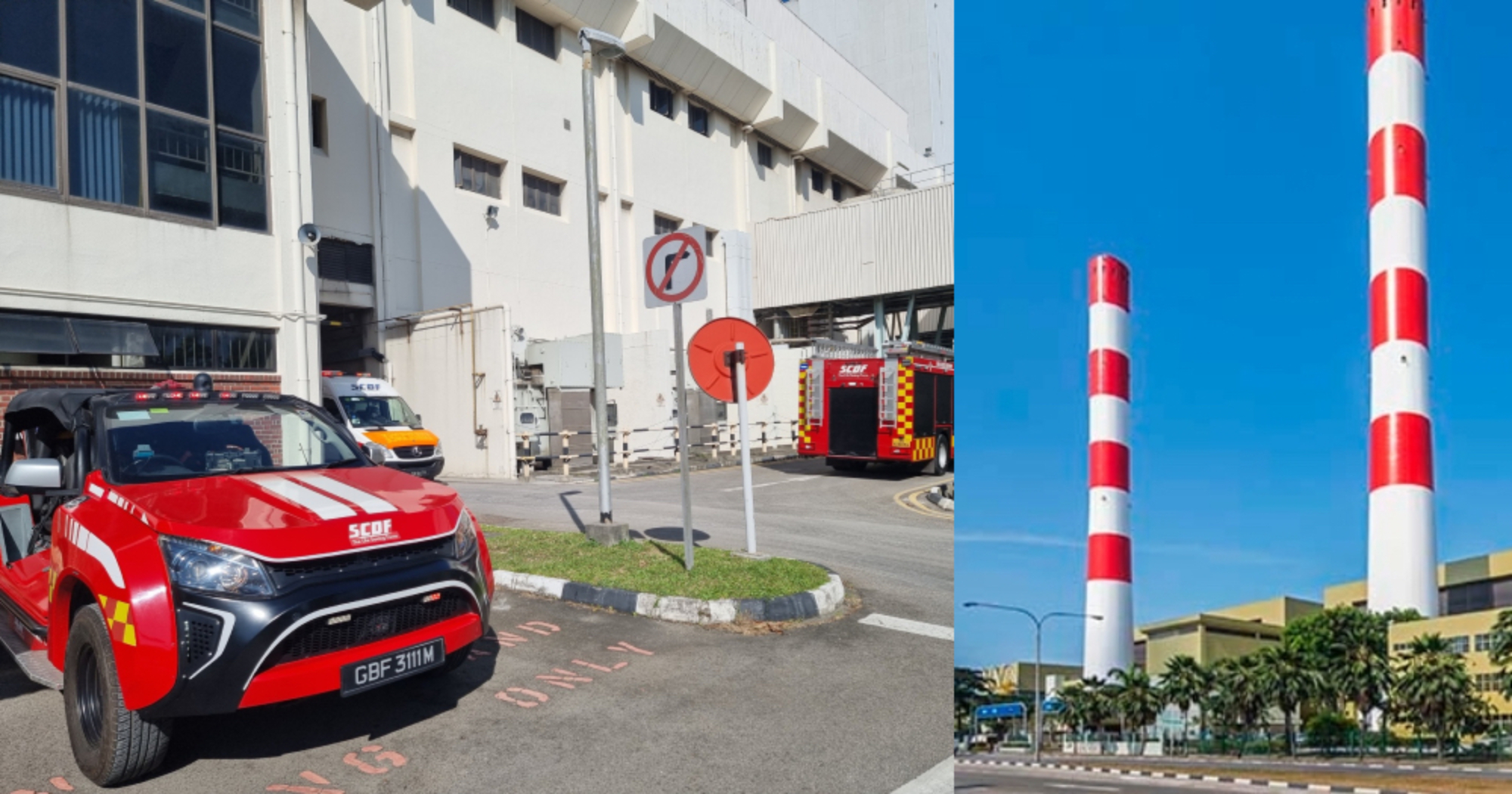


The National Environment Agency (NEA) has been convicted over safety lapses in the Tuas Incineration Plant explosion that occurred on Sep. 23, 2021.
Two NEA employees, Kwok Yeow Wai and Wee Eng Leng, perished in the incident.
A third employee, engineer Low Yin Choon, sustained serious injuries and third degree burns.
Charged with workplace safety offences
The Straits Times reported that NEA and two of its employees were charged in December 2023 for workplace safety offences.
On Nov. 18, NEA pleaded guilty to one charge of failing to take necessary measures to ensure the safety and health of its employees at work.
The investigation involved several agencies, such as the Ministry of Manpower (MOM) and the Singapore Civil Defence Force.
Christopher Lee Yew Binn, divisional director of the waste infrastructure operations and management division of NEA at the time, and Ng Wah Yong, then general manager of Tuas Incineration Plant, were handed one charge each under the Workplace Safety and Health Act.
Lee’s case has been set for a pre-trial conference on Nov. 28.
Ng’s case will be raised again in court on Nov. 20.
Permit-to-work system 'defective'
NEA's safety lapses included a failure to ensure that the permit-to-work (PTW) system implemented for high-voltage switchgear racking works was in accordance with electrical installation regulations.
The PTW is a formal authorisation system used by organisations to control selected work activities to ensure safe execution of onsite work.
The PTW allows for hazards to be assessed by suitably qualified persons, said Deputy Public Prosecutor Agnes Chan.
The engineering manager on the day of the incident was not authorised to issue a PTW to Kwok, investigations revealed.
DPP Chan added that the authorised person was not informed that high-voltage electrical works would be taking place on the day of the accident.
She said the PTW system was “defective” and lacked the essential gate-keeping function when dealing with high-risk work.
PPE gear did not include fire-retardant properties
NEA also failed to adequately implement control measures and establish safe work procedures for high-voltage switchgear racking works.
Prior to the accident, the personal protective equipment (PPE) gear for maintenance works that NEA provided its teams did not include fire-retardant properties, the court heard.
This was despite a risk assessment, which was conducted prior that showed that there was a risk of explosion and burns.
The prosecution stated that Kwok and Wee had suffered extensive burns in the incident.
Kwok was pronounced dead at the scene, while Wee succumbed to his injuries three days after the incident.
Low sustained burns over 27 per cent of his body, including his face, neck and limbs.
He was hospitalised from Sep. 23 to Oct. 18, 2021, and given 223 days of hospitalisation leave.
Team could not shut down plant remotely
Grace Fu, Minister for Sustainability and the Environment, provided details of the incident in a ministerial statement in 2024.
The three men had obtained permission from the plant’s control room to troubleshoot an electrical fault when an induced draft fan could not be switched off from the central control room, where the equipment is normally controlled.
Fu said the 2m-wide fan is used to extract gases from the incineration process for discharge via the chimney.
The men entered an electrical switch room while troubleshooting.
"At the electrical switch room, a localised explosion happened near the switchgear. Mr Kwok died at the scene, and Mr Wee was seriously injured," Fu wrote.
Low was also injured in the explosion, but has recovered and returned to work, she wrote.
The men could not shut down the plant remotely because a worn-piston from the machine had dislodged and dropped into a position where it blocked the circuit breaker from tripping.
The plant’s safety mechanism had been compromised by the dislodged piston, which blocked the safety interlock mechanism.
The explosion occurred when they conducted a live-racking procedure, despite the plant being active.
Senior Counsel Jason Chan, who was representing NEA, said the incident was “unprecedented and unexpected” adding that NEA deeply regrets the incident, but that the explosion was not caused through the lapses the agency is pleading guilty to.
“The safety interlock mechanism could not activate on the day of the accident because of the dislodged piston. These are the facts which led to the arc flash explosion.”
“NEA accepts that in the aftermath of the incident, there were things it should have done earlier and it has taken responsibility for those."
“But the key point is those lapses did not contribute to the actual death and injuries that occurred."
DPP Chan added that it was clear that the electrical maintenance branch (EMB) team had carried out prohibited live racking, which later led to the arc flash explosion.
That does not deflect from NEA’s failures, which led to the accident, he said.
“We submit that relevant question for the court is why the EMB team was allowed to carry out the live racking in the switch room in the first place."
Decommissioned after 36 years in service
After the accident, MOM issued a Stop Work Order (SWO) to NEA.
The Tuas Incineration Plant stopped receiving waste for incineration, ceased processes involving electrical servicing and maintenance and was shut down immediately.
NEA stopped operations at the Tuas incineration plant in February 2022 and it was decommissioned in July 2022.
It was replaced with the TuasOne Waste-To-Energy Plant.
Related articles
Top images via SCDF's Facebook page & Towards Zero Waste website