Interviews

AI & TikTok won't kill reading: Award-winning author Ken Liu on why he's optimistic about the future of books
The multiple-time Hugo Award winner also discussed the current wave of anti-immigrant sentiment, and how he feels it could be addressed.
November 01, 2025, 11:13 AM


The term "superstar author" may be less in vogue these days than before, but Ken Liu is undoubtedly one of them today.
Liu, a Chinese immigrant who grew up in the U.S., rose to global fame translating the work of another Chinese author Liu Cixin, now world-famous for his "Three Body Problem" series.
But Liu himself is a creator of note, with short stories like the "Paper Menagerie" and his own epic fantasy series called "The Dandelion Saga", which I have read and loved.
Unlike the typical Medieval Europe-inspired fantasy series that I grew up with, like Tolkien's "Middle Earth" and CS Lewis's "Narnia", Liu's island archipelago of Dara has unmistakeable Asian influences.
Farmers toil in the fields to grow rice, there is an imperial court with a rarely-seen emperor and the gods walk the land, alternately favouring or punishing the mortals.
As a longtime fan, imagine the excitement I felt when I was given the opportunity to discuss those diverse influences with Liu himself, thanks to the Singapore Writers Festival (SWF).
Liu will be giving a keynote talk at the festival on Nov. 8, and appearing at panel events on Nov. 7 and 9.
TikTok won't kill storytelling
In Liu's view, human beings want to account for the full potential and range of storytelling.
He addressed a question I had on whether storytelling can still hold the attention of readers, particularly the younger generation who seem more interested in scrolling through videos on TikTok.
Rather than viewing it as a threat, Liu prefers to frame it as exciting developments in how stories are being told, even if it's through a short-form video on TikTok.
"There are new trends, new ways of telling stories, a whole new language of storytelling, visual storytelling, is being invented on these platforms.
And I think they're deeply fascinating. They exercise creativity, they add to the richness of global culture."
People are still telling stories, even if they're not reading
Instead of stating that "people don't read anymore", Liu suggests "how are people engaging with storytelling" instead.
He pointed out that from a historical perspective, the novel itself is not some "sacrosanct form", only having been around for a few hundred years.
"Who's to say this is supposed to be a form that will be dominant as a way of telling stories forever?"
At one point, people wrote epic poems as a way of telling stories, which is less prevalent these days.
But it doesn't mean our society is somehow lesser than our predecessors who did write epic poetry.
In his view, the kind of stories that people pay attention to over time is not something to be worried about. It's just how culture evolves, and artists should be willing to evolve with it.
What does "success" in creating art mean?
But Liu also pointed out that not all artists necessarily wish to capture as large an audience as possible.
"Some artists are much more interested in the aesthetic pleasures of creation in the form of their choice.
So there are still artists today who write epic poems. They may not have a very large audience, but that's not really what they need. That's not what drives them.
So I think you have to sort of ask yourself, what kind of artists are you? What are you trying to get out of the art that you're practicing?"
He added that some artists may not need an audience at all.
"And I think that's okay too. There's no need for everybody to follow into the same patterns. We all have our own path to walk."
Liu mused further that "success" in the artistic world is a nebulous term. In modern society, success is largely related to capitalist terms, like how many copies a particular book sells or how many times a song is streamed online.
In other words, how much money it makes.
"I think that's not the best way to think about it, because when you put money into the equation, you sort of start to equate artistic worth and artistic success or artistic satisfaction with commercial success," he said.
Given that there are works which are commercially successful without being artistically interesting (in some opinions), Liu feels that "we have to find our own definition of success", and that commercial success is not indicative of artistic worth.
What drives creators in the AI-generated age?
We then got on the topic dominating headlines and stock markets alike, artificial intelligence (AI).
With "tech bros" boasting that AI could soon create novels, movies and music at the push of a button, what would Liu have to say to a young creator with dreams of becoming a famous author?
Liu said he would ask them to search for videos that teach anyone to write a book or a movie script using AI. They would probably find hundreds.
But he'd also ask them to look for videos from people saying "I've read a book written by AI, and it was the best I've ever read."
He feels that would be more difficult.
"I would say that the premise that AI is at the point where you push a button and you get the perfect story, the perfect script. I just don't think that's happening yet."
Would you read a robot-written book?
In addition, they should reflect on whether they would consume art created by AI in the first place. "Would you go see a movie or read a book written by AI?"
If the answer is yes, then we're acknowledging that AI has the potential to create art, and creators are doing the same.
If the answer is no, then you feel humans are looking for meaning in art as expressed by other humans, in which case they should not be too concerned about "competition" from AI-generated content.
It's possible that there might be an audience that would be satisfied with generic AI content and not seek out originals by creators.
But Liu said these people probably wouldn't be their audience in the first place.
"I don't think that's a threat to humans, because surely human creators would not want to compete for an audience who is so undiscerning as to want that kind of slop.
We obviously want to write for audiences who actually appreciate what we do. And if you believe AI will never get to the point where they're actually creating really meaningful work, then you have nothing to worry about."
Again, taking a historical perspective, Liu pointed out that AI may have "perfected" some things. But it has not stopped humans from taking part.
"I mean, humans cannot beat computers at chess, but have humans stopped playing chess? Or have we gotten lost all enjoyment of playing chess? We obviously have not," he illustrated.
How does he feel being an example of an immigrant success story?
Liu's parents are accomplished academics who emigrated from China, and Liu himself had a distinguished professional career before becoming an author. In my book, he's a fine example of an immigrant success story.
But with a wave of anti-immigration sentiment across the globe, not only in the U.S. but also Europe and Asia, would this prevent the "next Ken Liu" from telling their own story?
Liu was modest, saying he doesn't really see himself as a standard of success, but he is pleased with how he's fulfilled his own goals so far.
Diving into the thorny political issue, Liu said it's important to acknowledge that political movements focused on hate and exclusion almost always have at their root a form of "love that's been corrupted."
"So I think when you have a lot of pride in your own culture and a lot of love for your own way of life, sometimes that kind of love can be corrupted and misled and twisted by unscrupulous individuals who take your anxieties and turn them into xenophobia and exclusion and hatred."
Liu said that as an American, he is optimistic that offering balm to the root cause of anxiety is a better way to address the issue than just saying, "you hate and therefore you're a bad person."
"I think it's fundamentally important to empathise with the fact that we're all human beings and that our love can sometimes be twisted into a form that is not what we want them to be, and we need to be aware of the fact that our anxieties can be taken advantage of by demagogues."
But how do we address the root anxieties, and why do people feel like their way of life is under threat or that their culture is being taken away from them?
Liu believes we need to bring back a sense of meaning, vibrancy and confidence in people. To express their natural, understandable love for their country, culture and sense of self, in ways that do not lead to hatred of others.
He sees himself as an American telling "fundamentally American" stories, about what it means to strive for the American dream and live in a society during a time of great change.
"All of us are trying to tell the stories of the cultures we feel that we belong to," he said.
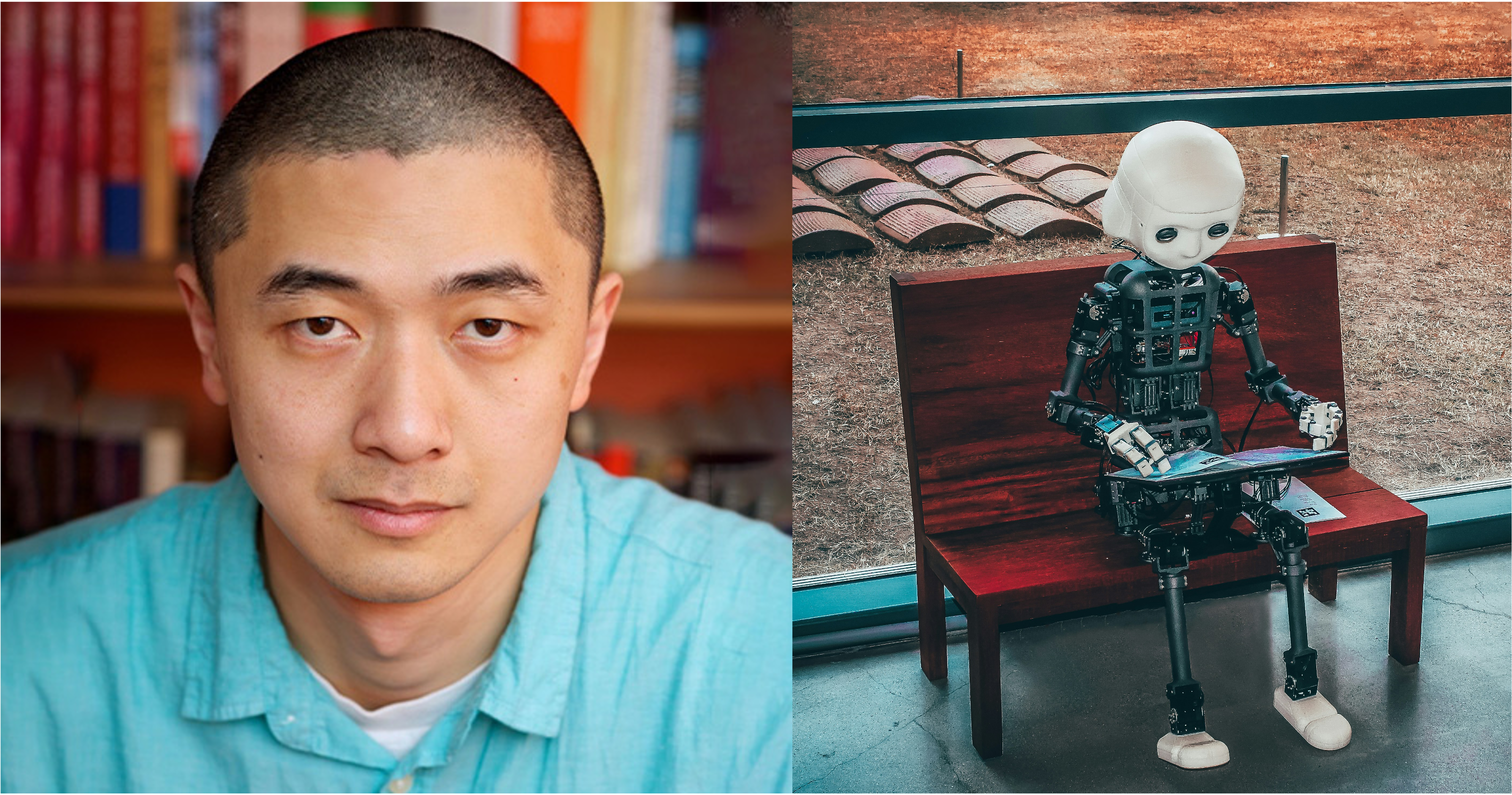
Top image courtesy of Lisa Tang Liu via SWF and Unsplash.