News

'I didn’t want to live anymore': Survivors of 2015 raw fish disease outbreak, who lost limbs & hearing, reflect on changed lives
The story goes on.
November 21, 2025, 03:05 PM



It's been 10 years since a 2015 outbreak of the highly infectious Group B Streptococcus (GBS) bacteria swept through Singapore.
Over 160 people suffered blood poisoning after eating dishes containing raw freshwater fish. Two people, including a 22-year-old man, died.
Raw ready-to-eat fish has since been banned in Singapore, and for most, the outbreak is at best a hazy memory — a barely remembered headline.
But two men, Tan Whee Boon and Sim Tharn Chun, are still living with the consequences every day of their lives.
Tan, 59, lost all his limbs due to complications from the infection.
Sim, 62, was left permanently deaf after the bacteria attacked his brain.
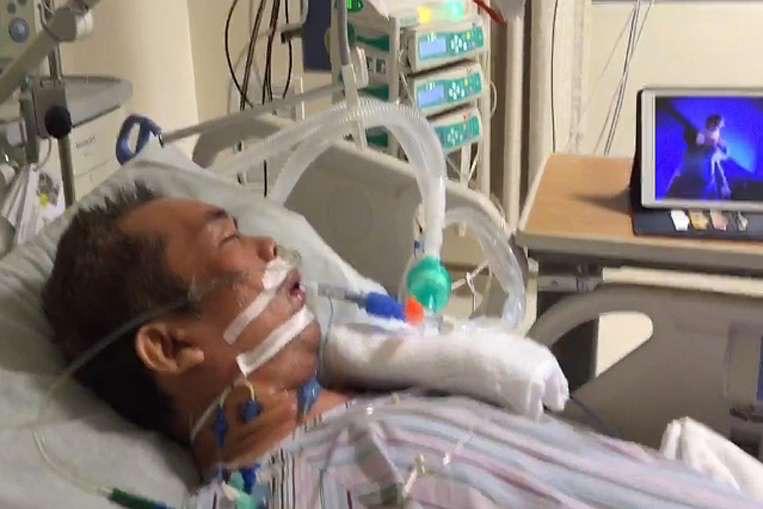 Photo from Sim and Chew
Communicating while deaf
I meet Sim and his wife, Cathie Chew, at a cafe at Woodlands Library.
They chose the quiet place because Sim relies on a speech-to-text application to communicate. He has a set of little mics that he brings around, and offers me one to clip onto my collar.
"When you say something, I can only read what you say, rather than listen. So you can wear this so it's easier," he explains.
Sim and Chew make for a striking couple. He wears a pink shirt and tinted glasses; she has a jaunty turquoise coat tied around her shoulders.
They've been married over 30 years and have three children: two daughters and one son. They also have a grandson, whose picture they have printed on a tote bag that Chew carries around.
"We just became grandparents last year," Sim tells me proudly.
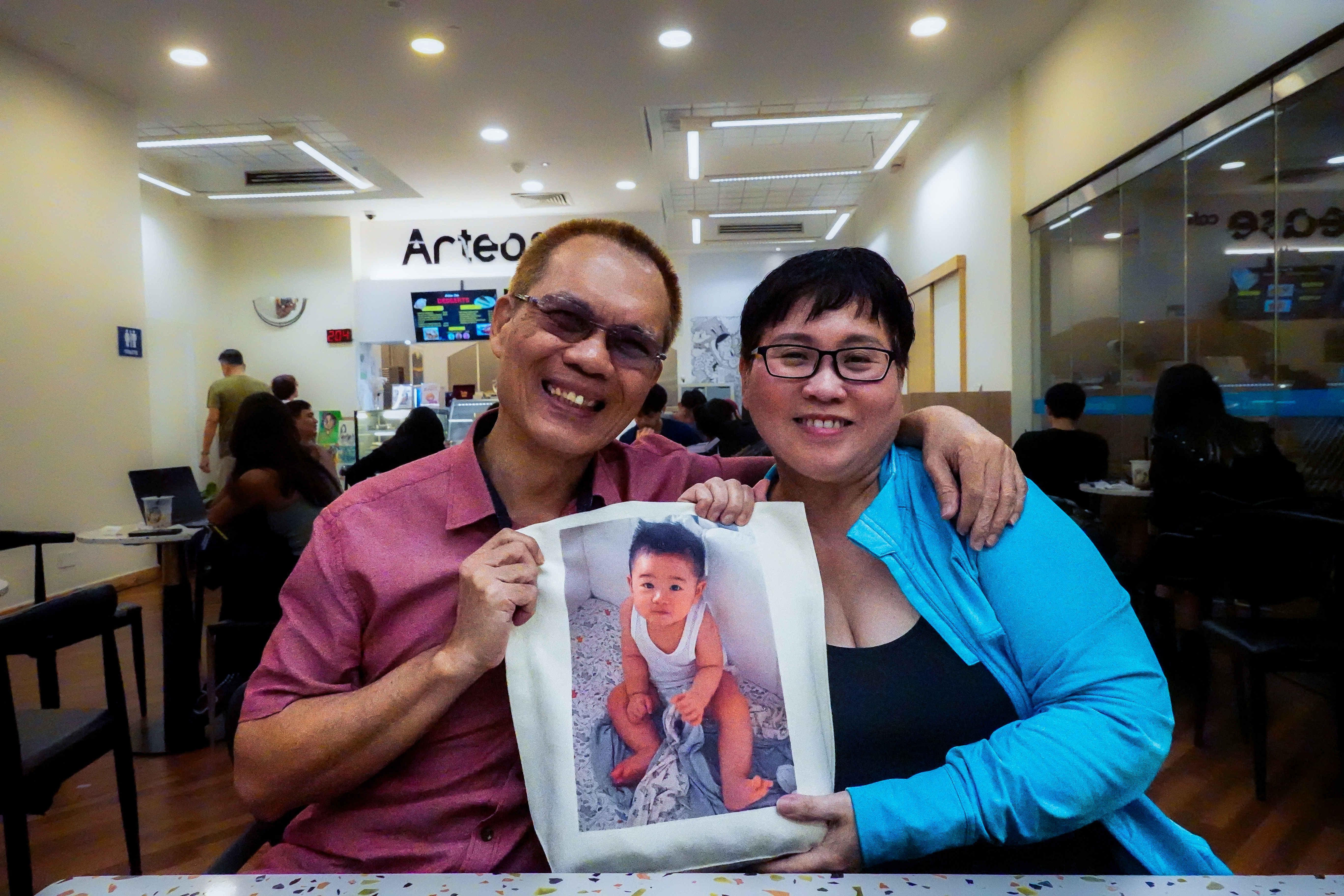 With the tote bag. Photo by Mothership
Falling sick
Before the illness, Sim was a high-flying regional sales manager at U.S. company Honeywell.
Things were good. In mid-2015, he won the Best Regional Sales Manager Award and bought a new set of golf clubs to celebrate.
He'd just flown back from a business trip in the Philippines when he decided to order a bowl of raw fish porridge at a hawker stall in Tiong Bahru.
"I'd been away for one week, so I thought of eating something local. I saw the raw fish stall, and I just couldn't resist it at that time," he says.
"The rest is pretty much history."
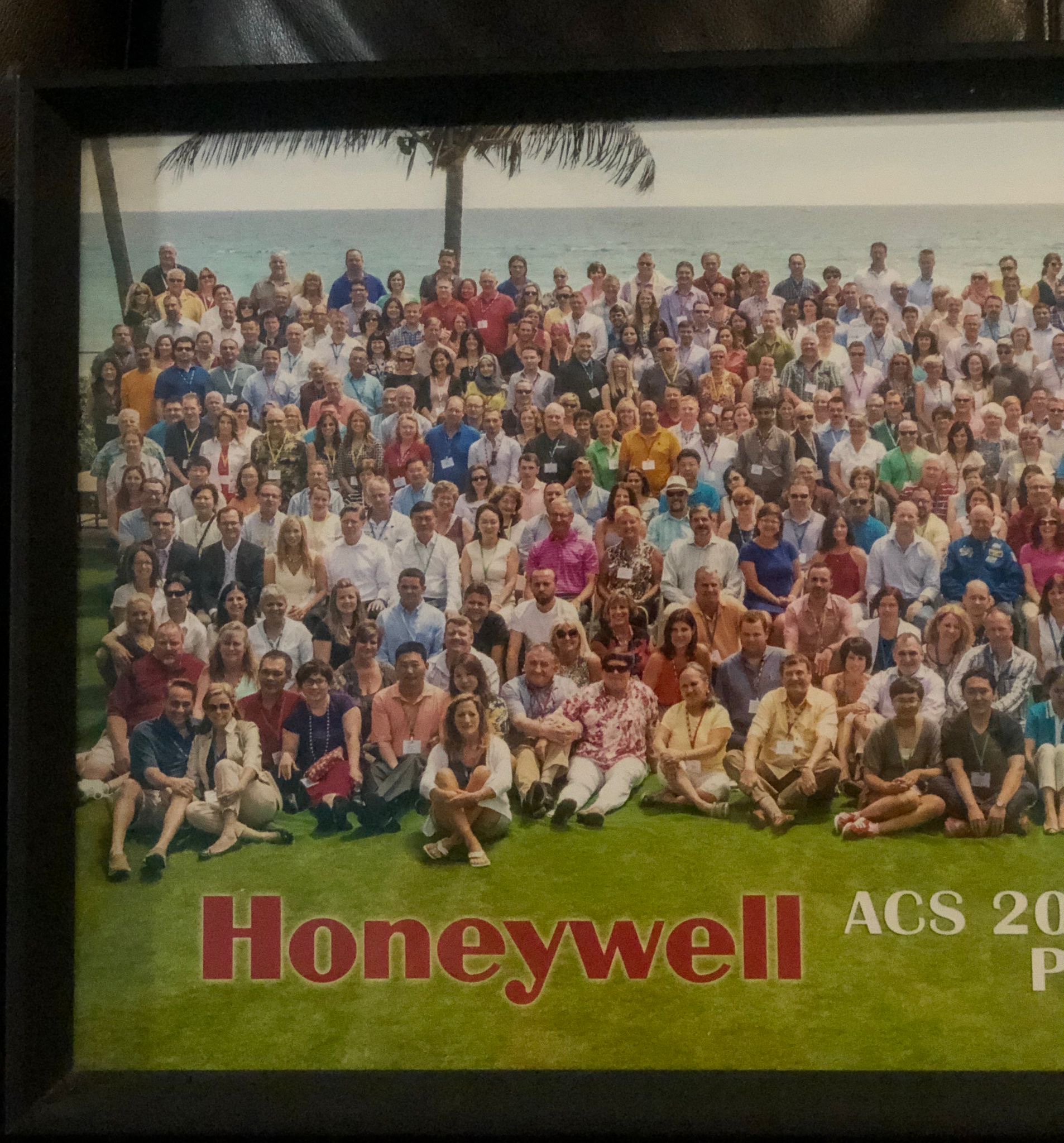 At Honeywell, his former workplace. Photo from Sim and Chew
The first symptoms were mild, flu-like, and Sim assumed he'd caught a cold. But a few days later, he began to feel dizzy while on his way home from work.
He remembers that night. They'd bought tickets to watch the new Hunger Games movie. The kids were looking forward to it.
But by the time his wife came home, he was slumped over on the sofa.
"I muttered, 'please get an ambulance'," he recalls. The next thing he remembers is waking up, 20 days later.
After emerging from his coma, his surroundings were a blur of distant, unintelligible noises, which he blamed on the after-effects of the illness.
It was only later that he realised he could no longer hear his wife's voice either.
Food poisoning
Tan's story is less subtle.
He'd eaten the same dish — raw fish porridge, albeit at a different store — and began to experience symptoms of food poisoning a few days later.
"It was quite serious. I continuously, through the whole night, had diarrhoea and vomiting...it felt out of control. I'd never experienced this before."
He decided to head to the A&E. Within an hour, he'd collapsed, unconscious.
It was two weeks later when he finally woke up. That was when the pain set in.
To save his life, his doctors had given him medication to restrict his blood flow and prevent the poisoning from spreading.
But his hands and feet had turned black and gangrenous from the lack of oxygen.
Despite their best efforts, they were unable to save the limbs. All four had to be amputated.
"I felt very helpless...I couldn't imagine how serious it would be. It was totally blank."
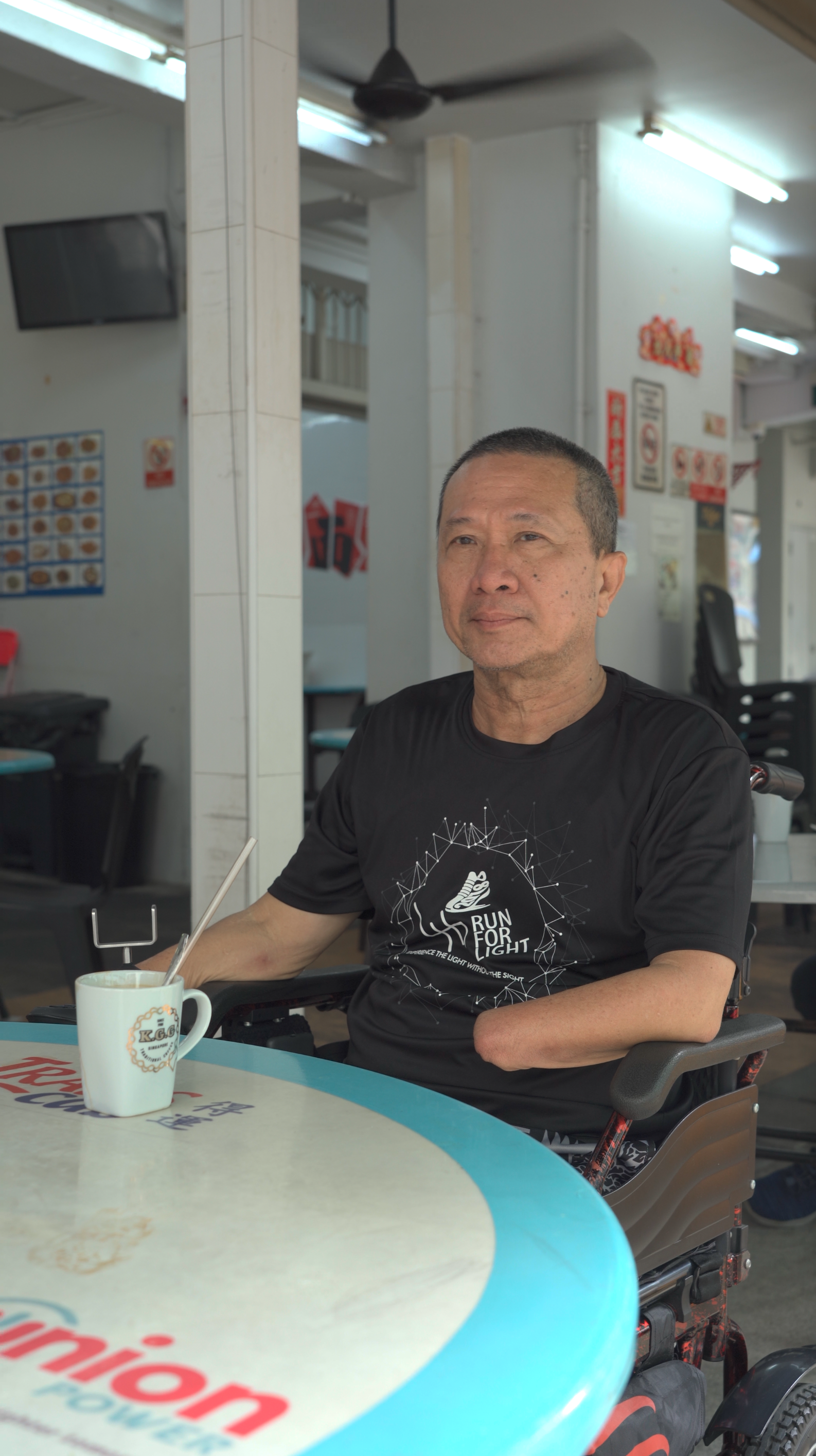 Photo by Mothership
Learning to live
Physical pain aside, the easiest part was surviving the illness. Continuing to live was — is — harder.
Both men lost their jobs. Additionally, Chew, then a veteran financial advisor, quit her job to look after her husband at home.
The hearing didn't just affect his communication, but also his balance — Sim, already weakened from the coma, had to re-learn how to stand, how to walk, how to bathe.
Tan, a former technician who worked 12-hour days, battled a dark cloud of aimlessness and depression.
"I was lost, with nothing to do, no job, no social life. I struggled with how to continue to live on...I felt hopeless, helpless. Like I didn't want to live anymore."
His wife became his caregiver and his 24/7 companion. When he finally emerged from bed, unsure how to kill his time, she'd accompany him to community events — dance events, dragon boating.
During our interview, she buys me and my colleagues drinks and settles down to use her phone while Tan and I talk.
Even in this, she's like his personal media liaison.
 Photo from Alita Initiative/Instagram
Meanwhile, Sim and Chew scrimped and saved. They sold their car to cut down on expenses. Friends and family helped to keep the "negative thoughts" at bay.
They also explored various ways to recover his hearing. On the doctor's advice, they tried hearing aids, and got cochlear implants surgically fitted. Patiently, they waited for the silence to dissipate.
It never did.
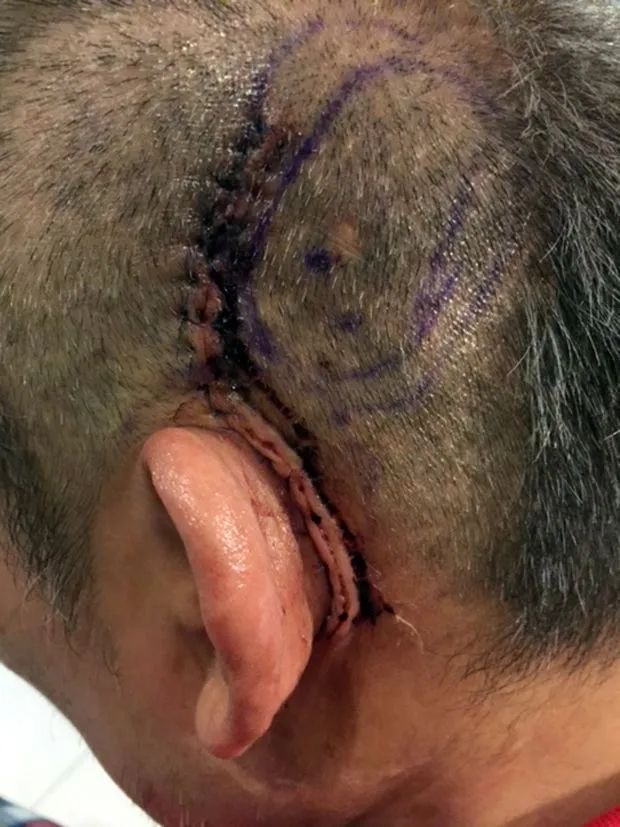 Post-cochlear surgery. Photo from Sim and Chew
Past the headlines
Today, both Sim and Tan have fallen into the rhythm of their new lives.
Both still depend heavily on their respective partners. Tan's wife accompanies him to his dragon boating sessions and has developed muscles of her own (which she shows off to me proudly).
"Whenever I go, she has to go," Tan teases her. "Kena sabo," she retorts good-naturedly.
His days are a whirlwind of community activities. Tan admits it's tiring for his wife to always tag along, but that she finds meaning in the action.
"I would say I had a blessed recovery journey," he says.
 Tan's wife behind him, with her muscles. Photo from Tan
Sim and Chew, too, go everywhere together.
Sim firmly believes that he should cater to his loved ones' communication methods and not the other way round, and has never picked up sign language.
He relies fully on his technological tools to help him hear. He can still speak, though his volume is a little inconsistent (Chew regularly gestures at him to speak up or quiet down, through the course of our interview).
He tells me he still can hear his own voice, perfectly, whenever he speaks. But it's a trick of his brain — a memory that loops, more than any real auditory function. "So now even more, I enjoy talking to myself," he quips.
"How about your wife's voice? Do you still remember it?" I ask.
"Actually, no," he says. "A little bit, sometimes...in the quietness of the night...I catch a little glimpse, that resembles what I was familiar with."
Chew gives him a light smack on the arm when he confesses this, blithe and smiling. She puts up a good front.
But later, I watch her turn and wipe away her tears.
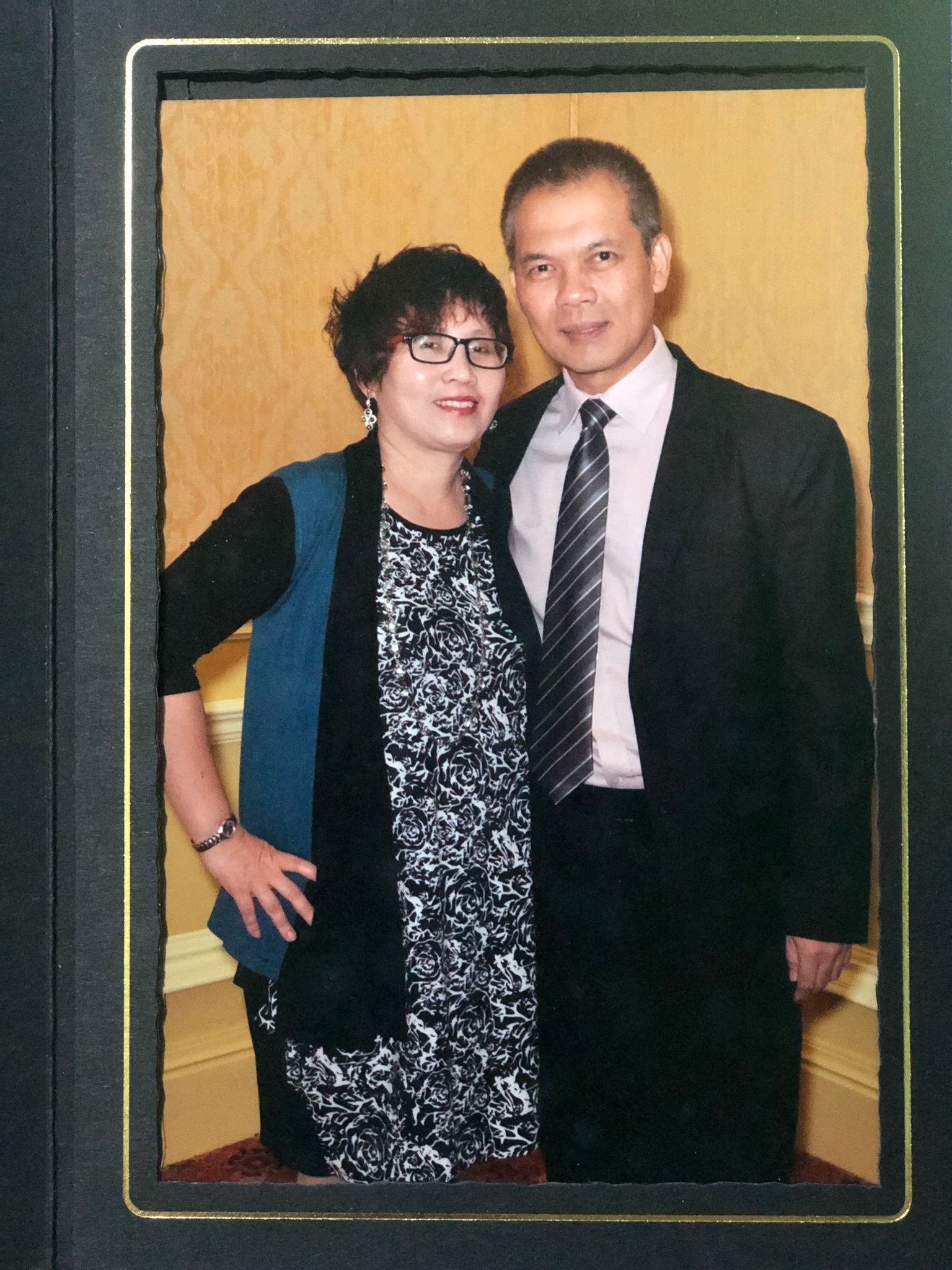 Sim and Chew in their younger days. Photo from Sim and Chew
Counting down the days
For most people, life is marked by seasons — phases that shift, gradually, one into another.
But for Sim and Tan, there is only the starkness of before and after.
By anyone's standards, both have recovered admirably. Tan is tanned and healthy-looking from his exercise, manoeuvring through the estate in his modified wheelchair with a practised ease.
And when Sim walks through the library with his wife, hand-in-hand, they could be any ordinary, middle-aged couple.
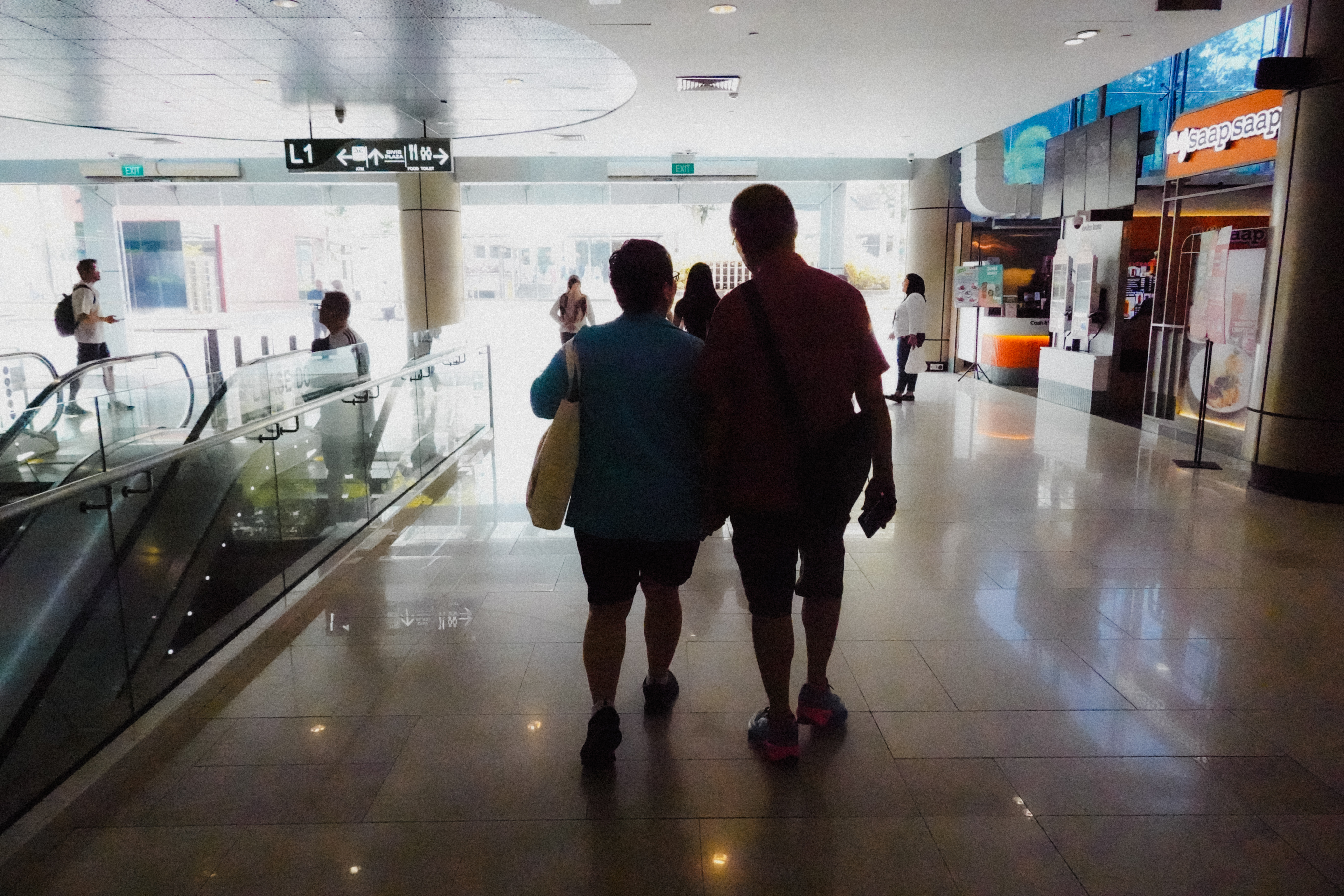 Photo by Mothership
Sim tells me that he tries to live a fruitful life, a contented life.
He's currently working as a docent guide with Ludus Lab, an inclusive tour agency that provides guided tours around Enabling Village led by persons with disabilities.
He's learnt to bake, spends time with family and friends, and attends services with Chew at Wesley Methodist Church.
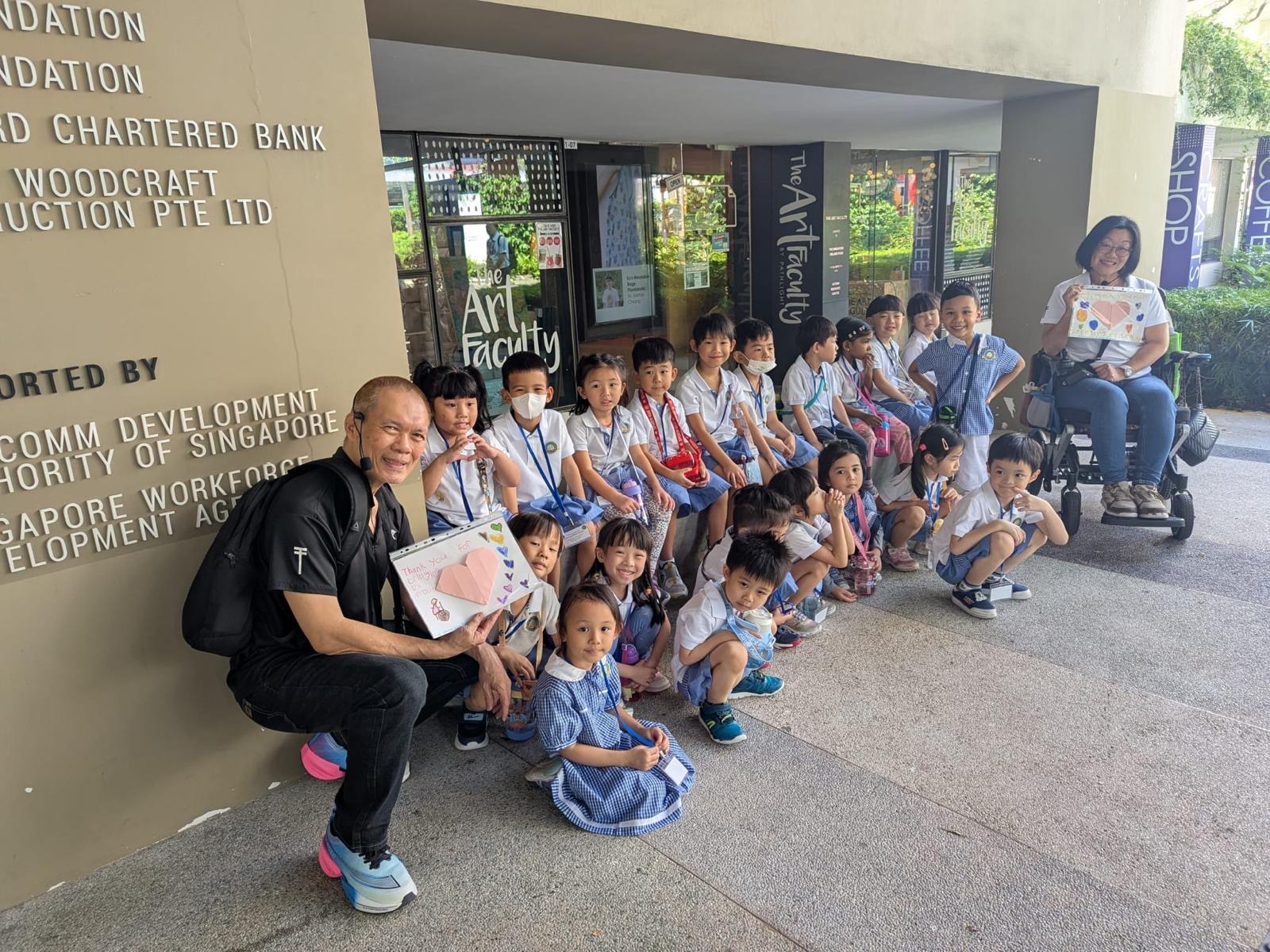 As a docent guide. Photo from Sim and Chew
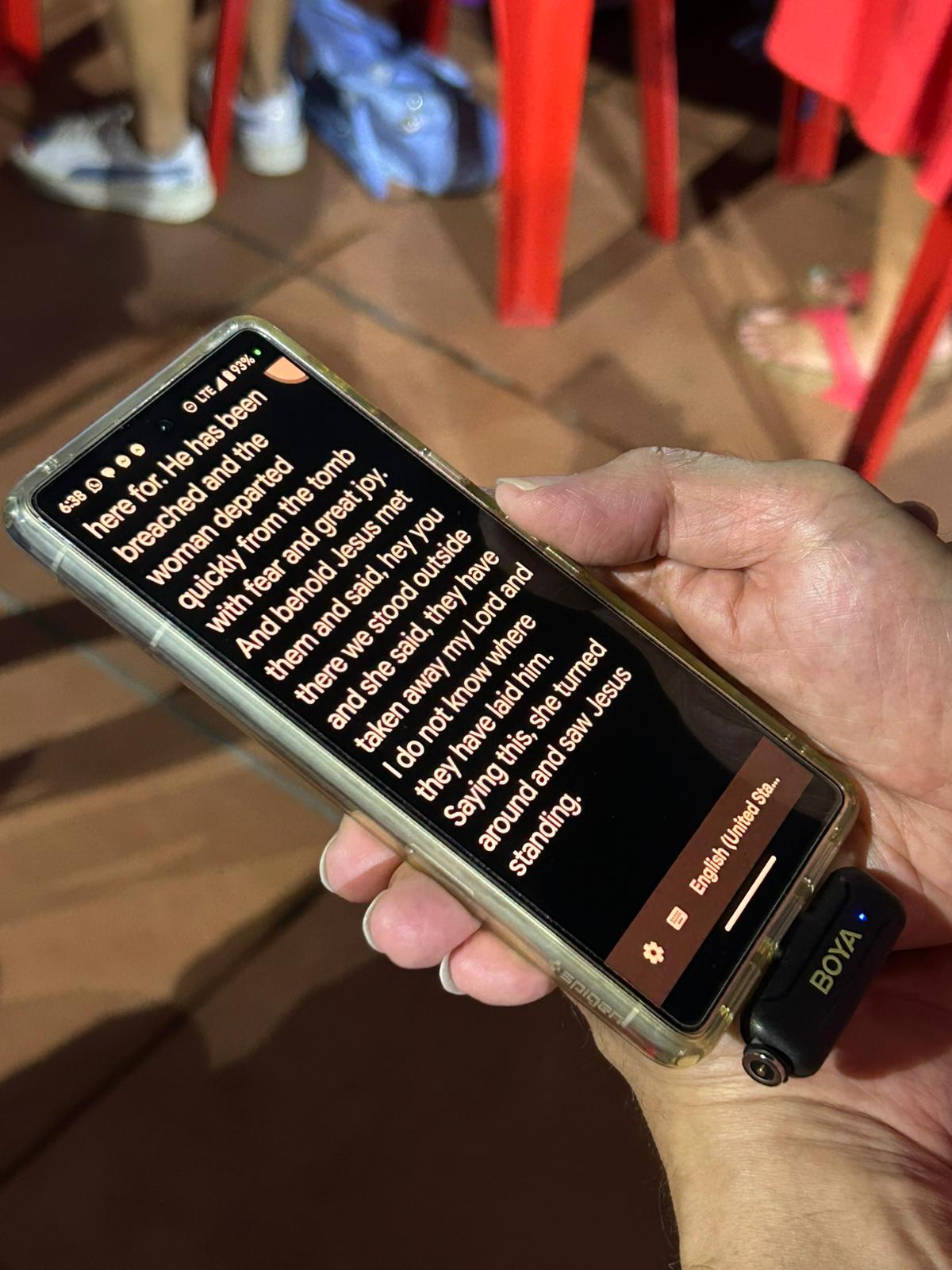 Using his speech-to-text technology to listen to sermons. Photo from Sim and Chew
But there is always the faint wishing for something more.
Sometimes he'll see a shiny car pass by and feel a wistfulness for the life he could've had. Or he'll be in a group conversation but fall off, his tech unable to keep up with the overlapping voices.
Even as he adores his little grandson, "when I play with him, I do not know whether he's talking or laughing. So it's a bit challenging."
Meanwhile, Tan recently lost his job as a building information modeller. He still has a part-time role as a community teacher at Singapore Institute of Technology (SIT), and he still keeps up with his exercise, even going abroad for competitions.
But he considers himself like the "living dead".
"My health condition is like zero. It's not only what you see, my internal [systems] are also haywire. Anytime, I can go," he tells me.
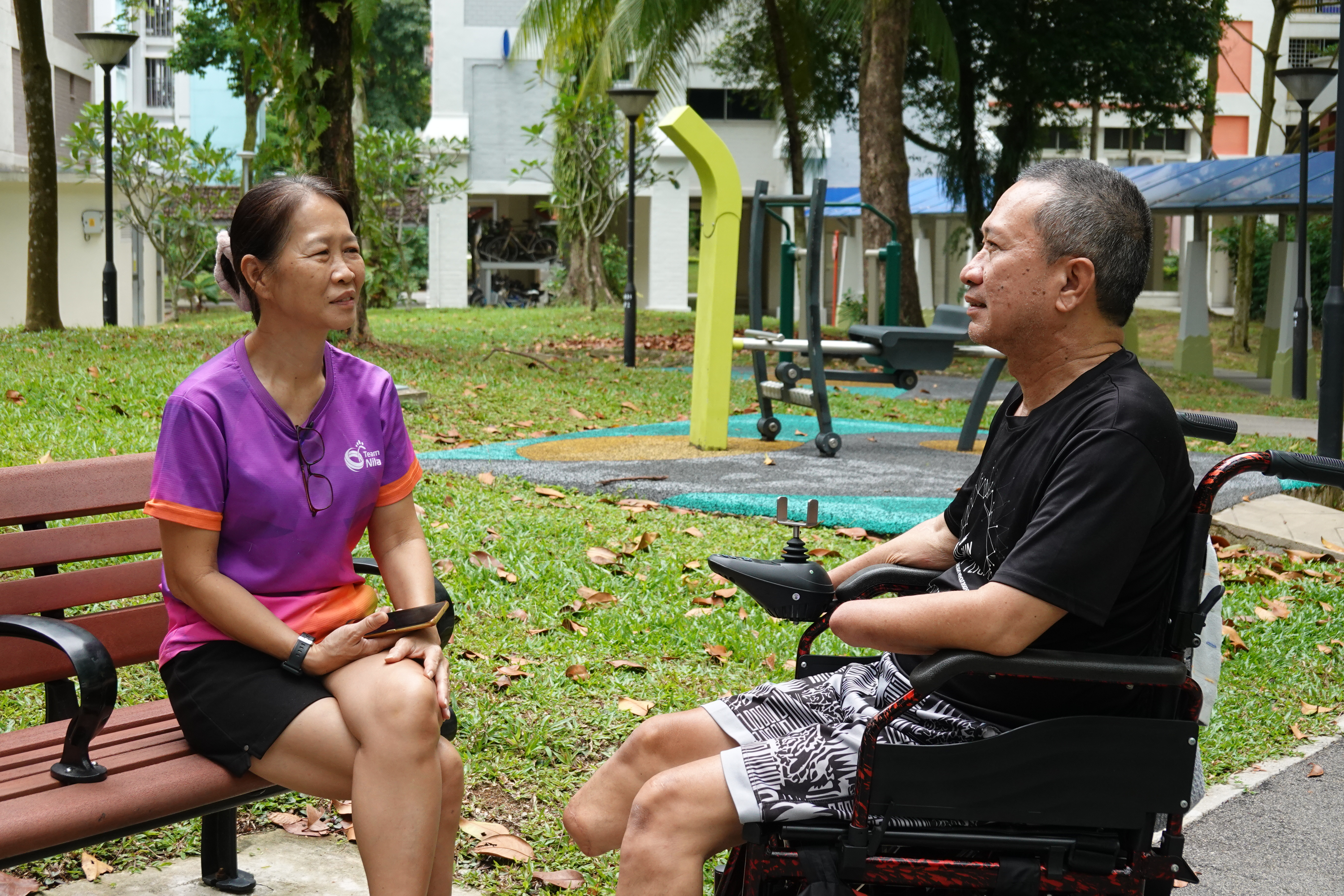 Photo by Mothership
Being thankful
When you learn to write a story, there are three parts. The build-up, the climax, and the resolution. That's what I was subconsciously searching for in this story.
But maybe this is a lesson for me.
There is no perfect, back-to-before recovery here. When I tell Tan how his story must have been an inspiration to others, he murmurs something politely and moves on.
It must be so tiring to be so inspirational all the time. To cater to people's desire for a happily-ever-after, when there is none. When the story is still going on, new struggles emerge every day, new monsters to fight and battles to win.
But there is growth. There is perseverance, and gratefulness, and a hard-won acceptance of what is good enough.
Sim and his wife tell me that in spite of everything, they consider his life a miracle. In 1997, he fell sick with a similar condition after eating undercooked beef overseas. That time too, he fell into a coma. But he woke up.
Both times, he came near death; both times he survived.
"It's providence...God has provided, in one way or another," he tells me. He still hopes, one day, that technology will improve and he'll be able to hear his grandson's voice.
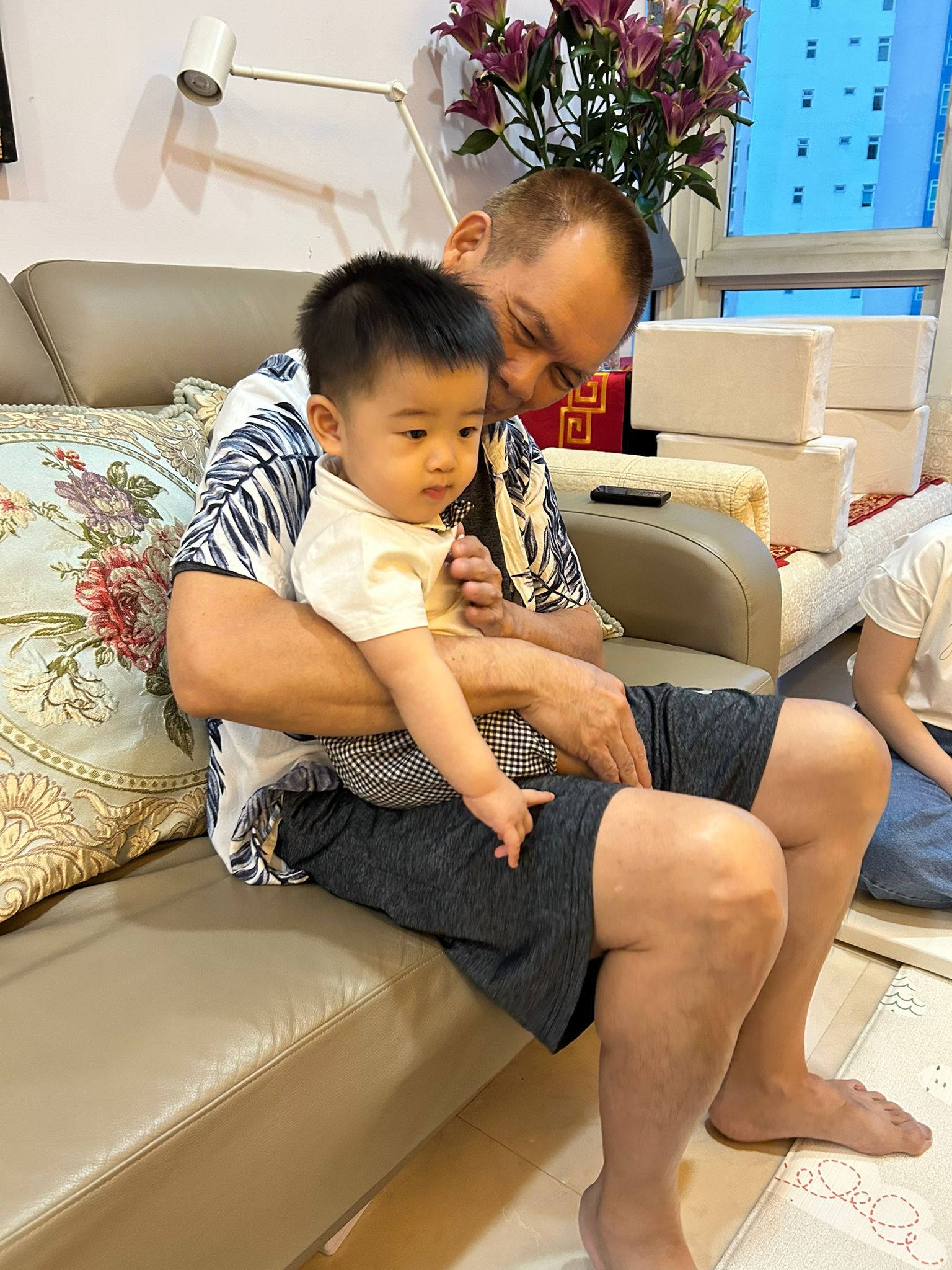 Sim and his grandson, nine months old. Photo from Sim and Chew
Meanwhile, Tan is taking each day as it comes. In his "early retirement", he does what he can, asks for help when he needs it, to keep the family afloat.
"If I can do everything good for today, it's good already. Living to the fullest for today is good enough for me," he tells me.
I watch their easy companionship, as Tan and his wife wander through the grounds of the HDB estate. "Why you never look at me?" she teases, when the photographer asks them to pose for the camera.
He'd earlier remarked that their relationship was "not so good as before". But that they understood each other better regardless, a weary yet impenetrable affection built from all their hours together, struggling, not giving up.
I didn't really get it then. But I think I do now.
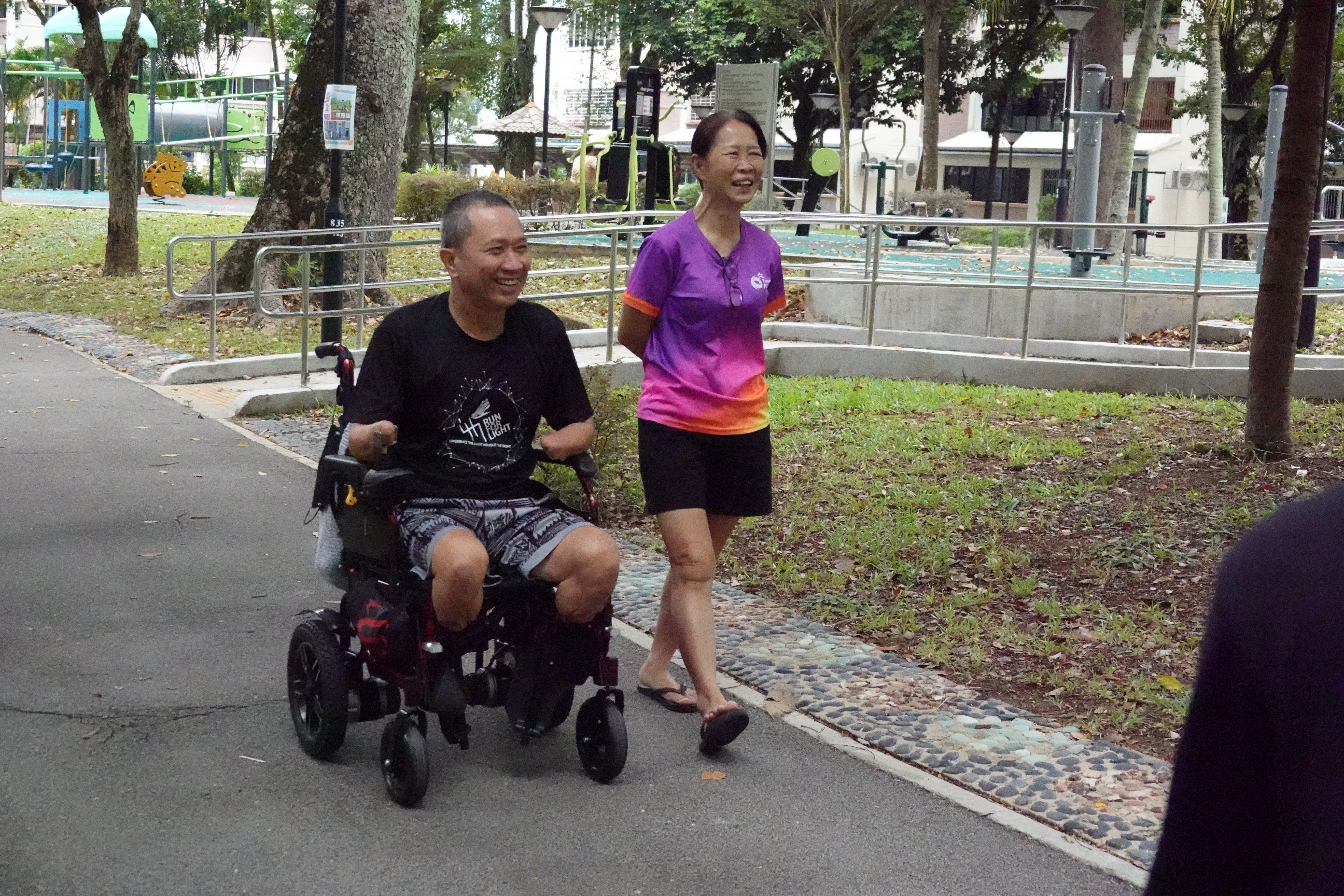 Photo by Mothership
@mothershipsg Mr Tan is currently a part-time community teacher at SIT, and is gearing up for dragon boating competitions abroad💪 #tiktoksg #fypsg #amputee ♬ original sound - Mothership
Top image by Mothership and from Sim and Chew