News

Netizen may have misunderstood WP's Eileen Chong's point in criticism, Ho Ching weighs in
There may have been a misunderstanding over the point that was being made.
November 11, 2025, 12:03 AM
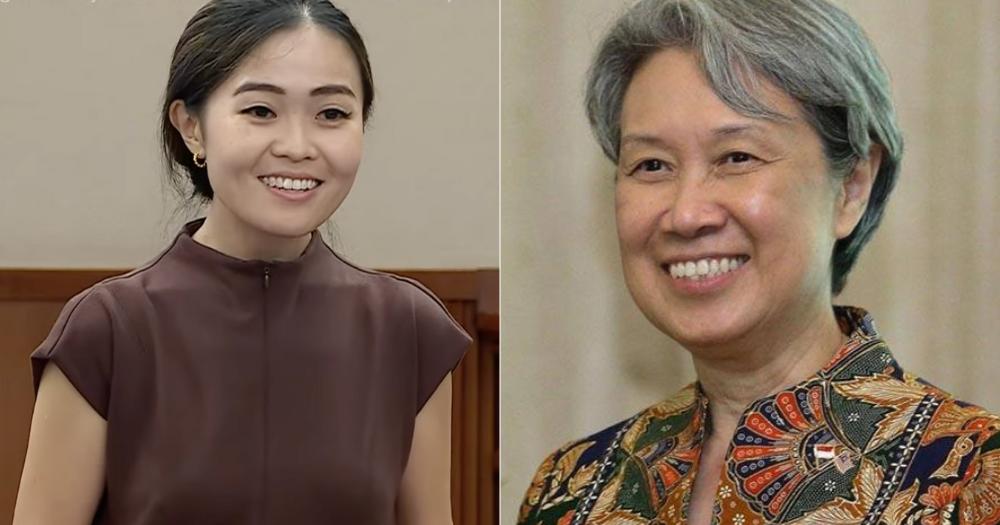


Workers' Party (WP) Non-Constituency Member of Parliament (NCMP) Eileen Chong was slammed by netizens after appearing to make a "mistake" during a Parliament debate.
This prompted Ho Ching, the ex-Temasek CEO, to speak up and say that she doesn't think people should be made fun of for mistakes.
But did Chong make a mistake in the first place, or the netizens' misunderstanding of the situation?
The debate on the bill
During the Parliamentary debate on the Online Safety (Relief and Accountability) Bill, WP NCMP Andre Low gave a speech outlining the WP's proposed amendments.
While the WP understands the motivations behind the bill, and "wishes to support it", it had some concerns to raise.
Among the concerns were the broad powers granted to the office of the Commissioner for Online Safety, which should be appropriately constrained by checks and balances, Low said.
Low pointed to Clause 26 of the bill, where the Commissioner is empowered to issue directions if he has "reason to suspect" that online harmful activity was conducted.
The WP wanted to change this to "reasonable grounds to believe", arguing this is not mere semantics. He cited the similar Online Safety Act in the UK, where the former allows an investigation to take place, while the latter allows enforcement action by the authorities.
"If we are serious about protecting victims, we must be equally serious about ensuring the Commissioner’s enforcement powers rest on evidence, not suspicion. Our amendment achieves both," Low said.
PAP MPs argue against Low's point
This point raised by Low was later addressed by PAP MPs.
Mariam Jaafar said that the new law "must put victims front and centre", noting that a "fair comment" exception leaves confusion and loopholes.
She noted that changing the term from "reason to suspect" to "reasonable grounds to believe" will raise barriers for victims and delay timely relief.
She said that waiting for victims to produce evidence for "reasonable grounds to believe" before acting is not protection.
Mariam Jaafar said the UK Act does use the term "reasonable grounds to believe", but in a specific context, such as defining the platform's duty of care, but not to victim redress, which happens at the platform level.
"So it's not equivalent to the OSC [Online Safety Commissioner] stepping in to issue takedown or redress orders," she said.
Foo Cexiang also commented on this point, saying he could not agree to the WP's change to raise the threshold from "reason to suspect" to "reasonable grounds to believe".
Foo said that raising the threshold for the Commissioner to take action would result in more time needed before he can act, during which the victim would "suffer in silence."
Foo added that the bill includes applications to reconsider or appeal against the Commissioner's decision as safeguards.
Eileen Chong's clarification
After Foo's speech, Chong sought a clarification, asking of the Deputy Speaker:
"Thank you Mr Foo. I would like to seek a clarification regarding your point on fair comment and if you can elaborate on what you mean. Because surely a person cannot be guilty until proven innocent, because anyone can lodge a report to this Commission. And I would urge Mr Foo to refer to part 4 of the draft bill.
And if the Commission has to assess and take action based on a single person's viewpoint, however valid as it may be, surely it should be based on reasonable grounds to believe, right, that something has actually occurred rather than just a reasonable suspicion. Thank you very much."
Proven guilty
Deputy Speaker Christopher de Souza then asked to confirm if Chong said a person cannot be proven guilty until proven innocent.
Chong clarified that she meant, "Surely a person should not be guilty until proven innocent."
She subsequently repeated her statement, that "(a person) should not be assumed to be guilty until proven innocent".
De Souza said, "I see. Understand," and invited Foo to respond.
Foo said he doesn't think the order prescribed by the Commissioner presumes guilt, and there is no judgment on whether someone is guilty if these directions are issued.
He added that's why there are safeguards built in that allow for the Commissioner's actions to be reconsidered or an appeal to be made.
Foo moved on to the other point of Chong's clarification, and said that while the Commissioner would indeed take action based on information provided by the victim, it will also be based on actions done by the "perpetrator."
Alleged actions
In a follow-up question, Chong asked, "Would Mr Foo not agree that if it's based on a report filed by the victim, then it's "alleged actions" by the perpetrator, and the Commissioner or the Commission would need to investigate if that has indeed happened and therefore warrants any directions or orders."
Foo responded that the strong safeguards also allow for legal action and "severe punishment" to be taken against purported victims who are later found to have supplied false information.
Need for speed
Law Minister Edwin Tong laid out in his speech that at present, there is no framework which can give redress to harms that happen at the speed and extent in the online space.
"While victims may try and seek relief in Court, there is a limit to how fast Court proceedings can be, and may also be costly. We all know that in these types of cases, speed of redress is crucial.
Most victims of such harms do not want to have to seek relief in Court, through the Court process."
He added that the purpose of the OSC is to deliver speedy, practical relief to give redress to what has objectively been determined to be an online harm.
In the closing speech of the debate by Minister of State Rahayu Mahzam, she addressed the point over "reason to suspect."
She said this is an "established legal threshold" that applies in other laws, and it has been assessed to meet the intent that online harms can be tackled in a timely manner.
She added that the Commission will publish guidelines that inform its decisions to ensure objectivity and consistency, which will inform the public the factors that the Commissioner will take into account.
"Victims and recipients of the OSC’s directions will be able to seek the OSC’s reconsideration if they disagree with it, and appeal to an independent Appeal Committee thereafter," she said.
Internet kerfuffle
The debate may have ended there, if not for the posts of a netizen who goes by Richard Weng.
Weng runs a Facebook page called Future of Singapore, which has over 4,000 followers.
On Nov. 8, he shared a clip from the Parliament debate focusing on Chong's clarification.
In his post, he accused Chong of being "fundamentally incompetent", listed her background and qualifications and said she "completely mangled a simple legal term that a secondary school student would know."
Meanwhile, he praised Foo for "eloquently responding with logic and purpose."
Weng's opprobrium seems to stem from believing that Chong should have used the term "innocent until proven guilty" instead.
In another post on the same day, he said that while he is not "an English teacher", he remained adamant that Chong's words were "nonsense and totally did not make any sense."
What Chong likely meant
However, while Weng seemed convinced that Chong made an error, he did not point out that the Deputy Speaker asked Chong to explain her statement and seemed satisfied with her answer.
While the common phrase is of course "innocent until proven guilty", Chong was referring to a hypothetical scenario in which the Commissioner acts against a perpetrator of online harms based on a report filed by a victim, based on "reason to suspect" as in the bill.
However, if it is later found that the victim unfortunately supplied false information, then the "perpetrator" would be proven "innocent", but the Commissioner would have already mistakenly issued his directions as though the accused was "guilty" in the first place.
Ho Ching
Ho Ching, ex-Temasek CEO and wife of Senior Minister Lee Hsien Loong, liked and shared the second post by Weng.
While Ho Ching did not point out the nuances of the debate between Foo and Chong, she did say that she doesn't think people should be made fun of if they make a mistake in their speech.
"People could be nervous, and stumble over their speech.
Or they could mix up syllables or letters of words, like in spoonerism or with malaprops.
We shouldn’t snigger or discourage folks from speaking up, however nervous or mixed up."
Top image from Future of Singapore FB page.