Environment

Dogs forced into crates at Seletar farm have bitten & chased people, AVS says force was 'within acceptable parameters'
The contractor was deployed by the Animal & Veterinary Service (AVS) following reports of four dog bite incidents in the area.
November 16, 2025, 04:52 PM


After videos of a stray dog-trapping operation at Seletar West Farmway 8 sparked concerns about animal cruelty, the National Parks Board's (NParks) Animal & Veterinary Service (AVS) has responded.
The agency said it had deployed an animal management contractor to trap and remove three dogs on Nov. 14 for public safety reasons.
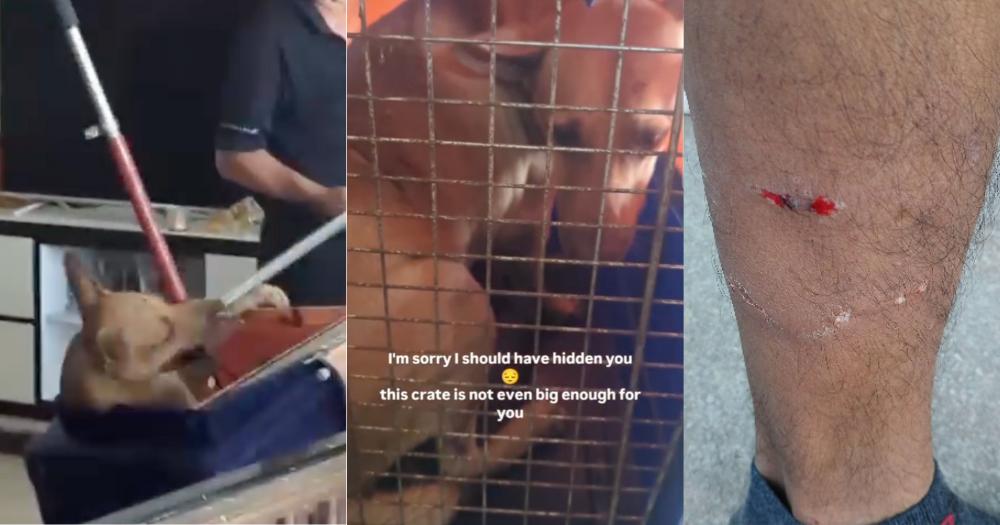
In the videos circulating online, several handlers from the contractor can be seen using poles to force a dog into a small crate.
One video showed them using a pole to restrain and drag a dog towards the crate while it barked and struggled.
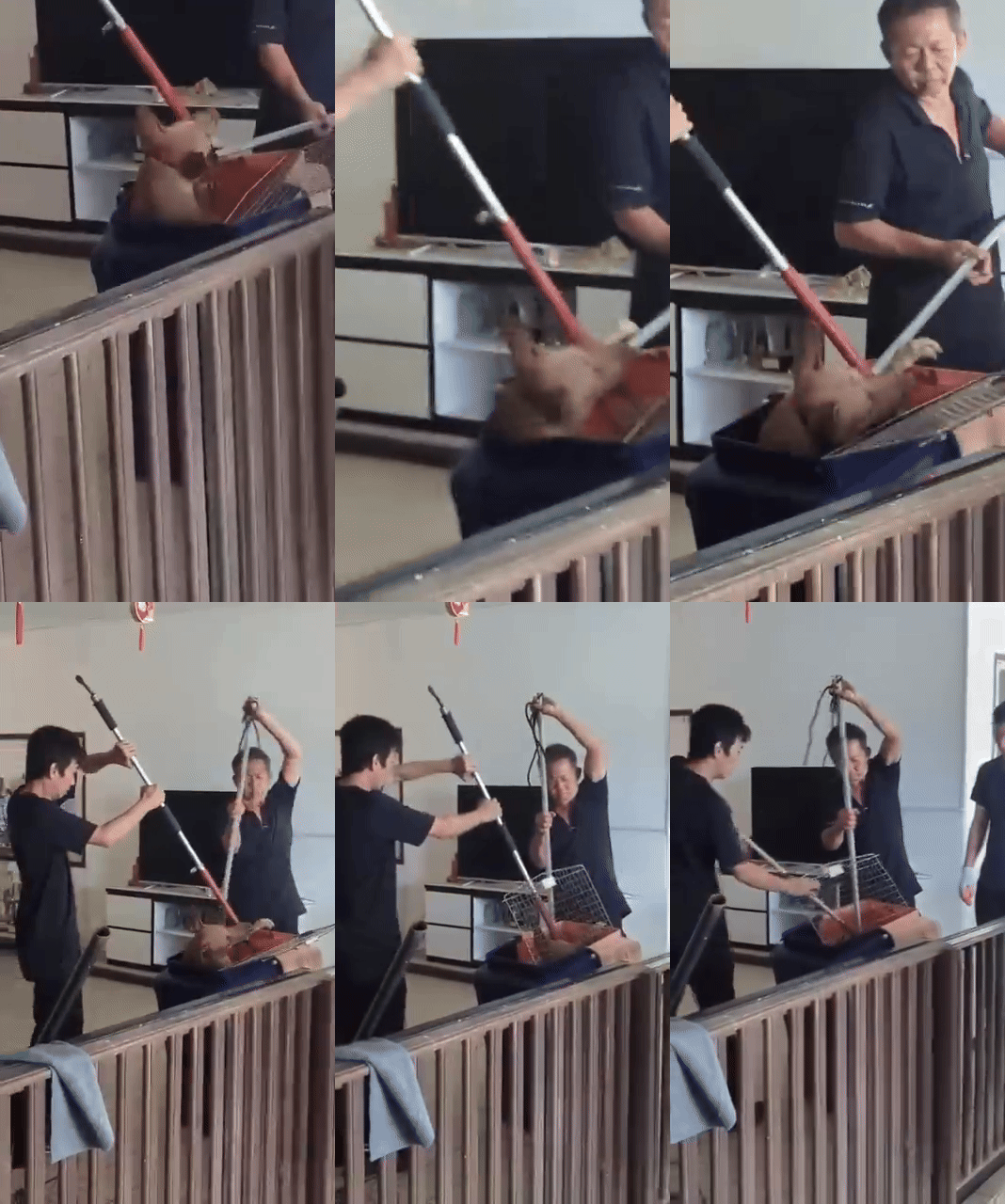 Gif from Yeo Yeo/Facebook
 Gif from Yeo Yeo/Facebook
AVS is aware of the videos, the Group Director for Community Animal Management at AVS, Anna Wong, said in response to Mothership's queries.
She explained that four dog bite and chasing incidents were reported in the area from May to November 2025, including two within a span of six days in November.
These resulted in injuries to members of the public, ranging from scratches to puncture wounds that required medical attention.
Among the four victims, two previously confirmed with AVS that one of the dogs AVS had trapped had bitten them in separate incidents. One victim was chased by all three dogs before being bitten by one.
"Given the escalating pattern of incidents and potential risk to public safety, intervention became necessary," Wong said.
Scared and in distress
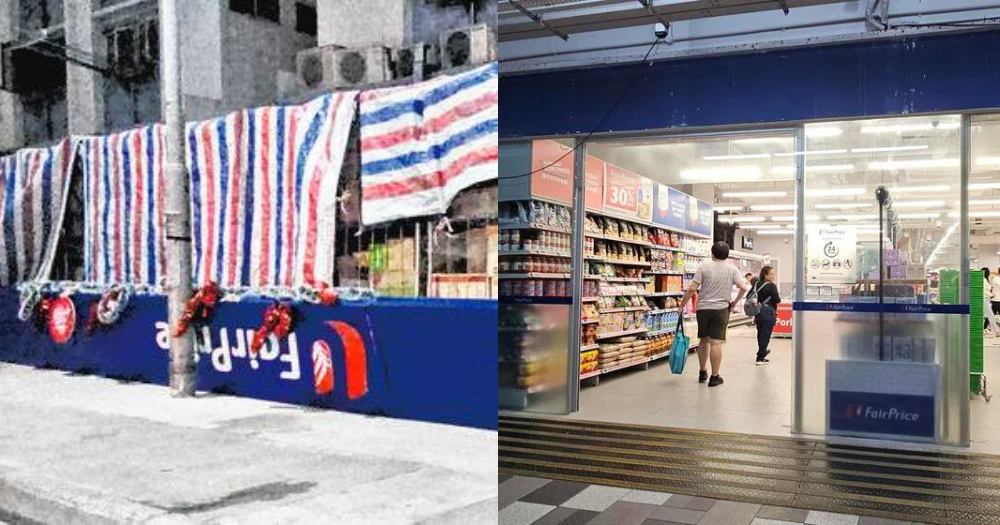
Several plant and flower nurseries are located along Seletar West Farmway 8, and the trapping appears to have taken place at one of them.
The bites had occurred at the nursery, and Wong said that AVS had engaged the nursery multiple times to address the issue.
The nursery then clarified that the dogs were not owned by them, and agreed to remove the dogs for safety reasons.
Based on photos shared on Instagram by a user, there were blood and faeces stains from the dogs on the floor.
"The dogs were so scared," the user wrote over the photo.
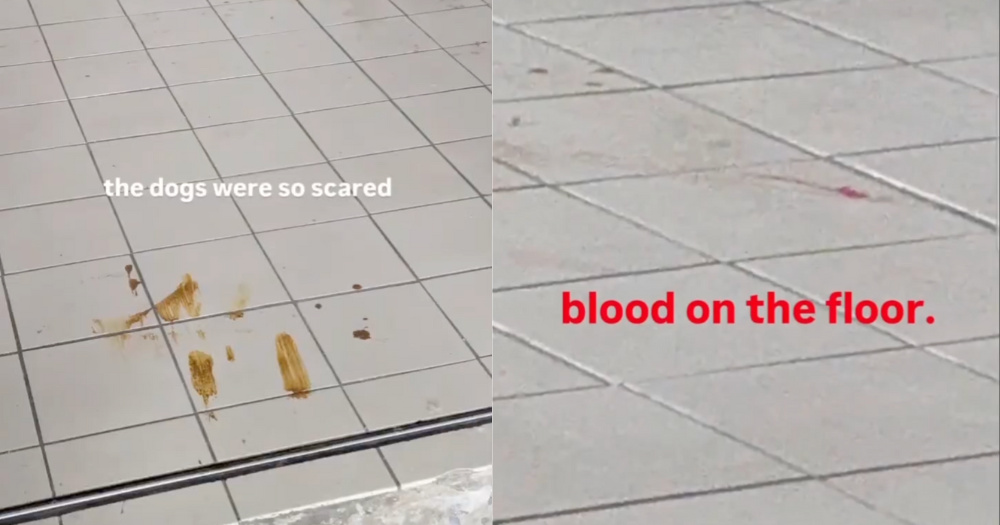 Screenshot from Instagram
According to the user, the dog that was seen barking and struggling against the pole was 10 years old and had a limp.
After it was placed in the crate, he "couldn't stand up after the shock".
 Screenshot from Instagram
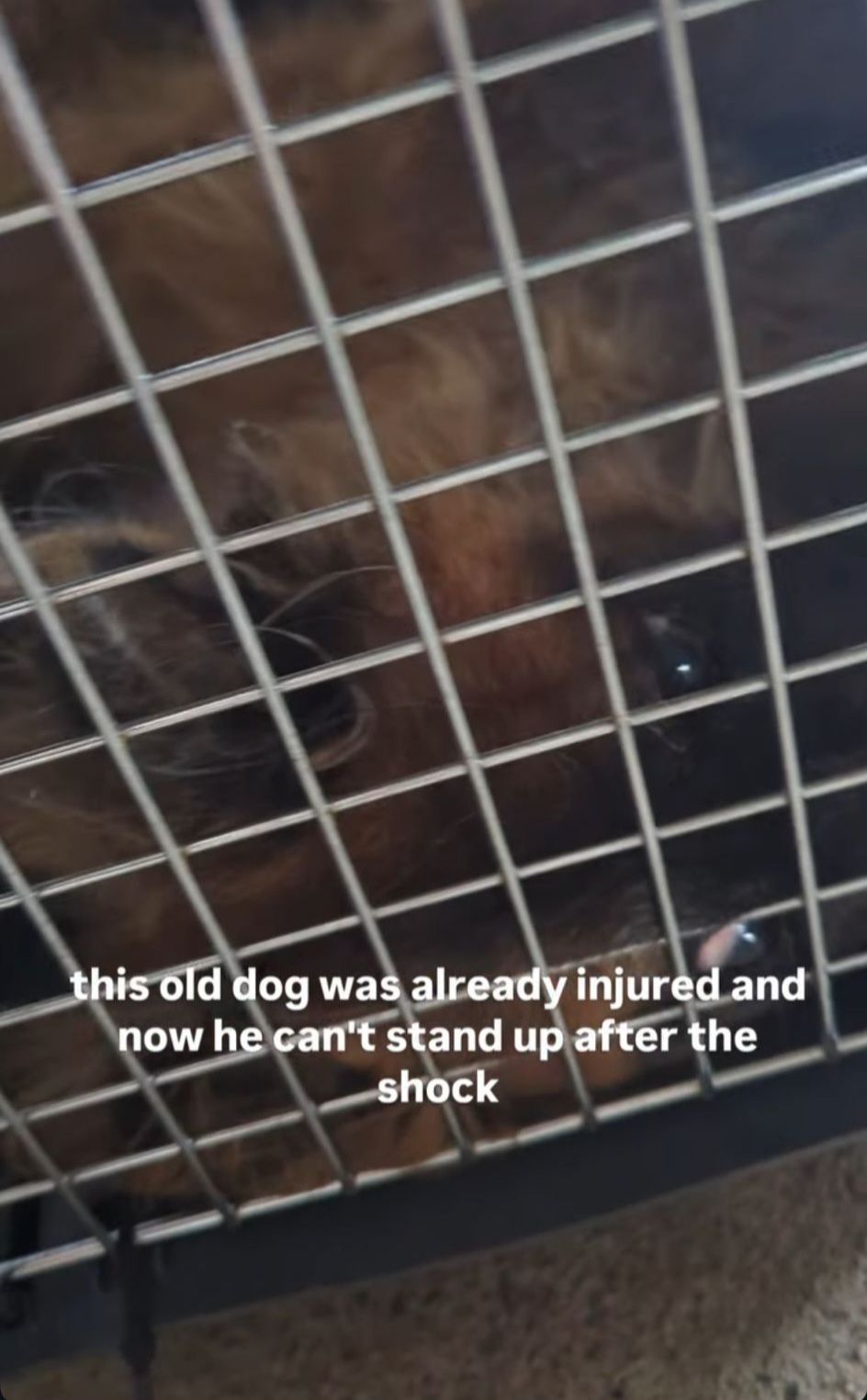 Screenshot from Instagram
Before the incident, one of the dogs frequently visited the nursery to drink water from the plant pots, according to the user.
 Screenshot from Instagram
Method behind the operations
In a Facebook post about the incident, the dog welfare non-profit Chained Dog Awareness in Singapore (CDAS) called the videos and photos "heartbreaking", saying they caused "widespread public distress".
It added that the crates used to trap the dogs looked far too small for their size, and questioned if the contractor could have "adopted a more humane, thoughtful, and coordinated approach".
CDAS also questioned "whether sufficient effort was made to identify the specific dog(s) involved in the biting incidents, rather than attempting to round up all the dogs indiscriminately".
"Even if the current trapping method is an approved procedure, that does not make it acceptable," as dogs are capable of feeling fear, pain, and distress, CDAS added.
The biting incidents
AVS has shared the photos and reports by two victims of the dog bite and chasing incidents.
One victim said that on May 25, he was cycling along Seletar West Farmway 8 when three dogs appeared behind him.
They chased and barked at him, and one of the dogs bit his right calf while he cycled away, according to the victim.
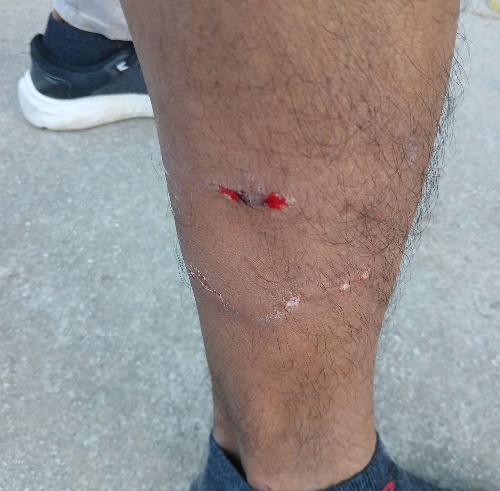 Photo from AVS
Another victim said he was looking at the outdoor display plants in the nursery on Oct. 11, when three dogs resting under a tentage suddenly ran up to him.
One of the dogs bit his right thigh without provocation or warning, he added.
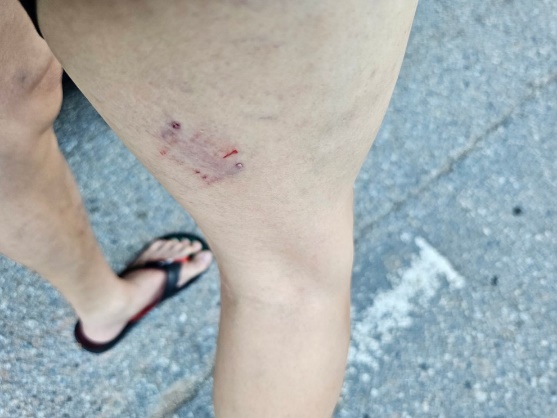 Photo from AVS
Force was within acceptable parameters
In Wong's statement, she said that the trapping operation was conducted under the supervision of AVS staff.
AVS had assessed that the amount of force used during the restraint of the dogs was "within acceptable parameters", considering the dogs' history of aggression.
Their history of aggression was also why AVS wanted urgently to secure the dogs promptly and safely.
"Trapping was achieved with reasonable force to safely secure the dogs, and all equipment deployed supports humane handling practices," she said.
AVS staff were also present onsite throughout the operation to ensure procedures were carried out in accordance with animal welfare standards.
The contractor's use of restraining poles to secure the dogs complies with international standards such as the World Organisation for Animal Health (WOAH)’s guidelines on Stray Dog Population Control, she added.
No uncovered wire loops or other potentially harmful devices were used during the trapping process.
Wong explained that enclosure trapping, an alternative method, was not viable due to the time required, and that the presence of alternative food sources would compromise bait effectiveness.
Regarding the video of the contractors appearing to push a dog's head, Wong explained that the dog had bitten and latched onto both the catch pole and snare pole during the restraint process.
The contractor applied "controlled pressure" to the poles to loosen the dog's bite and reduce tension on the restraining devices — a necessary response, Wong said, to safely disengage the dog's grip on the equipment.
These actions were carried out to prevent injury to both the dog and the contractor by avoiding forceful pulling that could cause harm to the dog's mouth or neck.
"Throughout the operation, all restraint procedures were carried out with due consideration for both animal welfare and personnel safety," Wong said.
Currently under care
Three dogs that were trapped are currently in AVS' care.
They have been observed by AVS to be bright, alert, and eating well, with no active bleeding since they were brought in.
AVS will continue to monitor the dogs before assessing their suitability for rehoming under the Trap-Neuter-Rehome/Release-Manage (TNRM) programme.
Members of the public who are interested to adopt dogs from the programme can approach NParks' TNRM rehoming partners.
NParks also advised members of the public to avoid staring at free-roaming dogs as they are territorial, and to speak softly and walk away slowly without making any sudden movements.
Members of the public who need help can call NParks' Animal Response Centre at 1800-476-1600 or contact AVS here.
Top images from Yeo Yeo/Facebook and AVS