News

S'pore is secular, but religion a very powerful force in building social infrastructure: Shanmugam
He acknowledged that "good work" can be done due to the "power of religion".
October 11, 2025, 06:45 PM


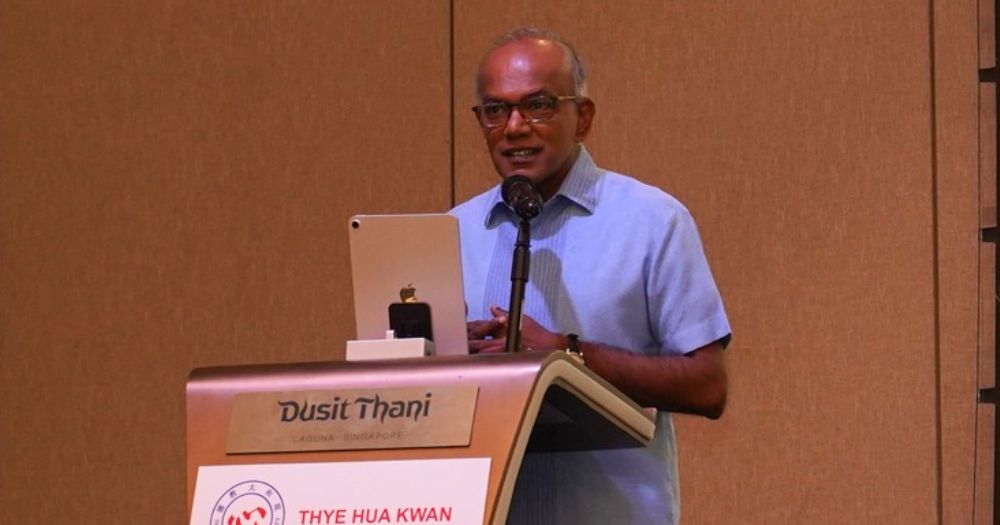
Singapore recognises how religion is a "very powerful force" despite being a secular state, said Coordinating Minister for National Security and Minister for Home Affairs K Shanmugam on Oct. 10.
Religious leaders are crucial in developing social infrastructure — building bonds and creating trust across races, religions and within communities.
Speaking at the 85th anniversary and fundraising dinner of the Parish of Christ Church, he highlighted the "precious peace" that Singapore has maintained despite divisions caused by religion and ethnicities in other societies around the world.
He also acknowledged the role of religion in recidivism in Singapore, equality between religions and the creation of common spaces to foster mutual respect among different faiths.
State is secular, but religion is a "very powerful force"
To explain how this racial and religious harmony has been maintained, Shanmugam shared three principles.
Firstly he said that while Singapore is a secular state, it recognises that religion is a "very powerful force".
"We don't bring religion into politics or politics into religion in a very obvious way," he added.
However, he acknowledged that "good work" can be done due to the "power of religion".
Shanmugam also said that people's political values and systems will "inevitably be informed" by their religious beliefs and values.
He also noted how a person's "religious principles" may be incompatible with someone else's.
"And if we allow a free play in politics, then the bigger groups will be the ones which will win out, and the smaller groups will then have to resort to violence as we see elsewhere."
As such, Shanmugam said that Singapore has to "keep to a certain frame", allowing individuals to be informed by their religious principles while working with these principles.
"But we have to have a framework of secular values so everyone can feel it's equal rather than whose religion is superior. We don't want that argument in politics," he added.
Religion in recidivism
Shanmugam also highlighted the crucial role of religious institutions in supporting initiatives in inmate rehabilitation, drug prevention, and broader community work.
"...If you look at, say for example, Ministry of Home Affairs. In so much of our work, we find that churches and others play a hugely important role."
He noted how Singapore has one of the lowest recidivism rates compared to countries such as New Zealand and Australia.
He encouraged churches to come in and talk to prisoners. Different types of support, including religious support, is "tremendously helpful" to "bring [prisoners] back from a life of crime".
He added:
"Whether you talk about drugs, whether you talk about prisons, whether you talk about so many other areas in community work, we find that those who are involved with churches and other religious establishments often are the most committed to helping the rest of society.
And I think it will be a tremendous loss if we say that cannot be done."
Social infrastructure
Shanmugam highlighted the second key principle — equality between religions.
He said this ensures that no religious principle overrides another, pointing to the example of the country's use of English as a common language, despite the Chinese community forming 74 per cent of the population.
In many countries, he noted, the language of the majority dominates, but Singapore's choice of English makes everyone "feel equal".
Thirdly, Shanmugam emphasised fostering mutual respect through the creation of common spaces among faiths, regardless of religion and race.
"And we back these principles up with law, so that if red lines are crossed, we move in with policy and with enforcement," Shanmugam added.
He said that Singapore has been able to achieve a "very high degree of tolerance and harmony" due to this.
However, these laws "can keep peace, but they cannot create harmony", or "a feeling of friendliness or brotherhood, nor can they engender respect".
Instead, religious leaders have to guide their congregations and set an example.
"When individual communities reach out in service of others, that builds goodwill, it deepens understanding, and it gives us a tremendous social infrastructure," he explained.
Religious institutions play a "tremendously important role" in building bonds across races, religions and within communities.
Top photo via K Shanmugam Sc/Facebook