




Environment

Sentosa launches islandwide cooling plan to lower temperatures by at least 4ºC
To keep visitors cool while they enjoy the outdoors.
October 07, 2025, 06:01 PM


A cooling network will be set up across Sentosa by 2030, targeted to improve the island's Physiological Equivalent Temperature (PET) by at least 4°C.
PET measures the combined effect of air temperature, humidity, direct solar radiation, and wind on the human body.
The Sentosa Cooling Network is the core of a new long-term initiative to sustainably enhance the outdoor thermal comfort of visitors across Sentosa through a mix of technological and nature-based solutions.
Announced by the Sentosa Development Corporation (SDC) on Oct. 7, it will comprise a series of cool nodes and a cool zone in the newly opened Weave mall at Resorts World Sentosa.
Cool nodes are smaller, accessible pit-stops that provide a quick and cool respite.
The cool zone, on the other hand, will anchor larger precinct with features aimed at creating more significant thermal comfort.
Apart from these projects, SDC has also made immediate efforts around the island to keep the place cool.
New fans and water coolers have been installed, 400 more trees have been planted along the beaches to expand natural shade, and soil-less green roofs will be built over covered walkways to lower surface temperatures.
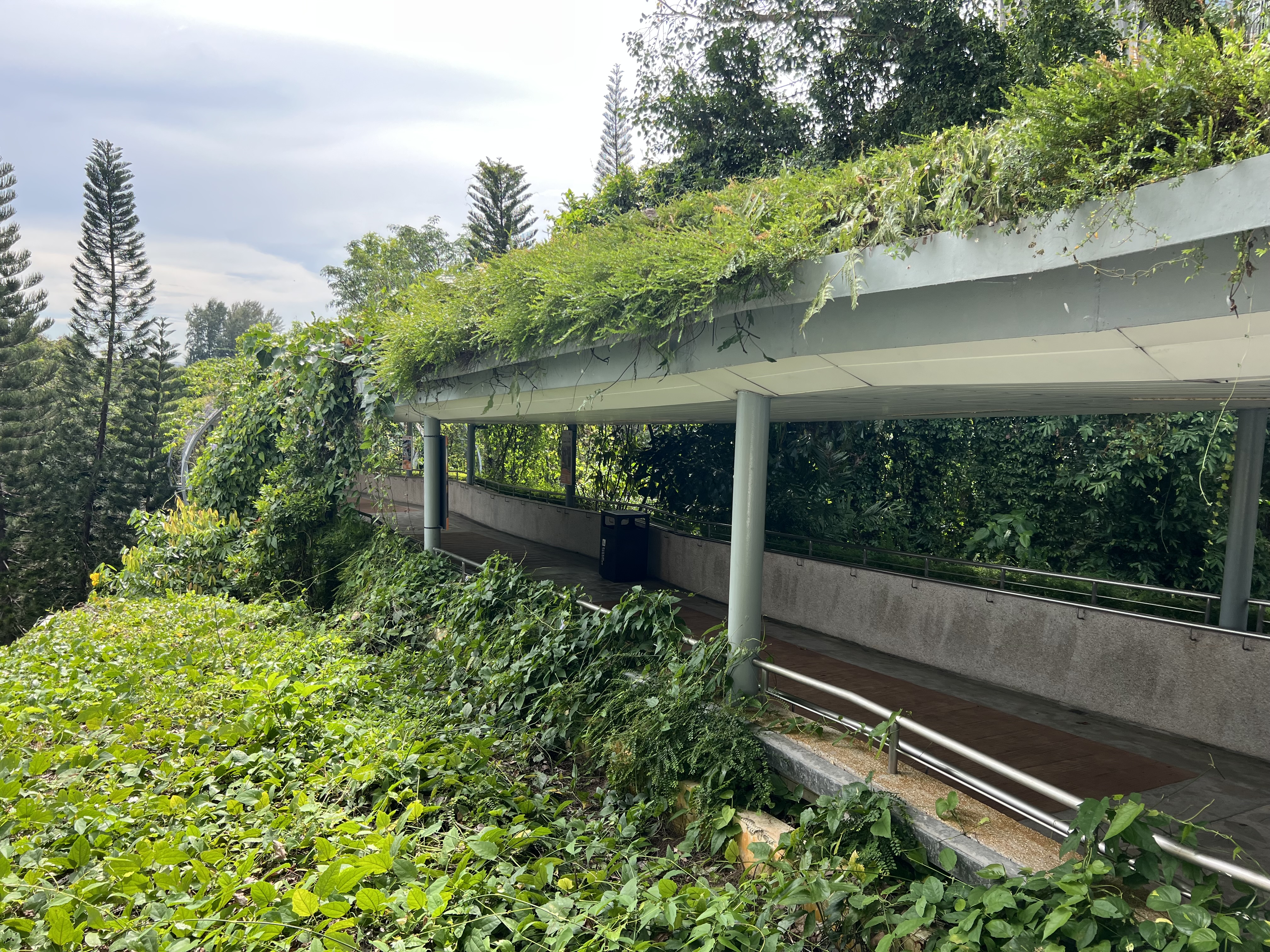 A green roof on the link bridge to Palawan Kidz City. Image from SDC
Through this initiative, Sentosa will also serve as a living testbed for innovative cooling solutions that can potentially be adapted for use in other parts of Singapore in the future.
Siloso Beach cool node
The cool nodes will be located at Siloso Beach, Imbiah Lookout, Fort Siloso Gateway, Tanjong Beach, Palawan Beach, and Palawan Green.
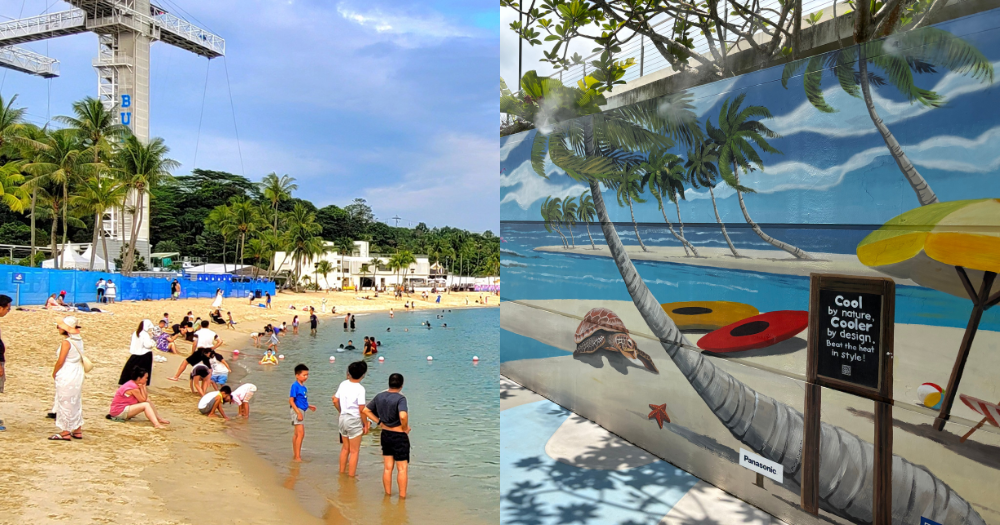
The Siloso Beach Cool Node, located along Siloso Beach between Rumours Beach Club and Scentopia, is on trial from June 2025 till April 2026.
The centrepiece of this project is a wall and floor mural with a misting system installed at the top.
Local artist William Lee created the mural using specially formulated paint that reflects solar heat and lowers surface temperatures by up to 2°C, making the floor feel cooler for barefooted beachgoers.
Visitors who walk past the mural will also be cooled by a mist spray, which will be turned on between 11am and 5pm daily.
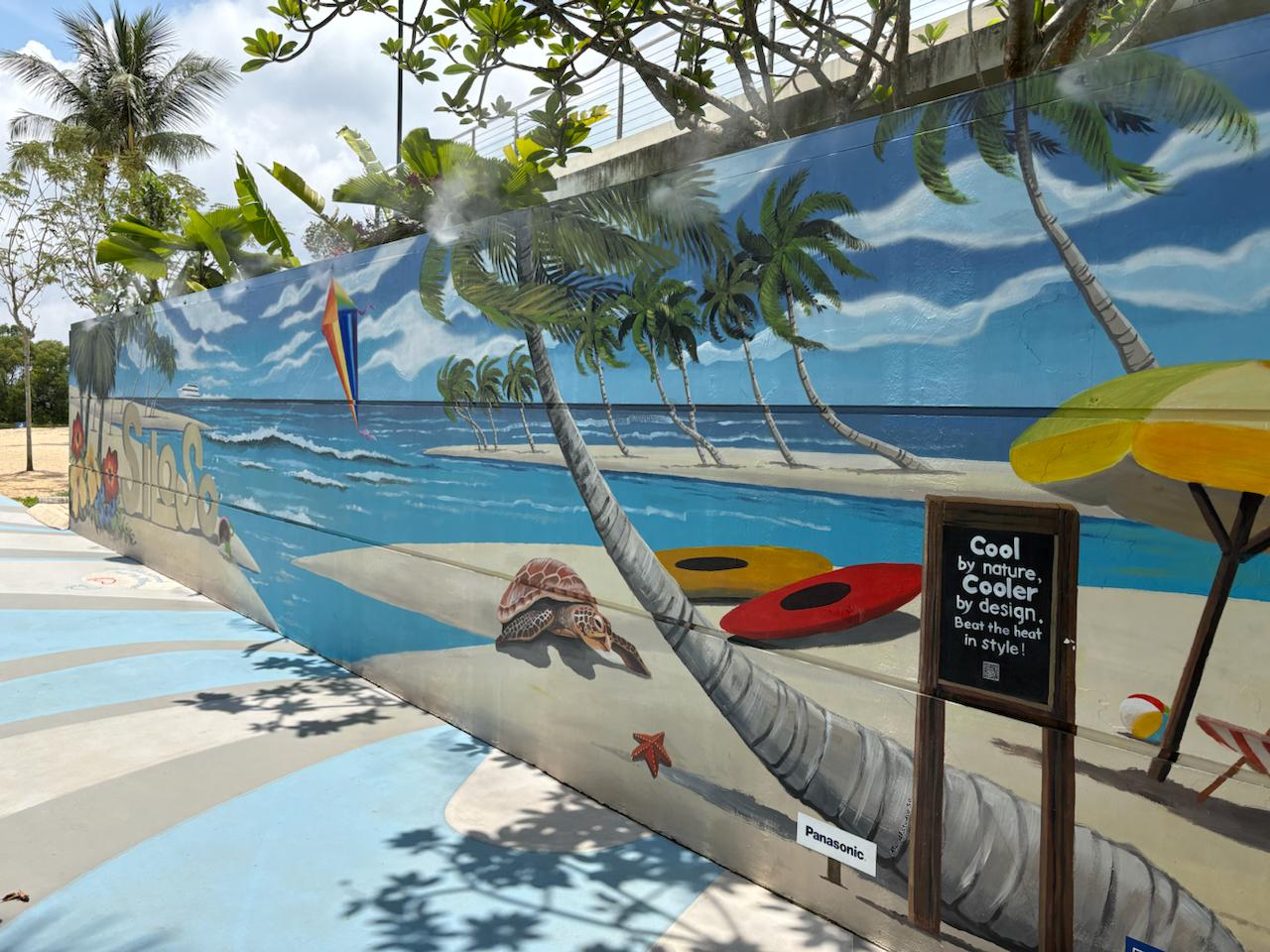 Photo by Wu Xueting/Mothership
Based on preliminary assessments by SDC, the painting of the floor did not reduce the slip resistance of the pavement, and the cool node reduced the floor surface temperature by 2°C.
The next cool node that SDC will be trialling is at Siloso Beach's Central Beach Bazaar forecourt, in the last quarter of 2025.
There, SDC will set up a regenerative tropical MicroForest, pavements with high solar reflectance, and more, which are expected to improve the PET by at least 4°C.
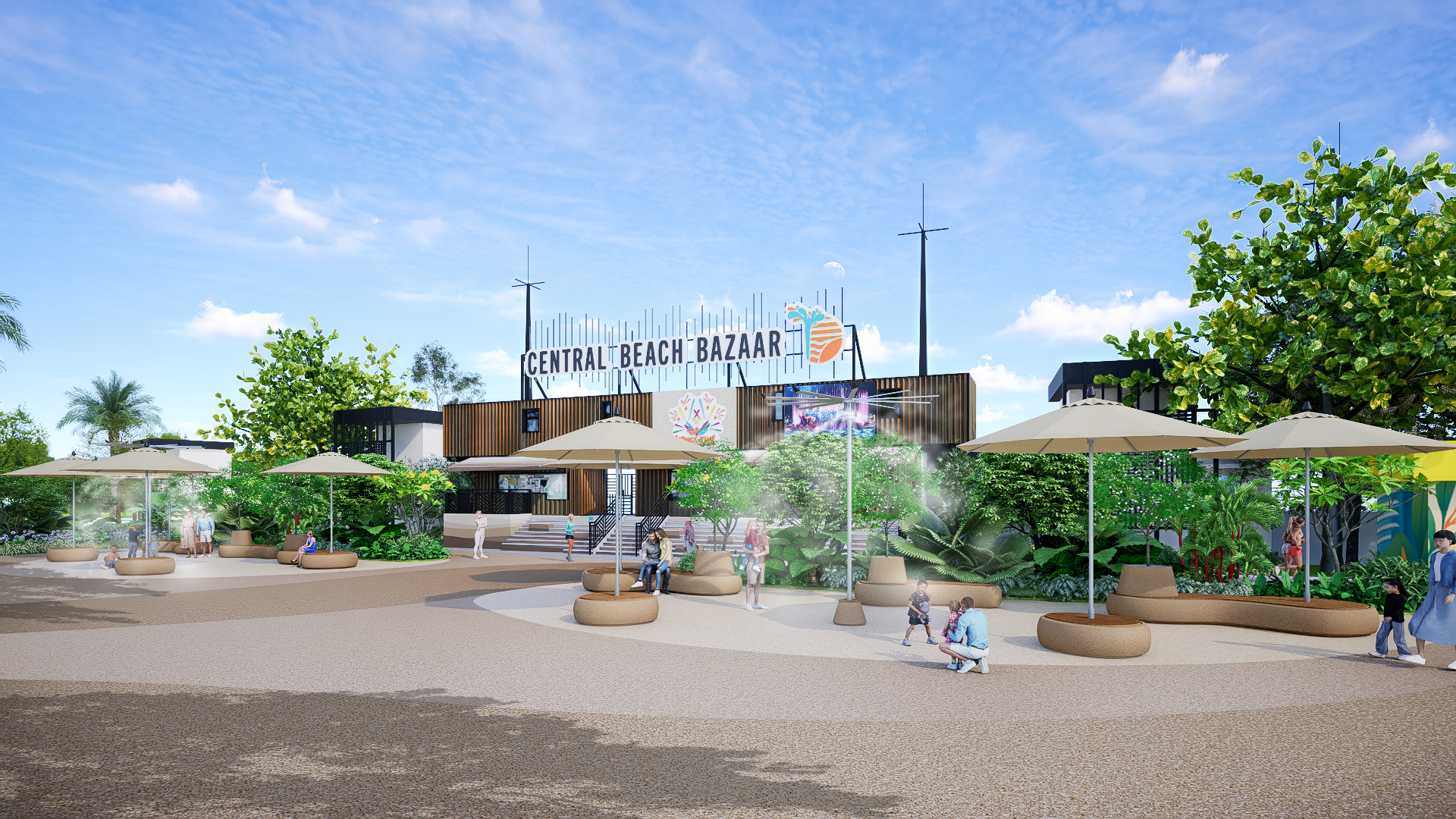 Artist impression of the Central Beach Bazaar forecourt Cool Node once completed in 2026 (subject to changes). Image from SDC
Weave cool zone
As for the completed cool zone at Weave, a special roof made of ethylene tetrafluoroethylene, a fluoride-based plastic, helps to deflect heat and reduce temperature increases from sunlight by 80 per cent.
Cold water by-products generated by the hot water usage in Resorts World Sentosa hotels are also reused to cool the air that circulates around the mall.
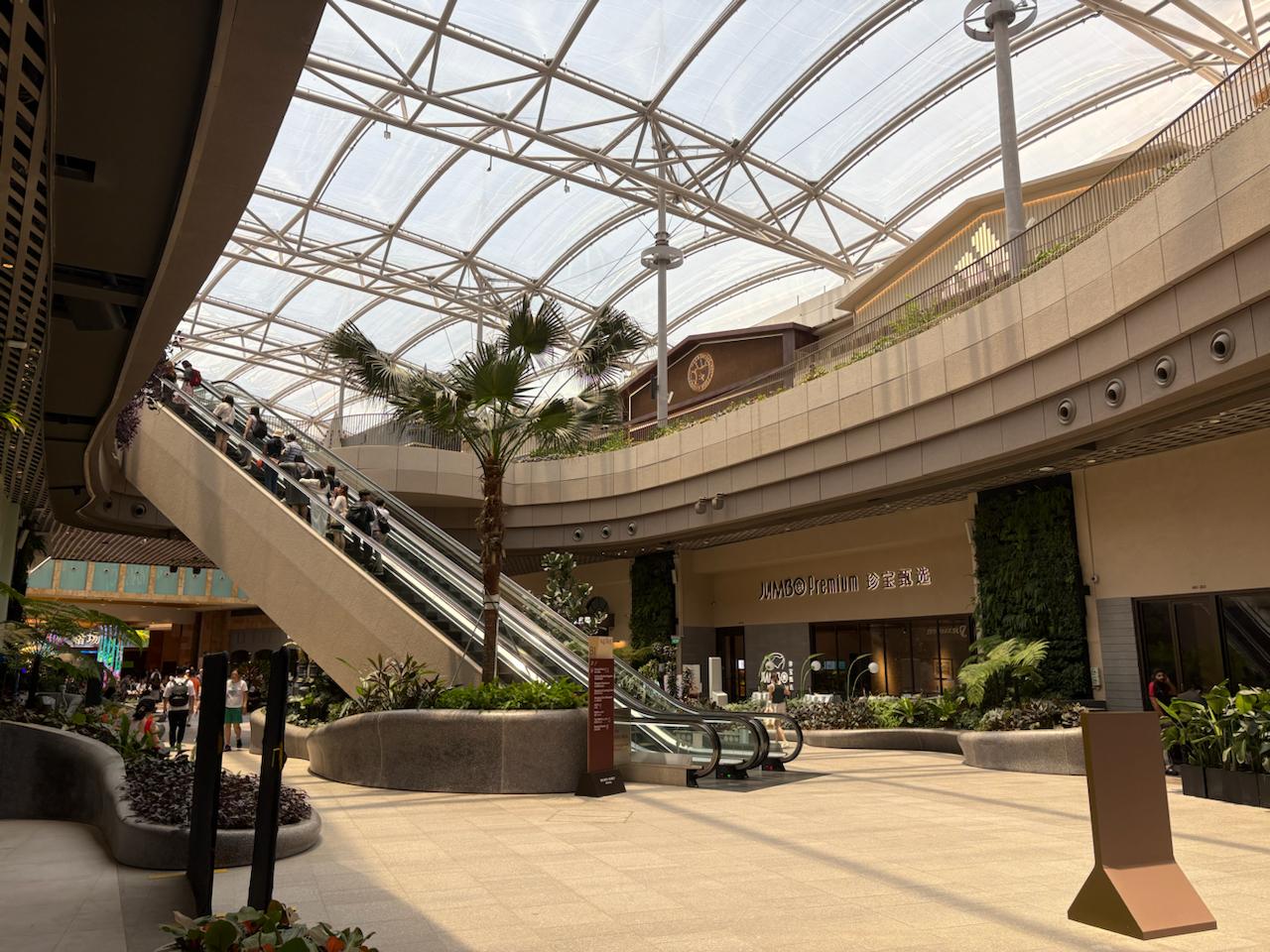 Photo by Wu Xueting/Mothership
In addition to Resorts World Sentosa, SDC will also work together with other partners at Sentosa such as Mount Faber Leisure Group, Raffles Sentosa, and Sofitel Hotel Sentosa to mitigate heat and improve visitor experience on the island.
Studying the heat across Sentosa
SDC established the cooling solutions based on a study it commissioned on the thermal conditions across Sentosa.
The aim is to keep the PET within a threshold of between 30°C and 38°C at Sentosa's guest-fronting areas — spaces where people are expected to spend time, such as for a meal or to rest.
Currently, when measured at the hottest times of the day, Mount Imbiah and Mount Serapong are the only two areas in Sentosa that recorded PETs within the desired threshold, according to the study.
These areas have more greenery compared to the other, more built-up areas that recorded high PETs ranging from 47°C to 56°C during the hottest times of the day.
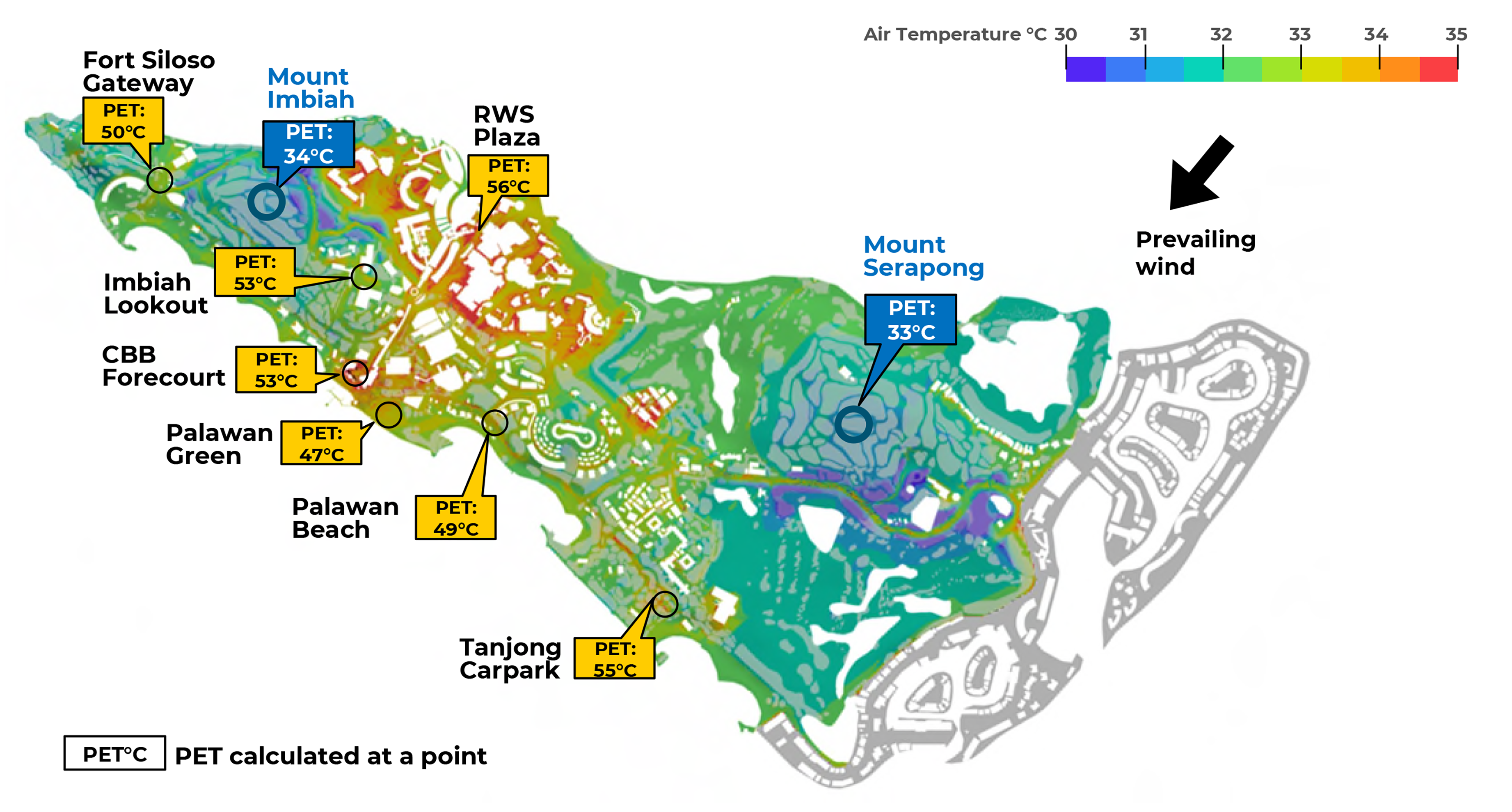 Baseline heat map of Sentosa Island. Image from SDC
The findings of this study will inform further heat mitigation strategies on Sentosa.
Top images from Ping Lea/Facebook and Wu Xueting/Mothership