



Lifestyle

S'pore couple shuts successful hawker stall to open Bugis eatery. Here's why.
From paying S$2,000 a month at a hawker stall to S$8,000 a month in Bugis.
September 15, 2025, 04:18 PM
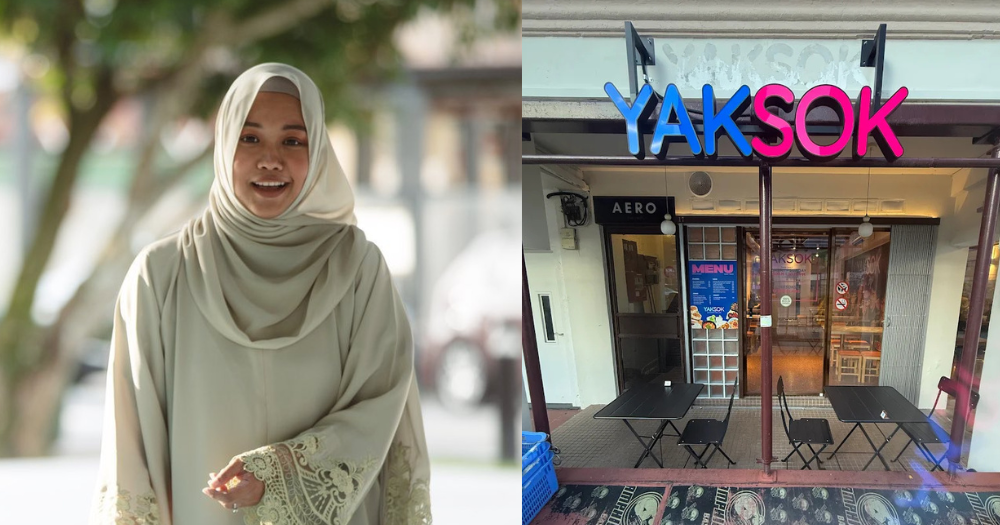


Raudhah Osman and her husband, Ryan Sufiyan, have achieved quite a following through their nearly half a decade in the F&B scene.
Yaksok’s style of Korean-Japanese halal fusion food has proven a hit in their home-based business (HBB), pop-ups, bazaars, and even at Amoy Street Hawker Centre.
In their (relatively) smooth-sailing journey, you could maybe point out one notable bump in the road.
Their first restaurant is at Tanjong Pagar.
Hearing how Raudhah talked about it to us, the lessons they learnt, the difficulties they faced, you would be forgiven for not expecting their tenure to have been a relatively short one, just three months.
They both vowed after their restaurant attempt to stay away from ever opening one again.
And up till June 2025, they kept their word.
Their Amoy hawker stall was doing well, and their brand was chugging along fine. One day, while visiting their friends at The Frités & Co, an eatery known for its loaded fries, conversations about available stores near the area came up.
Less than two months later, Yaksok’s Bali Lane outlet was announced on their Instagram.
The couple closed their thriving chapter at Amoy Street Hawker Centre only to try again at Bali Lane.
Why?
Raudhah was almost sheepish as she recounted her very, very quick plunge back into waters she had sworn off.
So why dive headfirst back into this relentless grind?
This was not the first time she had been asked this question. In fact, I don’t think that was the first time she had been asked that question that day.
And no one has probably questioned their move than the two themselves. She took me through how the overheads would compare to their Amoy Street Hawker.
The hawker had set them back about S$2,000 a month on rent; this eatery would approximately quadruple that expense.
Manpower, both in cost and availability, would be an even more pressing issue. While they could get away with minimal staff at their hawker, those margins are way thinner for their eatery.
If they tried a barebones crew, food would take longer to prepare, customers would be more annoyed, and they might frequent less—a potential downward spiral at every corner.
That nervousness seeped through even with the packed Friday crowd when I went there.
Sufiyan had said he had been unsure about the crowd today, as the previous Friday had been quite dry.
Both speculated that it was a combination of the school holidays and the bad weather.
The holidays also meant a slower weekend in general.
That was just their third week open.
That uncertainty permeates everything, even with the solid following they have garnered over the years. The numbers cannot be taken for granted.
Will their loyal customers know of this move? Will their casual customers know of this move? It’s a nerve-wracking daily battle to see if there are enough customers to justify their existence.
So why subject herself to all that, basically starting over after their successful Amoy hawker outlet?
She would put forth a lot of good points with well-thought-out numbers and hard logic, but the one that stuck out to me was the first reason she gave.
“If you ask any Malay business owner, it’s a dream to have something in Arab Street.”
What’s different
The sentiment is, of course, lovely, but how pragmatically different would this be from their previous three-month restaurant outing?
The name of their eatery, Yaksok, will be the same as their Tanjong Pagar iteration, but they have learnt a lot since then.
First of all, they view this as more casual dining than their previous stint at Tanjong Pagar.
There’s also more footfall. Bali Lane is generally a better location for an eatery like Yaksok. In fact, back in Tanjong Pagar, they didn’t even open on Sundays, a tradition they are obviously happy to buck.
Their brand recognition has strengthened since 2023, thanks to their longer existence and increased awareness of the need for ongoing marketing efforts.
And finally, their time in the business had helped them cultivate a larger pool of reliable part-timers, which helped immensely in the manpower front.
Will these differences be enough? They are understandably cautious, but Rauhadah puts their chances of making it for their new eatery at about 70-75 per cent.
It's been a long time since their HBB days, and they've done well for themselves since then.
But the tremendous savings in rental might prompt some to wonder why give up a thriving business that does not have anywhere close to the overheads that brick and mortar businesses might have?
"HBB fantastic, overheads are low, but there are limitations."
She pointed to regulations on HBB that might be quite restrictive, and she also talked about the very real possibility that complaints by neighbours would lead to a shutdown of the business.
And what would she say to convince someone to try out a brick-and-mortar store instead of an HBB? Her advice is to "at least try".
"If you have the means and you have the resources, go for it, at least once." Unless you happen to come across an open outlet at Bali Lane, of course, then maybe even twice.
Address: 17 Bali Ln, #01-00, Singapore 189853
Hours: 11:30am to 10pm, Monday to Sunday
Image from yanxyoda/IG and Yaksok/Google