News

MDDI launches online platform to share resources like SingPass & FormSG to aid global digital development
None of the internal data on those platforms will be shared.
September 29, 2025, 06:01 PM


During a working trip to the U.S. from Sep. 24 to 30, Minister for Digital Development and Information Josephine Teo officially launched an online platform through which Singapore's digital resources will be shared with countries to aid inclusive development.
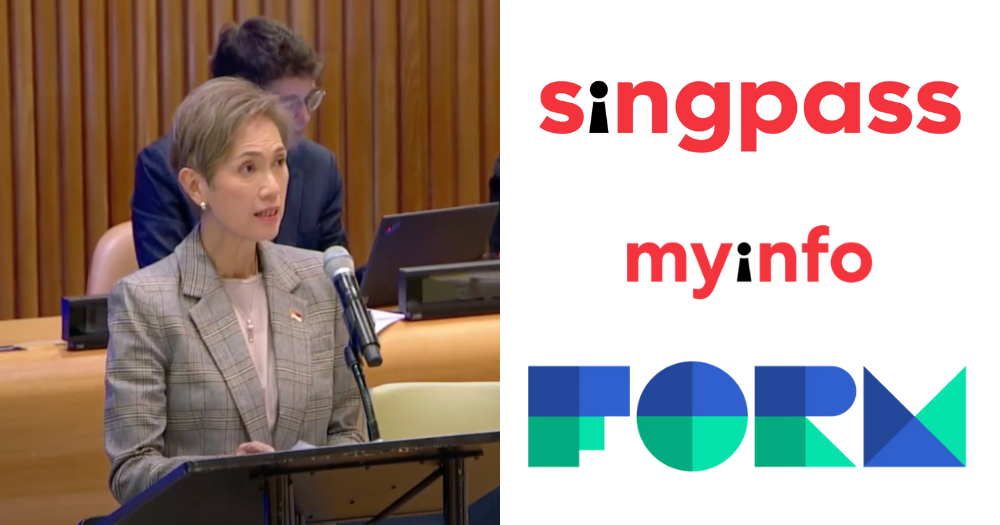
The platform, called the Singapore Digital Gateway (SGDG), was officially announced by Teo at the High-level Multi-stakeholder Informal Meeting to Launch the Global Dialogue on Artificial Intelligence (AI) Governance in New York on Sep. 25.
The meeting was organised by the United Nations General Assembly (UNGA), and saw UN Member States, observers, UN agencies, and other stakeholders come together to discuss key dimensions of inclusive and accountable AI governance.
What is SGDG?
SGDG is developed by the Ministry of Digital Development and Information (MDDI) and aims to support policymakers from other countries and multilateral organisations by giving them access to over 30 digital resources, which have been instrumental in Singapore's digital journey.
Some of the resources shared include Smart Nation 2.0, SingPass and GoGovSG.
In a virtual doorstop interview on Monday (Sep. 29), Teo confirmed that only the frameworks and base codes to the resources will be provided.
Users will not have access to the systems themselves and none of the internal data on those platforms will be shared.
Through SGDG, users can freely access resources, which cover Singapore's digital and AI strategies and blueprints, governance frameworks, guides, playbooks and open-source tools.
Courses and training for capacity building will also be offered. MDDI will work with international partners such as World Bank and United Nations Development Programme (UNDP) to deliver these programmes.
Single platform for all digital resources
The SGDG will start off by covering two core domains that reflect the building blocks of Singapore's digital journey and form the foundation of modern digital governance.
- AI domain: Resources include Singapore's National AI Strategy 2.0 and AI Verify testing framework for evaluating AI systems.
- Digital Government domain: Features Singapore's Digital Government Blueprint with 14 key performance indicators, and open-source tools like FormSG.
SGDG will later expand to cover more areas such as Cybersecurity, Online Safety, Smart Cities, and Digital Economy in phases.
Reasons for introducing the SGDG
According to Teo, the SGDC was introduced for two main reasons.
- To help countries address the need for digital inclusion
- To provide countries with a central platform where they can find resources to aid them in their digital development journey
She added that the pool of resources will be expanded over time, "depending on the areas of interest of [the digital ministries] around the world".
"With countries at different stages of digital development and facing varied challenges, Singapore hopes to contribute by sharing our experience, practical tools, and tested approaches as additional resources for those who may find them useful."
Online Safety (Relief & Accountability) Bill
MDDI also announced earlier this year that a new Online Safety (Relief & Accountability) Bill will be tabled by the end of 2025 to establish a new Online Safety Commission (OSC), allowing victims to get timely help if they encounter online harms and ensuring perpetrators are held accountable.
During the interview, Teo shared that the ministry has been in "close consultation" with stakeholders to ensure that they have the resources and capabilities to follow the new rules once the law is in effect.
She said that the consultations have helped to fine-tune the way in which the legislation is designed, and have helped the government in thinking through how the OSC can be operationalised.
Teo further added that she had met with the global headquarters of the tech companies that the government will be working with in New York to enhance the protections for the victims of online harm, as well as to discuss how the bill will be implemented and how the OSC will carry out its work.
Top photos via MDDI, GovTech