Interviews
S’pore child protection officer on the 'heart-wrenching' moments of her work & what keeps her going
A look into the work of a protection officer
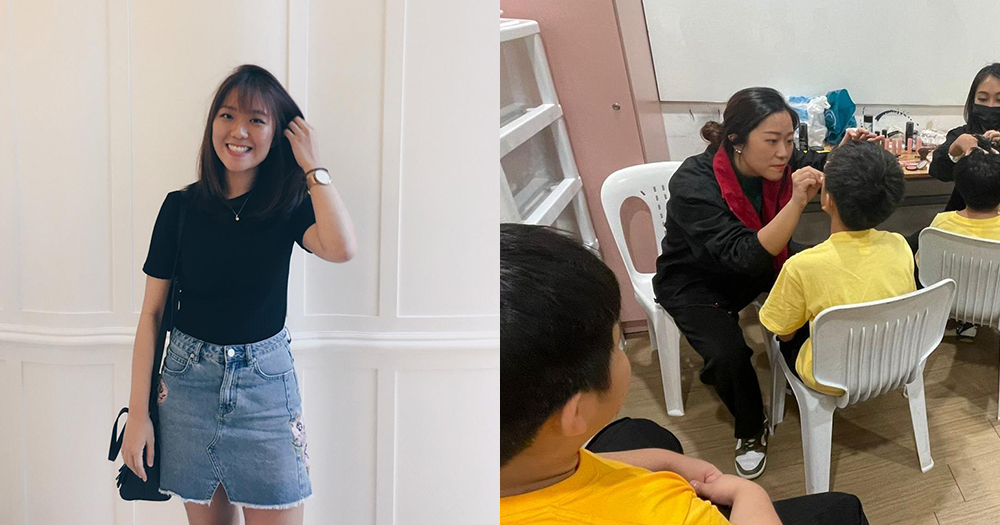
Tan Wei Lin was just weeks into her new job as a protection officer with MSF’s Protective Service when she came across a case that she still looks to as a reference point.
Back then, Tan, still a trainee, was tagging along with a senior protection officer who was following up on a case of child neglect and physical abuse involving a seven-year-old girl.
The girl, who we’ll refer to as Amy in lieu of her real name, and her older brother had been left in the care of her grandparents since birth after her biological parents divorced.
While living with them, Amy was left at home for long periods of time with inadequate supervision. When adults were around, they sometimes turned to physical punishment to restrain what Amy’s grandparents described as her mischievous behaviour.
“After speaking with the grandparents, they shared that they no longer wanted to take care of Amy and preferred to care for the brother instead,” Tan recalled to me.
“They wouldn’t change their decision on that; their stand was very strong to just care for the brother.”
An investigation officer with Protective Service
Such incidents are part and parcel of the work that Tan does as a protection officer in the Investigation (Children and Young Persons) department under MSF’s Protective Service.
Tan’s role involves looking into cases that have been referred to her team — some that are reported through the National Anti-Violence and Sexual Harassment Helpline (1800-777-0000) or online.
She then begins working with the families and caregivers of these children to ensure the child’s safety.
To facilitate this, she may have to interview the child and caregivers, as well as speak to other stakeholders.
In the case of Amy, she spoke to a medical social worker and a school teacher.
A protection officer may also be involved in attending court hearings, or accompanying a minor abused by their parents or caregivers to the police station in sexual abuse cases. This ensures the victim does not have to recount their story multiple times as protection officers follow a trauma-informed approach.
In cases where the child’s safety and well-being cannot be ensured, Tan may also have to remove the child from their family and place the child in out-of-home care as a last resort.
Placement may include with relatives, foster parents, or a social residential home.
That sounds like heavy work, I say to Tan.
“Yes, it’s emotionally draining,” Tan admitted.
“Especially when we have to help parents understand that we are not trying to break up the family, but rather it is making sure the child does not remain in the same environment where harm could occur again.”
All protection officers must undergo a core set of training to equip them with the requisite skills and knowledge to undertake this specialised area of work. These include legislation, use of assessment tools, family violence framework, case management protocols and safety planning.
Team debriefs and mandatory sessions with supervisors — where officers share their struggles and challenges — help sharpen their case management and effective engagement of clients and support officers in dealing with job-related issues.
Tan tries to practise mindfulness meditation as a personal coping mechanism.
Like many working adults in Singapore, she also unwinds through the time-tested practice of shopping online and unboxing much-anticipated deliveries.
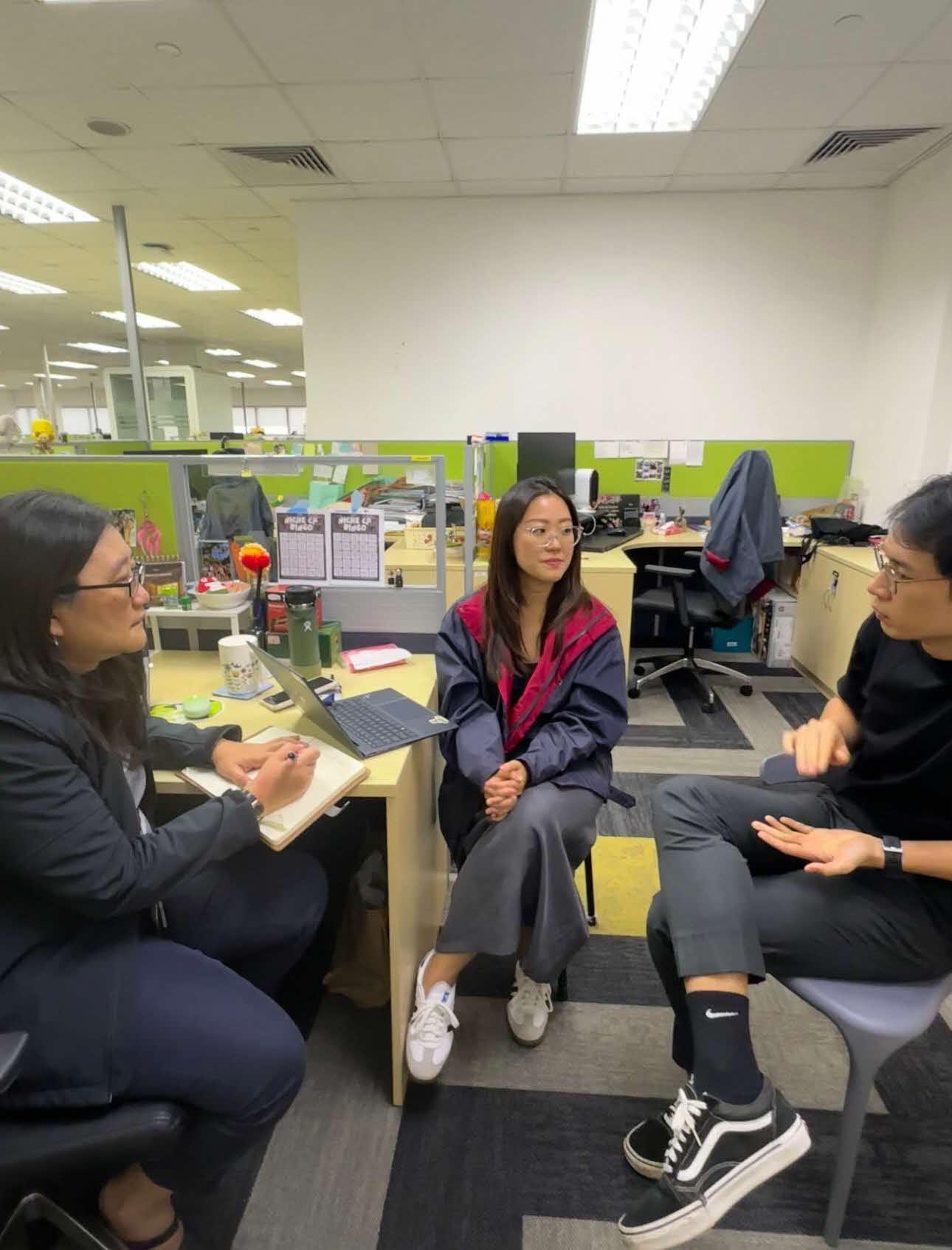 Team debriefs and mandatory sessions with supervisors help sharpen Tan’s case management. Image from Tan Wei Lin.
A passion to help the vulnerable
Tan said she was drawn to the role in the first place because of her passion to help those less fortunate, especially children.
“My passion to help the vulnerable developed when I was a teenager. I felt the support I received then was absent. That’s why I decided to study psychology and help the vulnerable.”
After graduating, Tan worked as a case worker in a children’s home.
Having served in that role for three years, she eventually moved upstream to become a protection officer in April 2025.
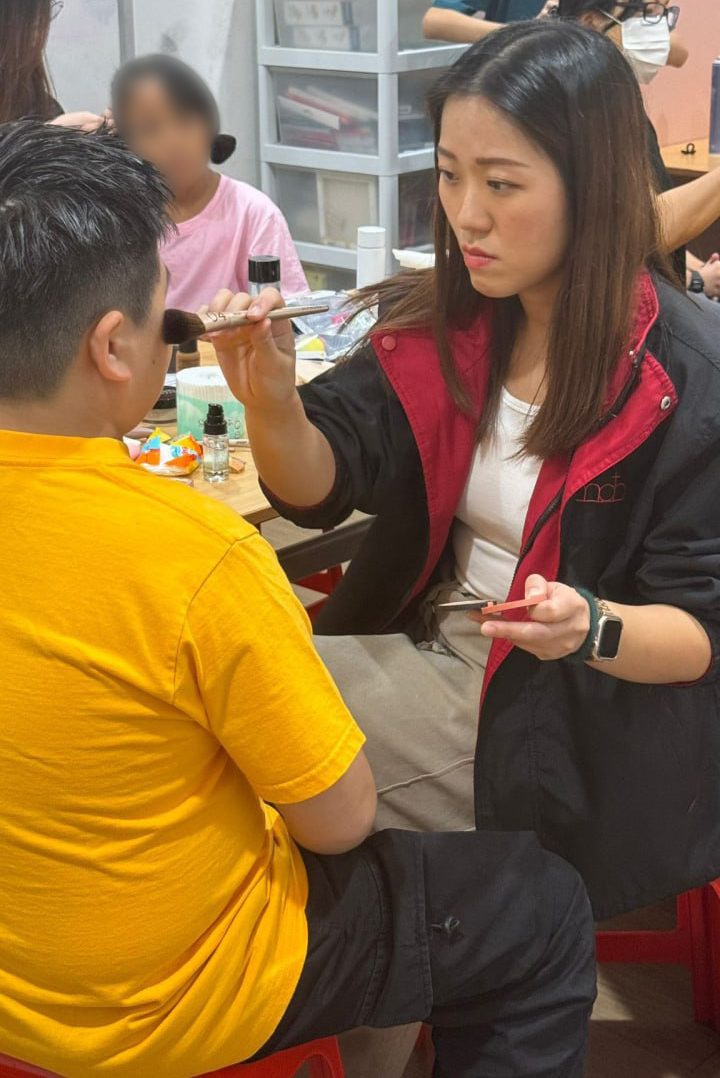 Before becoming a protection officer, Tan was a case worker in a children’s home. Image from Tan Wei Lin.
Expect the unexpected
Yet despite her years of experience, Tan told me that dealing with the human factor of her cases continues to be the most difficult part of the job.
Humans, after all, don’t always act in predictable ways or do as they should.
“(You have to) expect the unexpected,” she explained.
“Every day you wake up thinking about a certain case — it’s been going well for the past couple of months. And you pray that, you know, no (setbacks) will happen. But somehow, someday, something will happen.
“For example, if a mother had been caught abusing drugs before, and you’d been trying to reintegrate the child back with her mother after she shows progress over a period post-release, what happens if the mum is taken away again at some point?”
Then there is the need to stay professional and objective, no matter what she’s been confronted with, as with the case of Amy — where after contacting the child’s estranged mother, the officers discovered that she had started a new family overseas.
“She said, since the grandparents don’t care for Amy, and it’s not possible for (the mother) to come back, we should put Amy up for adoption.
It was really heart wrenching to hear her say that.”
The ultimate goal
What stands out to Tan from that case isn’t necessarily the details of the case itself, but her colleague’s composure in the face of such challenging circumstances.
“She could put herself in the parents’ shoes and understand the situation, because everyone is facing their own sets of struggles and difficulties, right? Some lack support while simultaneously struggling to provide care for the children.
But of course, we had to let the mother understand that this decision… is going to be something that is long-term and we don’t want her to regret it.”
For her, this means that success in her job doesn’t look like what we might expect.
While it would be great if every child could be reunited with their family, that isn’t always the case.
Amy, for example, was eventually placed in a residential home.
While this may not seem like the “perfect outcome” to Tan, she explained that ultimately the goal is to do what is right in the child’s interests.
“As long as the child is safe and their well-being is met,” she elaborated.
And it's this, notwithstanding all the emotionally draining aspects of the work, that keeps her going.
“At the end of the day, seeing the child happy, seeing the child smile again… being part of a team that genuinely wants to help make life better,” Tan said.
“As much as the work can be really tough at times, the moment of progress and the healing is what makes it all worthwhile.”
Save the NAVH number in your phone
Save the National Anti-Violence & Sexual Harassment Helpline 1800-777-0000 in your handphone now and Let’s Break the Silence Together.
If you or someone you know is experiencing or witnessing violence, abuse or sexual harassment, seek help by contacting the National Anti-Violence and Sexual Harassment Helpline. You may call 1800-777-0000 or make an online report here.
Writing this Ministry of Social and Family Development-sponsored article reminded the writer not to stay silent when it comes to domestic violence.
Top image from Tan Wei Lin