News

M'sia rejected 'several US demands' in tariff talks that risked national sovereignty, says trade minister
He considers the newly imposed 19 per cent tariff reasonable.
August 04, 2025, 06:28 PM


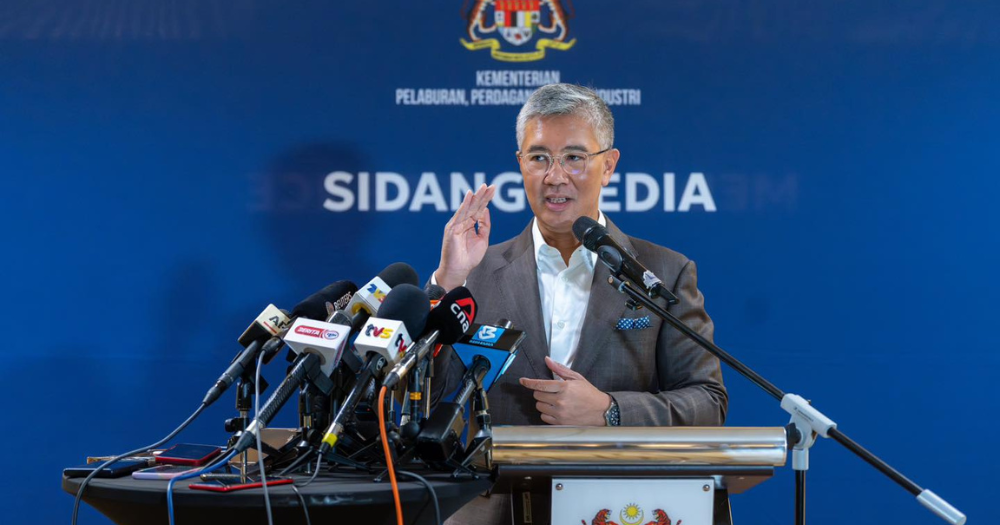
Malaysia's Minister of Investment, Trade and Industry Tengku Zafrul Abdul Aziz stated that the newly imposed 19 per cent tariff on Malaysian exports to the United States is considered "reasonable" and will not threaten the country's competitiveness.
He also said Malaysia rejected several U.S. demands that would have infringed on Malaysia's sovereignty.
Malaysia's tariff rate is 19 per cent
Under an executive order signed by U.S. President Donald Trump on Jul. 31, Malaysia will face a 19 per cent tariff on exports to the U.S., a drop from the 25 per cent previously floated.
In a speech in parliament on Aug. 4, Zafrul stated that though they were hoping for an even lower tariff rate, they found the outcome reasonable as it was achieved without "[jeopardising] any key national policies or [the nation's] sovereignty", The Star reported.
U.S. is Malaysia's most important trading partner
According to The Star, Zafrul said that the U.S. is Malaysia's most important trading partner and top export destination, with nearly RM200 billion in export value (about S$61 billion).
The U.S. is also one of Malaysia's main sources of foreign direct investment in 2025.
Zafrul expressed that because of the above reasons, Malaysia "cannot afford to take any changes in trade policy with the U.S. lightly" as it would result in "a serious and negative impact" on the country.
He stated that if the tariffs were higher, up to 100,000 workers in the electrical and electronics sector would have been at risk of losing their jobs if those products could no longer be exported to the U.S.
Rejected several U.S. demands that risked national sovereignty
Zafrul affirmed, however, that Malaysia did not give in to the U.S. demands which they deemed risked national sovereignty, The Star reported.
He stated that Malaysia's criminal laws will continue to apply to cloud service providers and social media platforms, and that "the government retains the right to request source code transfers for use in critical infrastructure, government procurement and the financial sector".
There will also be no exclusive access for the U.S. to Malaysia's supply of rare earth elements and critical materials.
With regard to the export and transit of artificial intelligence (AI) chips to third countries, Malaysia has agreed to strengthen controls under Section 12 of the Strategic Trade Act which was enforced since Jul. 14.
Zafrul added that a joint statement by the two countries will be issued in time to come, which will set out the outcomes and commitments of the negotiation.
"The government remains committed to ensuring transparency and balance, protecting both the intellectual property of companies and Malaysia sovereignty, security and economic stability".
U.S. and Malaysia agreed in principle to an Agreement on Reciprocal Trade (ART)
Zafrul said that the two countries had agreed in principle to an Agreement on Reciprocal Trade (ART), which outlines the commitments reached during negotiations, The Star reported.
The ART covers key six areas: tariffs and quotas, non-tariff barriers, digital trade and technology, rules of origin, economic and national security, and commercial considerations.
"The agreed improvements directly enhance the ease of doing business, making Malaysia more competitive and attractive as a leading investment destination in the region", Zafrul stated.
Malaysia agreed to reduce or eliminate import taxes on 98.4 per cent of all tariff lines for U.S. imports, but "maintained [their] position not to offer any removal or exemption of excise duties", Malay Mail reported.
Some sales tax exemptions will continue to apply to U.S. agricultural goods such as dairy and seafood.
Digital trade
According to The Star, Zafrul revealed that Malaysia agreed to three key points with regard to digital trade:
- No discriminatory digital tax on U.S. firms
- American cloud and social media providers will not need to contribute six per cent of their revenue to the Universal Service Fund (USF)
- Allow domain name system (DNS) traffic to bypass local DNS services
Top photo via Tengku Zafrul/Facebook