News

Gan Kim Yong talks up opportunities created by S'pore-India cooperation, including in healthcare & trade
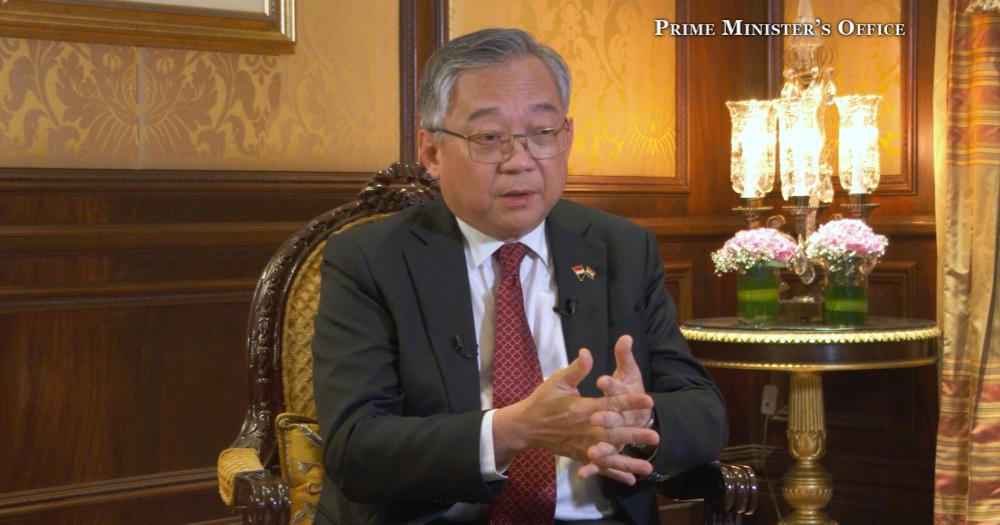
DPM Gan was speaking to press during his working visit to India to attend the third ISMR.
August 14, 2025, 04:32 PM

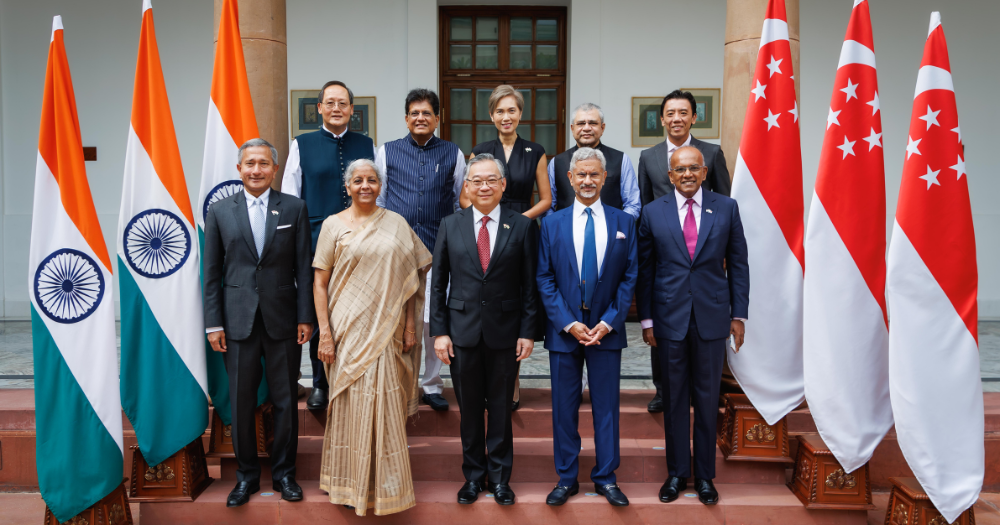
 Singapore’s Deputy Prime Minister and Minister for Trade & Industry, Gan Kim Yong, spoke to the press on Aug. 13 during his working visit to India.
The purpose of the visit was to attend the third iteration of the India-Singapore Ministerial Roundtable, but he also took the opportunity to visit projects undertaken in India by Singaporean companies.
During his doorstop, Gan spoke about the state of India-Singapore relations, but also about the opportunities available in India for Singaporean companies, and avenues for further growth.
Bilateral ties
Gan spoke about the warm bilateral relationship between the two countries, noting that Singapore had congratulated India ahead of its Aug. 15 Independence Day, its 79th.
India and Singapore are also celebrating the 60th anniversary of bilateral relations, and Gan said that his call on the Indian president had been “very useful to exchange views” and discuss how to “take the bilateral relationship to the next level”.
There were many opportunities to work together, and Gan highlighted a few areas where there were high levels of complementarity between Singapore's and India’s economies, such as sustainability, digitalisation, skills development, health and medicine, and advanced manufacturing and connectivity.
But the global economic landscape was more volatile than it had been in decades past, and Gan said that it was important for countries “who are like-minded to come together”, to work and collaborate together and deepen integration.
Sectoral tariffs?
Gan was also asked about the tariffs that United States president Donald Trump had threatened to inflict on specific sectors, potentially up to 250 per cent for pharmaceutical products, and 100 per cent for semiconductors.
In the face of such high sector-specific tariffs, did Gan think of further partnership with India as a way to cushion their impact?
Gan noted that the issue of tariffs did not come up between the two delegations, and he speculated that this was due in part to India’s ongoing talks with the U.S. regarding tariffs and a trade deal.
However, at a different point in the doorstop, he elaborated a little more on the relationship and how it would be useful in the future.
Resilient supply chains
Products in the pharmaceutical and semiconductor sectors have long and complex supply chains.
Because of this, it is vital for Singapore to continue to work with its partners, regardless of tariffs, to explore “opportunities and possibilities for extending and expanding our supply chains”, to make them more robust and resilient.
Doing so would give Singaporean companies and multinational corporations more options and alternatives for sourcing components, with both groups of companies keen to explore options in India.
Gan described it as a "pathway for them to integrate and to strengthen this complex supply chain”, and allow Singapore’s semiconductor industry to “be more resilient”, while also creating opportunity within the Indian economy.
When asked about amendments to the Comprehensive Economic Cooperation Agreement, Gan said that the agreement, as well as other existing frameworks, “has already laid the foundation for collaboration between Singapore and India” and because of this, “there are already enough avenues” to explore opportunities.
Nursing training
Gan also spoke about the opportunities to expand collaboration between Singapore and India in the healthcare space.
Noting that there were already many Indian nationals working in Singapore as nurses, he said that both governments were keen to continue to work together to improve training standards, to make them more aligned with Singapore’s needs.
Each country had different curricula and approaches to training, and currently, there was a need for additional training and refreshers when India-trained nurses worked in Singapore.
Gan said Singapore and India would work to realign their training to facilitate nurses to work in Singapore.
This would benefit both countries, improving the level of training in India while meeting Singapore’s nursing needs.
Related story
Top image via Ministry of Trade and Industry