Features

From PAP stalwart to No. 1 govt critic: The forgotten legacy of Toh Chin Chye
"I hope I will be of public service, and not be a wallflower in the chamber of Parliament, or a dumb cow.”
August 15, 2025, 06:13 PM
Young Singaporeans might not be familiar with Toh Chin Chye — one of Singapore’s founding fathers, of the Lee Kuan Yew era.
A core member of the People’s Action Party (PAP), he was the party’s first- and longest-serving chairman. But his later years saw him become the government’s No. 1 critic, outshining even the opposition in his fiery debates.
As he once said: “People must ask questions. And when they stop asking questions about what is fair and what is not fair, then that spells trouble.”
In "The First Fools: B-Sides of Lee Kuan Yew's A-Team", published by The Nutgraf Books, nine Singapore writers explore the lesser-known sides of our founding fathers, and the people they were outside their larger-than-life political legacies
An excerpt from the chapter, “Toh Chin Chye: Neither Wallflower Nor Dumb Cow”, is reproduced here in an abridged form.
By Puah Rui Xian
At 64 years old, Toh Chin Chye found himself about to be whipped.
It was a position most unusual for the senior member of the ruling People’s Action Party (PAP). The setting: not prison, but Parliament. The whip in question: not the thick rattan cane used to lash criminals in jail, but a stout, bespectacled man by the name of Lee Yiok Seng.
As the designated party whip. Lee was responsible for maintaining party discipline. Toh had broken the rules, and according to protocol, the former party chairman — once part of the PAP “Big Three” alongside Lee Kuan Yew and Ong Eng Guan — had to be punished.
Why flog an “old warhorse”, as one reporter called Toh? The year was 1986, and Toh had just rubbished the “Killer Litter” Bill in Parliament.
The Bill was an amendment to an existing piece of legislation regulating Singapore’s public housing landscape, and had been tabled after a spate of incidents involving litter being thrown from high-rise flats.
In one such case, an iron pipe struck a woman and left her comatose. The government was now moving decisively to clamp down on serious offenders — by evicting them and their families from their homes.
For Toh, the Bill was an overstep. “If a tenant of a HDB flat were to be found convicted of murder, the family does not lose their flat,” he said when the Bill was being debated in Parliament.
“For the act of a single person, you are punishing the whole family…I do not see any equity at all in that.”
Before a gallery full of reporters, he added in his typical straightforward manner: “It is a ludicrous piece of legislation.”
But it was only when Toh abstained from voting in favour of the Bill that the PAP hauled him to the metaphorical whipping post.
 Photo from PAP website
Government critic
It was the latest in an almost six-year saga that saw Toh, a former Deputy Prime Minister and Cabinet minister, morph from PAP stalwart to No. 1 government critic.
In the verbal cut-and-thrust of the Parliament chamber, he outshone even the opposition when debating issues of the day, from national healthcare savings scheme Medisave to the elected presidency.
While his unfiltered attacks and knack for capturing the mood on the ground earned him the admiration of ordinary Singaporeans, his fellow party members were, to put it bluntly, pissed off.
Less than a week after Toh’s killer-litter remarks, then-First Deputy Prime Minister Goh Chok Tong delivered what could be construed as a thinly veiled threat:
“Dr Toh is dribbling the ball in the wrong direction. But he has not yet kicked the ball into his own goal. So there is no need to sideline him.”
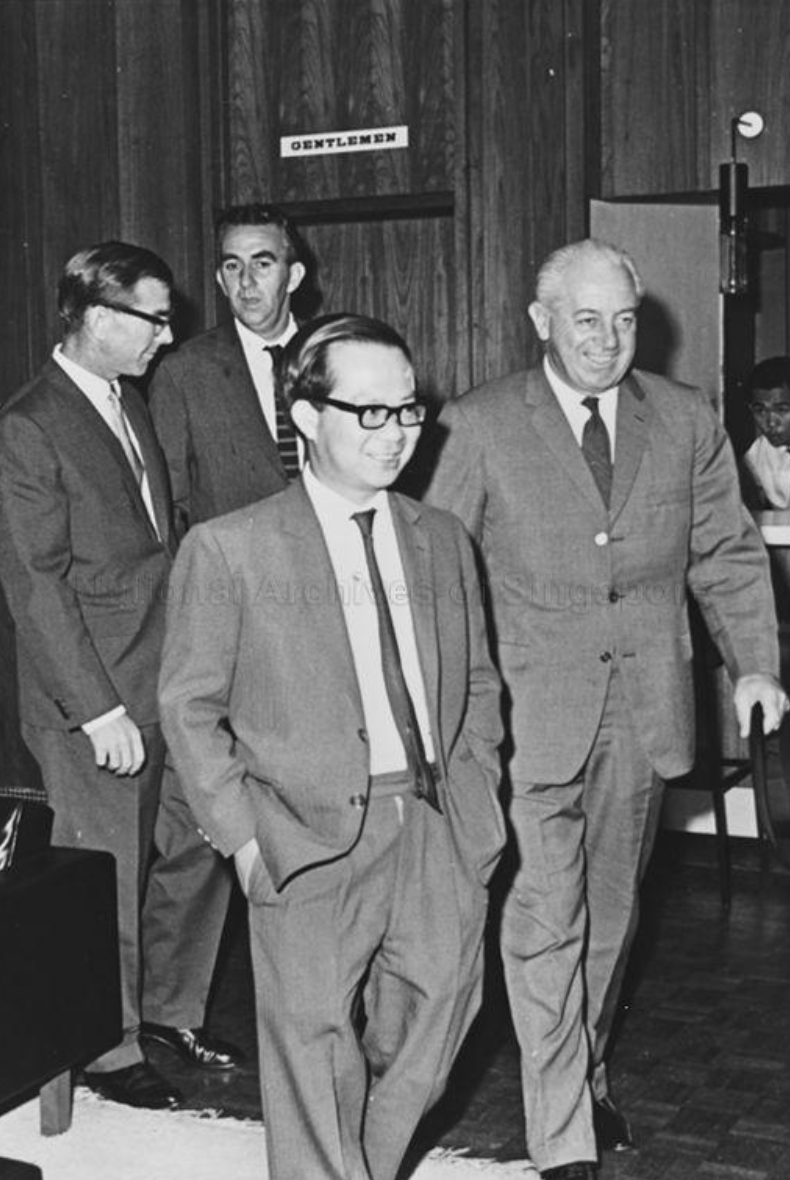 Toh, with then-Australia Prime Minister Harold Edward Holt, back when he was DPM. Photo from National Archives of Singapore
Toh was eventually let off the hook on account of his stature as a founding member of the PAP. But a few days later, the recalcitrant politician appeared on stage at a forum organised by the National University of Singapore, next to opposition MP J. B. Jeyaretnam.
Parliament is now like “a minefield,” Toh told the crowd. Others might have baulked at making such remarks publicly so soon after stepping on the party leadership’s toes, but not Toh.
Sour grapes?
Was it a courageous act of speaking truth to power, or simply a case of sour grapes?
To many in the PAP, it was the latter. In 1981, Toh had been dropped from the Cabinet line-up due to disagreements with then-Prime Minister Lee Kuan Yew over the pace of leadership renewal.
Overnight, he went from minister to backbencher. He had been demoted before the whole country.
“Toh was bitter,” wrote Lee in his memoirs. “He stayed on in Parliament for another two terms, sniping at me and the PAP, never enough to be accused of disloyalty, but enough to be a mild embarrassment. I did not want to put him down publicly.”
Neither did Toh have the support of the backbenchers. “When elephants fight, we get trampled on,” said Chandra Das, who joined Parliament in 1980. Das often watched firsthand as Toh went for the jugular of whoever was unfortunate enough to debate him.
These were usually the junior ministers, who were sent as infantry to counter Toh. “That upset him even more,” said Das.
 Toh, arriving at the opening of Parliament in 1985. Photo from National Archives of Singapore
A faded legacy
It is perhaps little wonder that when Toh died in 2012, his dubious legacy as a backbencher was mostly shunted aside in favour of his earlier achievements.
And there were many to be lauded. It was Toh who kept the leader of opposition party Barisan Sosialis, Lee Siew Choh, out of government when he defeated him in the 1963 general election, by a margin of 89 votes.
It was Toh who consolidated the University of Singapore — now known as the National University of Singapore — into a single campus at Kent Ridge, turning it into an engine of nation-building during the critical early years.
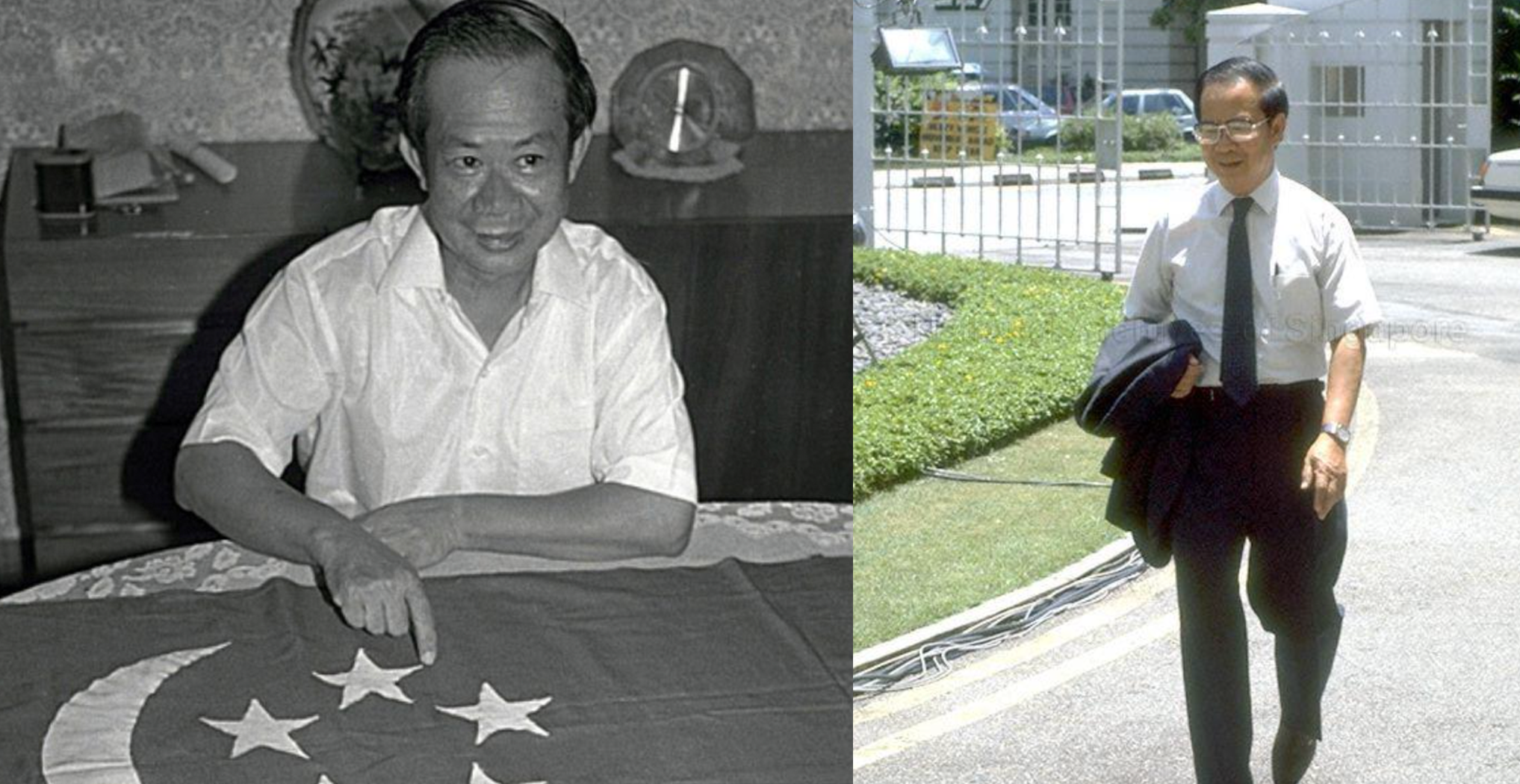
It was Toh who led the team that designed Singapore’s coat of arms and national flag, Toh who decided that the anthem should be Majulah Singapura.
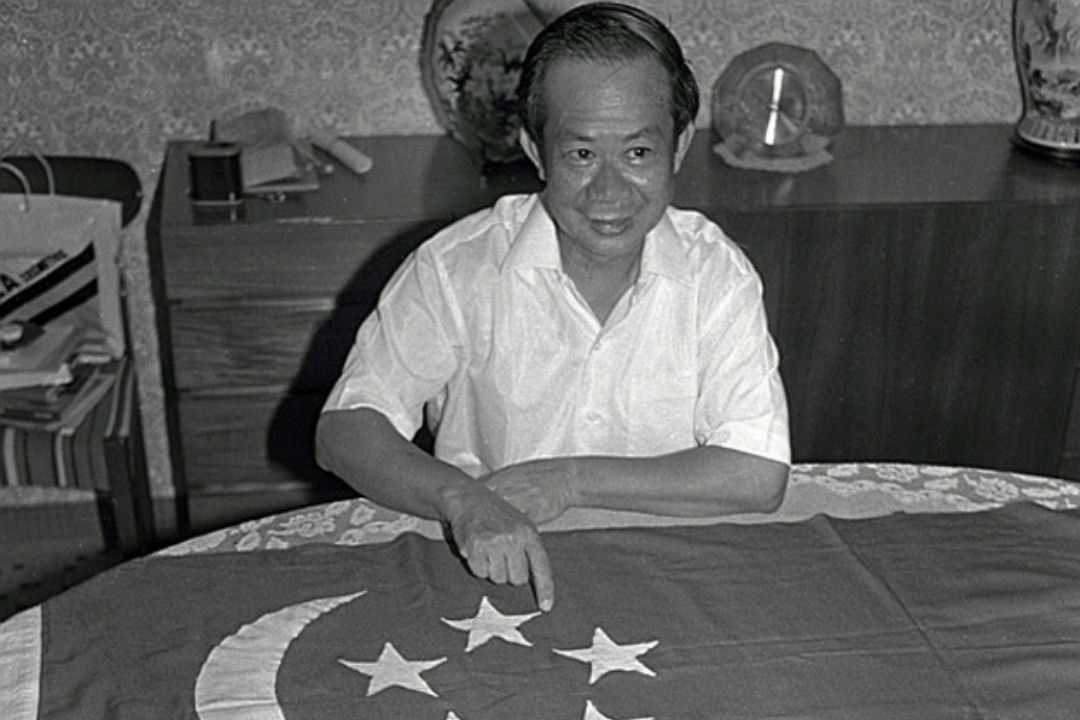 Photo from PAP website
But it was also Toh who stood up and opposed Goh Chok Tong in Parliament when the latter tabled MediSave. It was Toh who, in defending the people’s right to healthcare, accused the government of “perverse propaganda.”
It was Toh who charged the PAP with turning its back on the working class when he criticised the tax-relief scheme for better-educated mothers; Toh who argued that an elected presidency would put future generations of Singaporeans at risk of a divided government.
The dust of these Parliament clashes has long since settled. Many of Toh’s arguments are buried in the Hansard, a verbatim record of speeches and debates made in the Parliament chamber.
Perhaps for some, they are better forgotten, or at most, remembered as poison darts launched by a bitter man. But in Toh’s own words, he stood for something more than that.
“Members of Parliament are elected as voices of the people. Therefore, as a voice, they must speak up. It is no good to be a nice gentleman, a quiet gentleman, in Parliament.”
Or, as he later put it in his trademark cantankerous fashion: “I hope I will be of public service, and not be a wallflower in the chamber of Parliament, or a dumb cow.”
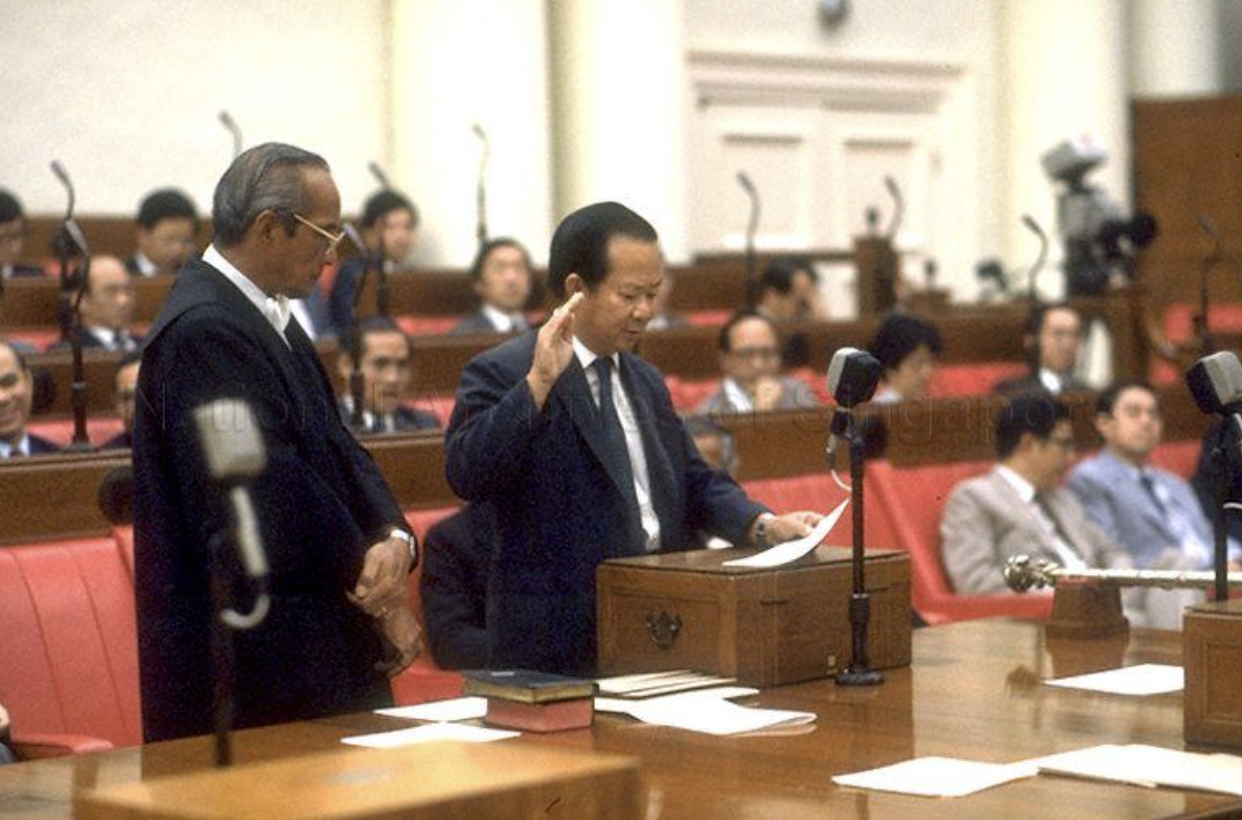 Toh taking his oath of allegiance as an MP in 1985. Photo from National Archives of Singapore
Top image from National Archives of Singapore and PAP's website