Features

Firsthand: Once told she had 6 months to live, S'porean cancer survivor now lives life to the fullest
"The illness gave me this sense [that] I cannot live my life this way anymore," she said.
July 26, 2025, 10:52 AM


Sophia Tan remembers learning over the phone that she might have cancer.
"It's very urgent. Can you come immediately?" she recalled the doctor on the phone saying. "We have a bed ready for you."
She was completely blindsided. She had not even done a test for cancer.
It happened on May 4, 2015. She'd gotten dengue fever a month prior, and had gone back to the hospital to participate in a dengue study.
She did a blood test for the study, then went home. Hours later that same day, she received the call from the research doctors that would change her life.
"There must be something wrong with the test results," she thought.
The idea that she could have cancer was ludicrous. Then 36, Tan was a former physical education and Outdoor Adventure Club (ODAC) teacher who enjoyed hiking and avoided junk food. Just days before the phone call, she had gone swimming with her friends.
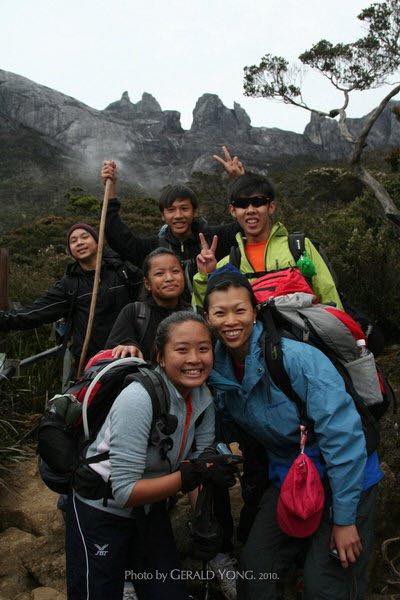 Tan (bottom right) climbing Mount Kinabalu with her ODAC students in 2010. Photo via Sophia Tan.
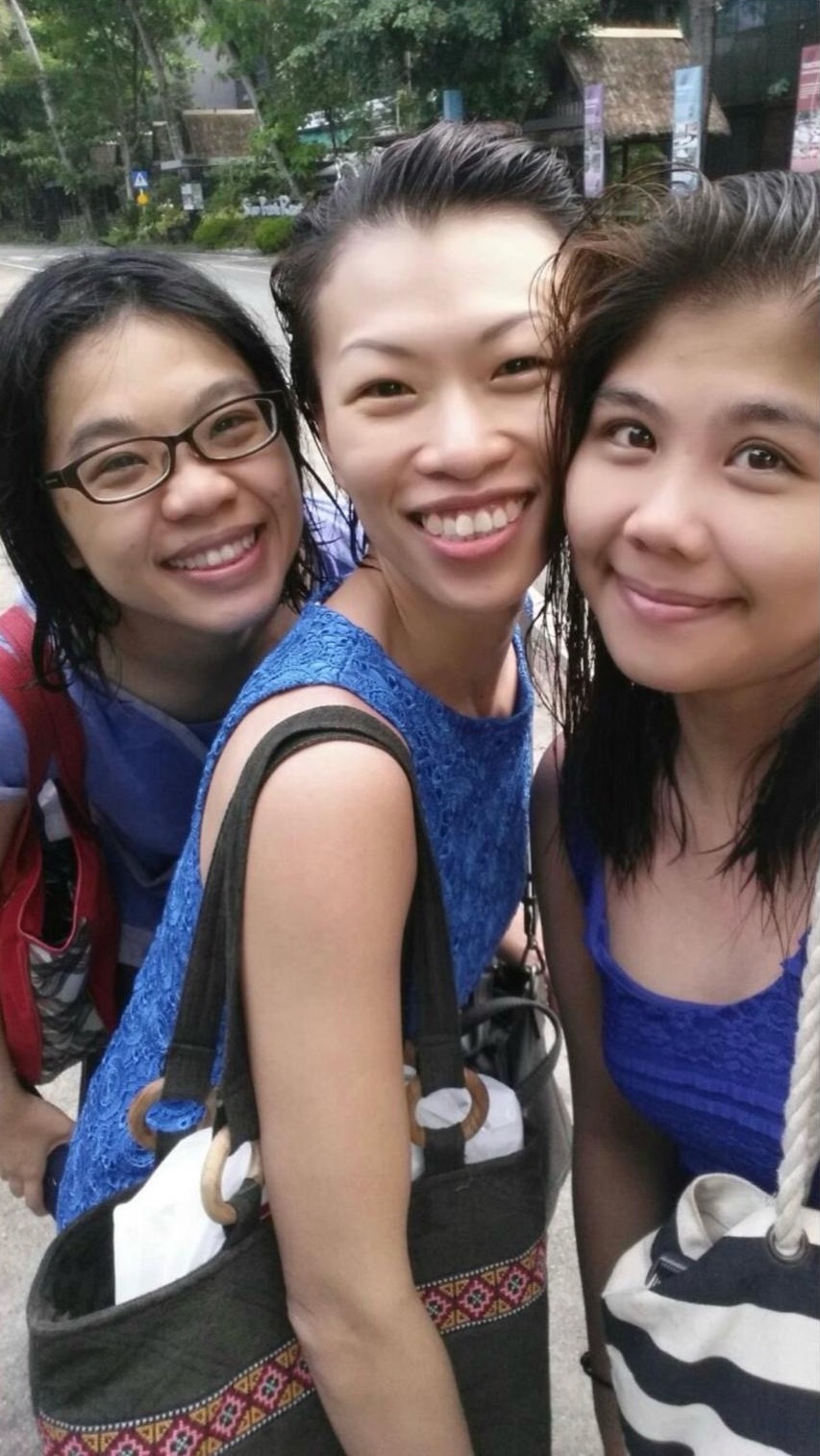 Tan (centre) with her friends after a swim about five days before she was told she had cancer. Photo via Sophia Tan
But there had been signs. She had to be hospitalised when she had dengue fever because she was experiencing pain in her joints, and her blood pressure was very low. And the procedure of collecting her skin sample for the study tired her out so much that she fell asleep right there in the hospital.
Joint pain, low blood pressure, and fatigue — all common symptoms, she learnt later, of leukaemia.
After the phone call, she went to the hospital and did further tests that confirmed she had acute myeloid leukaemia (AML).
An aggressive form of blood cancer, AML occurs when there is an excessive, uncontrolled production of immature white blood cells in the bone marrow. By May 2015, there were over 80 per cent of such blood cells in Tan’s bone marrow.
In a shared ward, surrounded by seven doctors and no one she knew, she was told that she had six months left to live.
Disbelief turned into fear turned into rage.
"Who are you to tell me how long I have left?"
She kept these words inside her in front of the doctors, but let them out to me during our conversation, her voice catching for a micro-second.
Even then at the hospital, she had been aware that the rage was her fear talking, and she didn’t like it. She did not want to be controlled by fear.
Taking back control
Tan decided that if she couldn’t avoid treatment, she would fight hard to decide its terms.
She chose a hospital she wanted and asked to be transferred. She explored natural treatment options, initially resistant to doing chemotherapy due to concern about the long-term side effects on her body.
But her family, scared for her, wanted her to do chemo. Tan knew that the next six months would be hard, and doing it without her family’s support would be even harder.
So she agreed, but told herself she would continue to take charge.
Every day, she checked her blood results. She also read up on different types of medication and their side effects.
For her, however, the most important effect of cancer to manage was in her mind.
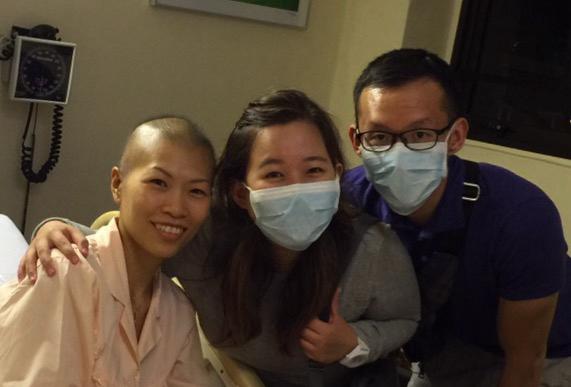 Sophia with friends who visited her at the hospital. Photo via Sophia Tan.
A wake-up call
When she started chemo in June, the uncertainty did not lessen.
"I didn't know anybody who has had leukaemia," she said. "I didn't know someone who had seen the other end of the [treatment] process."
But she did know someone very close who had come close to death just a few months earlier.
Her mother had a stroke in February 2015, at the age of 60, and became very ill. Much like Tan’s diagnosis, the stroke was a shock to the family as her mother was "relatively healthy", as Tan put it.
Tan witnessed her mother in a spiral of distress, questioning why this illness happened to her.
"I thought that it's really not helpful to think in that way…I don't want to go down that route," she said.
When the time came that she fell sick with cancer, she was determined to think positively. She wanted to see herself through to the other side of her illness.
"I didn't want people who could be negative or affected me in any [negative] way to even come and visit me."
It was also a wake-up call for her personally. Shaken by the revelation of her own mortality, she decided she had to live life differently moving forward.
"I think the illness gave me this sense [that] I cannot live my life this way anymore," she told me.
"Inside, I’m not well. And I didn't know what’s not well."
In between rounds of chemo, she attended workshops on awareness, and reflected deeply about her past.
She realised that she would often suppress difficult feelings like anger and resentment at home to make others happy. In turn, her happiness and life were defined by other people's feelings.
"I was giving in order to please others or to get approval," she said. "I think that was [a] very unhealthy part of how I functioned."
She started learning to put herself first, express herself better, and change some unhealthy habits.
"It was during that period of time…that I was able to let go of some very toxic relationships."
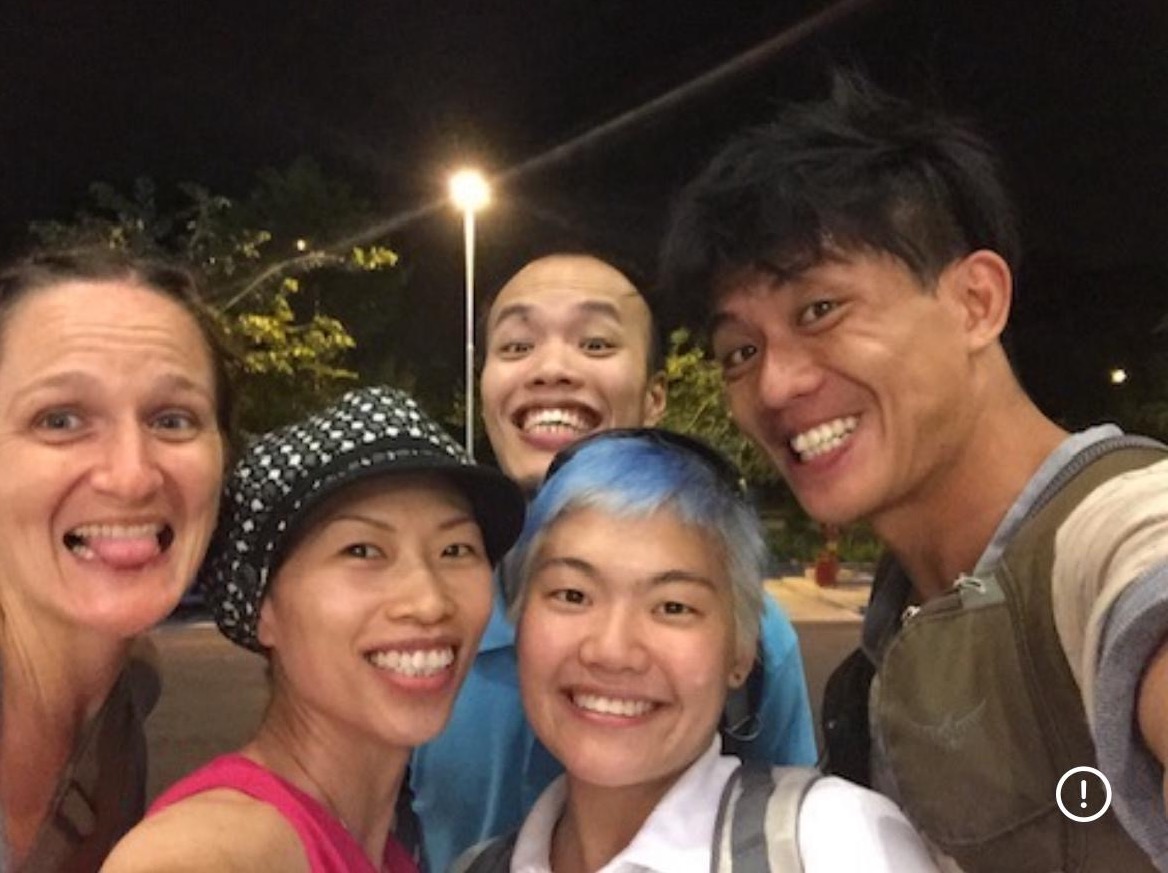 Tan with some friends she made while picking up contact improv, a type of dance, during treatment. Photo via Sophia Tan.
"I will live"
This new mindset gave her more confidence and resolve to live.
"As I was doing one of the [workshops], I remember telling myself…I will live, and I will get out of the hospital. I will not come back."
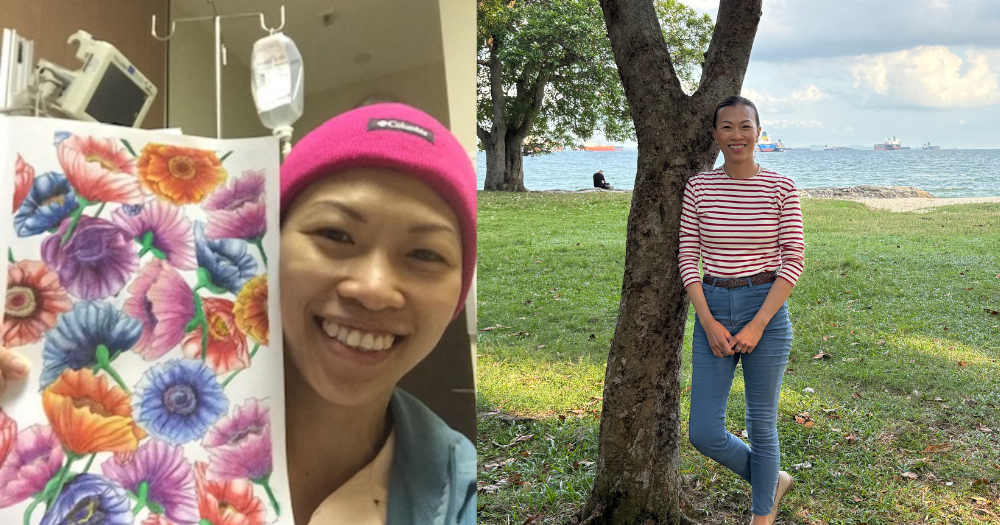
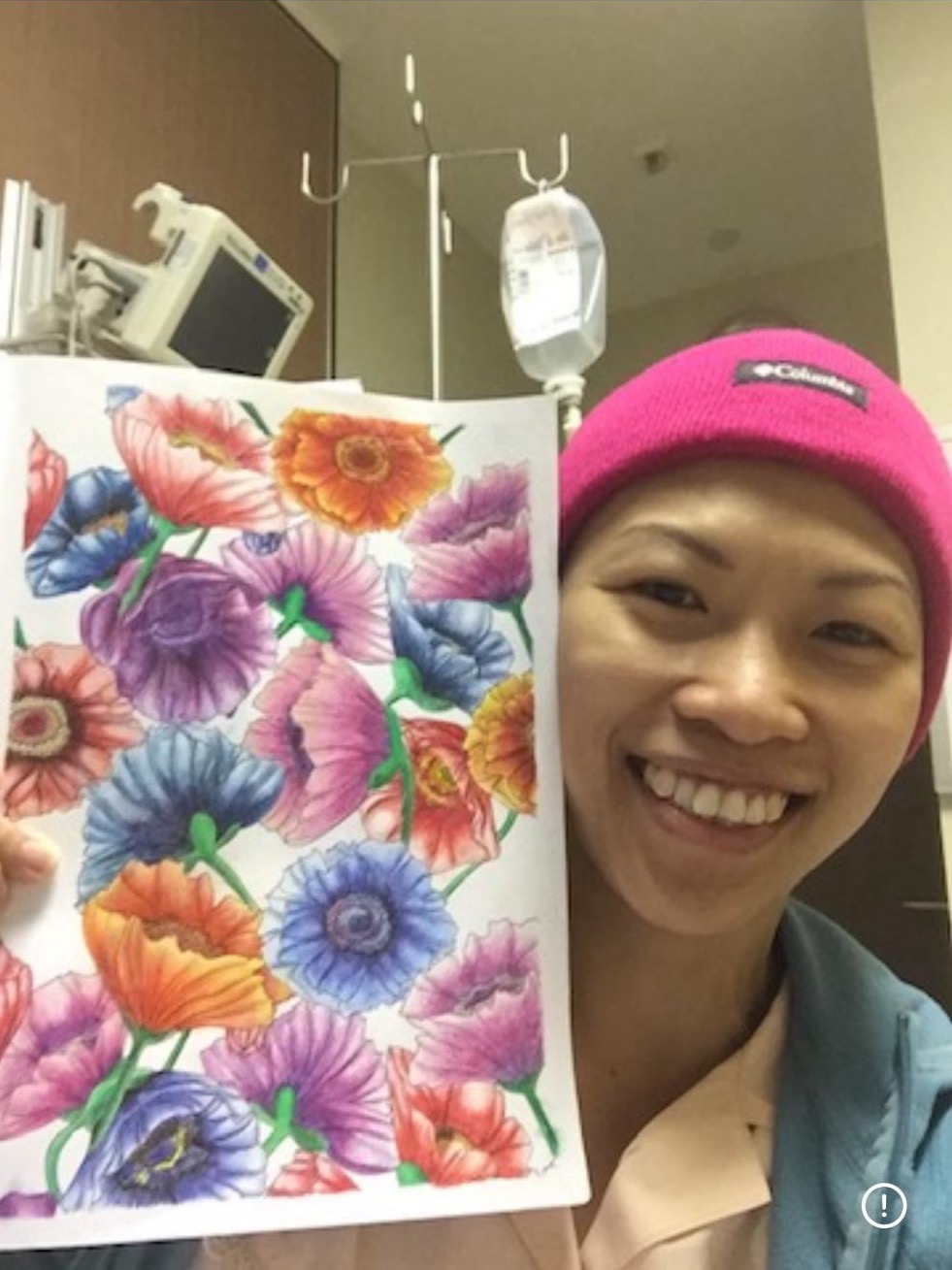 During treatment in the hospital, Tan would often colour – something she said she enjoyed and helped her stay mindful. Photo via Sophia Tan.
While her attitude was inspiring, I was left quite puzzled.
What motivated her to change her life with just months left to live?
I got the sense that this was the way she had been responding to her illness the whole time since her diagnosis. She was trying not just to cope with cancer, but to live through it with dignity. She wanted to live to her fullest with whatever time she had left.
"Nobody knows when, but we all know that one day [death] will come," she said. "But I think what is more important is that, when I'm around, what am I doing with my life?"
Thankfully, she would get the chance to keep exploring this question for many more years.
A perfect match
Early on in her treatment, her AML was assessed to be a poor-risk type, which Singapore Centre for Clinical Haematology says gives patients only a 25 per cent chance of a durable remission with existing treatments.
Tan's doctors told her that just doing chemo would not be enough — the cancer would most probably recur.
Tan’s best bet was a bone marrow transplant.
Her sister — her sole sibling — and other relatives got tested, but none of them were a good enough match.
In June, a medical social worker linked up with the Bone Marrow Donor Programme (BMDP), which manages Singapore’s only public bone marrow donor registry, and started the search for an unrelated donor.
Today, Singapore blood patients have just a 16 per cent chance of finding a suitable match with a donor, BMDP shared in May 2025. In 2015, the odds were even lower, at 1 in 20,000.
It was hence "quite miraculous" that she found one.
Three months and three gruelling rounds of chemo later, BMDP found someone who was a 100 per cent match. They reached out, and 41-year-old Pauline said yes, she was still up for donating her bone marrow.
"She didn't know me. She didn’t have to say yes," Tan told me, choking up. "But she did."
She and Pauline not only shared all the same type of human leukocyte antigens (HLA), a protein in their cells — they also shared the same birthday.
They learnt this when they met for the first time in the BMDP office in 2022, having communicated only through anonymous letters previously. Tan had requested years before if they could meet, which BMDP allows from 24 months after the transplant, but it was not until she tried again in 2022 that she got a reply and consent from Pauline.
What is it like to meet the person who saved your life?
Tan struggled to find the words when I asked her.
"There was this huge sense of awe," she said after a long pause. "This person gave me a second chance at life."
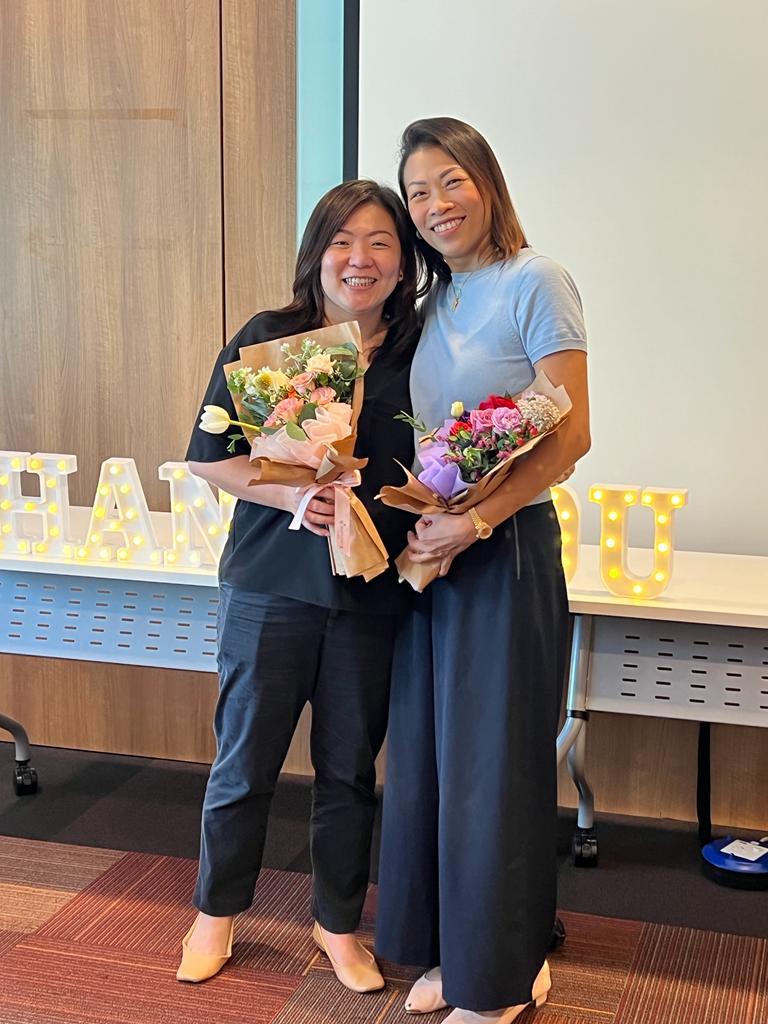 Pauline (left) and Tan when they first met in 2022. Photo via Sophia Tan.
New life, new love
Following a successful bone marrow transplant in early November, she was discharged from the hospital on Dec. 11, 2015.
Ten years after she was told she had six months left to live, Tan sat in front of me at East Coast Park, her face and hands animated as she told me about her recent fishing trips with her fiancé.
Yes, she was just days away from getting married when we spoke. She and Cédric met in 2019, four years after her transplant.
Maybe it’s because I was seeing her in the flesh, under the mid-afternoon sun, but Tan looked a lot stronger and more radiant now than she did in her photos from before cancer.
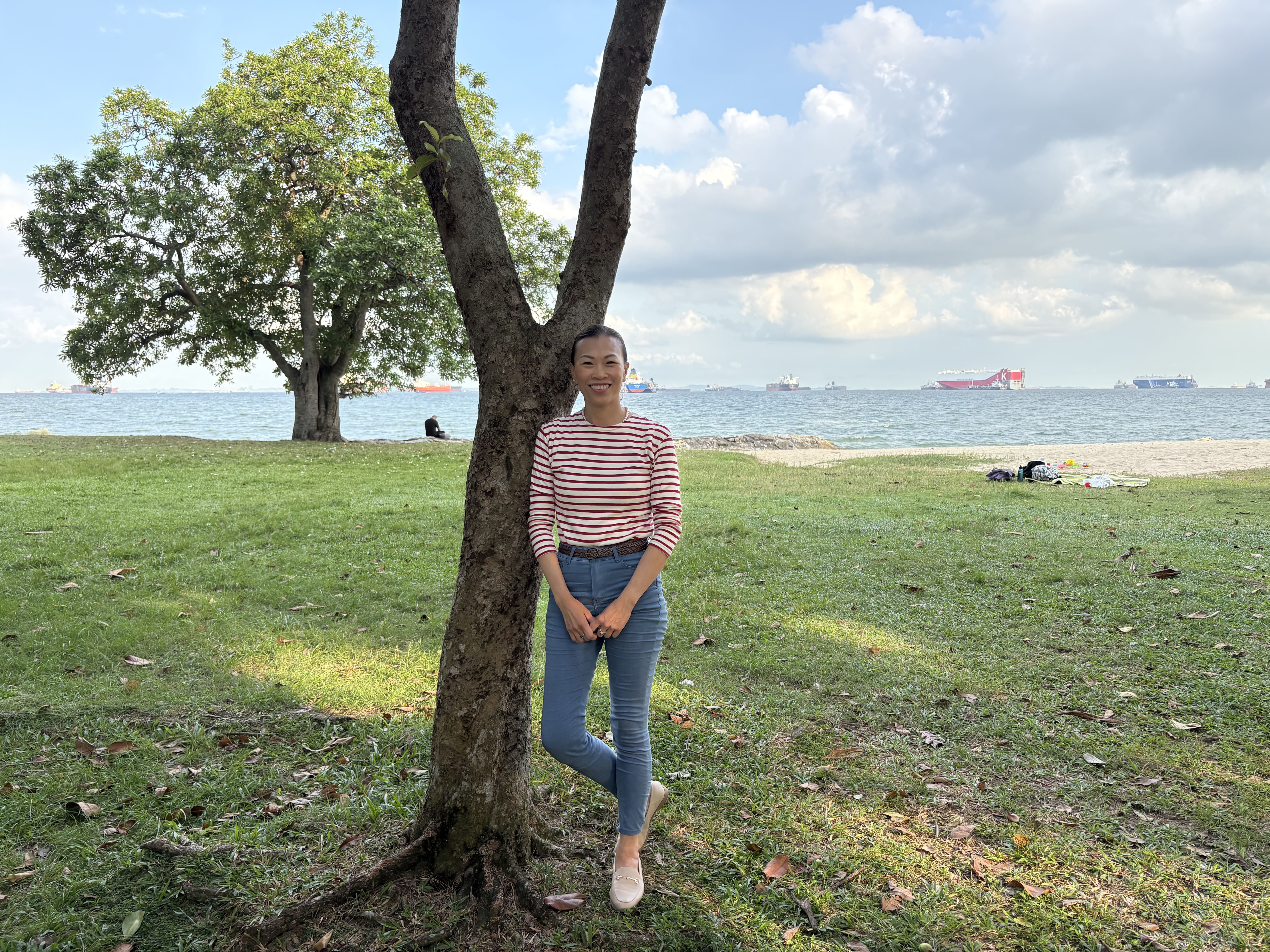 Photo by Wu Xueting/Mothership
There’s a lot that I cannot see, though. Life after cancer has not been without difficulties.
“I would say that my physical fitness will probably not be [comparable] to…the past,” Tan, now 47, told me.
She stopped menstruating while undergoing chemo, and it has not recovered for her, a common side effect of the treatment for women. Today, two of her crucial reproductive hormones are not at an optimal level for her to have children.
Still, she keeps positive, and believes “there’s more life after cancer”.
That’s the message she hopes to share when she walks in a charity runway show organised by Fashion for Cancer on Sep. 13, 2025. She’ll be joined by other cancer survivors to raise funds for cancer research and patient support at the National Cancer Centre Singapore (NCCS), and to give hope to those who are still going through cancer.
She's also a volunteer with BMDP in their outreach efforts, sharing her story and encouraging people to sign up as a blood marrow donor.
“Cancer is not a death sentence,” Tan wants people to know, “and life after cancer can be a bright, lively, and thriving one.”
She’s found such life in the outdoors. She has got back to hiking with her family, and picked up fishing — all catch and release. I was stunned to see a photo of her holding a sailfish she caught last October. It’s almost as big as her!
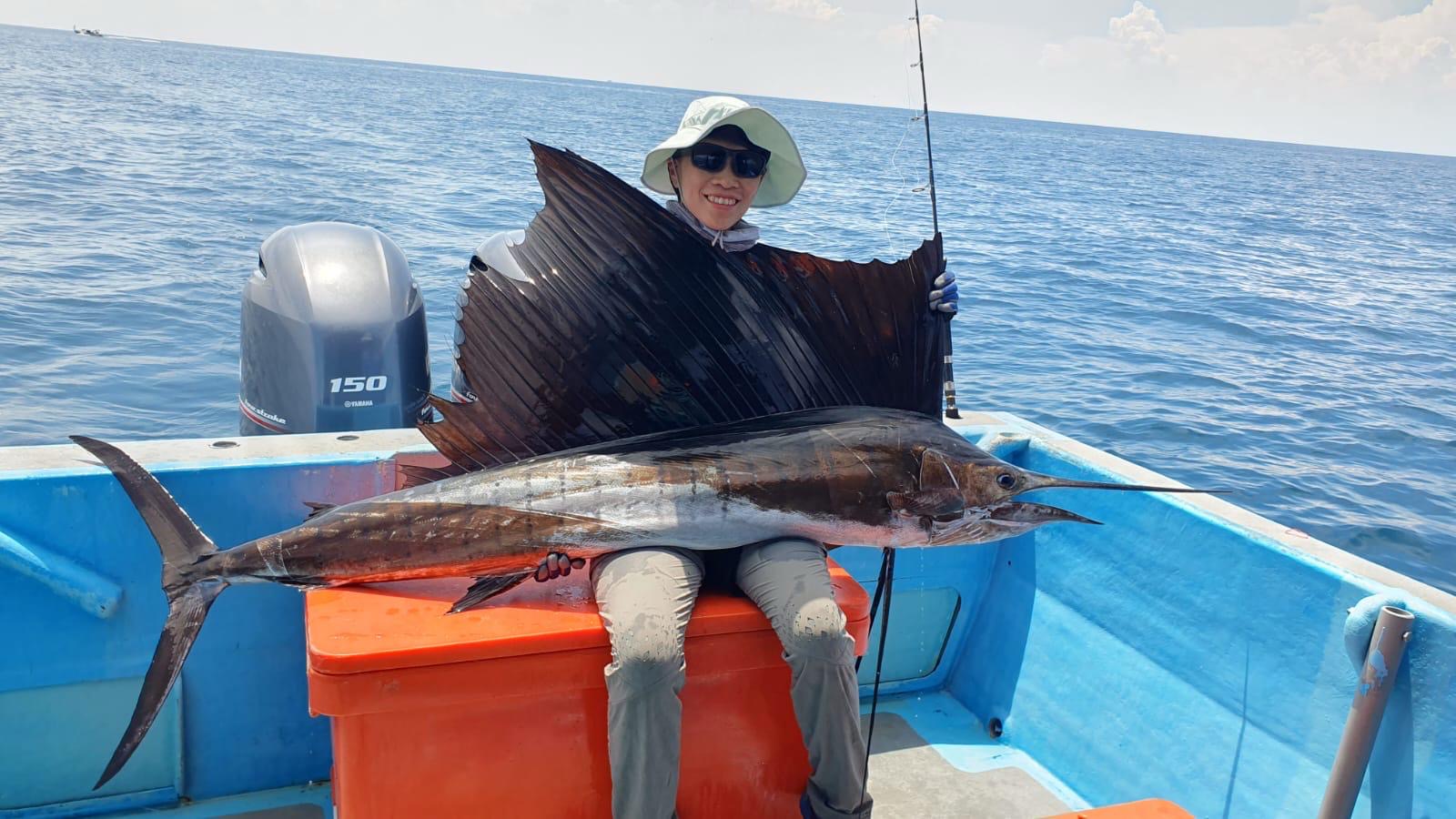 Tan and her sailfish in Rompin, Malaysia. Photo via Sophia Tan.
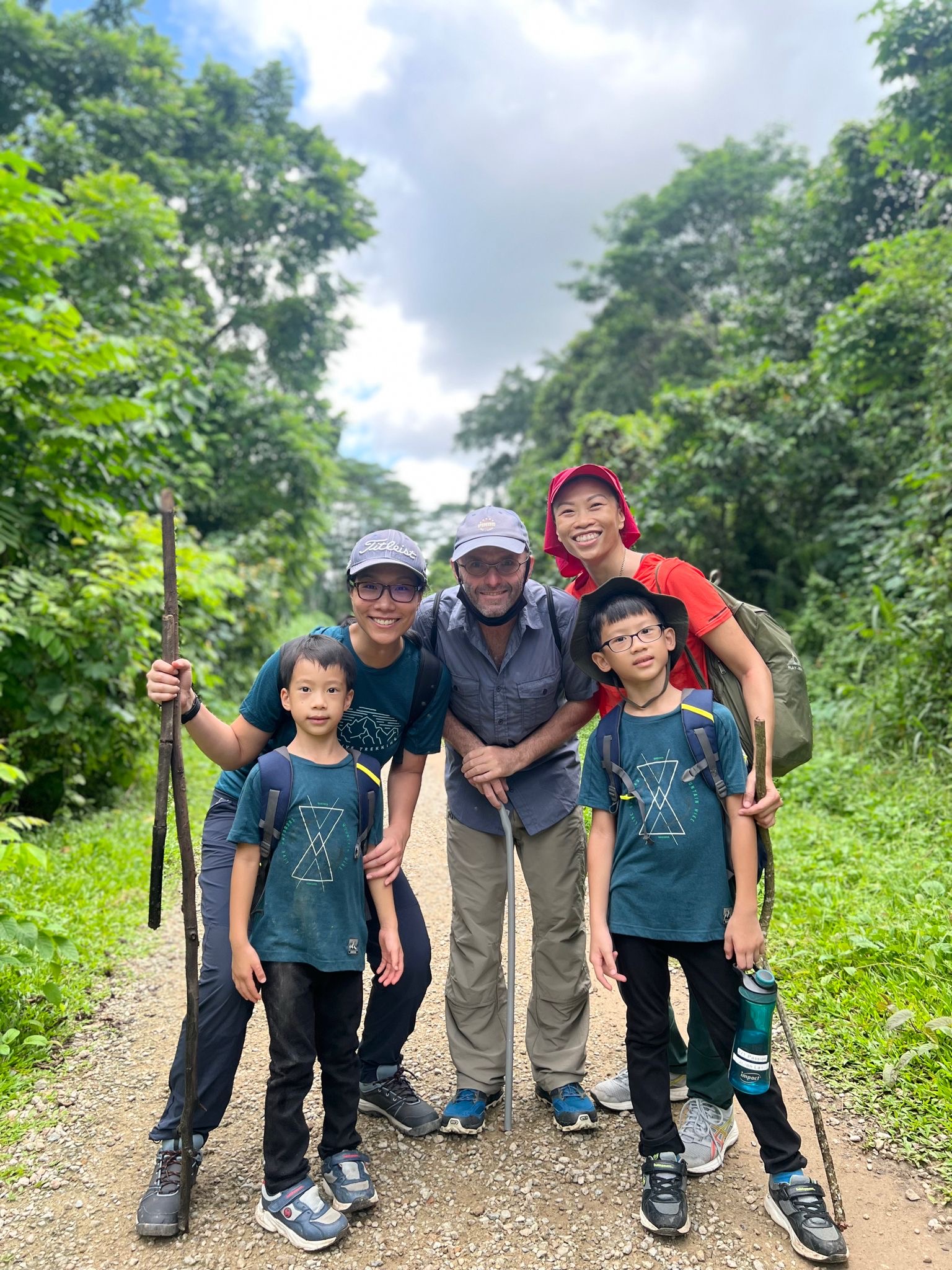 Tan on a recent hiking trip with her then-fiancé, her sister, and her sister's kids. Photo via Sophia Tan.
She also continues to practise what she learnt during cancer about being more expressive with her feelings.
“I think now I am very mindful of my emotions and…willing to face up to my emotions,” she said.
“I’m by no means done with this journey of growing and discovery, as there is still so much to discover.”
Including a new chapter of her life with her partner. Perhaps the glow I saw in her skin was from pre-wedding excitement?
As I write this, Cédric and Tan are happily married.
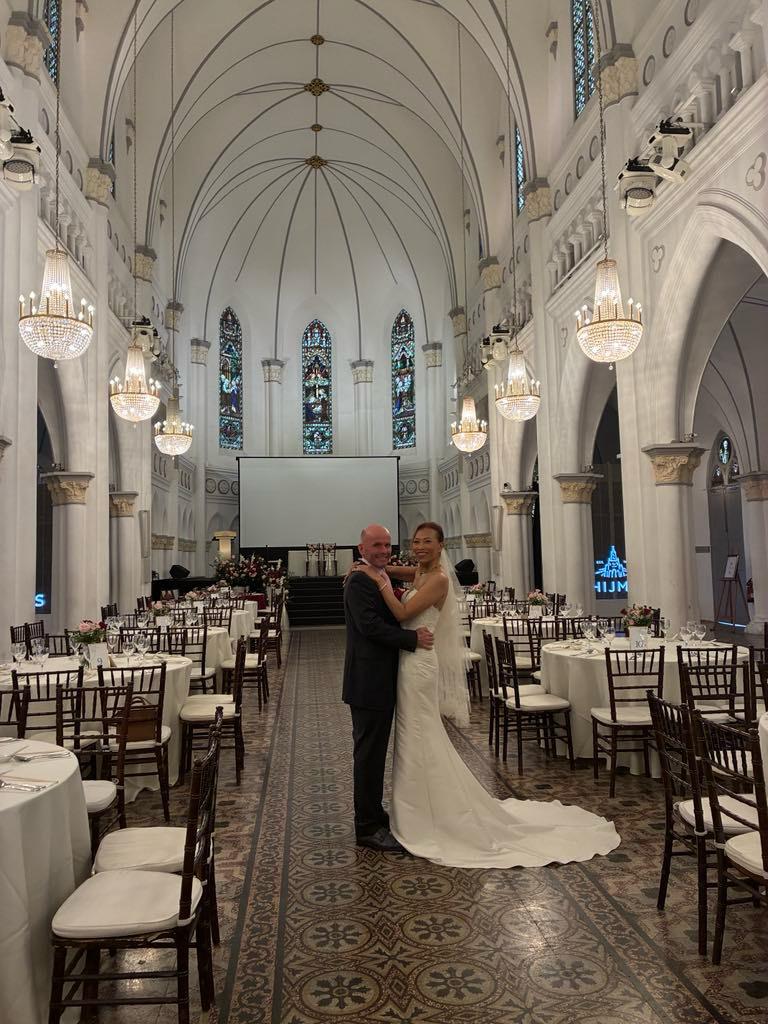 Photo via Sophia Tan
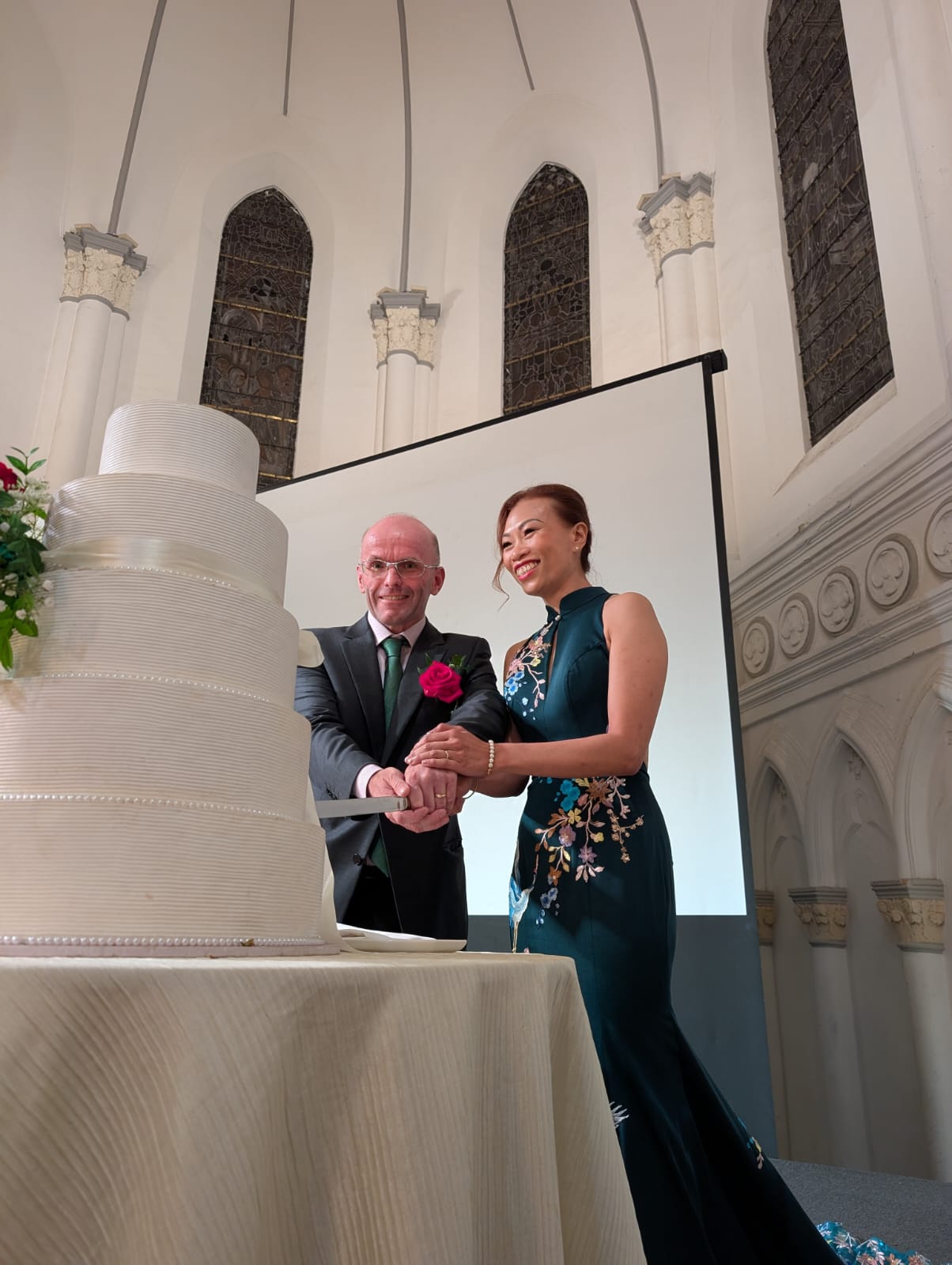 Photo via Sophia Tan
As we wrapped up our conversation, Cédric appeared. He had been hanging around somewhere nearby, wanting to give us space to talk. He and Tan pulled each other in for a quick, familiar hug, then she introduced him to me.
We chatted for a bit, but soon I had to run off. They told me they might stay for a while. Perhaps take a walk by the beach, they said. The sun had gone low, and there was a light breeze.
Since they had come all the way, might as well enjoy their time here.
Top image from Sophia Tan and Wu Xueting