News

France's Prime Minister Bayrou wants to get rid of public holidays to boost economy
"The last stop before the cliff."
July 16, 2025, 06:50 PM


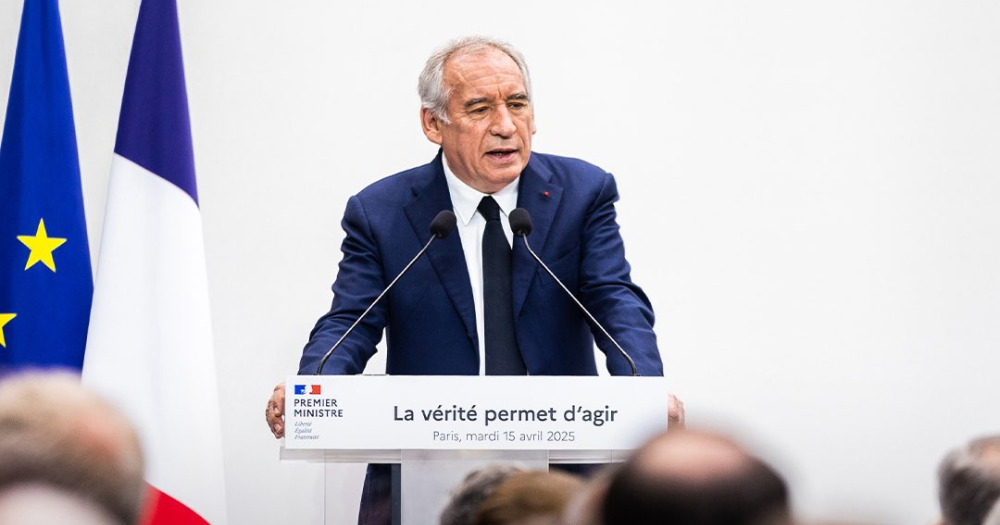
French Prime Minister Francois Bayrou has proposed removing two public holidays, among other measures, to boost the nation’s economy as it stands “in mortal danger” of being crushed by debt.
The Guardian reported that during the announcement of his 2026 budget proposal on Jul. 15, Bayrou suggested scrapping Easter Monday and Victory Day, celebrated by France on May 8 to mark the end of World War Two.
As of his announcement, France has 11 public holidays a year, the same number as Singapore.
However, employees in France are entitled to 30 days of paid leave for a full year of work, as compared to Singapore’s minimum entitlement of 7 days.
Bayrou went on to reason that several bank holidays in May had resulted in the month turning into a "gruyere" (a Swiss cheese full of holes), but said that he was open to other options.
“The entire nation has to work more so that the activity of the country as a whole increases, and so that France’s situation improves. Everyone will have to contribute to the effort,” he explained.
Crippling debt
France’s public deficit soared to 168.6 billion euros (S$251.6 billion) in 2024, which is 5.8 per cent of its Gross Domestic Product (GDP), well above the European Union’s (EU) permitted limit of 3 per cent of GDP.
The proposed removal of public holidays is among many measures Bayrou has outlined to cut the national budget by 43.8 billion euros (S$65.3 billion).
Other plans include reducing the number of civil service employees, freezing welfare spending and tax brackets at last year’s levels and introducing a so-called “solidarity contribution” for wealthy individuals.
Defence spending spared
Meanwhile, defence spending is expected to rise by 6.5 billion euros (S$9.7 billion) within the next two years, roughly 10 per cent, according to the BBC.
The call came from French President Emmanuel Macron on Jul. 13, when he warned that Europe’s freedom is facing a “greater threat” than ever since the end of World War Two, citing the dangers posed by Russia.
"To be free in this world, you must be feared. To be feared, you must be powerful," Macron said in a speech addressed to the Paris armed forces.
As president, Macron has responsibility for foreign affairs and defence, while Bayrou is responsible for domestic affairs.
Not a fan
Bayrou is now at risk of his budget being voted down, and his government collapsing.
Many of the measures he outlined have since drawn criticism from opposition parties, including the far-right National Rally, the largest single party in parliament, and the radical left La France Insoumise.
Additionally, Macron’s decision in June 2024 to call for an early parliamentary election delivered a hung parliament, in which he and Bayrou’s centrist alliance did not hold the majority of seats, leaving them prone to infighting instead of dealing with the debt crisis.
To pass the budget, they would have to invoke a constitutional clause, a move that would leave the government vulnerable to a no-confidence vote.
The previous Prime Minister, Michel Barnier, lost his premiership through such a fate, after he pushed a bill with an even harsher budget using his executive powers, marking the first time the government had collapsed through a no-confidence vote since 1962.
Still, Bayrou hopes that the cuts will bring the deficit under the EU’s threshold by 2029, and warned that France could otherwise face a debt crisis similar to the one Greece experienced over a decade ago.
"It's the last stop before the cliff before we are crushed by the debt," he said during the announcement of his fiscal proposal.
Top image via Francois Bayrou/X