Branded
Visited Beijing or Shanghai? You can visit Quanzhou, China, for less than S$400 in Aug. 2025
22 world heritage sites, good food, and fewer tourists.
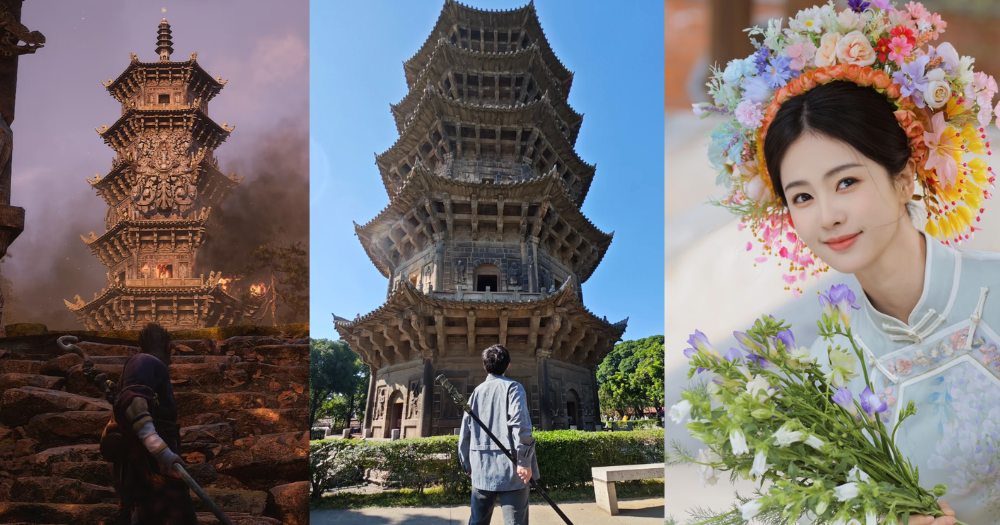
Are you looking for a destination with rich culture, good food, and ample photo opportunities for the gram without being squeezed by other tourists?
Look no further. Quanzhou, a port city located in China’s Fujian province, is the answer.
Plus, Xiamen Airlines can get you there for less than S$400 (but more on this later).
First time hearing about Quanzhou? We got you.
By visiting Quanzhou, you will join the ranks of Venetian explorer Marco Polo, who regarded the city as “defying imagination” with its bustling trade scene during the Maritime Silk Road.
With Singapore dollars being valued at a record high against Renminbi, take this chance to visit this part of China in the next few months while the exchange rate is to our advantage.
 Information accurate as of Jun. 23. Screenshot via Google
And no, you do not need a visa to visit Quanzhou, thanks to the mutual 30-day visa-exemption arrangement between Singapore and China.
Still not convinced? Here are more reasons to visit Quanzhou.
Journey through time with Quanzhou’s 22 world heritage sites
For history connoisseurs, Quanzhou houses 22 sites that are included in the United Nations Educational, Scientific, and Cultural Organisation (UNESCO) World Heritage List.
These sites range from archaeological remains, such as ancient bridges and porcelain kiln sites, to religious architecture built by Taoism, Buddhism, and Islamic faithfuls.
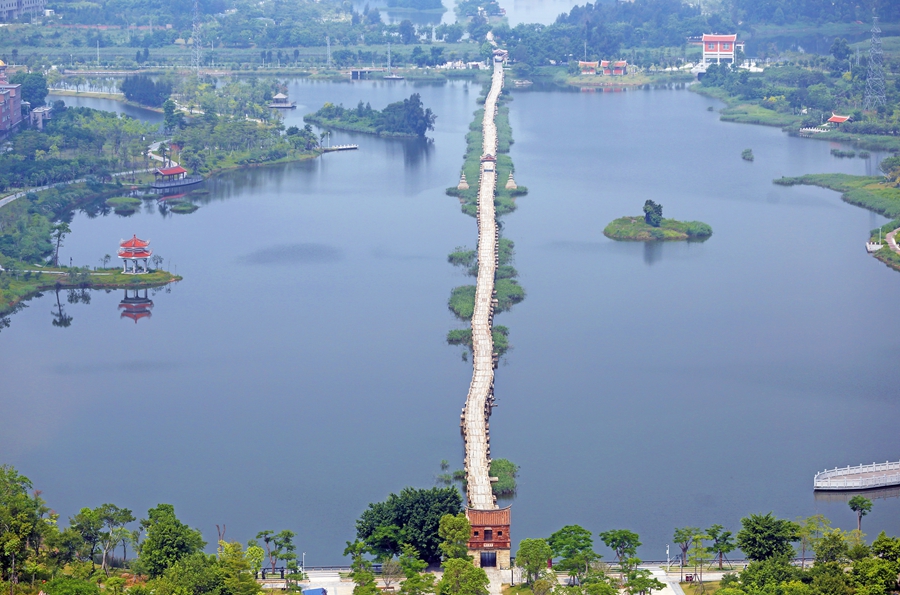 Anping Bridge, China's longest extant flat-beam sea-crossing stone bridge. Image courtesy of the cultural relic protection center of Jinjiang city
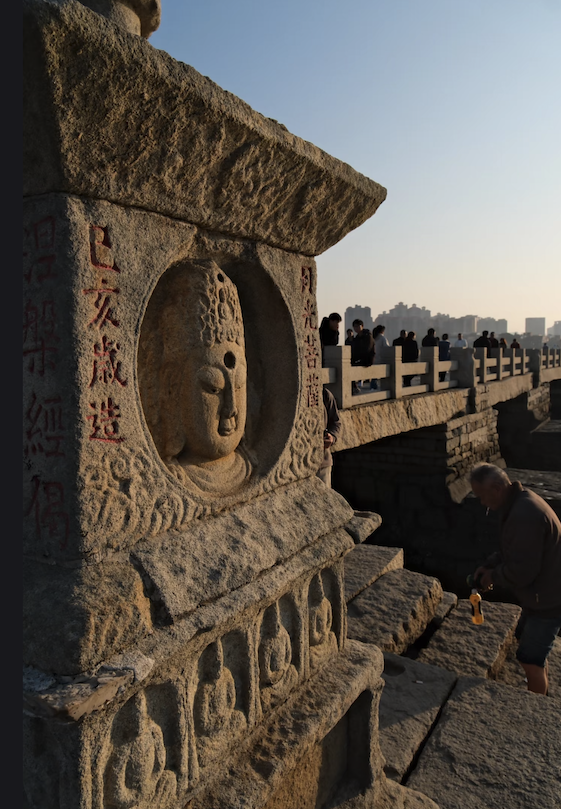 Completed in 1059 AD, Luoyang Bridge connects Quanzhou to northern Fujian. Image via 每天都要小鱼干儿/Xiaohongshu
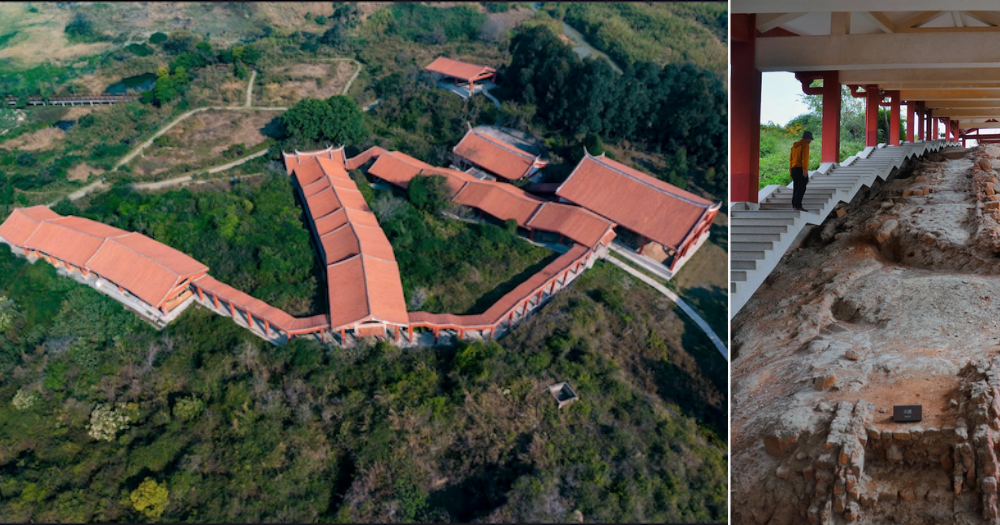 Sites of Cizao kilns, an example of export-oriented porcelain kiln sites that lie on the outskirts of Quanzhou in the Song and Yuan dynasties. Images via 庞尼西 & 小盐同学在这里/Xiaohongshu
The reason behind this diversity is that Quanzhou was an important trade centre for centuries, connecting China with Southeast Asia, the Indian subcontinent, the Arabian peninsula, and regions in Africa.
One of these world heritage sites is Kaiyuan Temple (开元寺), a Buddhist temple built in 686 AD during the Tang dynasty.
 Left screengrab from Black Myth: Wukong from via momo/Xiaohongshu, right image of Kaiyuan Temple via 海丝泉州文旅之声/Xiaohongshu
If you are a fan of “Black Myth: Wukong,” this temple may look familiar, as it inspired one of the scenes in the game.
Just like many other fans of the game, you can recreate the scene in front of the temple — great for social media.
Another noteworthy world heritage site is Qingjing Mosque (清净寺), also known as Masjid al-Ashab in Arabic.
No matter the time of day, the mosque exudes its own unique charm.
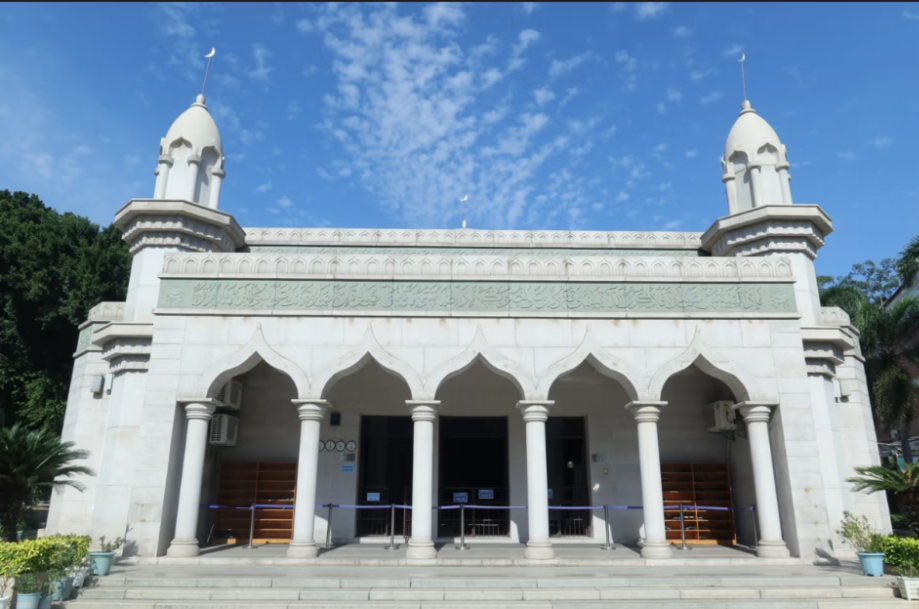 Qingjing Mosque during the day. Image via Lulu/Xiaohongshu
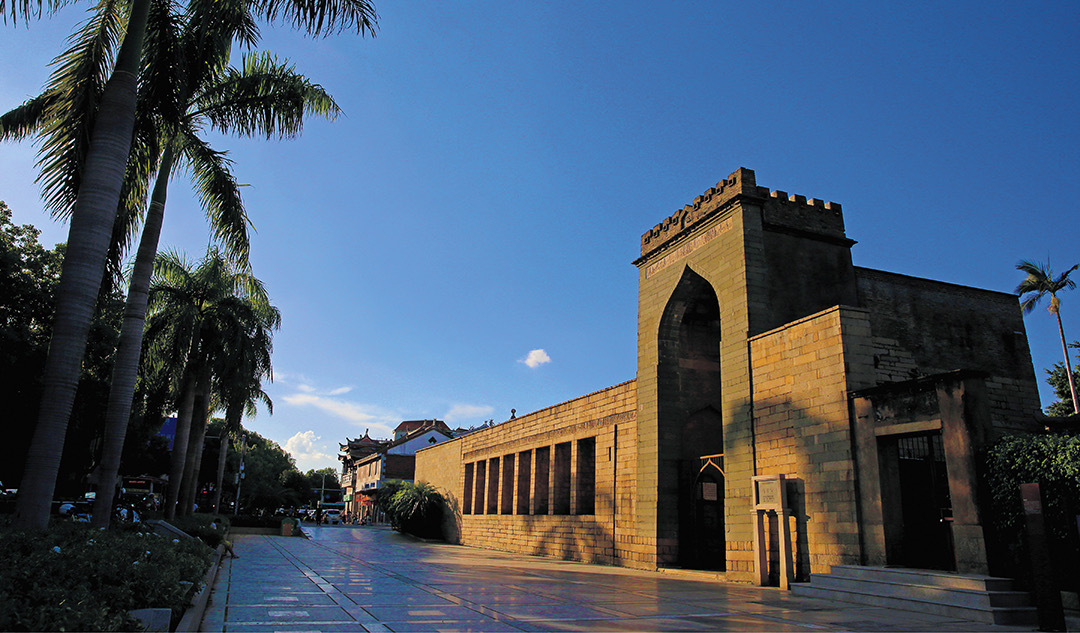 Qingjing Mosque around evening. Image via 泉州市智慧旅游云平台/WeChat
Built in 1009 AD during the Northern Song dynasty, it is the oldest surviving mosque in China.
Spanning 2,184 sqm, the mosque was built from stones and modelled after similar architectures in Damascus, Syria.
While you are around the mosque, you can complete the day with a city walk at Xijie (西街), the oldest street in Quanzhou that was built more than 1,300 years ago during the Tang dynasty.
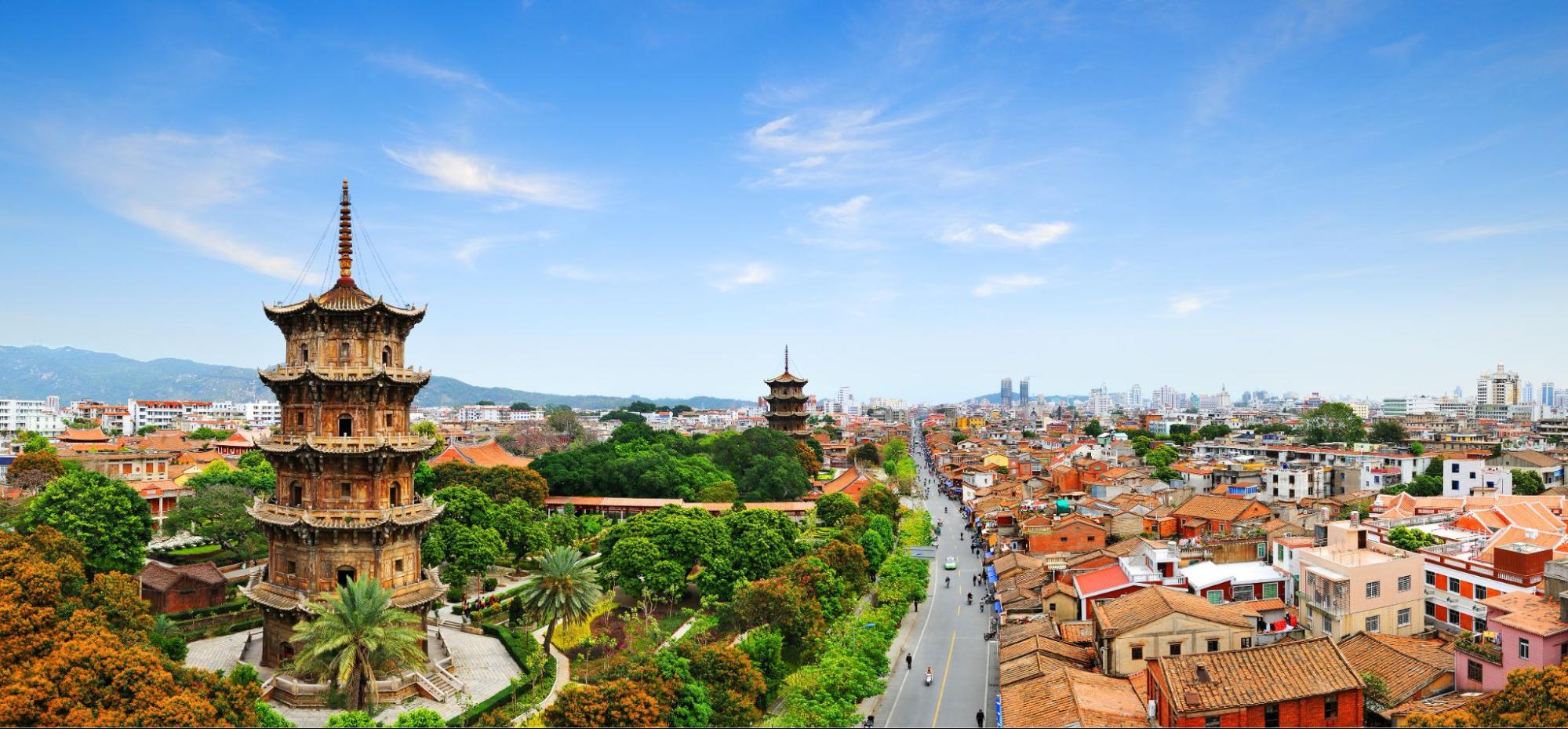 Image via Xiamen Airlines
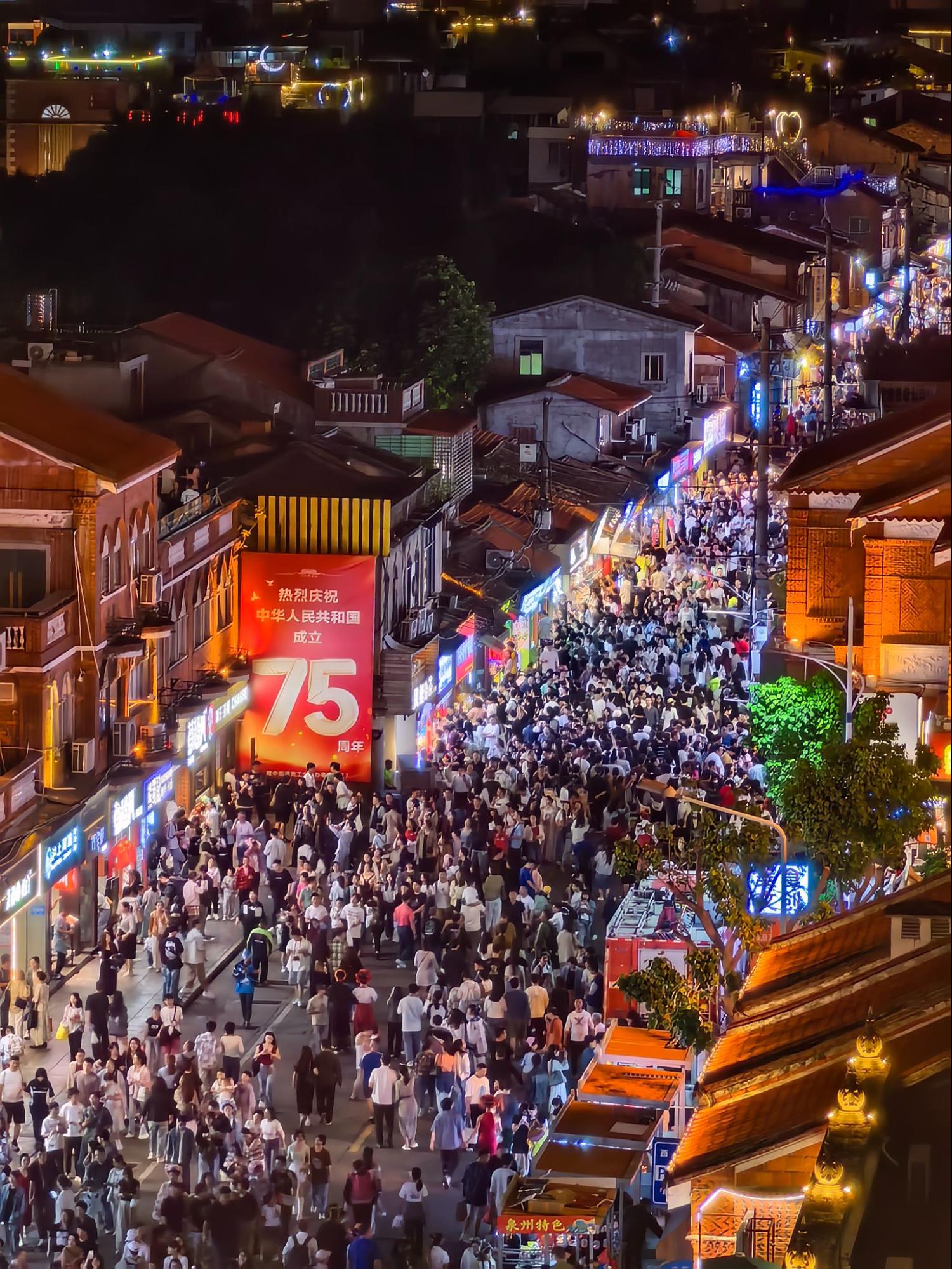 Xijie at night. Image via Xiamen Airlines
Xijie is popular amongst locals and tourists, because it has something for everyone — you can enjoy traditional cuisine, shop for souvenirs and snacks, and take more photos against iconic backdrops such as this wall with a huge Chinese character of “Love”.
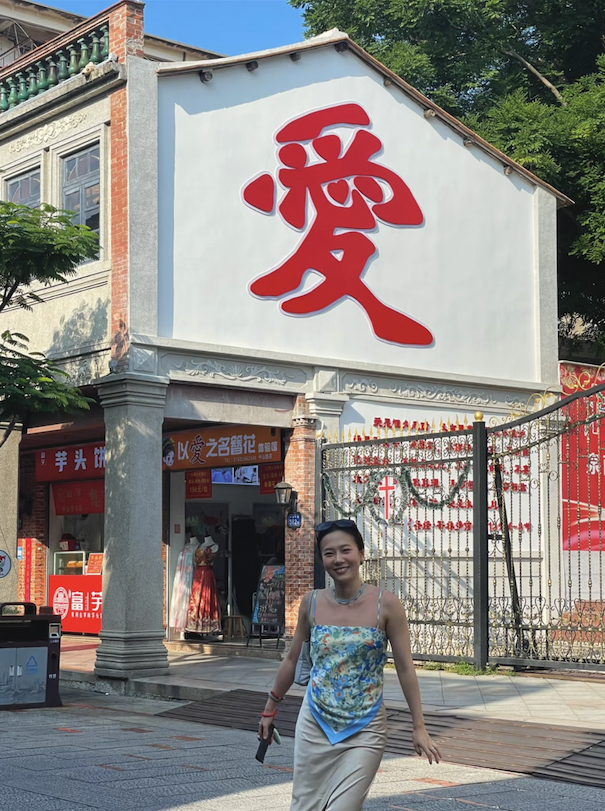 Image via 凯蒂的菠萝/Xiaohongshu
Craft your Minnan story
If you’re looking for a culturally immersive experience in Quanzhou, try out zanhuawei (簪花围), a traditional practice in southern Fujian, also known as Minnan, where you adorn your hair with flowers.
In particular, you should swing by Xiapu village (蟳埔村), where the tradition of zanhuawei is alive and bustling.
Over there, a skilful artist, usually an elderly woman, will style your hair into a bun before placing a hairpin inside.
She will then wrap several wreaths of flower buds, silk flowers, and fresh flowers around your head before fixing them with hairpins.
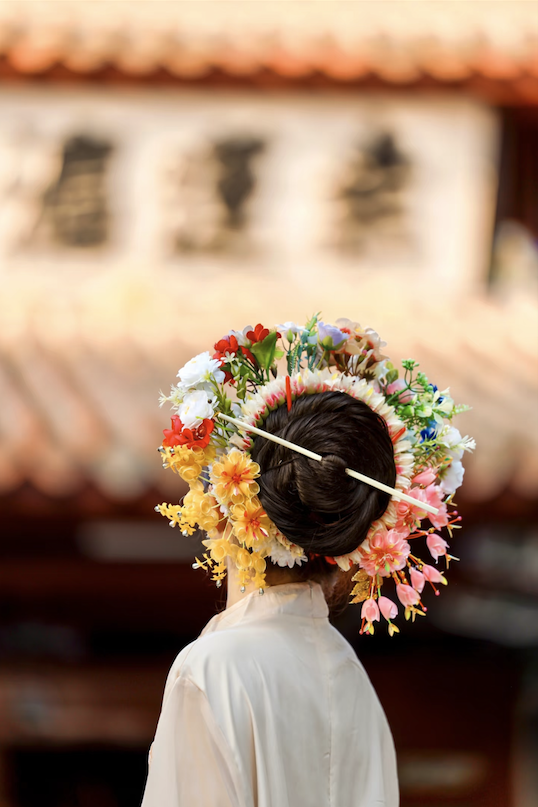 Image via 于斯/Xiaohongshu
While women in Xiapu village traditionally adorn their hair with jasmine, camellia, and chrysanthemum, you can opt for other flowers and select your own colour scheme for your zanhuawei.
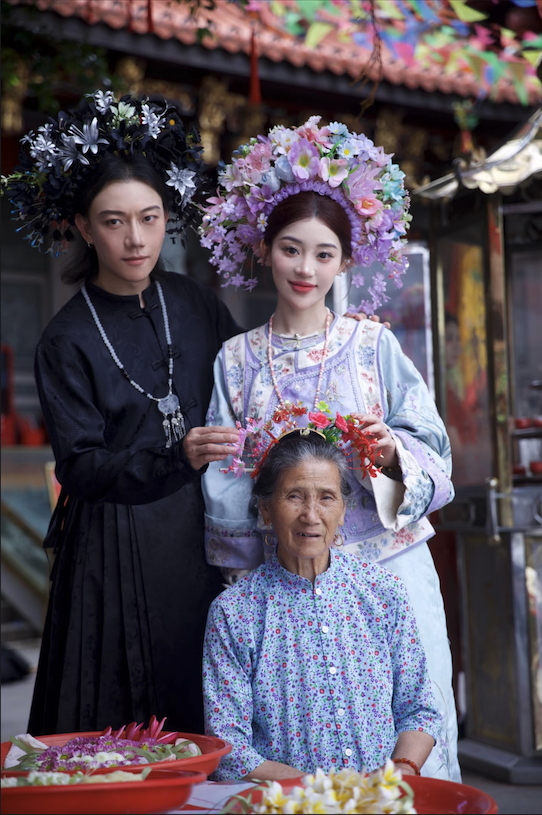 Image via 搞搞陣StAn/Xiaohongshu
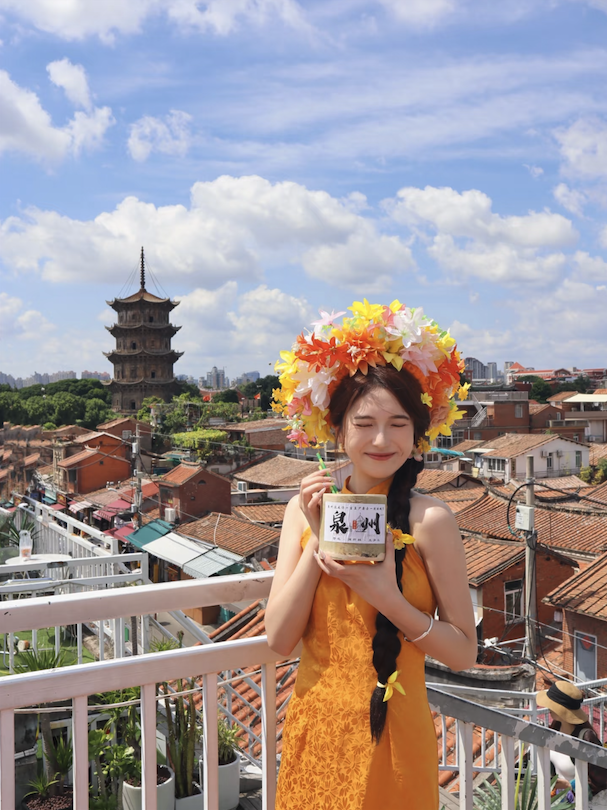 Image via 🍓/Xiaohongshu
You can also make your own oil paper lantern (油纸灯笼) in Quanzhou.
In southern Fujian, such lanterns convey people’s wishes for a strong family lineage and prosperity that lasts for generations.
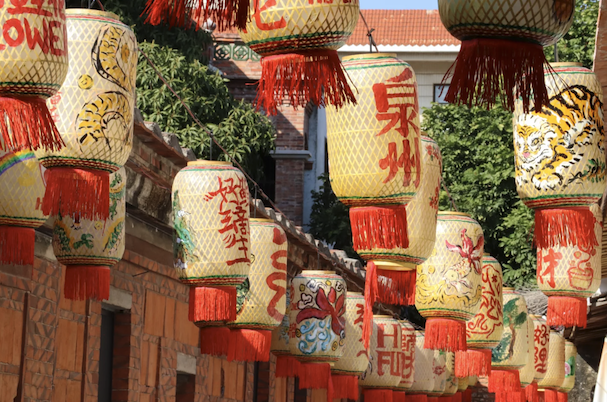 Image via 好摄の路人甲/Xiaohongshu
With their ability to light up their surroundings, even on rainy days, such lanterns also symbolise a bright future.
Many households will also add auspicious words and symbols, such as tigers and peonies, onto the lanterns.
The good news is you do not need to build the lantern from scratch (unless you really want to).
All you need to do is bring your creativity to the handicraft studios, and all the other materials, including a blank lantern, paint, and brushes, will be provided.
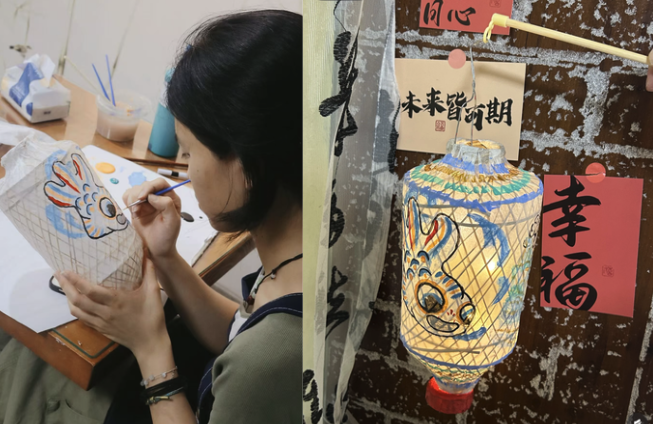 Photo via 无鸭梨手作制造所/Xiaohongshu
Be one with nature
If you want to escape the hustle and bustle of a city, Quanzhou has two notable natural sanctuaries to offer.
One of them is Qingyuan Mountain (清源山), a national park that comprises three mountainous ranges, including Qingyuan Mountain, Jiuri Mountain, and Ling Mountain.
With an altitude of 615m, the park will allow you to overlook Quanzhou’s skyline without overstraining yourself on your holiday.
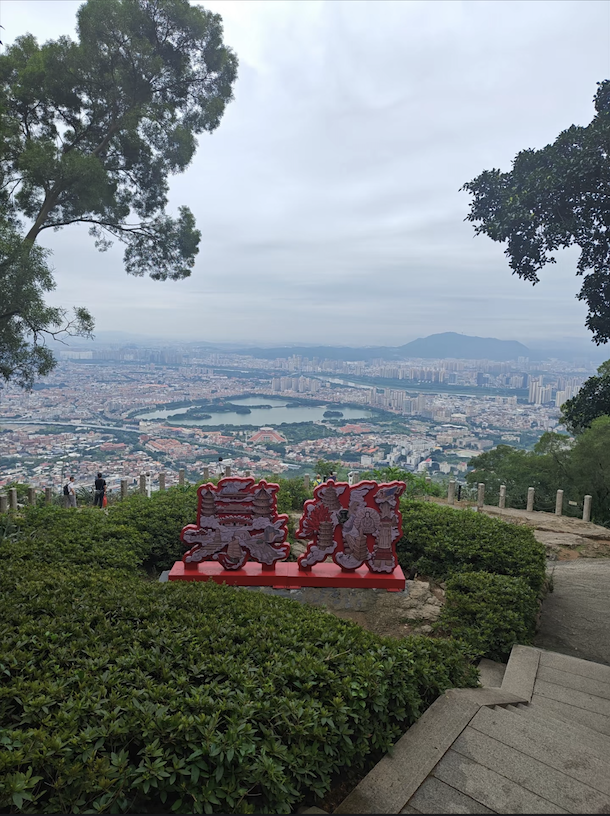 Image via Celestine_zz/Xiaohongshu
While you rejuvenate in the natural scenery, you can also explore cultural artefacts scattered across the park, which include a stone statue of Taoism founder Laozi, nine stone Buddha statues from the Song and Yuan dynasties, and over 600 cliff carvings.
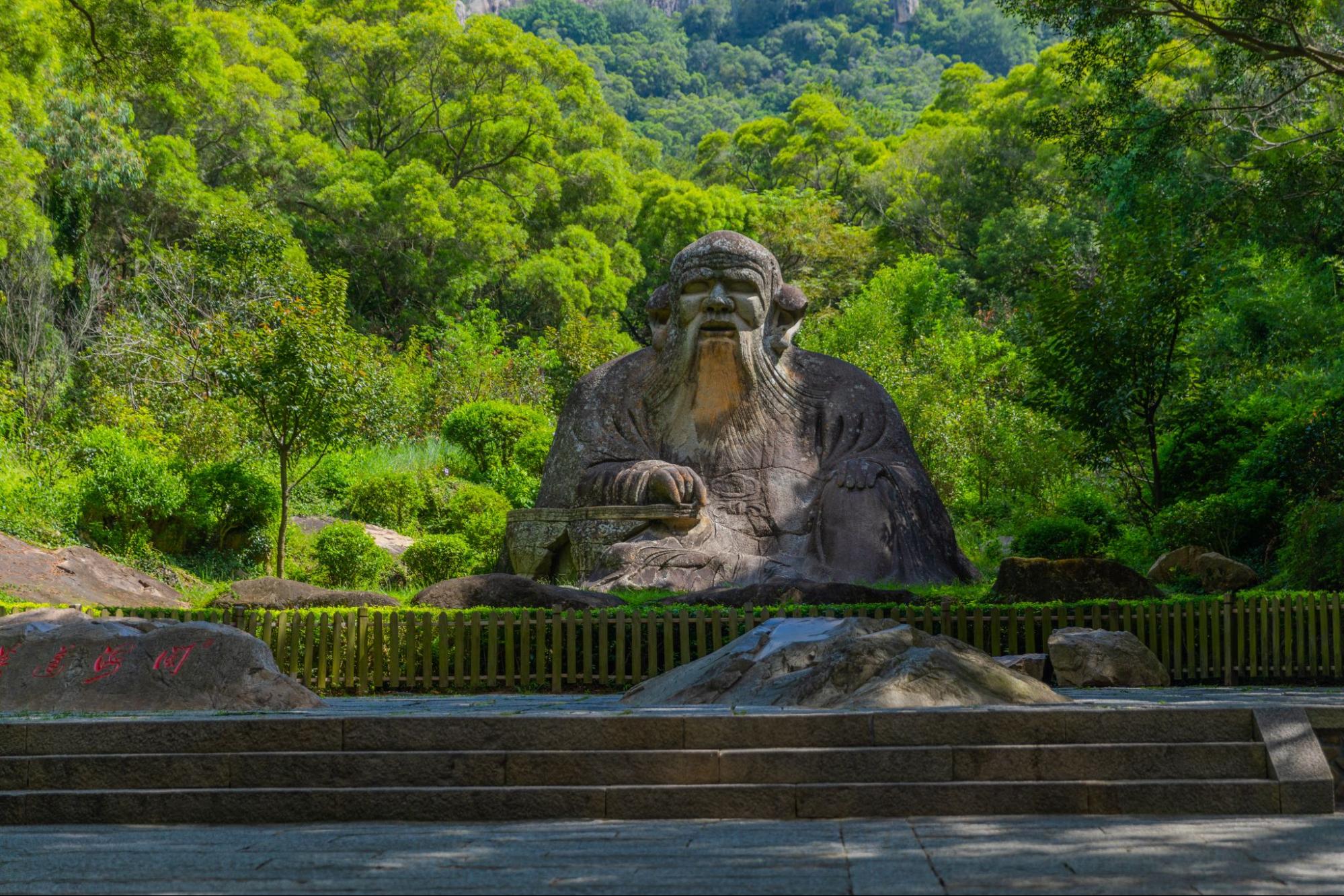 Stone statue of Taoism founder Laozi. Image via Xiamen Airlines
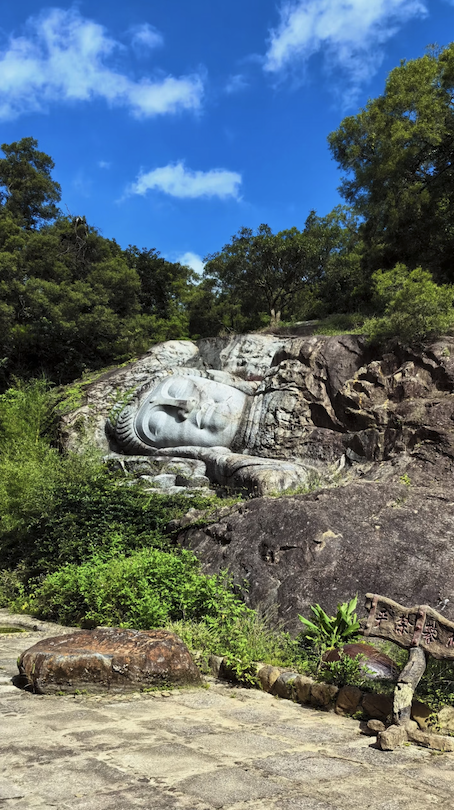 A statue showing Buddha in a lying position at Qingyuan Mountain. Image via 闽南真真酱/Xiaohongshu
If you are tired, you can take a break by the lake in the park, named Tianhu (天湖), and enjoy a cup of coffee at the cafe there.
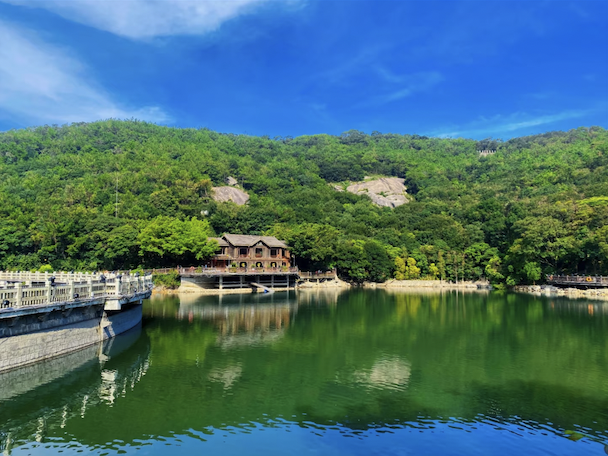 Image via 阳光追梦喵🐱/Xiaohongshu
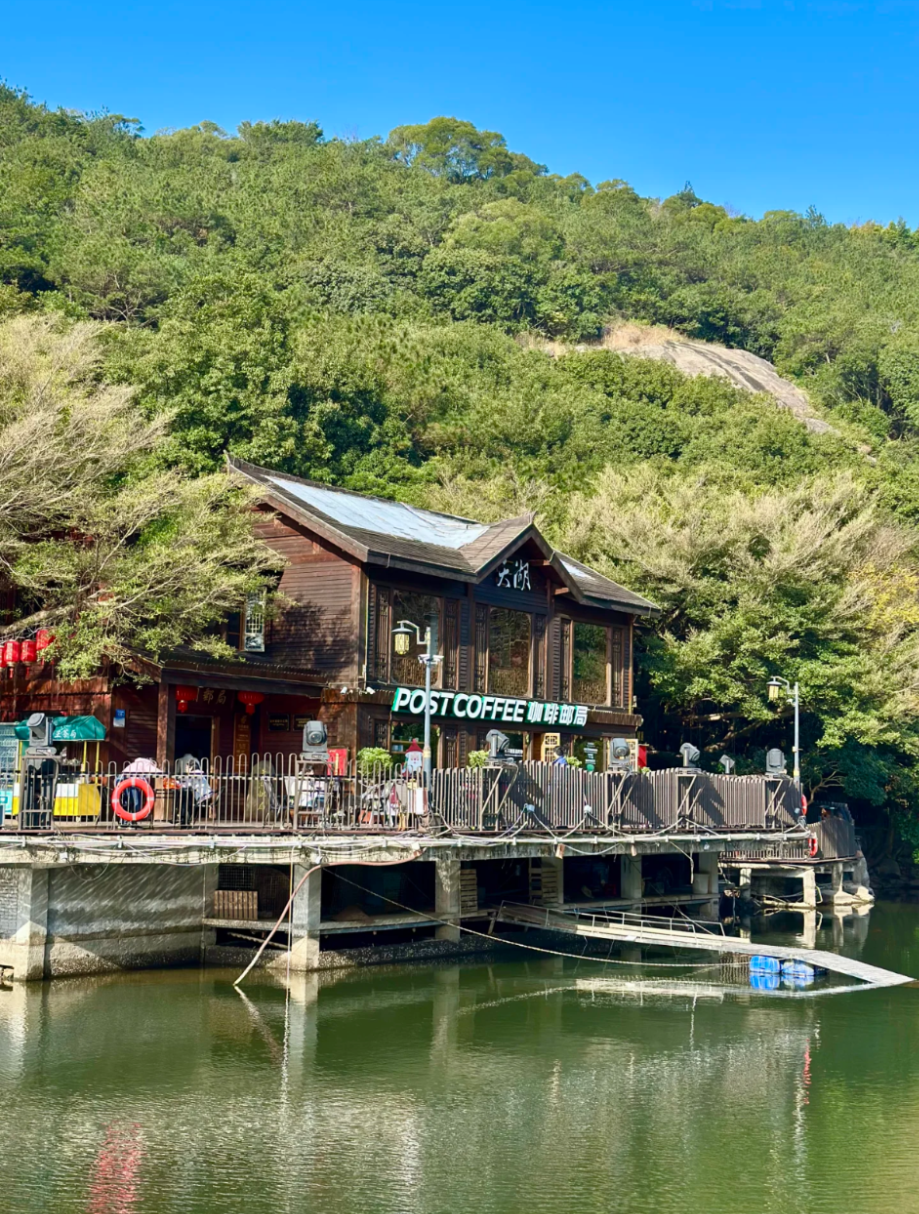 Image via 🍓623🍓/Xiaohongshu
Luojia Temple
If you are not a fan of mountains, you can visit Luojia Temple (洛伽寺), a Buddhist temple built along the coastline of Quanzhou.
 Image via 石狮红塔湾/Xiaohongshu
The temple appears as if it is floating above the sea when the tide rises, even though you can still walk across a small bridge to reach the temple from the mainland.
As the temple lies in close proximity to the Golden Coast (黄金海岸), you can also ride a bike along the coastline or simply sit by the sea after visiting the temple, freeing your mind from the worries of everyday life.
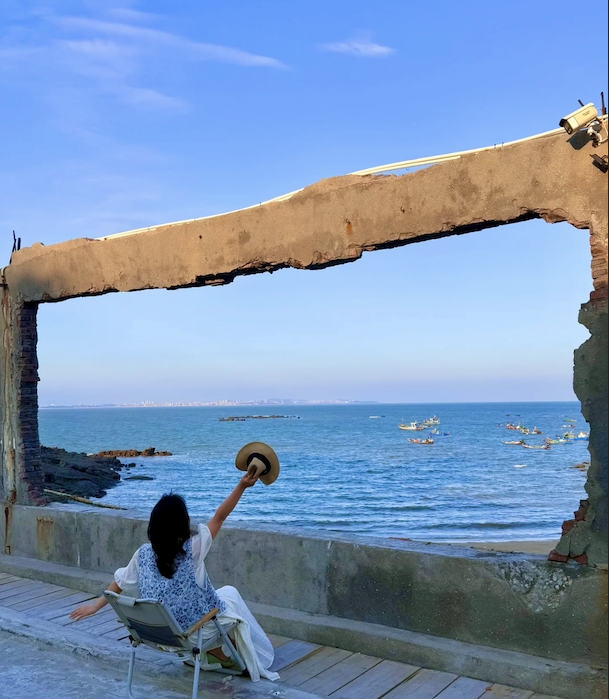 Image via 梦心Travel/Xiaohongshu
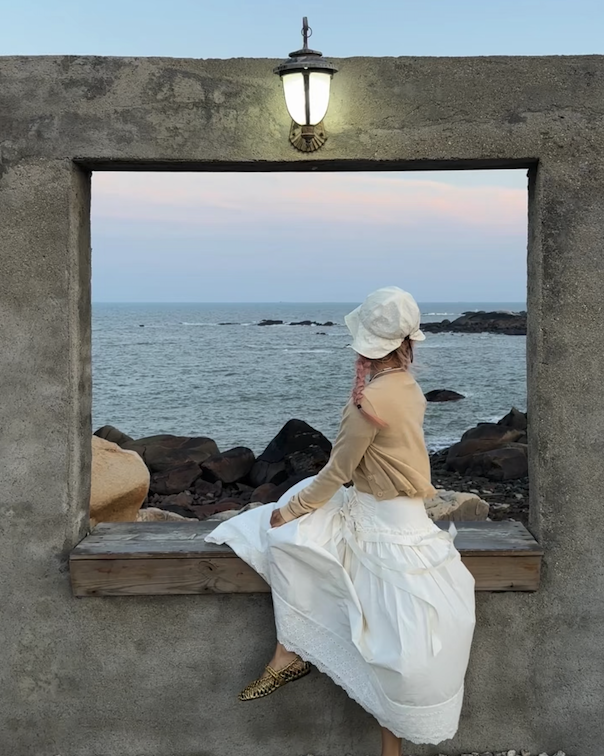 Image via 陳小糖圆子/Xiaohongshu
If you are not afraid of getting your feet wet, you can try out the swings located along the coastline — a great photo opportunity for the gram.
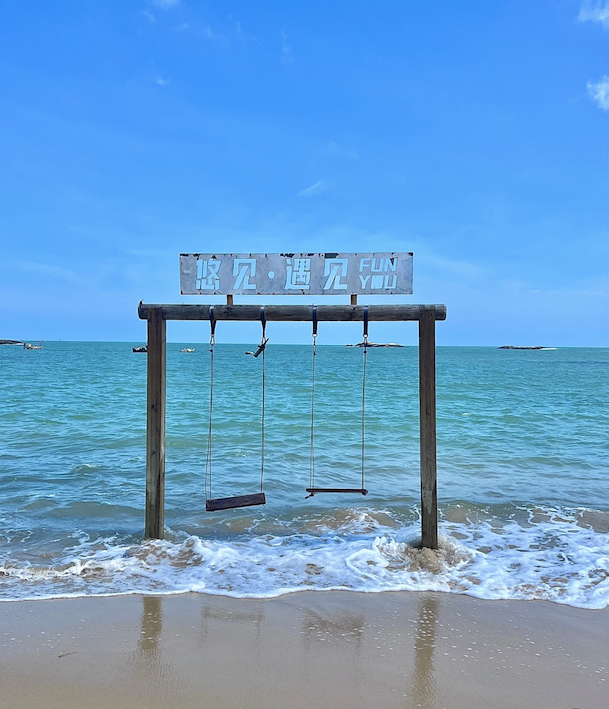 Image via 一淇/Xiaohongshu
Symphony of flavours from sea to street
This article won’t be complete without mentioning the mouthwatering food at Quanzhou.
As someone who visited Quanzhou, the one that left the deepest impression on me was Mee Sua Soup (面线糊), which is typically paired with seafood and fried dough sticks.
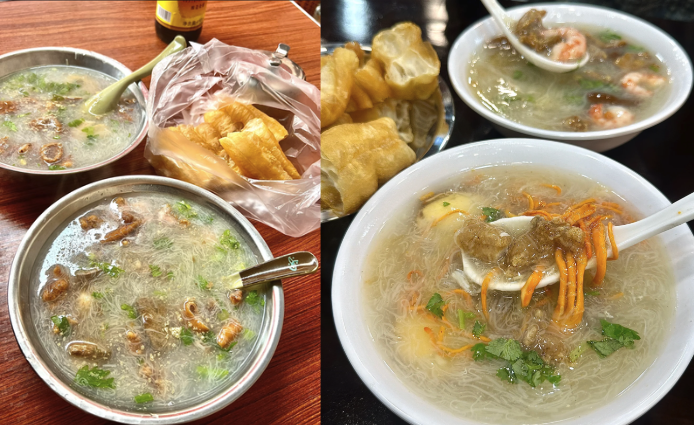 Image via 一箱胡萝卜&Chi吃吃吃/Xiaohongshu
With a slightly thicker soup texture, the dish will offer you a taste of the sea while filling your tummy with warmth.
Alternatively, if you are looking for a more savoury option, you might like Quanzhou’s Ginger Duck Stew (姜母鸭).
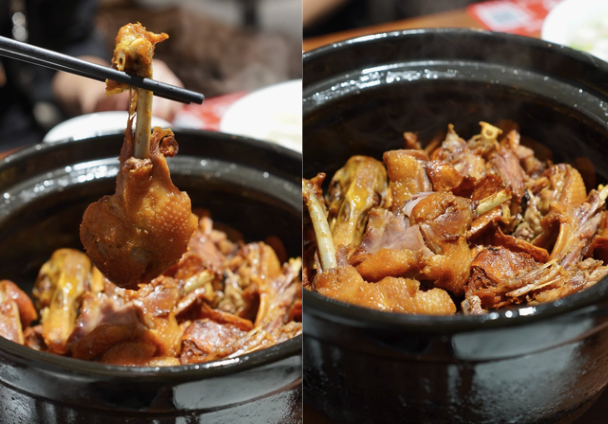 Image via 月亮大王/Xiaohongshu
Braised in a slightly tingly sauce, the duck meat has a soft yet tight texture.
Last but not least, you cannot miss out on Quanzhou’s seafood.
Being a port city means that Quanzhou can offer you ample amount of fresh seafood without burning a hole in your wallet.
One restaurant worth mentioning is Qing You Yu (庆有余), which allows you to choose your seafood from a three-tier fish tank and serves dishes in generous portions.
Two signature dishes at the Michelin Guide-featured restaurant are chilled swimmer crab (招牌冻花乐) and mantis shrimp with shrimp paste filling (溏心富贵虾).
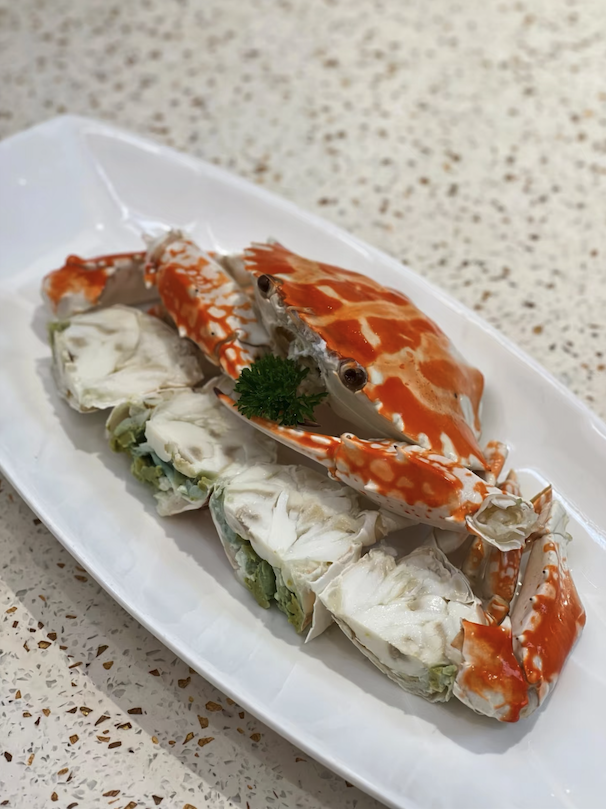 Chilled swimmer crab. Image via 海胆睡着了/Xiaohongshu
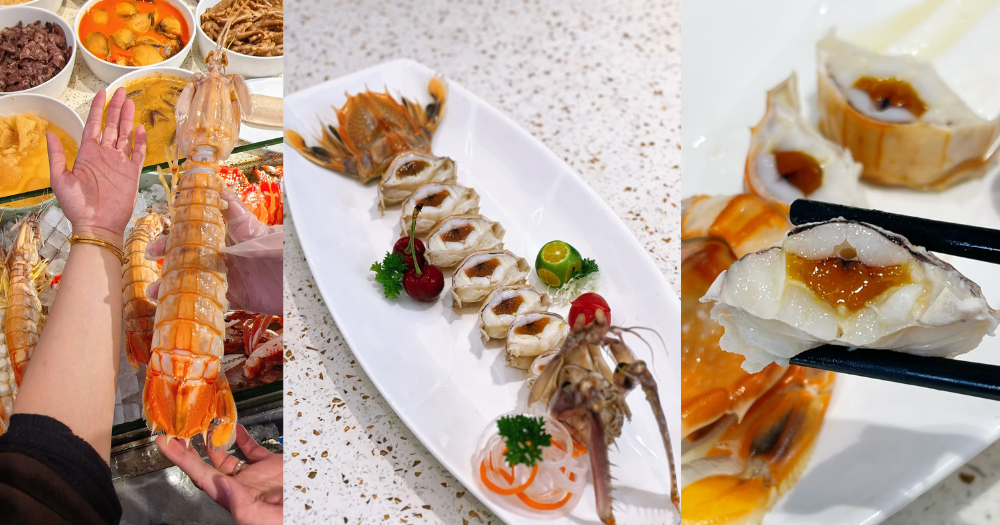 Mantis shrimp with shrimp paste filling. Images via 南南南南間。& 海胆睡着了/Xiaohongshu
After your meals, you can order Four Fruit Soup (四果汤), a local dessert, to sweeten up your day and beat the heat.
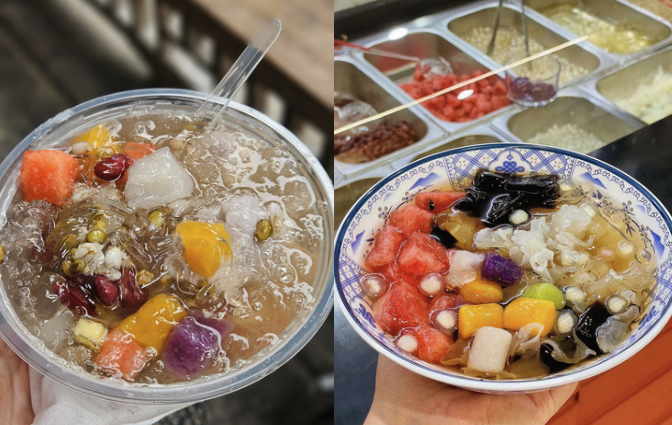 Image via 我叫好饱&吐司喜欢吃面包/Xiaohongshu
In Quanzhou, the dessert used an agar-agar that is made from red algae, and you can add on other toppings, such as grass jelly, fruits, and lotus seeds.
Travel to Quanzhou with Xiamen Airlines
If you are planning a visit to Quanzhou, book your tickets with Xiamen Airlines soon to enjoy the most affordable fares.
 Image via Xiamen Airlines
For example, a trip at the end of August costs less than S$400 at the time of writing.
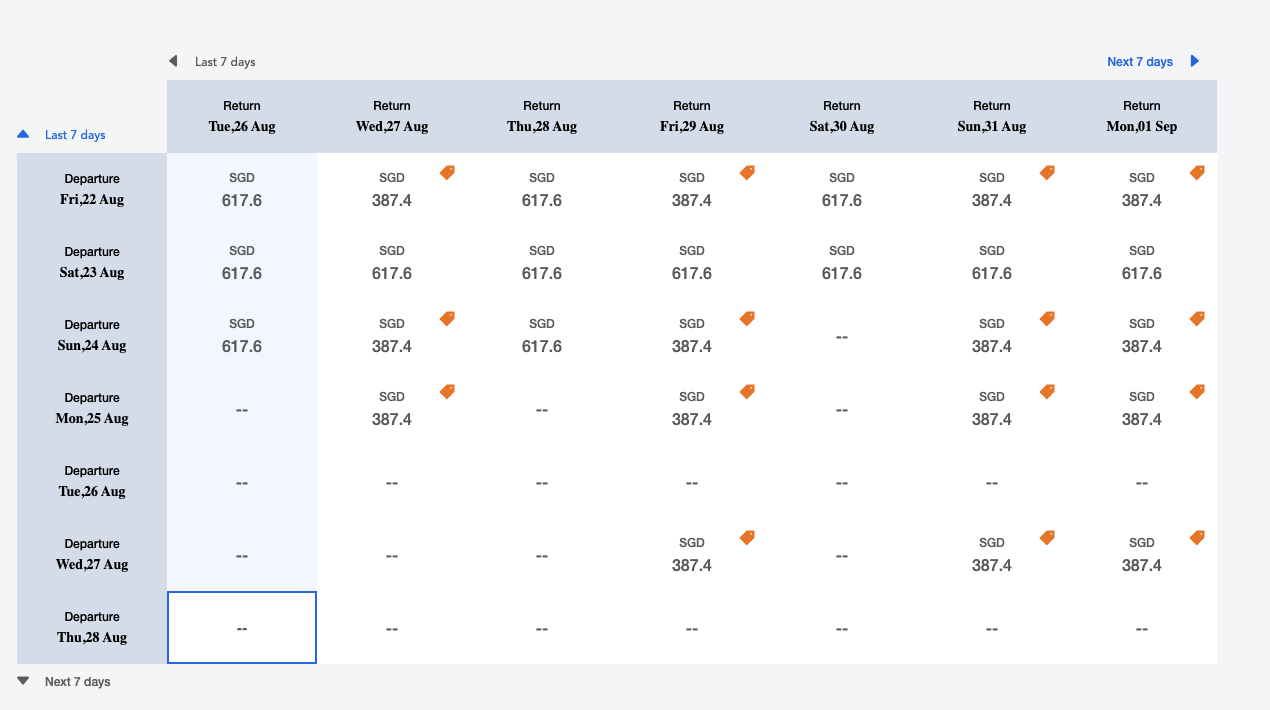 Information accurate as of Jun. 8. Screenshot via Xiamen Airlines/Website
Besides operating four weekly flights to Quanzhou, Xiamen Airlines also offers flights to Xiamen, Fuzhou, and Hangzhou.
Visiting multiple Chinese cities in the same trip? You can also enjoy convenient flight timings with Xiamen Airlines, making it easier to plan flights from one city to another.
Find out more about Xiamen Airlines and its offerings here.
This branded article by Xiamen Airlines makes the writer eager to embark on another trip to Quanzhou.
Top images via 舰载豆浆机, 看星 & 海丝泉州文旅之声/Xiaohongshu