News

S'pore cannot be passive bystander in evolving world order, but must shape its own destiny: PM Wong
PM Wong laid our his foreign policy vision for Singapore in 2025's S Rajaratnam Lecture.
April 16, 2025, 07:27 PM
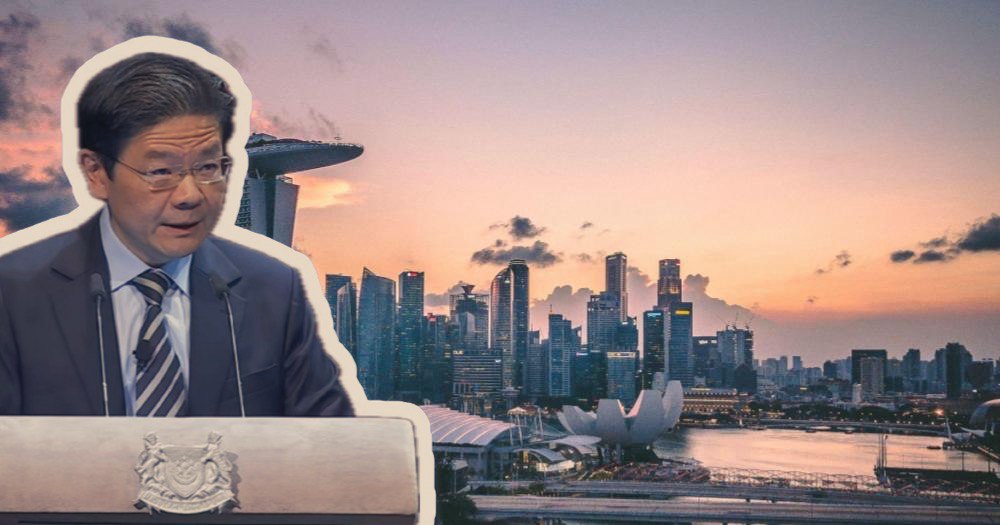

 On April 16, Prime Minister Lawrence Wong delivered the 2025 Rajaratnam lecture, laying out the three main thrusts of his foreign policy.
In it, he laid out the foundational understanding of Singapore's place in the world, historically, and how, in a particularly turbulent time, Singapore intended to move forward, laying out a cautious but hopeful foreign policy going forward, under-gridded by strong principles.
The speech laid out three key thrusts for Singapore's foreign policy.
Singapore would contribute actively to the stewardship of the global commons; it would champion deeper regional cohesion and integration, and it would strengthen its global network of partnerships.
Underwriter no more
PM Wong explained how Singapore had prospered in a post-World War Two world in a cooperative global environment underwritten by the United States.
However, he said the U.S.'s global engagement had lost the support of its citizens, who felt left behind, and that other countries had taken advantage of the U.S.'s security umbrella and market access without themselves contributing.
This change was reflected on not just one side of the U.S. political divide and might reflect a "new normal" for the U.S.
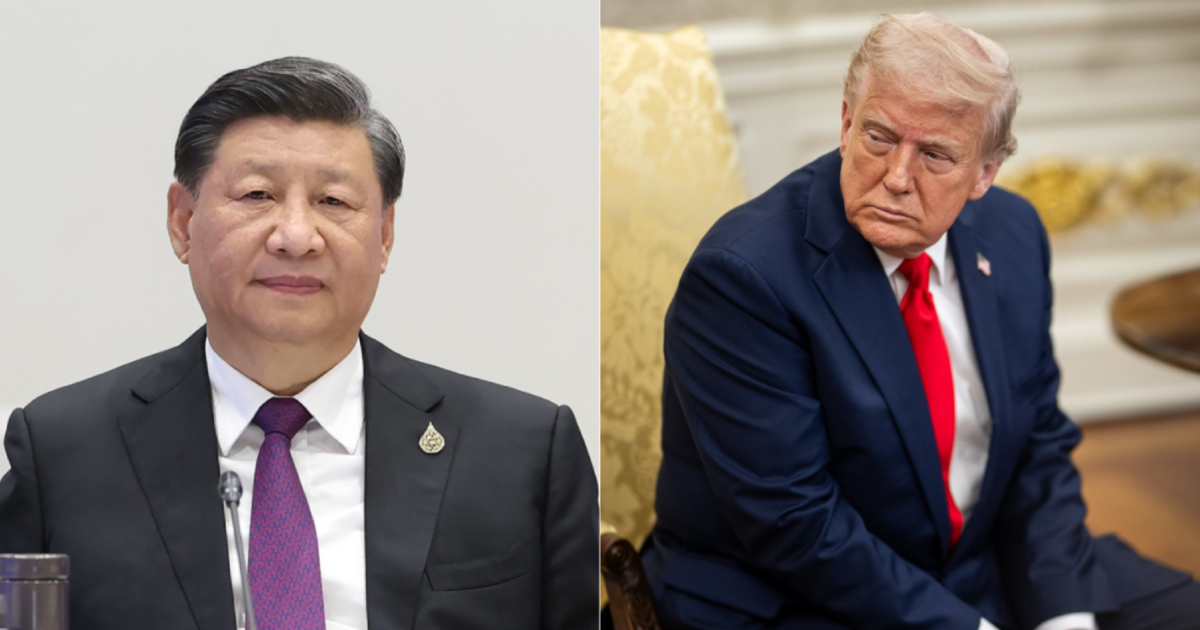
PM Wong noted that China, meanwhile, has emerged as a near-peer competitor of the U.S., having benefitted "immensely" from the U.S.-led order.
A new generation of Chinese are more assertive and determined to secure "China's rightful place in the world".
Global world disorder
PM Wong highlighted the turbulence that the world was currently encountering, especially the recently announced trade tariffs imposed by the U.S. on all its trading partners.
While the tariffs were postponed everywhere but China, the changes created great uncertainty and "no company can comfortably plan long-term investments" if tariff rates can be changed "at a moment's notice".
The U.S. and China were also entering a full-blown trade war, which would see trading between the two "grind to a halt".
"What we are witnessing is the remaking of the global economy - not as one integrated system, but as increasingly bifurcated ecosystems centred around the U.S. and China."
PM Wong said that global development was deeply worrying for small economies like Singapore, which has depended on a stable rules-based global order, as well as the free flow of trade capital, people and ideas.
A new world order is emerging, likely to be more multipolar, less coordinated, and more contested.
Shape our destiny
Despite its small size, Singapore could not afford to be a passive bystander in an evolving landscape.
"Instead, we must respond with agility and resolve and actively shape our own destiny."
Singapore's brand is well regarded, PM Wong said, and it enjoyed a deep reservoir of international goodwill.
Singapore was also not alone, with many like-minded countries sharing its commitment to an open, stable, and rules-based global system.
Singapore would work to preserve the frameworks that matter and lay the groundwork for a stable global order to emerge in the years ahead.
To that end, Singapore will move forward on three key thrusts:
Contribute actively to the stewardship of the Global commons.
Many of the world's most pressing challenges require more global cooperation, not less, with peers giving the example of artificial intelligence, governance, and climate change.
This support for international law and multilateralism was not just hoping for the best but also something that Singapore was actively working towards.
PM Wong highlighted Singapore's consistently constructive role in building consensus and finding solutions.
He also gave the example of Ambassador Rena Lee, who had led the successful United Nations negotiations on the High Seas treaty on biodiversity and who Singapore had nominated as a candidate to serve as a judge at the International Court of Justice.
Her nomination reflected a continued commitment to the rule of law in international affairs.
Wong also highlighted the impact that Singapore has made in supporting other countries' development by sharing its experience through the Singapore Cooperation Program (SCP).
Since 1992, the SCP has benefited more than 155,000 officials from over 180 countries, territories, and intergovernmental organisations.
To further its efforts, Singapore has established a new Development Partnership Unit to coordinate efforts across agencies, strengthen collaborations, and focus on areas where Singapore can make a meaningful impact.
Singapore would focus on Southeast Asia but will set aside more resources for partners across the world, as well as in new domains like the digital economy and renewable energy.
These efforts would hopefully show Singapore to be a responsible stakeholder that helps shape a most stable, resilient and inclusive global environment.
Champion deeper regional cohesion and integration
PM Wong said that Asean remains central to Singapore's foreign policy and that regional unity matters more than ever.
He emphasised Asean's economic integration and the progress it had made, such as making the Asean Free Trade Area virtually tariff-free.
However, PM Wong advocated for the acceleration of integration efforts.
Asean should aim for 100 per cent tariff elimination across the region, boost intra-Asean trade, conclude the Asean Digital Economic Framework Agreement, and accelerate the development of the Asean Power Grid.
ASEAN also engaged with partners beyond the immediate region through forums such as the East Asia Summit, bringing all major powers to the same table and giving them a stake in the region's success.
Singapore would take over the Asean chair in 2027, which would be Asean's 60th anniversary and intended to use the opportunity to deepen regional integration and ensure Asean remains a vital and credible anchor for peace and prosperity in Asia.
Strengthen its global network of partnerships
PM Wong said the more connected Singapore is, the more resilient it will be, and it will be better able to navigate uncertainty and withstand shocks.
Singapore was already plugged into major frameworks through multilateral trade agreements like the CPTPP and RCEP, as well as its network of Free Trade Agreements (FTAs).
He said that Singapore needed to reinforce the multilateral trading system to preserve open flows of trade and investment.
Over the past week, PM Wong spoke with counterparts from Malaysia, Japan, New Zealand, the United Kingdom, all CPTPP members, and the European Union.
All agreed that the world needed more cooperation, not less, and that they should not "retreat into protectionism or isolationism."
One proposal put forward was greater collaboration between CPTPP and the EU, which would represent 30 per cent of the world's GDP, and for whom a formal partnership could facilitate trade and investment flows and uphold key principles of the rules-based trading system.
Another possibility is the strengthening of the Asean-EU partnership and working towards a longer-term goal of an Asean-EU FTA to unlock the potential of a combined market of over a billion people.
PM Wong also highlighted the need to develop deeper ties in new frontiers such as the Middle East, Africa, and Latin America.
Singapore has a comprehensive partnership with the United Arab Emirates and recently upgraded its relations with Saudi Arabia to that of a Strategic Partnership.
He also highlighted the need for more diplomatic missions in Africa, where there are currently only two, and Latin America, where there is only one.
Monsoon harbour
Singapore, he said, once again found itself in uncharted waters; but Singapore was not the same country it was six decades ago, having deeper capabilities and becoming stronger and more resilient.
Singapore had found innovative ways to overcome its lack of critical resources, built up financial reserves, and established a strong and effective SAF and Home Team.
He warned that no one else will safeguard Singapore's interest or secure its future; "we can only depend on ourselves."
Singapore's survival in an uncertain world depended not just on its leaders and diplomats but on all Singaporeans.
Singapore needed to remain open to ideas, partnerships, and opportunities; building bridges, not barriers.
Singapore's traditional role had been that of a safe harbour to sailing ships sheltering from harsh monsoon winds, allowing traders and sailors from around the region and the world to meet, trade, and settle.
"The monsoon winds are blowing again, but we do not need to cower, and we certainly will not capitulate.
We cannot control the global currents, but we can chart our own course with courage, foresight and skill."
Top image via Unsplash & Prime Minister's Office/YouTube