Environment

Punggol residents recall monkeys searching through trash, 1 resident was chased & hid in public toilet
Residents of the Waterway Sunrise estate shared about their encounters with the macaques.
April 01, 2025, 05:09 PM


It seems monkeys have become a persistent feature at Punggol, near Coney Island.
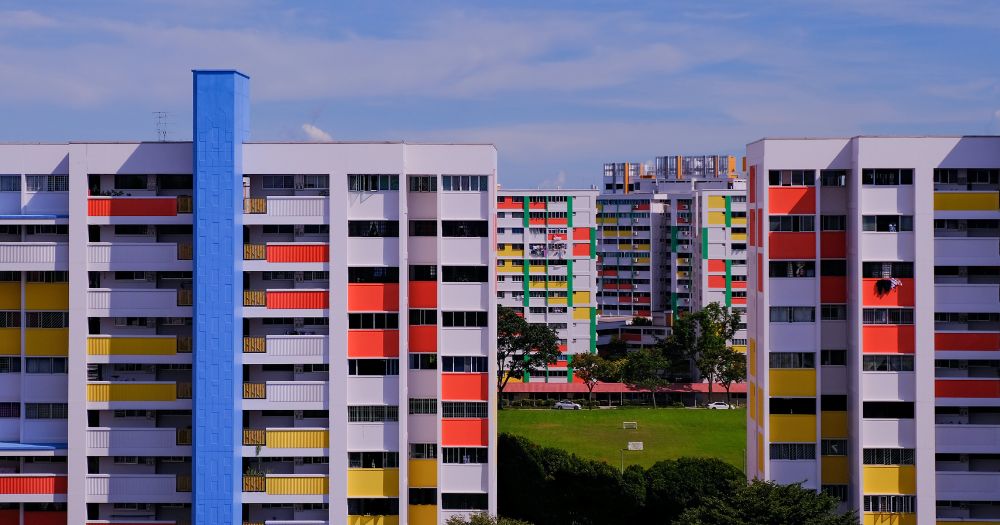
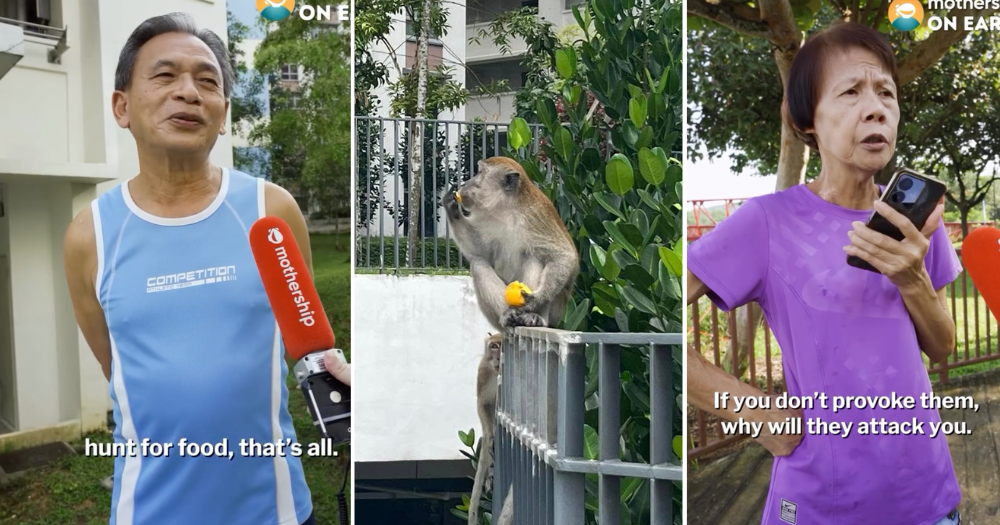
When Mothership went down to the Waterway Sunrise estate on Mar. 27, residents shared that they have seen the animals rummaging through trash, loitering along the nearby park connector, as well as climbing on the balconies of some of the Housing Development Board (HDB) units.
One elderly woman even recalled how she was chased by a monkey and had to hide in a nearby public toilet.
"More and more"
In February, a large troop of the monkeys was spotted loitering around a few blocks at Punggol Northshore.
Residents shared that they've seen similarly large troops at Waterway Sunrise, with one man sharing that he's seen troops of up to 30 individuals.
He said that the monkeys typically appear in the morning, and he sees them when he goes for a jog.
"Nowadays... there's quite a lot, more and more monkeys, especially in the morning."
He has also observed the monkeys searching for food in the rubbish bins, leading to rubbish strewn across the floor.
However, he remains unperturbed, stating that the monkeys "don't disturb anybody".
He added that he has been staying at 657B Punggol East for the past two years, "so to [him it] is nothing".
One student from Punggol View Primary School, who stays at the same block shared similar observations — he had seen the monkeys in the trash bins, and occasionally climbing into some flats.
Chased by a macaque
Another elderly woman who stays at 653 Punggol Drive had a more up close and personal experience with the monkeys.
She told Mothership that she has seen 20 to 30 monkeys at a time, typically along Punggol Promenade Nature Walk, which is linked to Coney Island by a bridge.
She recounted being chased by a monkey after it noticed her holding a plastic bag, forcing her to hide in a public toilet.
Since then, she makes sure to avoid bringing any personal belongings or plastic bags down, aside from her phone, while taking her walk.
When asked what she feels could be done about the monkeys, she shared that perhaps the creatures could be "kept in a zoo or something".
"Once they come, it's really a lot of them, not just one or two. It's 10 or 20 of them at a time."
However, she did note that the monkeys do not attack unless provoked.
Long-term population measures
Other residents suggested that there could be more signs or flyers informing people of the presence of the monkeys, and that the animals should not be fed.
In response to Mothership's queries, the National Parks Board (NParks) stated that it adopts a science- and community-based approach in managing wildlife in Singapore, including long-tailed macaques.
To manage them, NParks adopts a combination of management measures:
- Undertaking studies to understand the population ecology of macaques,
- Minimising human sources of food by ensuring proper waste disposal and enforcement against feeding,
- Habitat modification such as removal of fruit trees,
- Guarding of macaques away from human areas and
- Removal of intrusive individuals from human dwellings.
Currently, NParks sterilising macaques at Coney Island Park and the Punggol vicinity as part of its long-term population control measures.
The sterilisation programme in the area started in late 2023 following extensive research and science-based assessments, and will be monitored over time, NParks said.
To ensure the population remains viable, a population viability analysis was conducted to manage population growth, while ensuring the population remains viable.
Aside from this, NParks is also planting more native fruit-bearing trees at Coney Island, as they are natural sources of food for the monkeys.
The agency has also been working closely with the town council to provide advisory posters, and recommending measures such as increasing the frequency of estate cleaning and monkey-proof bin designs.
Do not feed macaques
Members of the public are strongly urged not to feed macaques, as it alters their natural foraging behaviour, habituates them to human presence, and leads them to rely on humans for an easy source of food.
Feeding of wildlife is illegal in Singapore.
Under the Wildlife Act, first-time offenders caught feeding wildlife could be fined up to S$5,000, and repeat offenders could be fined up to S$10,000. NParks will continue to conduct enforcement patrols against feeders.
To further raise public awareness, NParks has installed educational signs to advise parkgoers and residents on what to do when they encounter macaques.
"We will continue to actively collaborate with grassroots organisations and volunteers on wider outreach efforts," NParks said.
If macaques approach you in the open, here's what to do:
- Remain calm and quiet and do not make any sudden movements or maintain eye contact with them.
- Look away and back off slowly.
- Keep away from the area until they have left.
- Keep plastic bags out of the sight of macaques when spotted. Macaques have associated plastic bags with the presence of food and will try to snatch them when they see them.
Members of the public may also call NParks' 24-hour Animal Response Centre at 1800-476-1600 for wildlife-related issues.
Top photo from Mothership and Andie Ang/FB