Environment

Community centres to serve as 'cooling spaces' with air-con in event of heatwave in S'pore
Stay hydrated.
March 19, 2025, 06:53 PM


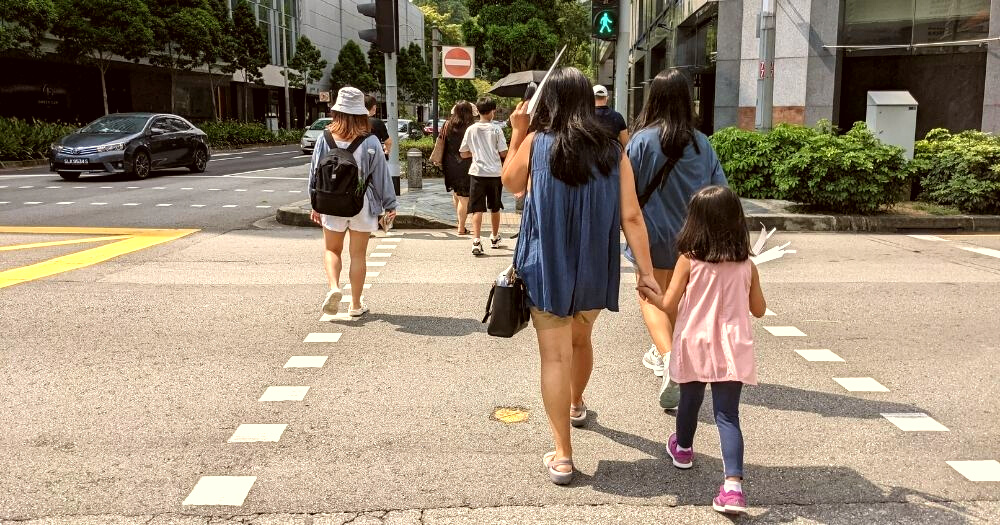
As temperatures rise in Singapore, the government has a slew of measures ready to be implemented if the country experiences a heatwave.
These include opening up areas in the community which will act as "cooling spaces" with air-conditioning that members of the public can go to for respite from the heat, as well as implementing dress down attire at schools.
These measures were shared with the media on Mar. 19 by the newly formed Mercury Taskforce, which is chaired by the National Environment Agency and comprises 37 public agencies, including the Ministry of Health, Ministry of Social and Family Development and Early Childhood Development Agency.
Warming up
The taskforce shared that while there is a lower risk of a heatwave occurring in 2025, the period from late March to May is typically the hottest period of the year.
This is described as the hot season — in 2024, most of the days with high heat stress occurred during March, April and May.
High heat stress occurs when any hourly-average Wet-Bulb Globe Temperature (WBGT) — a measurement that takes into account air temperature and humidity among other factors — at a station is equal to or greater than 33°C.
May is forecast to be the warmest month in the 2025 hot season as well.
In 2024, April was the warmest month in Singapore, tied with 2016 as the warmest April on record.
Stepped up measures
Meanwhile, a heatwave occurs when there is a daily maximum temperature of at least 35°C, and a daily mean temperature of at least 29°C for three consecutive days.
The last time a heatwave happened in Singapore was in 2016.
In the event of a heatwave, a joint media advisory will be issued and there are whole-of-government response plans in place.
Some stepped-up measures you can expect should there be an impending heatwave are the opening up of cooling spaces, as mentioned earlier.
These can be community centres, selected Residents' Committees spaces, or indoor sports halls with air-conditioning.
The taskforce did not reveal how many of these community spaces will be open to the public, and how widespread they will be across the island.
Those in schools and preschools can also dress down.
Schools and eldercare facilities will reduce outdoor activities during the hotter hours of the day, between 11am and 4pm.
In line with the Ministry of Manpower's heat stress measures announced in 2023, employers are required to ensure that all outdoor workers hydrate at least hourly and have regular rest breaks under shaded areas.
Employers are also required to monitor the WBGT for every hour of outdoor work performed, especially during the hotter periods of the day.
You can find more information on how you can manage heat stress here. Download the myENV app to receive heat stress alerts.
Top photo by Kow Zi Shan