Features

This 86-year-old art school championed the East-West fusion art style in S’pore
It has left an enduring mark on Singapore’s art scene.
February 26, 2025, 06:39 PM


The Nanyang Academy of Fine Arts (NAFA) building sits at the corner of Bencoolen Street and Middle Road on prime real estate in the heart of the city.
Even though its unassuming facade says otherwise, it houses Singapore’s pioneer arts institution.
Unlike the verdant School of the Arts and the edgy Laselle College of the Arts, NAFA presents a look of quiet dignity—befitting an institution that has weathered the storms of war and political machinations.
Established in 1938 by artist Lim Hak Tai, NAFA has played a pivotal role in developing the Nanyang art movement and shaping Singapore’s artistic landscape by producing numerous Cultural Medallion recipients, such as Chua Mia Tee, Siew Hock Meng, and Anthony Poon.
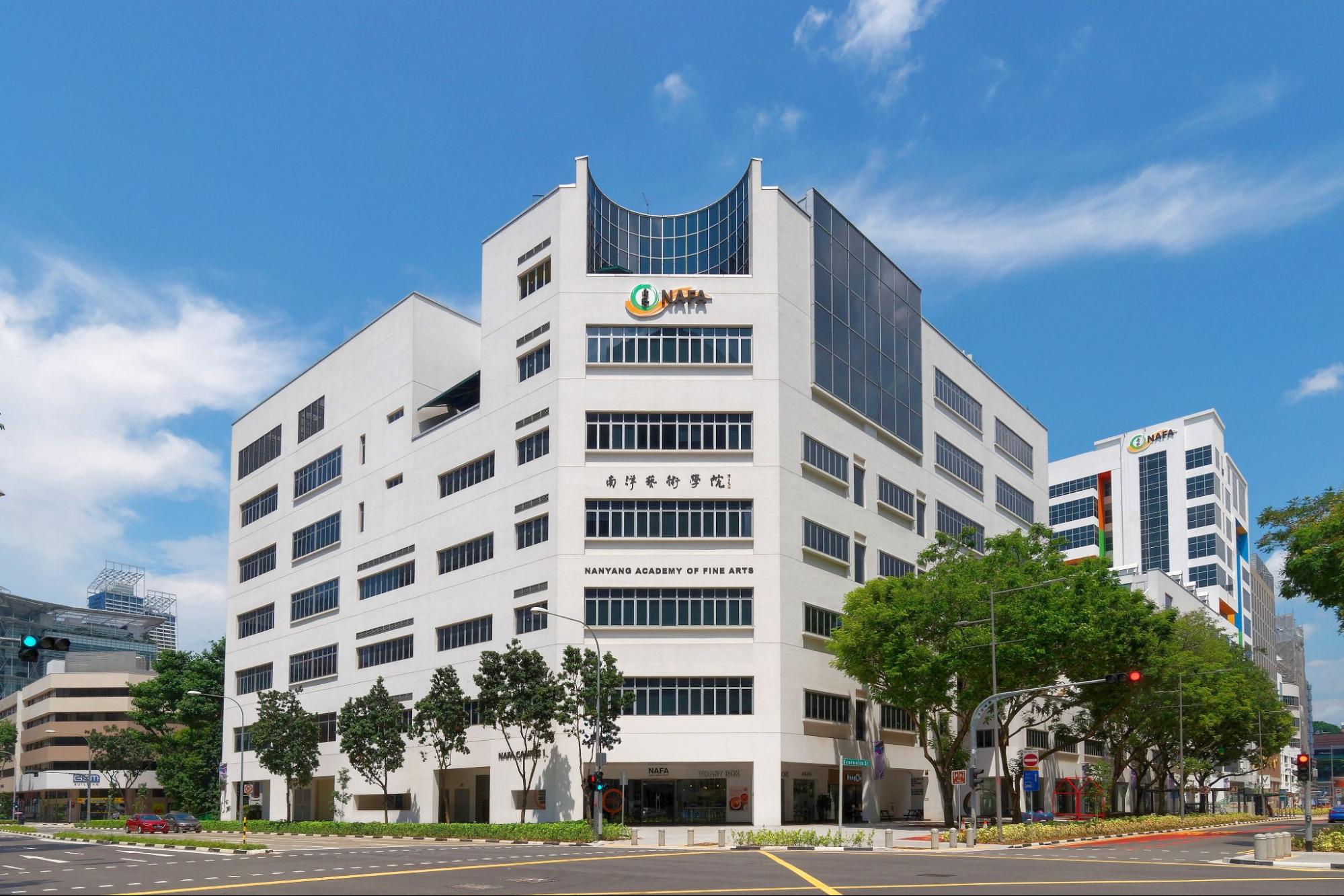 Image via NAFA.
Started as a passion project
Lim, an accomplished artist and educator, left Xiamen for Singapore between 1936 and 1937, a move that has been attributed to his desire to avoid the imminent Second Sino-Japanese War.
Seeing the need for an institution that could nurture artistic talent in the region, Lim partnered Tan Khuat Siong, the second son of philanthropist Tan Kah Kee, and the Society of Chinese Artists to found the Nanyang Academy of Fine Arts.
At the start, NAFA operated from a shophouse in Geylang, with three full-time staff and a cohort of 14 students.
It offered a limited curriculum, which included Western painting, sculpture, and Chinese art.
For Lim, NAFA was a passion project, driven entirely by his love for the arts.
Not only was he not paid for the multiple roles he held at the academy—he was simultaneously the principal, the head of the education department, and the instructor for watercolour and oil painting—Lim had to dig into his own pockets to fund the school’s expenses.
To earn an income, Lim taught at Chinese High and Nanyang Girls’ High on the side.
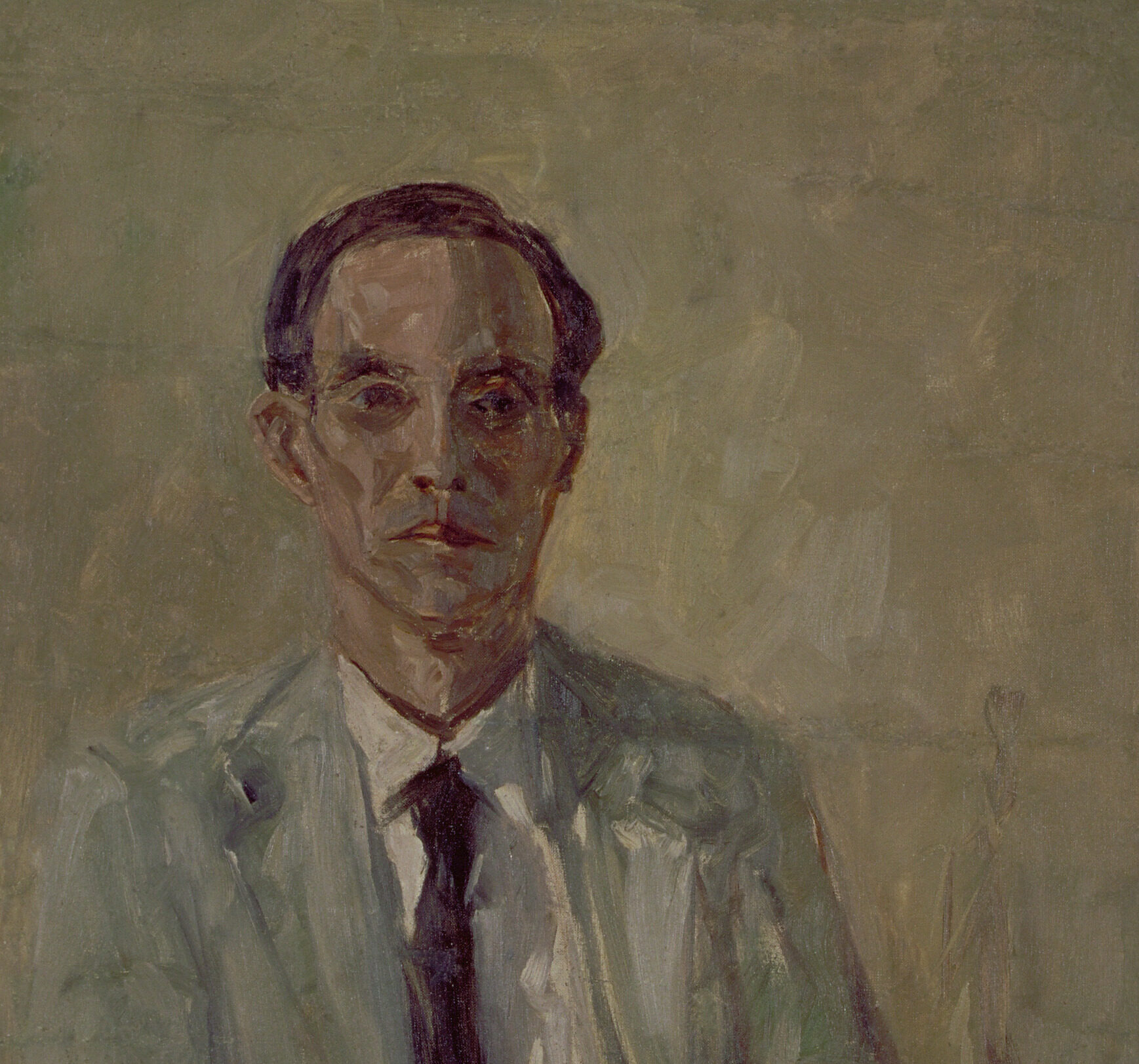 Portrait of Lim Hak Tai by Chong Pai Mu, 1940. Image via Culturepaedia.
Over the years, NAFA flourished and grew, relocating each time to accommodate more teachers and students.
The school also expanded its range of classes to include lessons on art theory, music, cartoon drawing, and more.
However, the war that Lim ran from in 1938 still found him in the end.
The academy was known to be an anti-Japanese base, which provided much-needed support as the war raged over in the East.
When Imperial Japanese forces took over Singapore in 1942, Lim had to close the school, reopening it only in 1946.
The post-war period was even more challenging for the school.
Faced with the urgent task of rebuilding the country, government funding for schools was in short supply, much less for privately run schools like NAFA.
The academy was granted funding equivalent to that of primary schools.
However, Lim believed in providing an affordable arts education, so he often turned to fundraising and even used his own money to keep the school fees low.
He even waived school fees for needy students.
In 1952, amid the Malayan Emergency, the government delivered another blow to the academy by refusing to recognise NAFA’s art education diploma.
It caused student enrolment to drop.
However it was during this period of adversity that the Nanyang Art movement started to flourish, even if for a short time.
Nanyang Art
Through the school, Lim championed an art style known as Nanyang Art—using Western and Chinese styles and techniques to depict local subjects.
“Nanyang”, which means “Southern Seas” in Chinese, was used to refer to Southeast Asia, and in particular, Malaya.
The fusion of Eastern and Western art techniques is just one of the tenets of Nanyang Art. Lim, over the course of his work in NAFA, articulated six central ideas of Nanyang Art:
- Integrating the cultures and customs of the various races
- Fusion of the art of the East and the West
- Developing the spirit of science and current social thinking of the 20th century
- Reflecting popular demands of local people
- Expressing the local flavour through art
- Emphasising the educational and functions of fine art
Take, for example, Lim’s very own “Riot”.
Inspired by Cubism, this piece records the ethnic tensions and social upheavals in the years leading up to Singapore’s independence; Lim often encouraged his staff and students to use art to represent the reality of the place they lived in, warts and all.
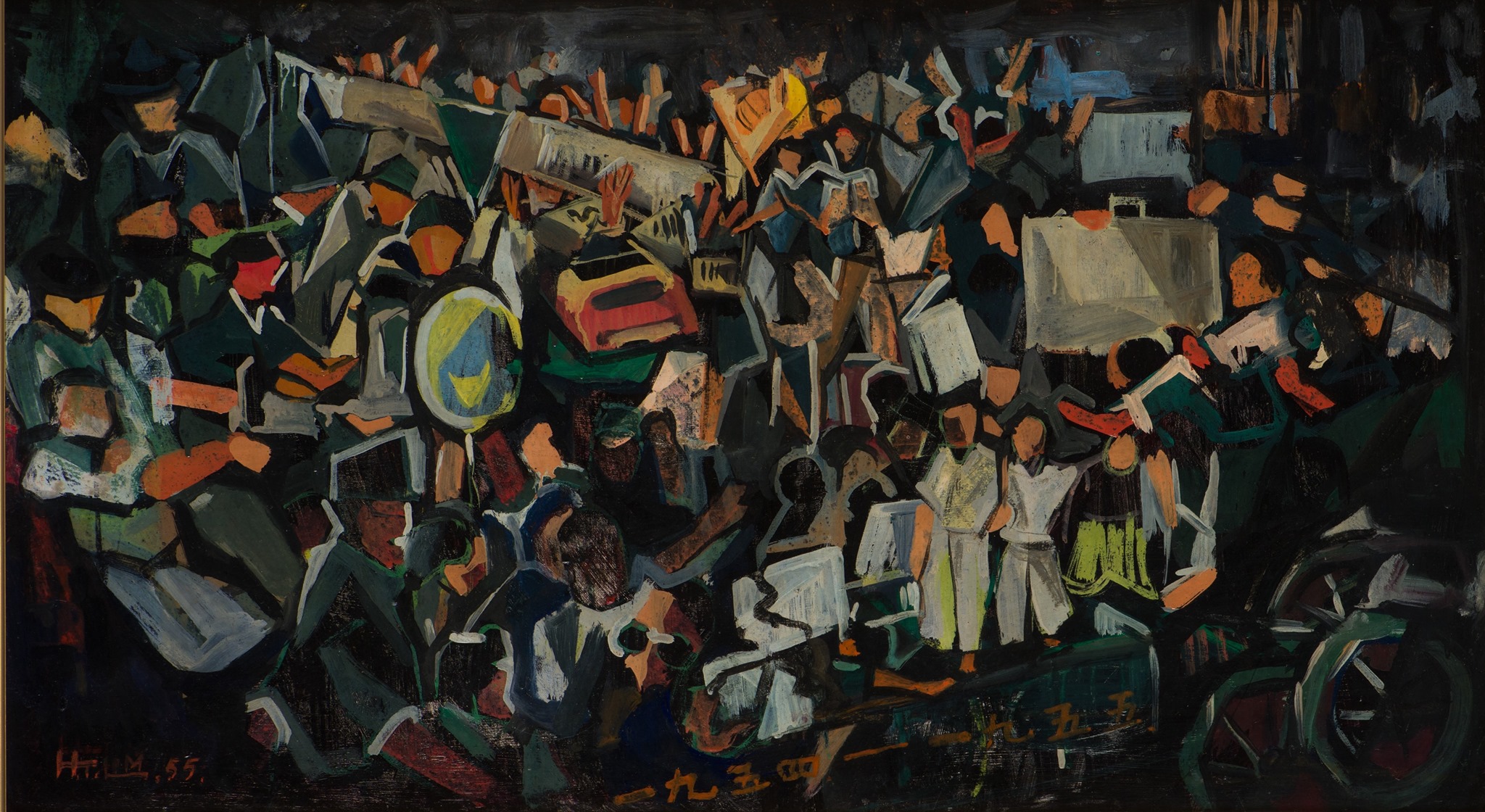 Riot by Lim Hak Tai, 1955. Image via National Gallery
This approach to art was, during Lim’s time, revolutionary and very much different from how we view art and its socio-political functions today.
Lim’s encouragement was in essence what led his staff at NAFA—Cheong Soo Pieng, Chen Wen Hsi, Chen Chong Swee, and Georgette Chen—to become pioneers of this movement, producing a body of work that would become the basis for what we today know as Nanyang Art.
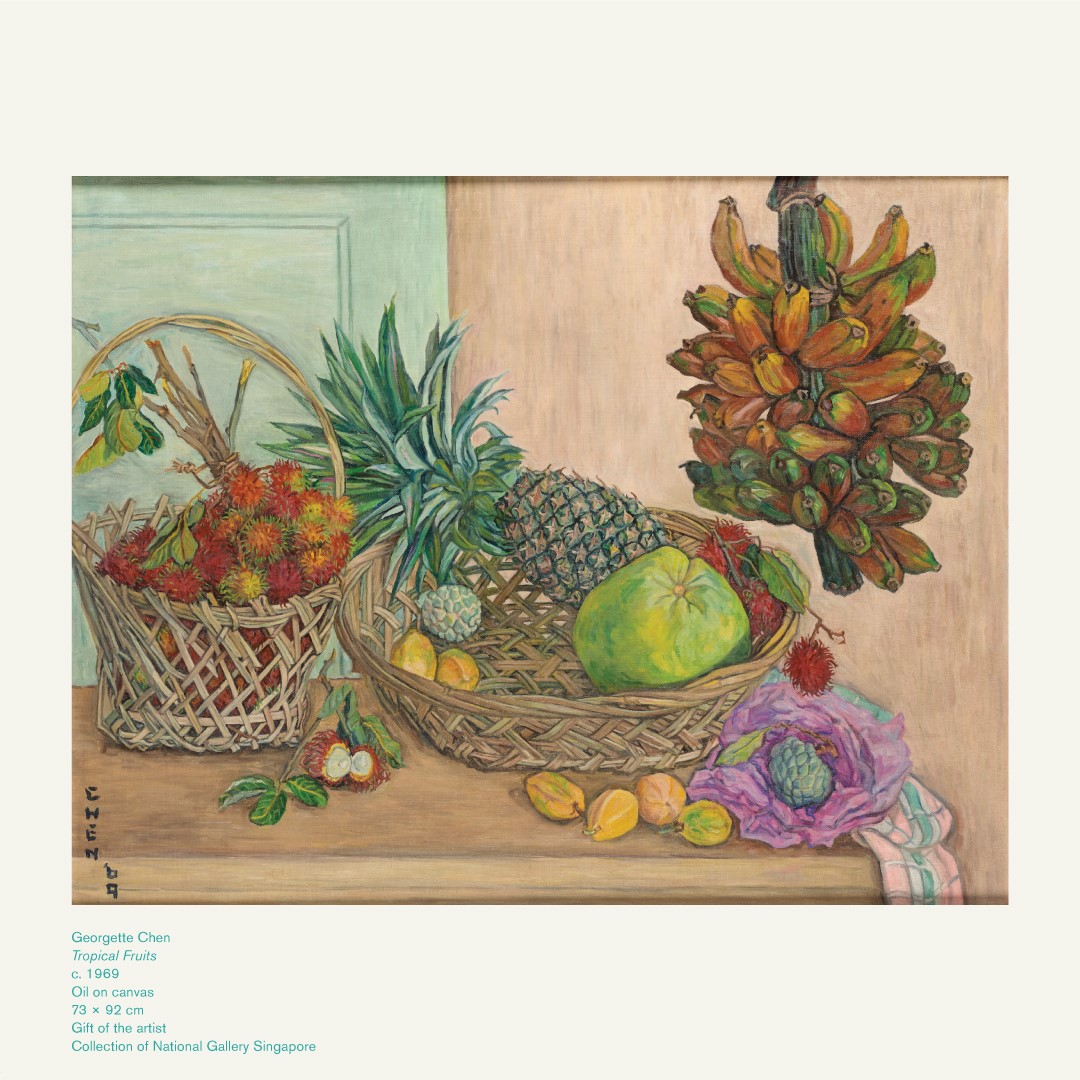 Tropical Fruits by Georgette Chen, 1969. Image via National Gallery.
Nanyang Art—a diverse category spanning oil paintings, Chinese ink works and more—continued to mature in Singapore, enjoying a “golden period” until the mid-1960s.
As scholar Yeo Mang Thong wrote in an essay, “Nanyang Art was borne out of a specific time and is now merely a part of history”.
But what Lim and NAFA championed—in terms of values like multiculturalism—remain central to the Singaporean identity.
This, aside from the numerous alumni whose works continue to influence contemporary artists, is arguably one of NAFA’s most enduring legacy.
Keen to learn more interesting nuggets about Singapore Chinese history and culture?
Check out Culturepaedia, a bilingual repository featuring articles by scholars and experts from academia and the wider community. It will offer you an introduction to Singapore Chinese culture, and show you how it has evolved over the years.
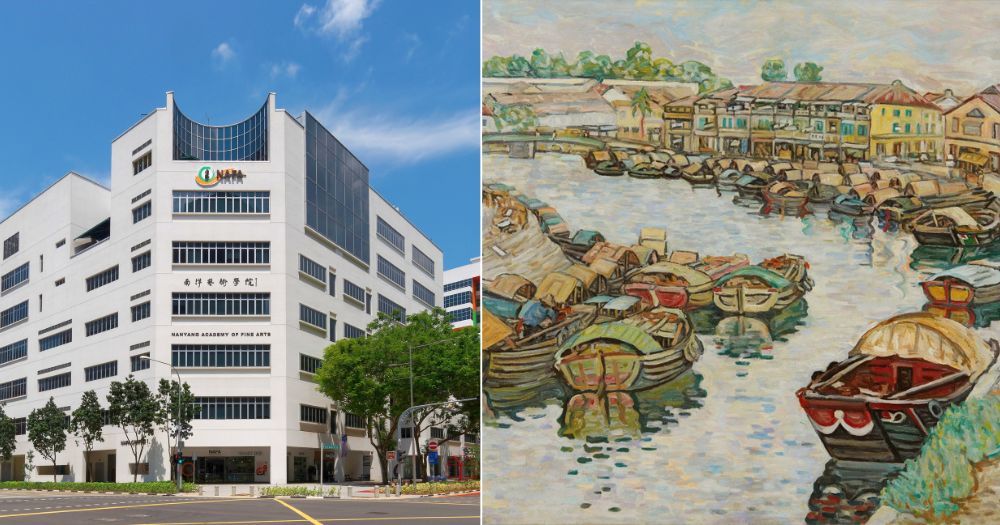
Top images: NAFA, “Boats and shophouses” by Georgette Chen via Sotheby's.